


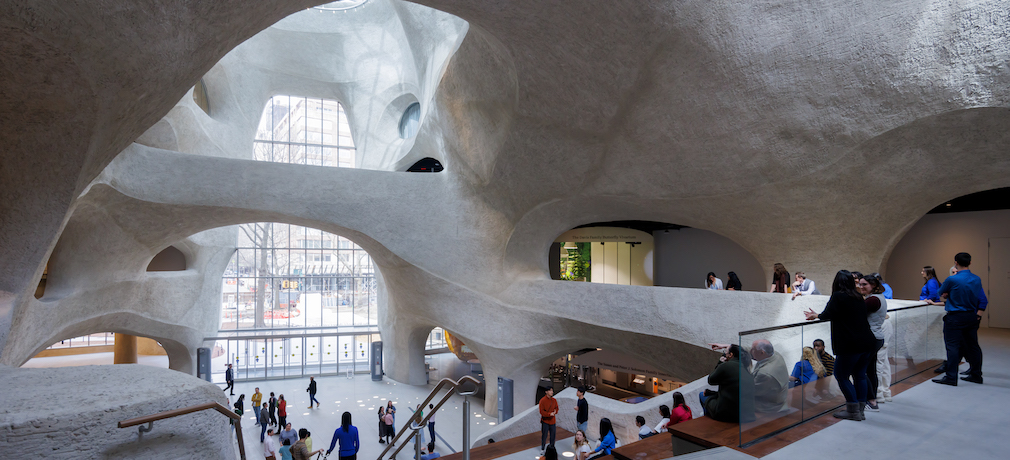
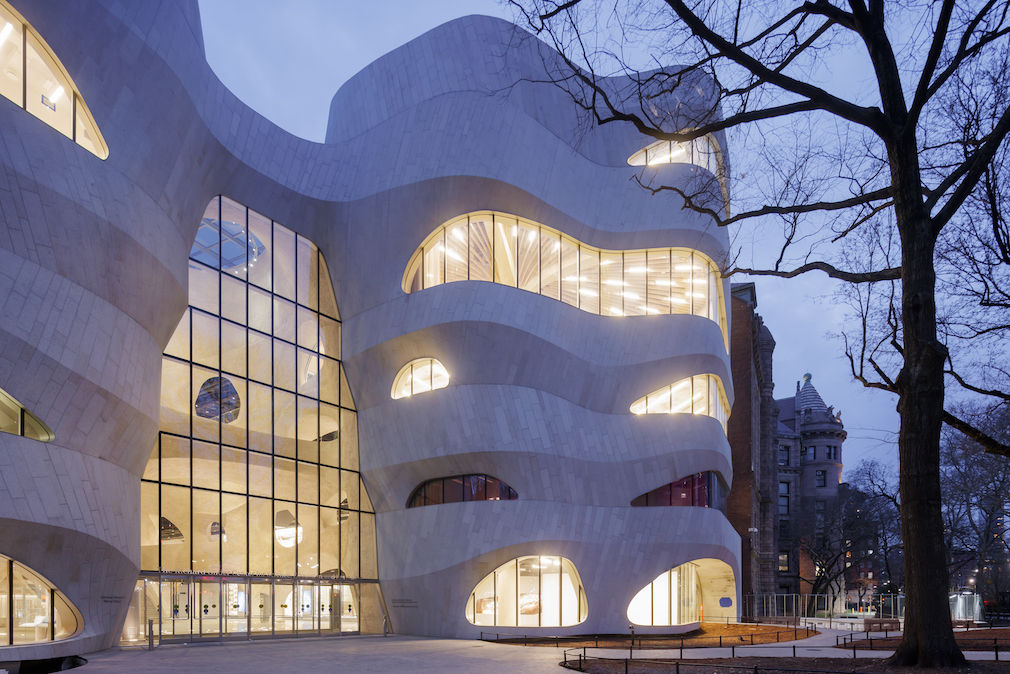

The Richard Gilder Center for Science, Education, and Innovation opened to the public on May 4, and was immediately hailed as a soaring architectural achievement. The center, designed by internationally acclaimed architecture firm Studio Gang, houses world-class research facilities, scientific collections, and next-generation classrooms. An extension of the American Museum of Natural History in New York’s Upper West Side, the Gilder Center will also feature innovative exhibitions, including an Insectarium dedicated to the most diverse group of animals on Earth, and directly above it the year-round Davis Family Butterfly Vivarium, where visitors can mingle with up to 1,000 free-flying butterflies in various micro-environments.
The 230,000-square-foot $465 million Gilder Center project was announced in 2014 and includes six floors above ground, four of which are open to the public, and one below. It creates 33 connections among 10 Museum buildings to link the entire campus and establishes a new entrance on the Museum’s west side, at Columbus Avenue and 79th Street, in Theodore Roosevelt Park. Designed by Studio Gang, the international architecture and urban design practice led by Jeanne Gang, the Gilder Center is the latest in a series of major projects over the last three decades that have transformed the Museum’s campus, its science, educational and exhibition spaces, and all four facades, including Central Park West (2012 and 2021) and the 77th Street “castle” façade (2009), which have been thoughtfully restored.

Visitors coming from Columbus Avenue experience the Gilder Center as a building set in a park, constructed at the same height as the older Museum buildings that flank it, with flowing, gentle curves. Adjacent areas of the park have been enhanced with a new landscape design, developed by Reed Hilderbrand with community input, which features more pathways and seating areas.
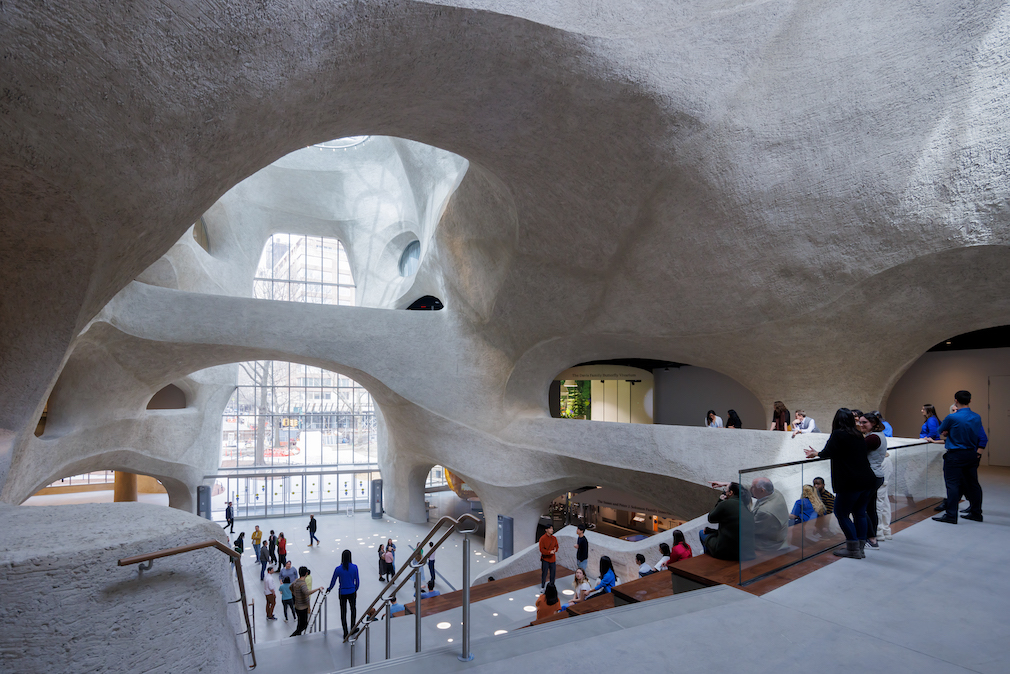
“The Gilder Center is designed to invite exploration and discovery that is not only emblematic of science, but also such a big part of being human. It aims to draw everyone in—all ages, backgrounds, and abilities—to share the excitement of learning about the natural world,” said Jeanne Gang, founding principal and partner of Studio Gang. “Stepping inside the large daylit atrium, you are offered glimpses of the different exhibits on multiple levels. You can let your curiosity lead you. And with the many new connections that the architecture creates between buildings, it also improves your ability to navigate the Museum’s campus as a whole.”
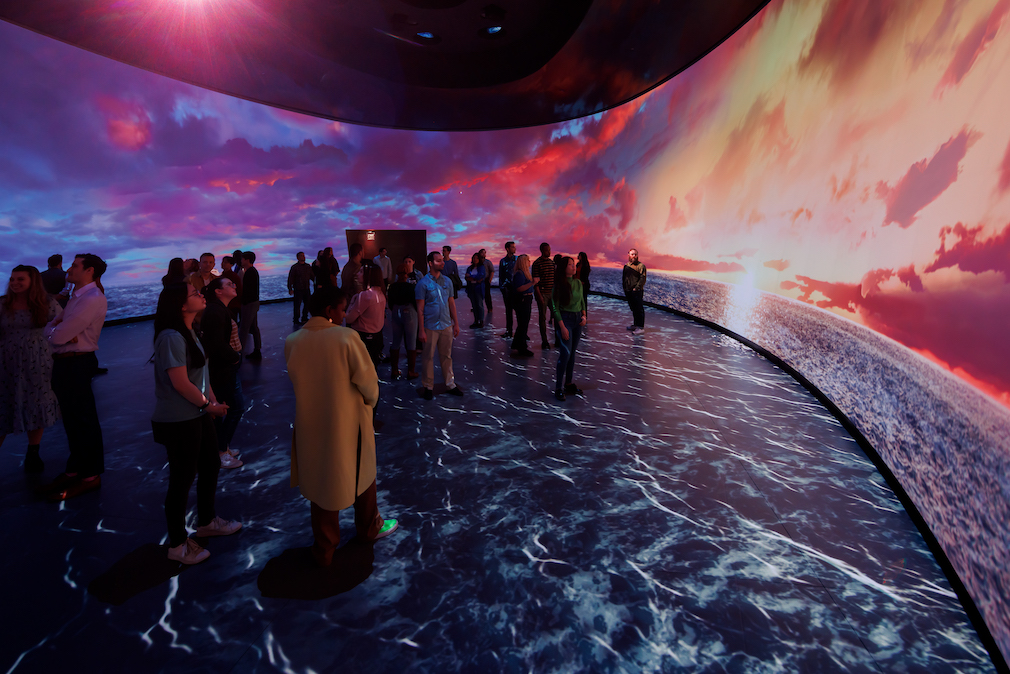
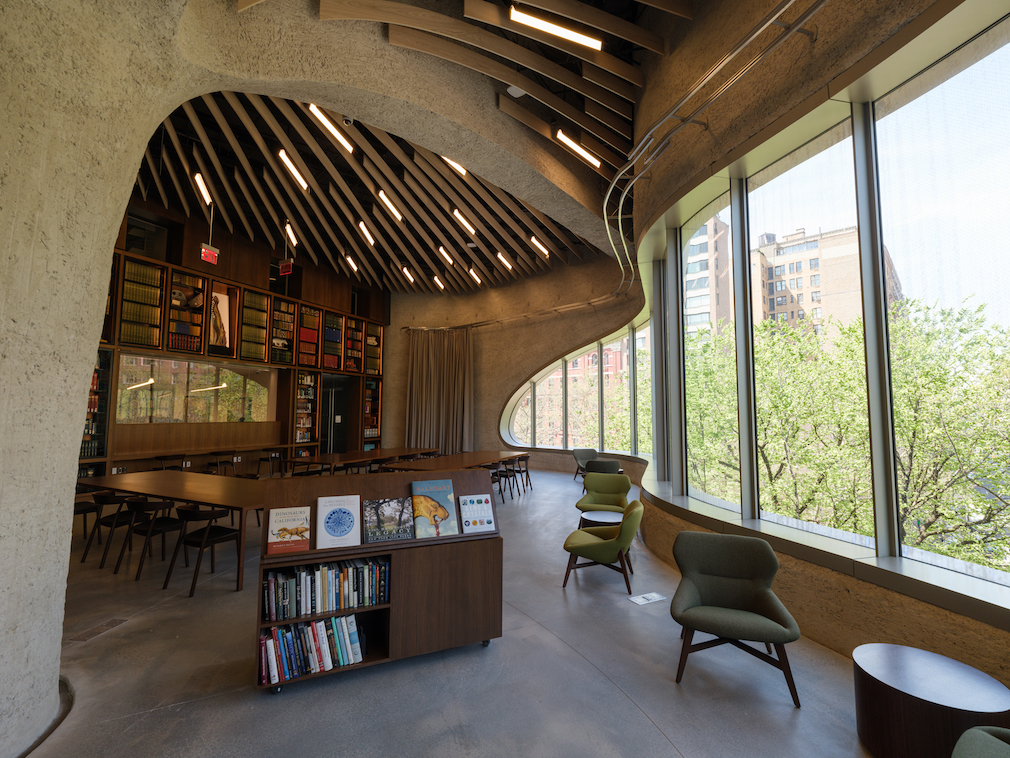
The Gilder Center embodies the Museum’s mission of science and education in every way—from sparking curiosity and wonder through new exhibits in strikingly designed spaces to providing new facilities where research collections, exhibitions, and learning are situated in close proximity, reinforcing the central role of natural history collections in scientific discovery and providing deeper experiences that connect visitors to the evidence and processes of science through engaging exhibits and programs. At the same time, the new building also enhances the visitor experience by establishing continuous pathways through its four-block campus, connecting buildings that were constructed over the course of nearly 150 years.
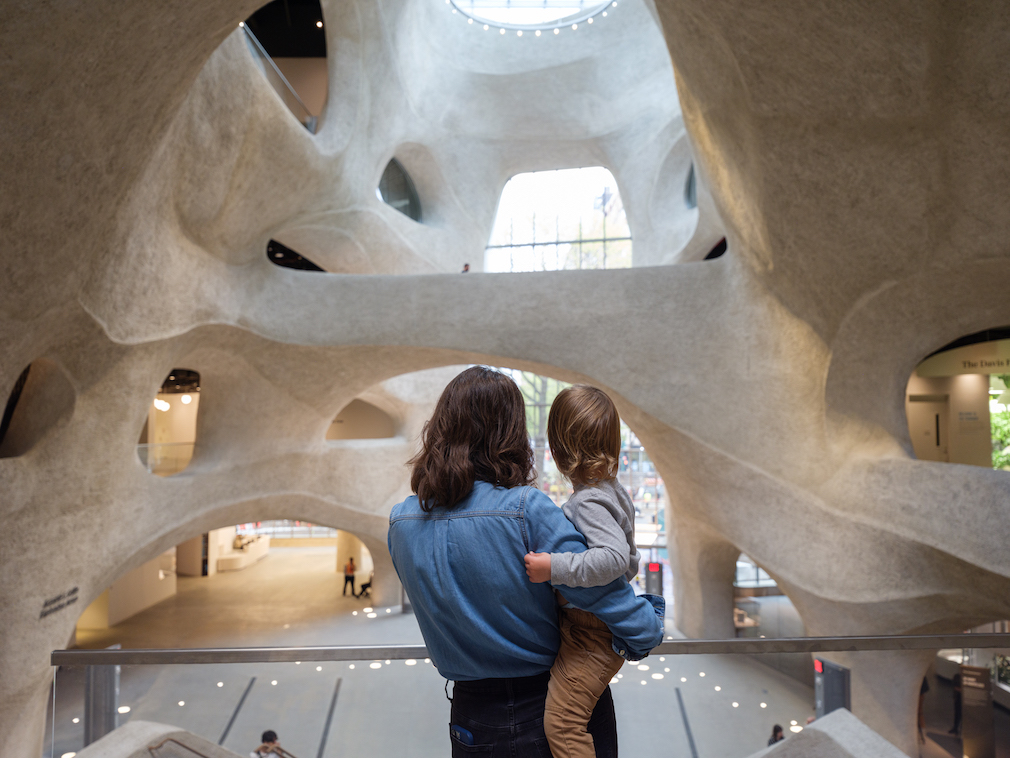
“The American Museum of Natural History is one of New York’s greatest treasures, making science and technology accessible to learners of all ages,” said New York State Governor Kathy Hochul. “New York State was proud to play a role in the creation of the new Gilder Center for Science, Education and Innovation with funding through the Regional Economic Development Council initiative. This transformative project will give New Yorkers and visitors from across the world an opportunity to experience the Museum’s vast, new windows into our natural world.”
Photography by Iwan Baan.
Like what you see? Get it first with a subscription to aspire design and home magazine.