


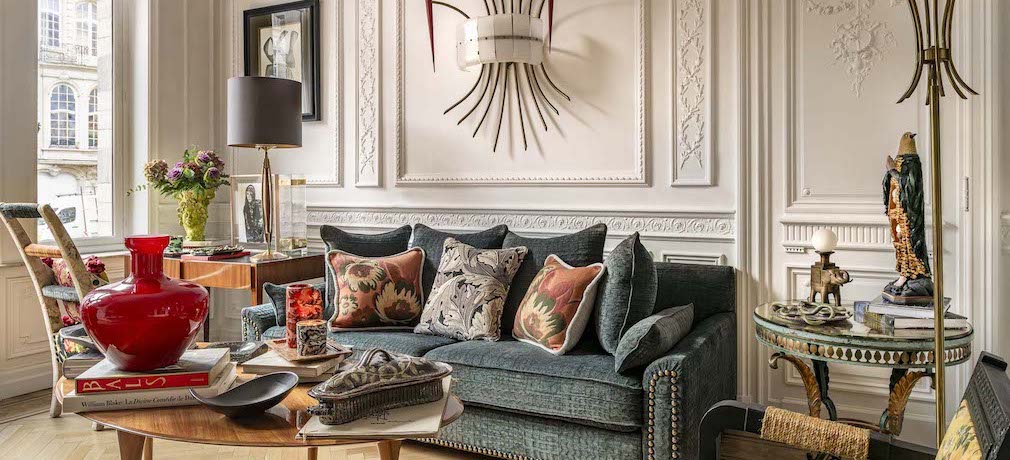
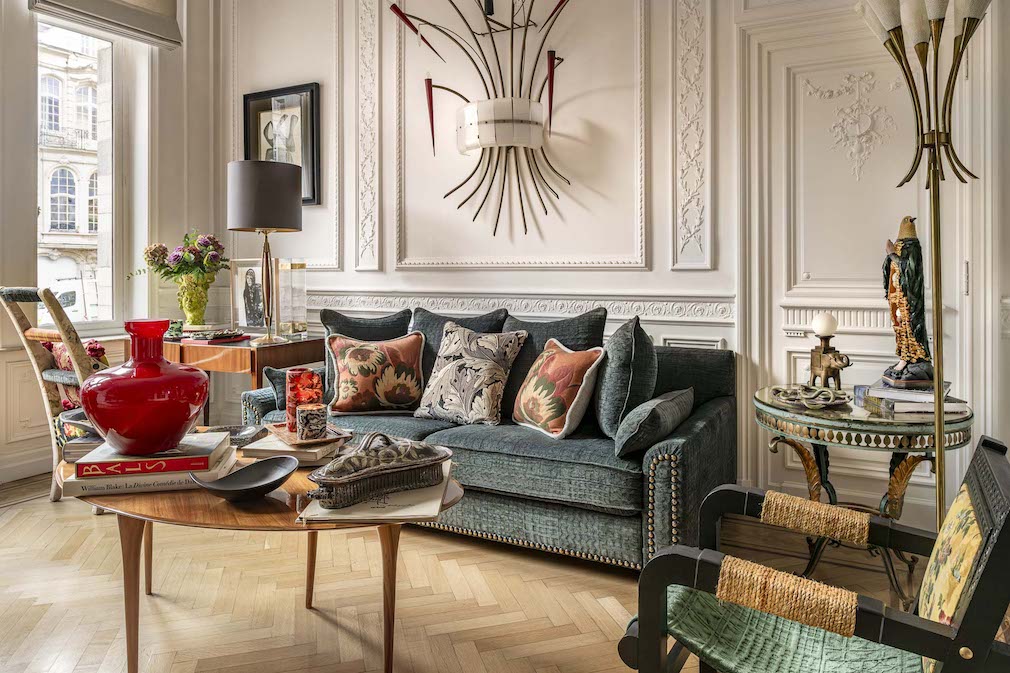

“I like everything Bohemian,” states the graphic, interior and furniture designer Gilles Dewavrin. This is not exactly a surprise from a man who spent summers in 1970s London working for the Lucite-obsessed Baron Alessandro Albrizzi and making picture frames in France for David Hicks, whose love of eclectic interiors drenched in bold patterns and hues knew no bounds. “These people loved color,” he recalls. “It was a Carnaby Street sort of thing.” Not that Dewavrin experienced that epicenter of the mod 1960s Peacock Revolution firsthand, he is quick to slyly point out when asked his age. “I remember reading about it.” Yes, well, let’s move on.
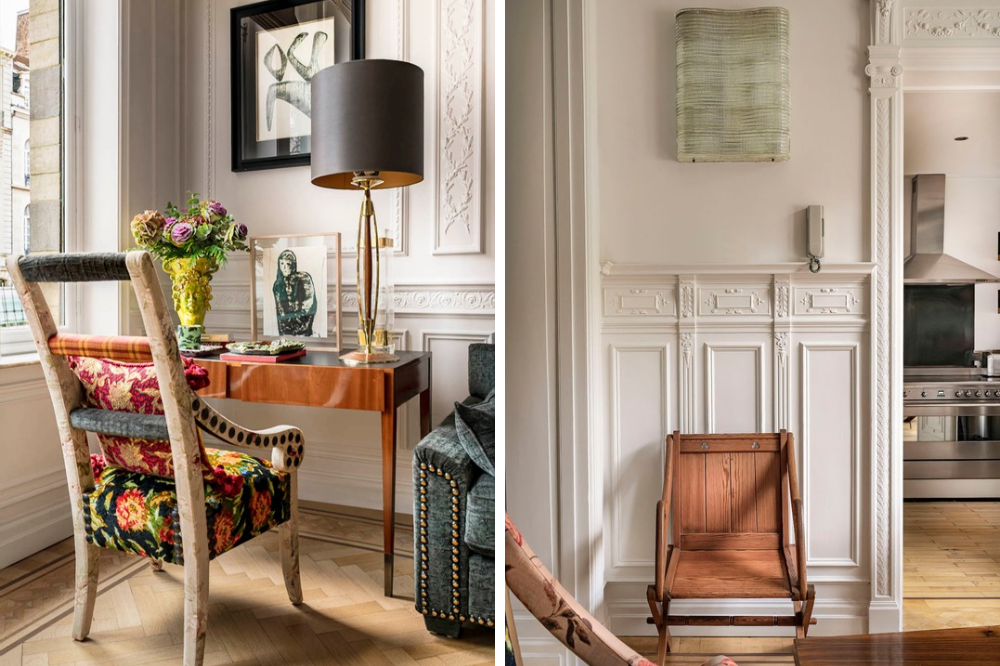

One glance around Dewavrin’s chic Brussels apartment in a building near the Place Georges Brugmann in Ixelles reveals these influences to be alive and well in his unconventional, conversation-generating assemblage of pattern, color and eccentricity. Evident also are his background in fashion (he founded Myrène de Prémonville with the famed French stylist) and perfume (he still sells a line of private-label, scented candles). “I love piling it on,” Dewavrin shares. “Some of this furniture I’ve had for a very long time. I can never get rid of things.”
To be sure, this inability to let beautiful things go has been a lifelong affliction. But abetting it, perhaps, were the years Dewavrin kept a stand in the Sablon, the famed antiques district in Brussels, which he stocked with finds unearthed at the enormous Fiera di Parma in Italy. That business, apparently, fed this designer’s natural acquisitive impulses, especially for mid-20th-century Italian design.
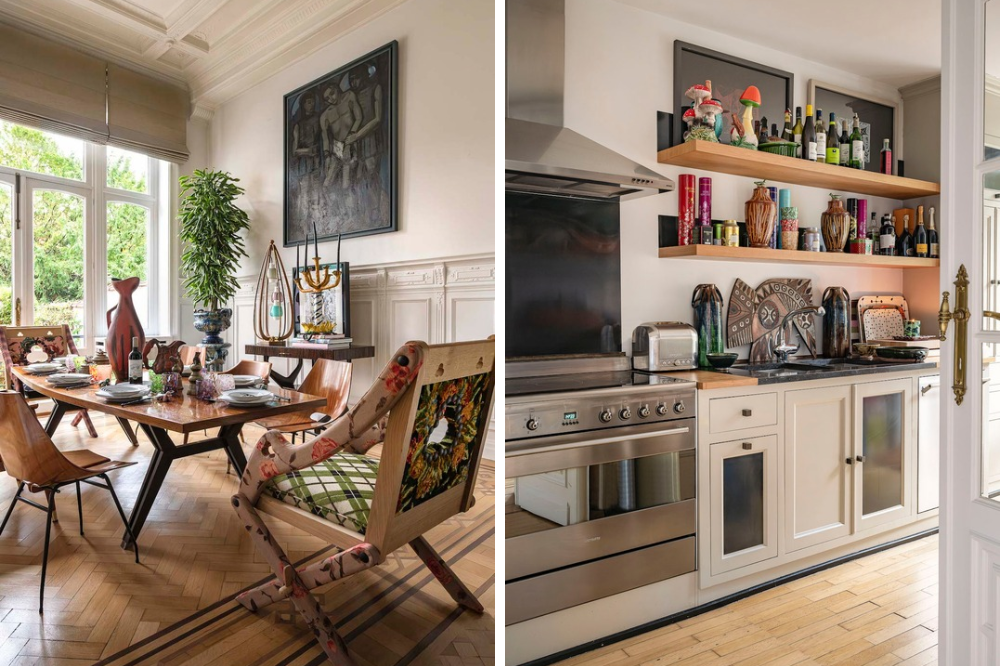
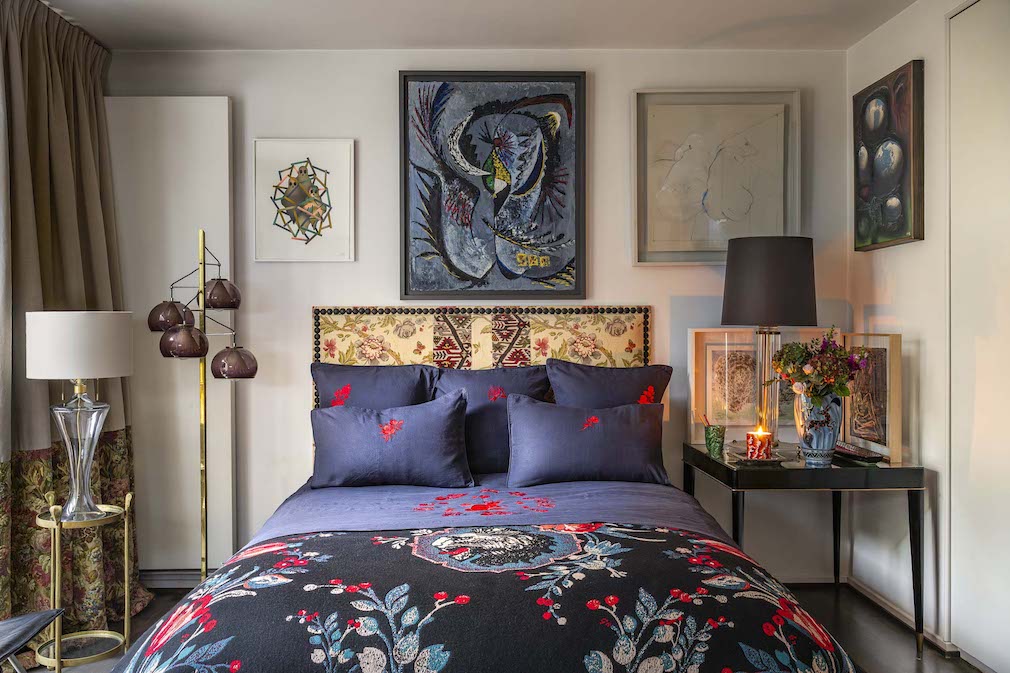
And why should Dewavrin restrain himself, after all, when he mixes eras and styles with such incontestable aplomb? There is his beloved Italian midcentury furniture (he enthuses about a Gio Ponti desk that he refurbished, calling it his “heartthrob,” which he pairs with a midcentury American lamp and his own Grand Voltaire chair accessorized with a Gucci cushion). There are ceramics of every variety, from a green Sicilian vase to a reptilian plate by Belgian artist Caroline Pholien (“I love snakes,” he concedes). A sofa is anchored by a William Morris pillow fabric under a massive late-1960s or early-70s wall light from a hotel. Two Fornasetti-style chairs sit before an elaborate black-and-pink-marble fireplace that features a taxidermy raven. Even his fabric mix feels ebulliently variegated. Exhibit A? His bedroom, which throws into the creative blender Rubelli couture curtains with a Gucci throw and midcentury art by Charles de Wardenier (known, in his day, as WAD).
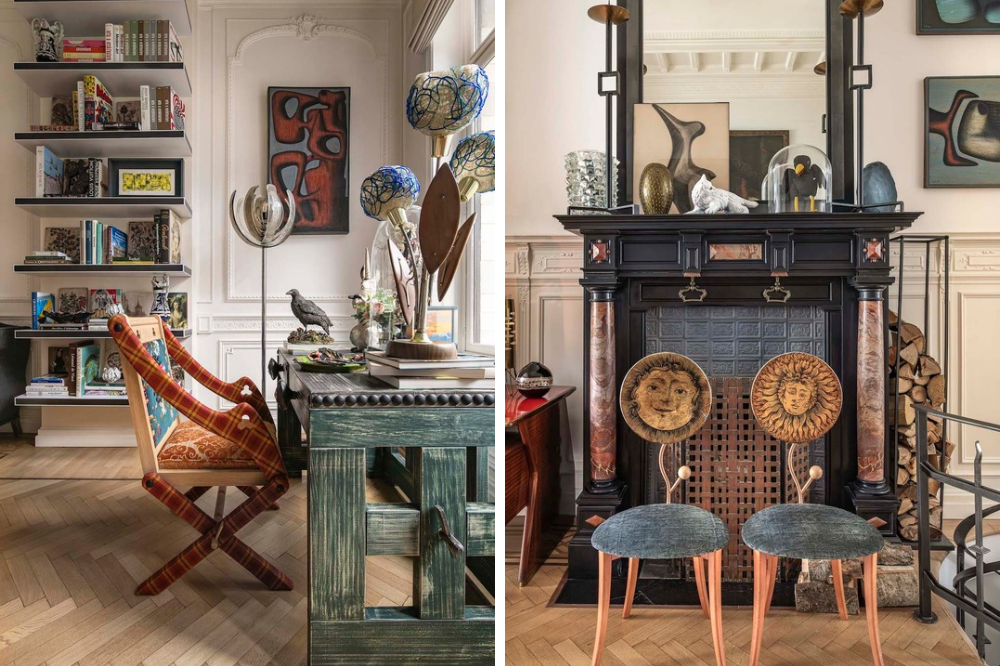
Dewavrin began making his own furniture, which was influenced by the Arts and Crafts Movement — neo-Gothic trefoil decorations, strap arms, etc. — because “I needed something to do in the country,” where he has another home and several dogs.
Proportionally, however, his chairs and desks tend toward the extra-large. “I like big, oversize things in a small house,” he admits. “It feels grander.” Providentially, the early 20th-century building where his two-bedroom duplex garden apartment is located (“Very French, like a hôtel particulier,” he describes) had high ceilings, which gave his furniture and eclectic collections room to breathe.
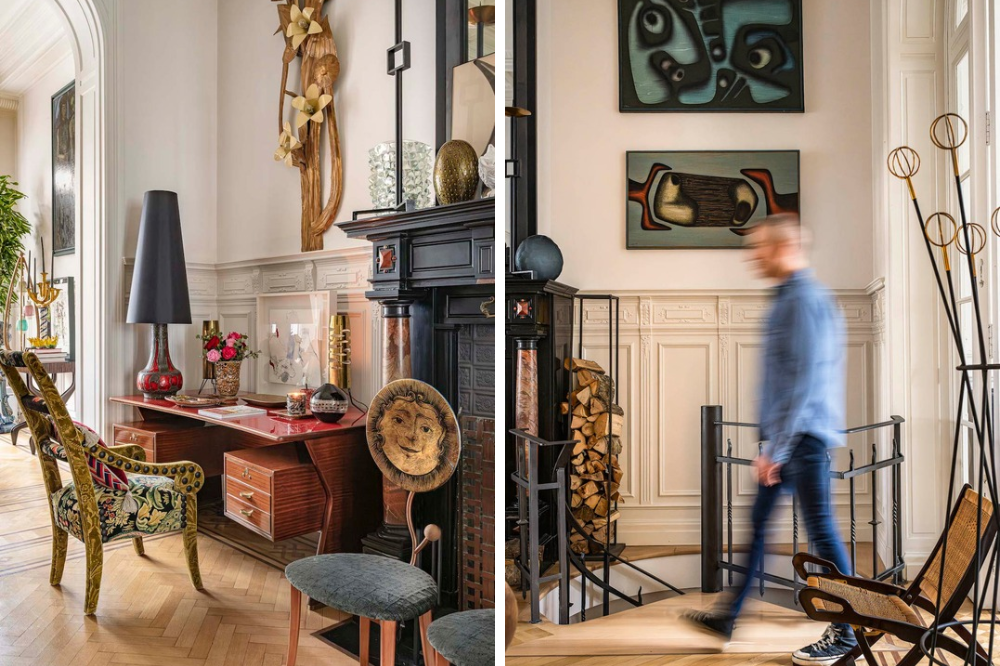
Despite his penchant for maximalism, however, Dewavrin values a judicious approach to design. “If you pile things on, there has to be a kind of equilibre [balance],” he explains. “It can’t be messy. If you overdo it, it can be a bit chichi.” This is one reason he incorporates his own furniture. “These bring back a masculine character,” he believes.
To quote the avant-garde artist Jean Cocteau, “Tact in audacity is knowing how far you can go without going too far.” This is an art Dewavrin has perfected; it is familiar territory for him.
Photography and styling by Claude Smekens.
Like what you see? Get it first with a subscription to aspire design and home magazine.