
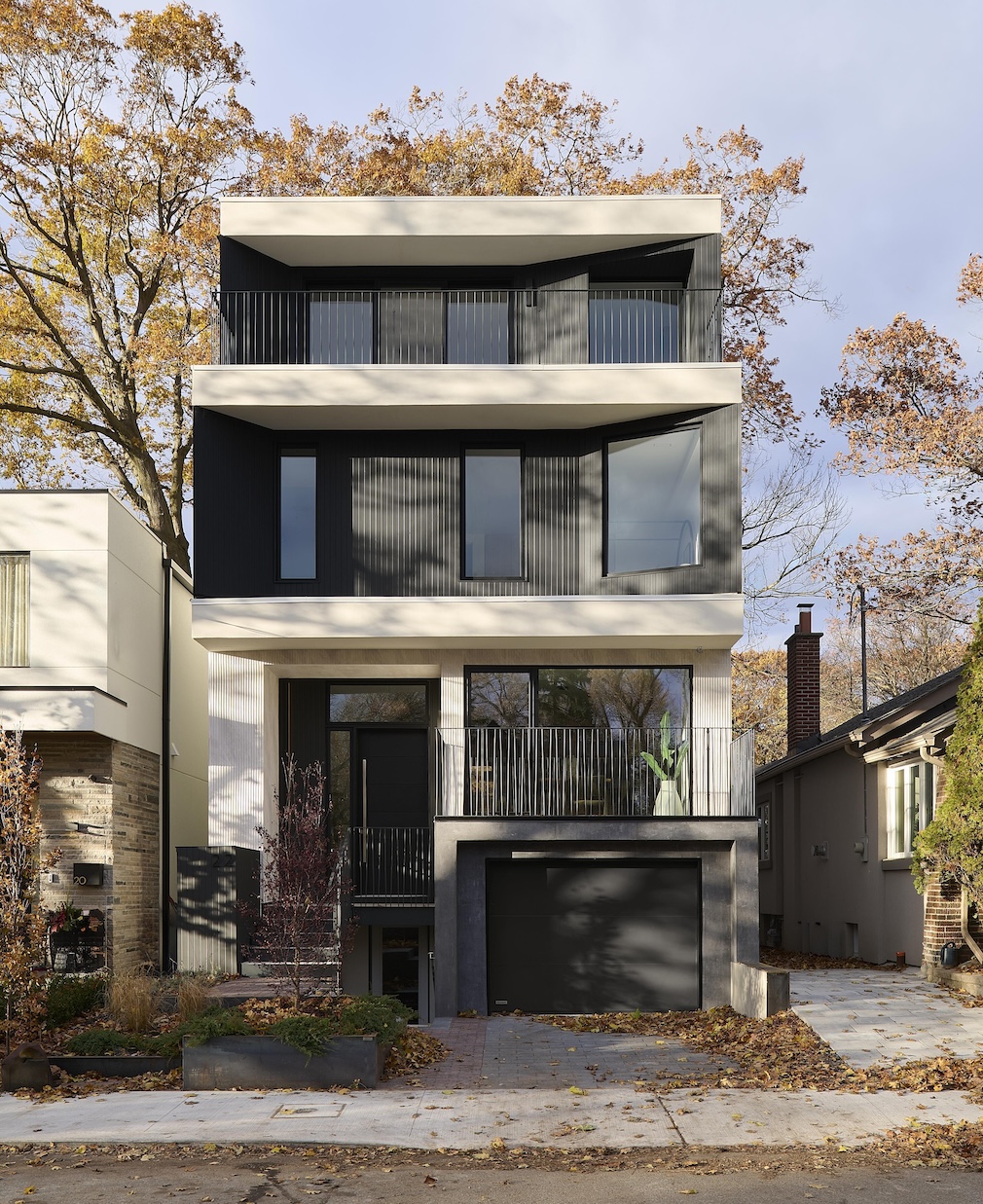
At the edge of the Glen Manor Ravine in Toronto’s Beaches neighborhood, a quiet luxury emerges in the form of this custom home by baukultur/ca. Influenced by Scandinavian clarity and a near-Zen approach to reduction, the home creates an atmosphere of confident stillness, where light, proportion and honest materials work in concert. The result is a refined modern dwelling that feels both grounded and elevated, offering calm sophistication through considered restraint.
Set on a quiet cul-de-sac within a mix of older homes and newer modern builds, the house sits with poise rather than dominance. Angled planes, recessed balconies and a wrapped façade temper the volume, while keeping the architecture unmistakably modern. Fine stucco, black-stained cedar and composite stone form a disciplined exterior palette that is carried indoors through oak flooring, brick tile and muted millwork.
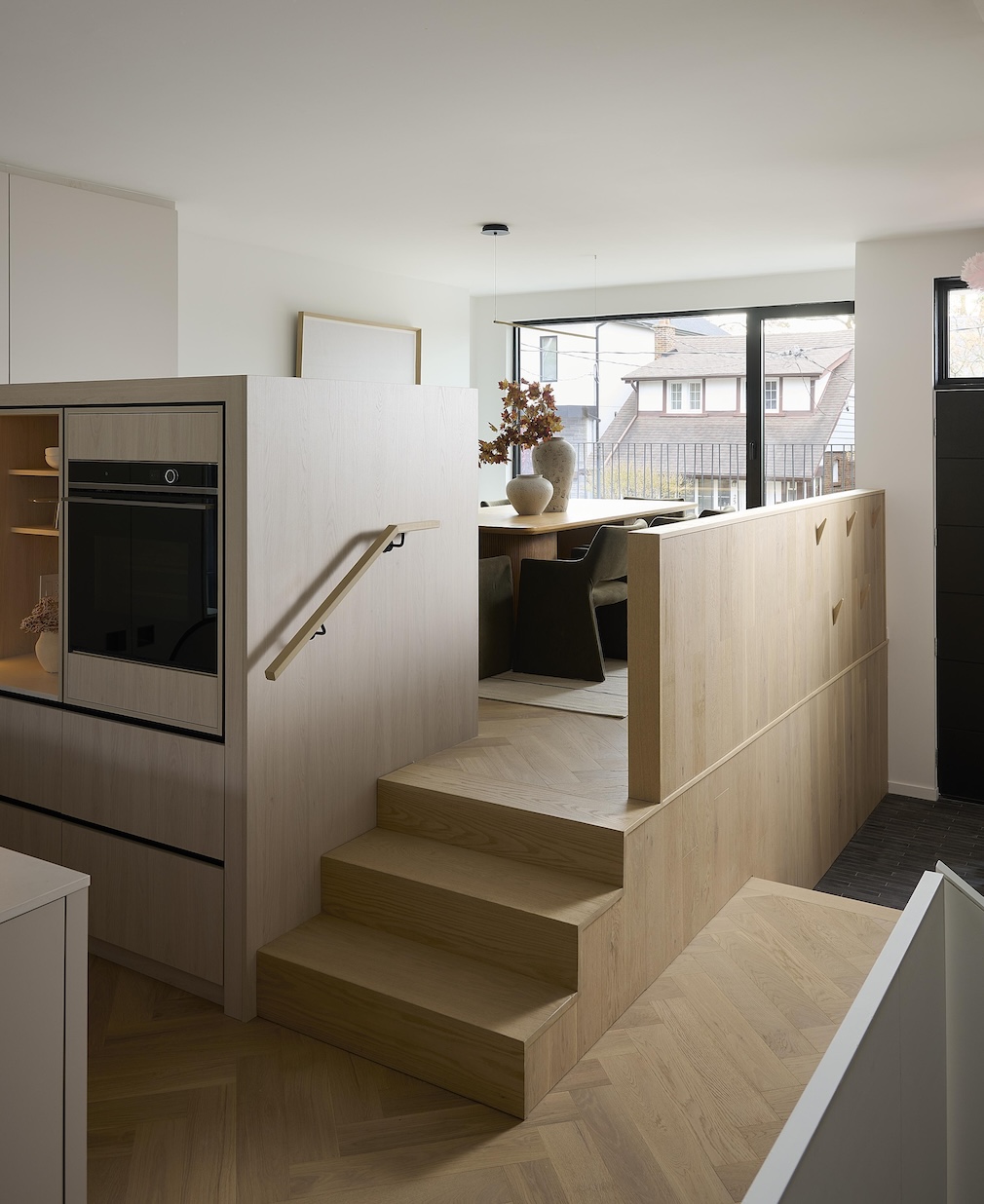
Inside, the main level develops over three subtle shifts in elevation, giving each daily activity a defined place without inserting walls. Openings on three sides, together with generous skylights above the stairs and living area, draw daylight deep into the home. The stair functions as a vertical light register, with its sculptural two-tone guards catching and reflecting light through all four levels.
Entering the foyer — two steps below the main floor — the experience begins with a sense of calm enclosure. Built-ins with a concealed powder room door and a half-wall clad in minimalist oak panels introduce a warm, composed palette. Slim black brick underfoot sets a strong base, while the oversized UMAGE pendant floats above like a soft cloud.
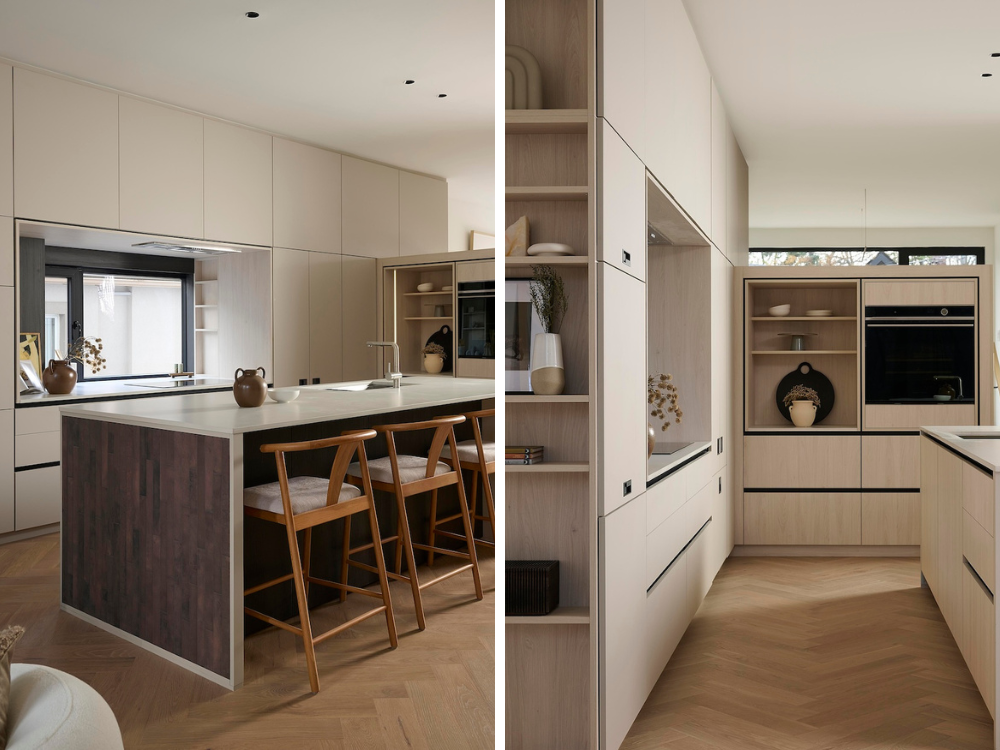
Traveling up two steps into the center of the home, the space is defined on one side by the stairwell, and on the other by the kitchen with its generous island finished in Caesarstone concrete. Light grey and whitewashed oak cabinetry with black detailing give the kitchen a warm, quiet presence, while the island’s red-toned brick end gables introduce a subtle richness.
The millwork naturally organizes the main floor into three settings – cooking, living, and dining — allowing the plan to flow fully open, while giving each setting its own sense of privacy and belonging. The kitchen’s prominent window, used intentionally in place of a backsplash, frames natural light and an unexpected sense of depth as part of the experience.
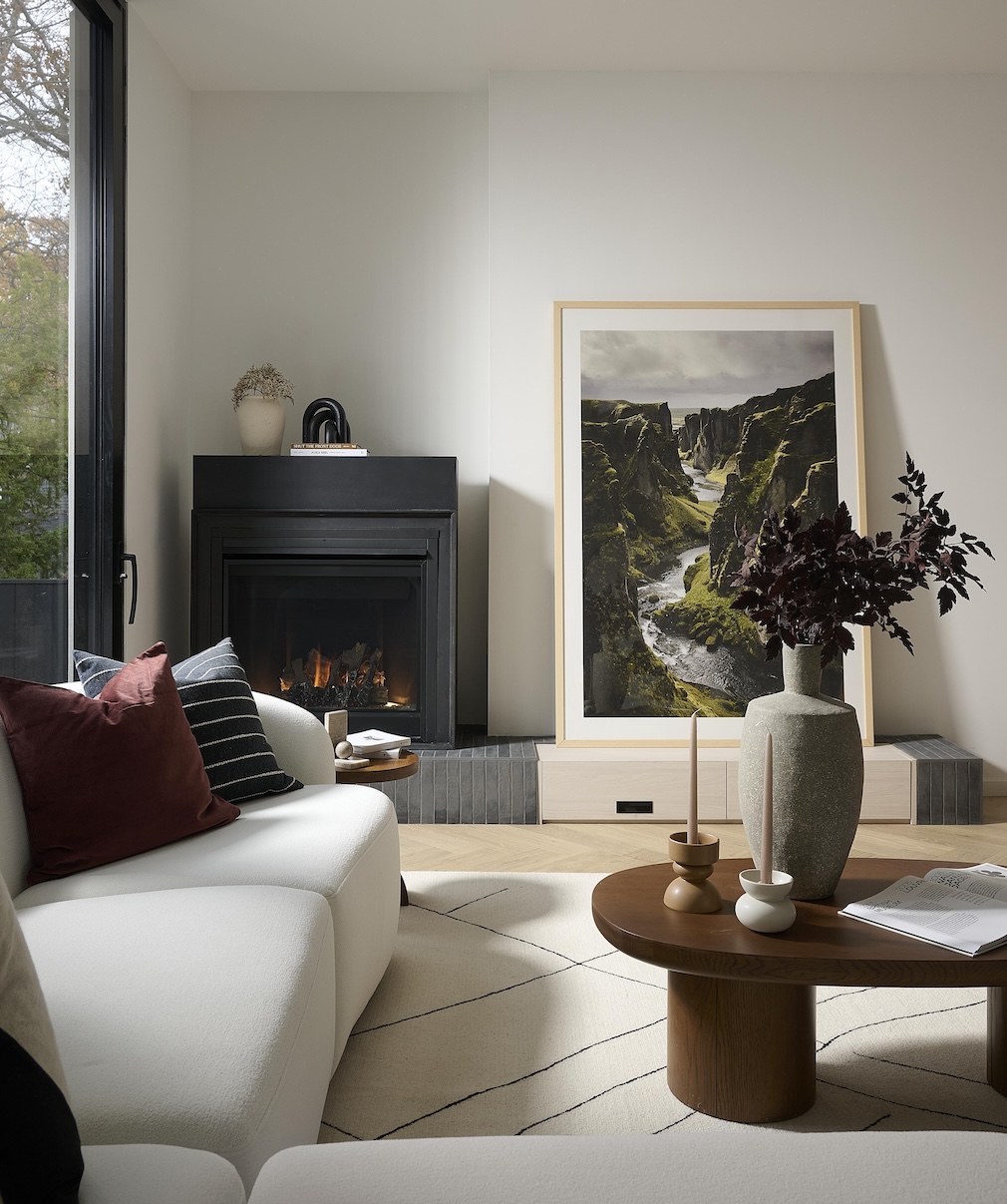
In the back of the home, the living area opens to the outdoors through two precise full-height openings. A generous sliding door connects to the deck and yard, while a slender adjacent aperture reinforces the visual extension to the garden. A freestanding black fireplace on a black-brick and white-oak sideboard, along with a built-in bar on the opposite wall, completes the room’s quiet sense of comfort.
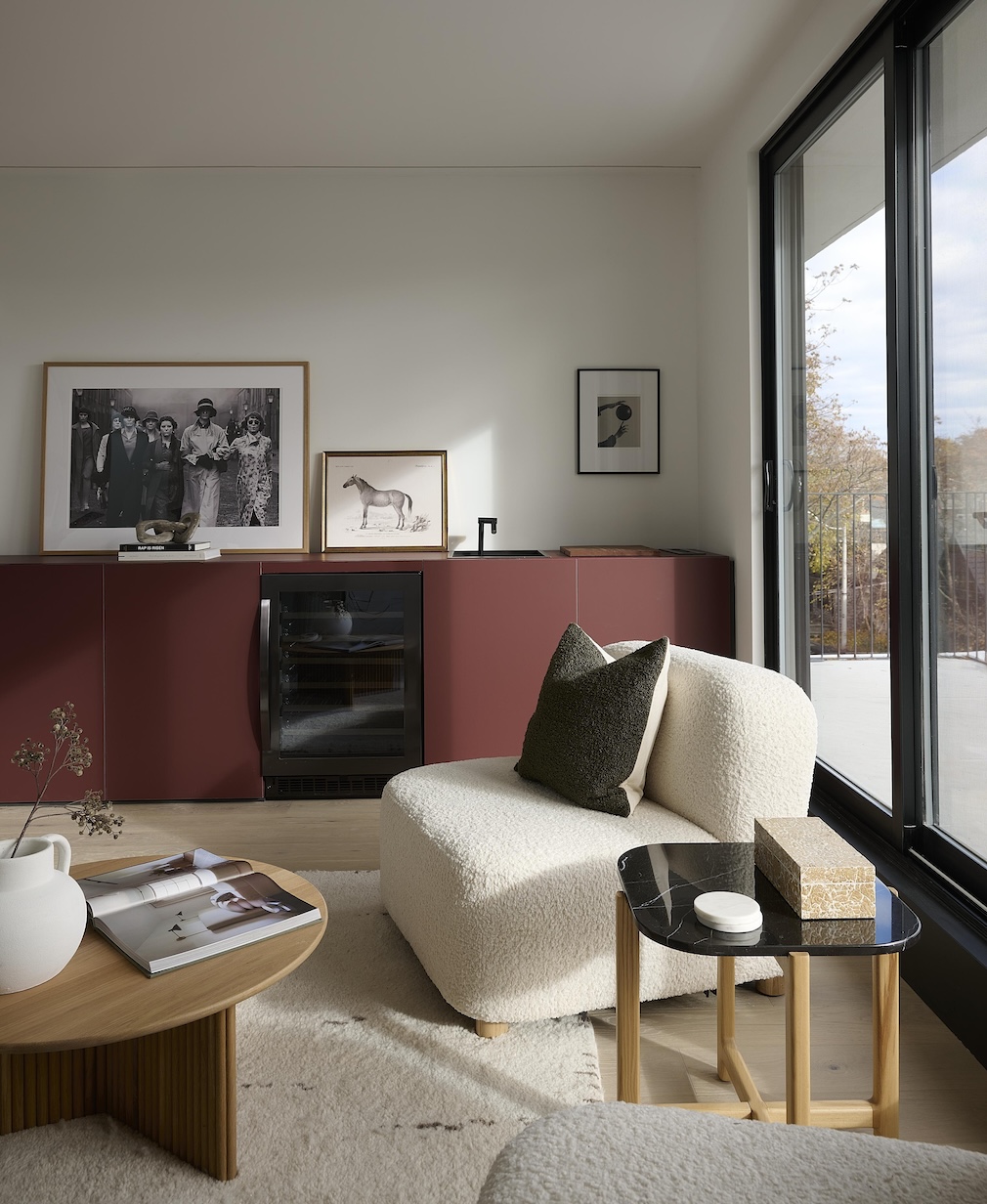
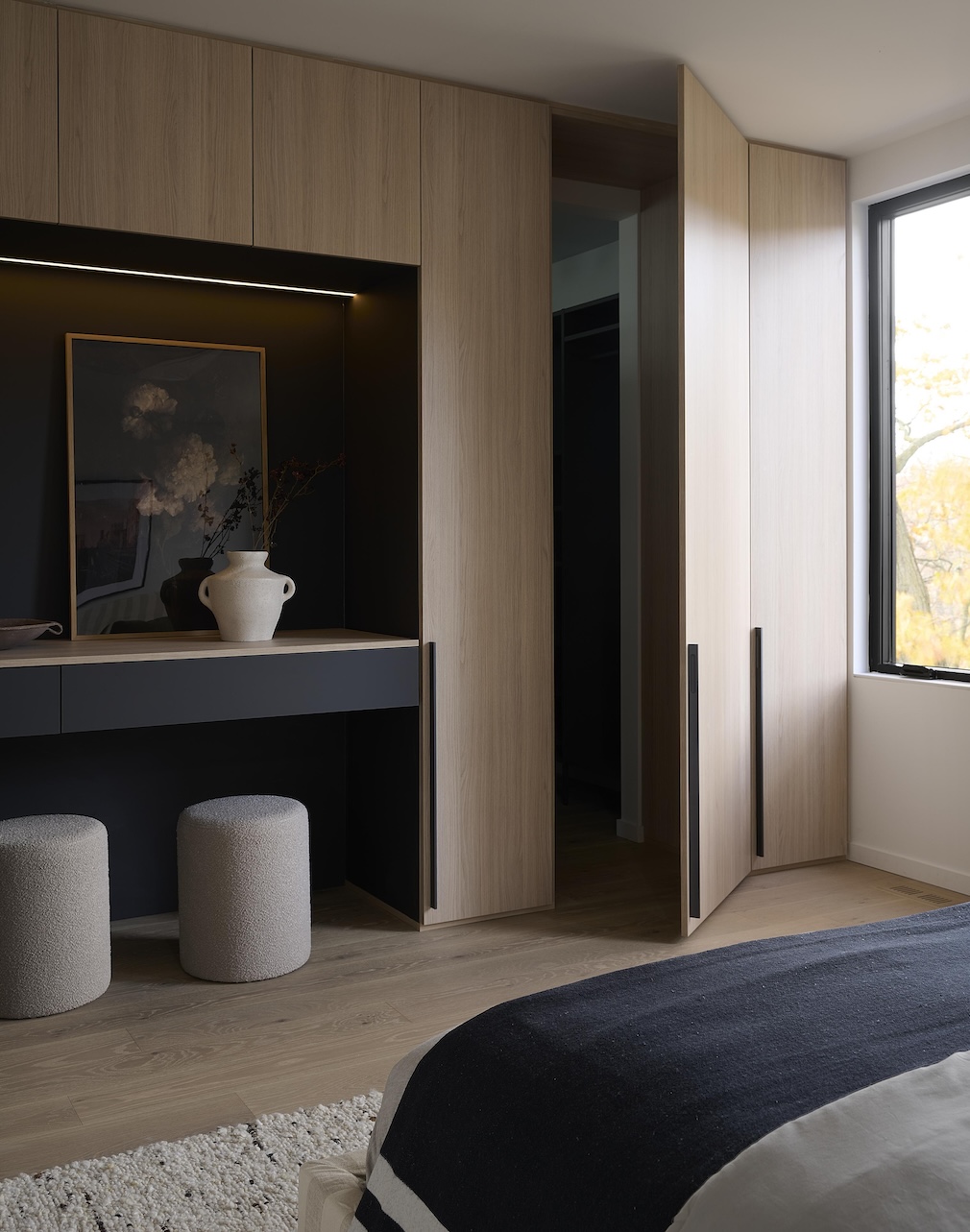
The second run of oak waterfall stairs with a two-tone guard leads to the principal suite’s sitting room, where a glass wall opens to the roof deck and the tree canopy beyond. A deep burgundy bar anchors the room, balancing the expansive outdoor views that stretch over the tree canopy to Lake Ontario in the distance. The principal bedroom uses windows on two sides to frame the surrounding treetops. A full wall of built-ins in quarter-cut oak and matte graphite includes a wardrobe, a vanity and a concealed door to a flexible room – ideal for a hidden office or extended wardrobe.
In Glen Manor Haus, quiet luxury is not an aesthetic, but an experience, crafted through calm spatial order, the precise play of light and shadow, and tactile authenticity. Craftsmanship is measured by precision; richness is found in how materials meet, how daylight shifts across surfaces, and how the home quietly supports everyday life. It is luxury as ease, refinement through restraint, and beauty grounded in stillness.
Photography by Alex Lukey.
Like what you see? Get it first with a subscription to aspire design and home magazine.