

When most people look in a mirror, they gaze endlessly into its reflection. But, for multi-hyphenate artist Gregory Nangle, he’s focused on the fixture itself. The creative has used églomisé—a process in which decorative accents and gilding are applied to the back of glass in order to create a well-appointed mirror—since 2001. Over twenty years later, Nangle looks to the storied practice once again for his series, Fading Mirrors.

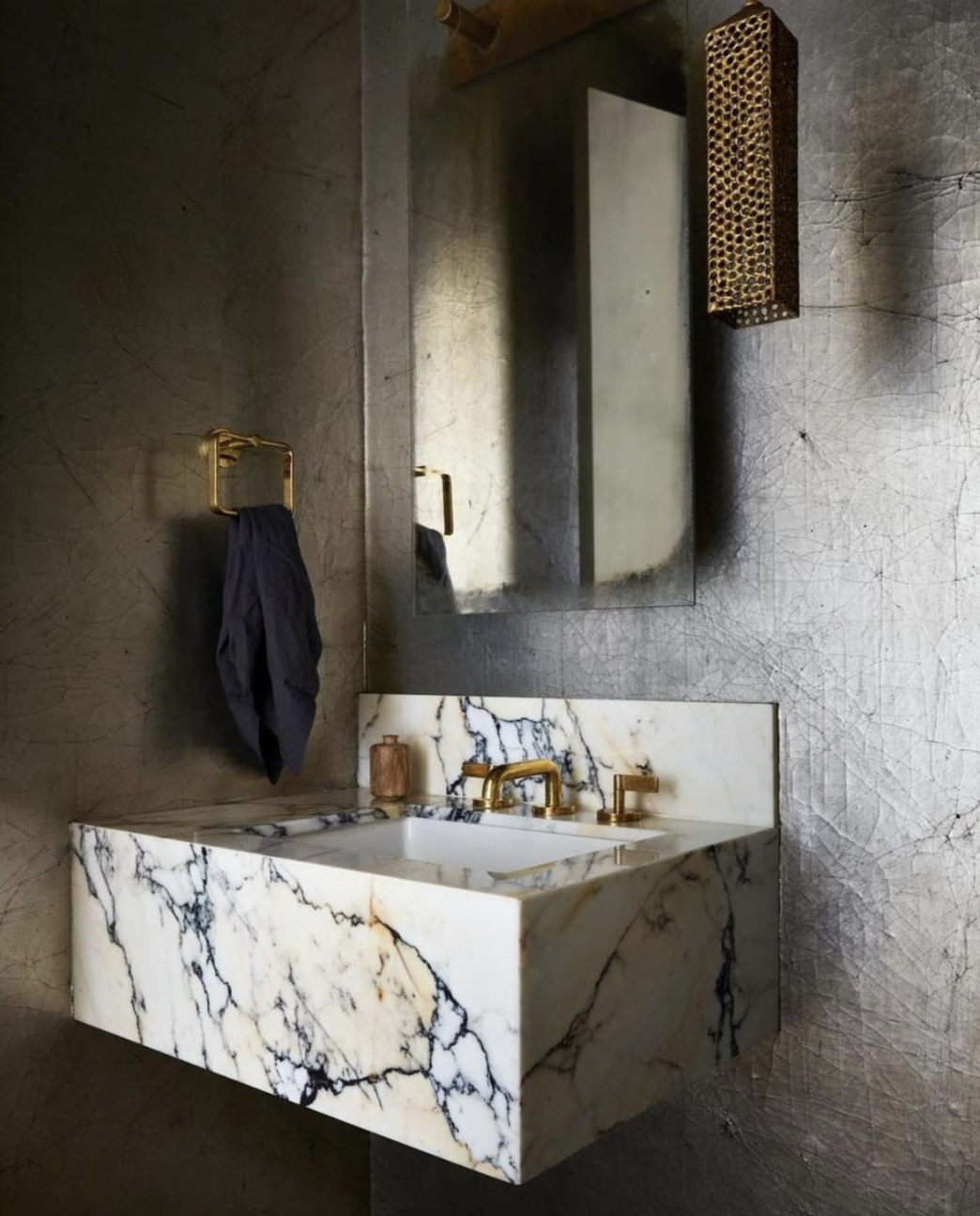
With a fading texture around this rectangular option, Gregory Nangle’s mirror shines in this Northern California project by Chromas. Photo by Stephen Kent Johnson.
In this series, Nangle utilizes his “language of hardware and glass” to examine the duality of embellished minimalism. Though the two may seem at odds, Nangle’s series of mixed media mirrors proves that opposites can both attract and create a dynamic, thought-provoking tension.
“As a sculptor with a heavy background in metal and glass, I naturally wanted to show both materials in a new way working together,” Nangle explains. “As a painter, I also wanted to use my lifelong technical training in oil painting in a new way through the lens of glass as a material.”

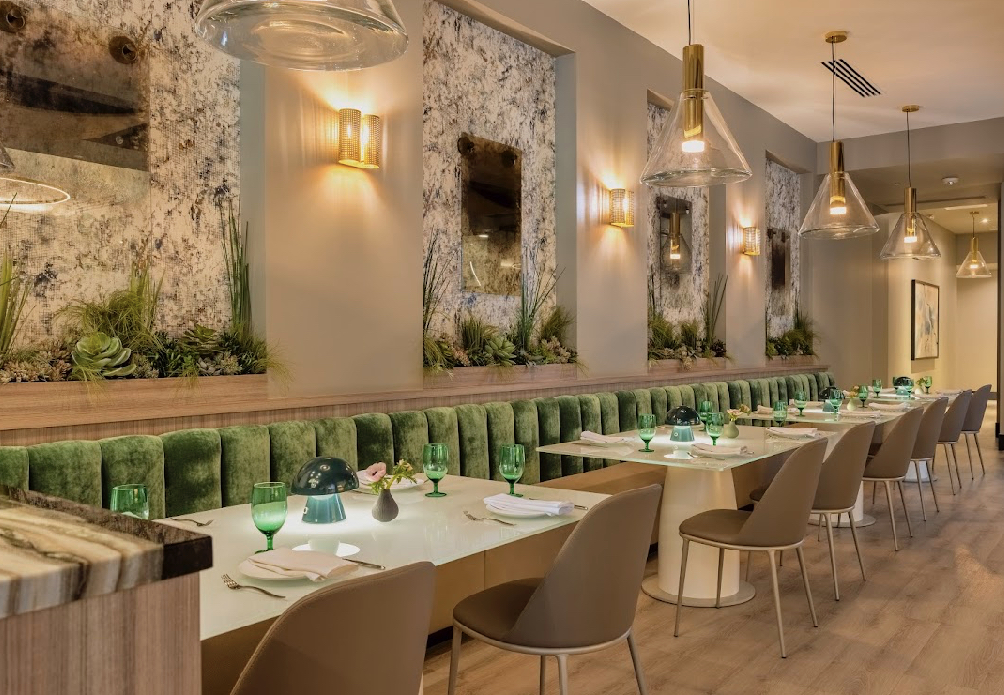
Why settle for one mirror when you can enjoy a few? In this Detroit-based restaurant, Base Designs and Oliver Max Inc. reveled in repetition with a row of similar styles. Photo by Haden Scott.
To achieve the slightly distressed look, Nangle applies a mirroring chemical to a perfectly cast rectangular glass—a move that’s akin to abstract expressionists. From there, glass and bronze’s geometric forms interact with the natural flow of liquid silver to create a piece that sits squarely between enduring elegance and industrial brutalism. (A cross between a painting and a traditional mirror, if you will.)
Nangle has been committed to simultaneously fine-tuning his craft all while making room for innovation—and his Fading Mirrors series is no exception.

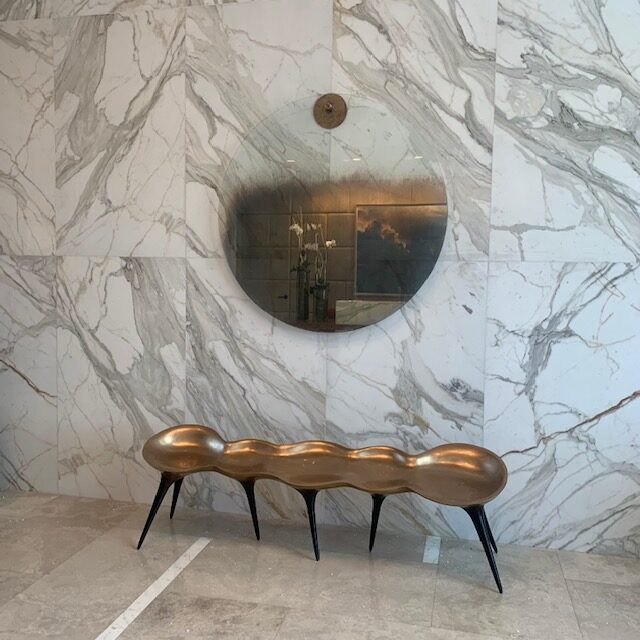
Designer John Rawlins highlighted the mirror’s stark contrast by placing it on a smooth, marble wall. Photo courtesy of John Rawlins.
“The unorthodox and experimental patinas used on the brackets and hardware are each unique and change with each season and project,” he explains. “While older styles are usually available for commission, new finishes and unique glass treatments are always at the forefront of the next piece.”

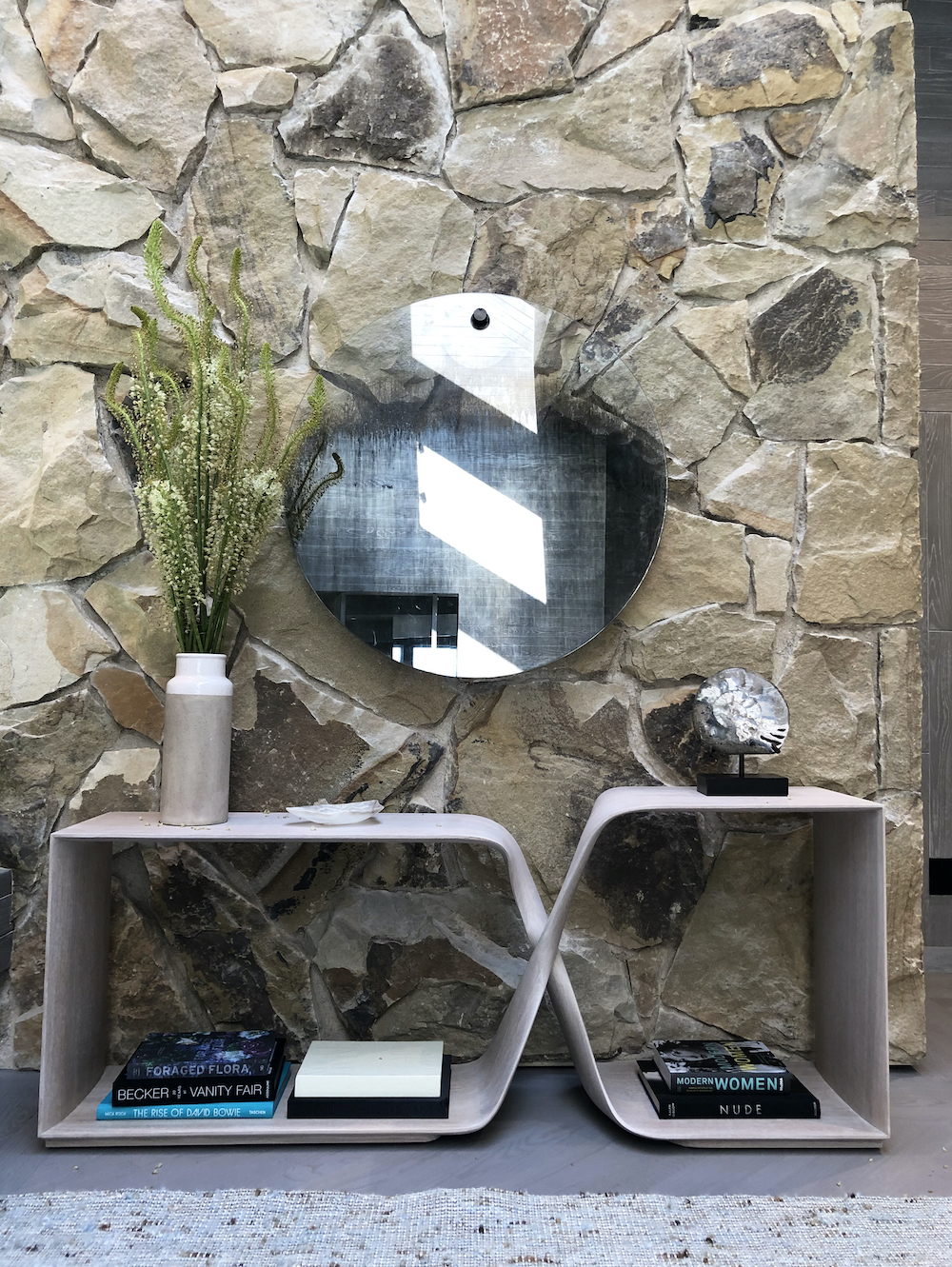
Nangle’s Fading Mirror takes on a translucent-like quality when paired with a stone wall, as seen in this space by New York design firm Wesley Moon. Photo by William Waldron.
Nangle’s Fading Mirrors series is available in a handful of sizes and shapes such as rectangles, squares, circles, and hexagons. Since each mirror is handmade in Nangle’s Philadelphia-based studio, no two mirrors look alike, which means they can confidently stand on their own or be paired with other styles. But, regardless of the layout, Nangle’s series makes a case for stopping and taking a closer look at the looking glass.
For more information, check out Gregory Nangle’s Fading Mirrors series at Wexler Gallery or visit one of the gallery’s locations in Philadelphia or New York.
Like what you see? Get it first with a subscription to aspire design and home magazine.