



There is a concept in winemaking called terroir, the idea that a wine’s character is inseparable from the land that produced it — the climate, the soil, the stones beneath the vines. Tamper with it too aggressively, and you risk losing the thing that made it worth drinking in the first place.
Interior designer Hélène Roux of Les Montagnardes appears to have taken this very notion to heart. When she and her partner came upon a farmhouse in Goult — a village of golden walls and cathedral calm tucked into the hills of the Luberon — that instinct was immediate. The mas dates from 1860, and what it has is presence — a stone shell worn smooth by time, a courtyard shaded by a centennial linden tree and the sort of stubborn, unshowy beauty that Provence does better than almost anywhere else. What it did not need was a redesign, but rather someone patient enough to listen. Roux, who designed the house for herself and her family, speaks of the project less as a creative endeavor than as an act of stewardship. “We wanted to preserve the spirit of the place,” she describes. “We didn’t want to undertake a major transformation.”


Like the winemaker who works minimally in the cellar, her interventions are mostly invisible. The exterior of the house was barely touched. Original stone ceilings were left entirely intact. The approach is one of subtraction rather than addition, creating something that feels at once deeply rooted and effortlessly refined.
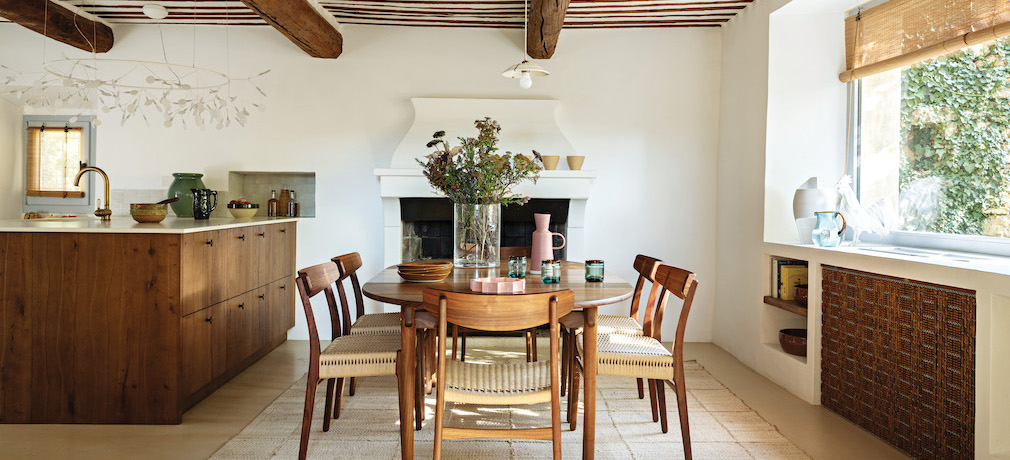
The interiors open with a kitchen and dining room of uncommon serenity. A polished concrete floor in a color calibrated to match the existing Ménerbes stone — blended so precisely that the join between old and new nearly disappears — establishes the room’s soft yet radical logic. “The difference between the materials is now almost invisible because the colors are so close,” Roux explains, “creating this sense of unity.”

Furniture and curtain frames share a single warm wood tone, repeating the note without laboring it, the way a well-made Côtes du Rhône returns to the same red-fruited chord across each sip. Nothing crowds the space. Even the air-conditioning units have been discreetly buried beneath window ledges in modest wooden blocks — that almost-invisible accommodation that speaks to Roux’s refusal of anything too loud or domineering. “We didn’t want anything ostentatious,” she states plainly. “The building was a farmhouse, and we wanted to maintain that simplicity.”

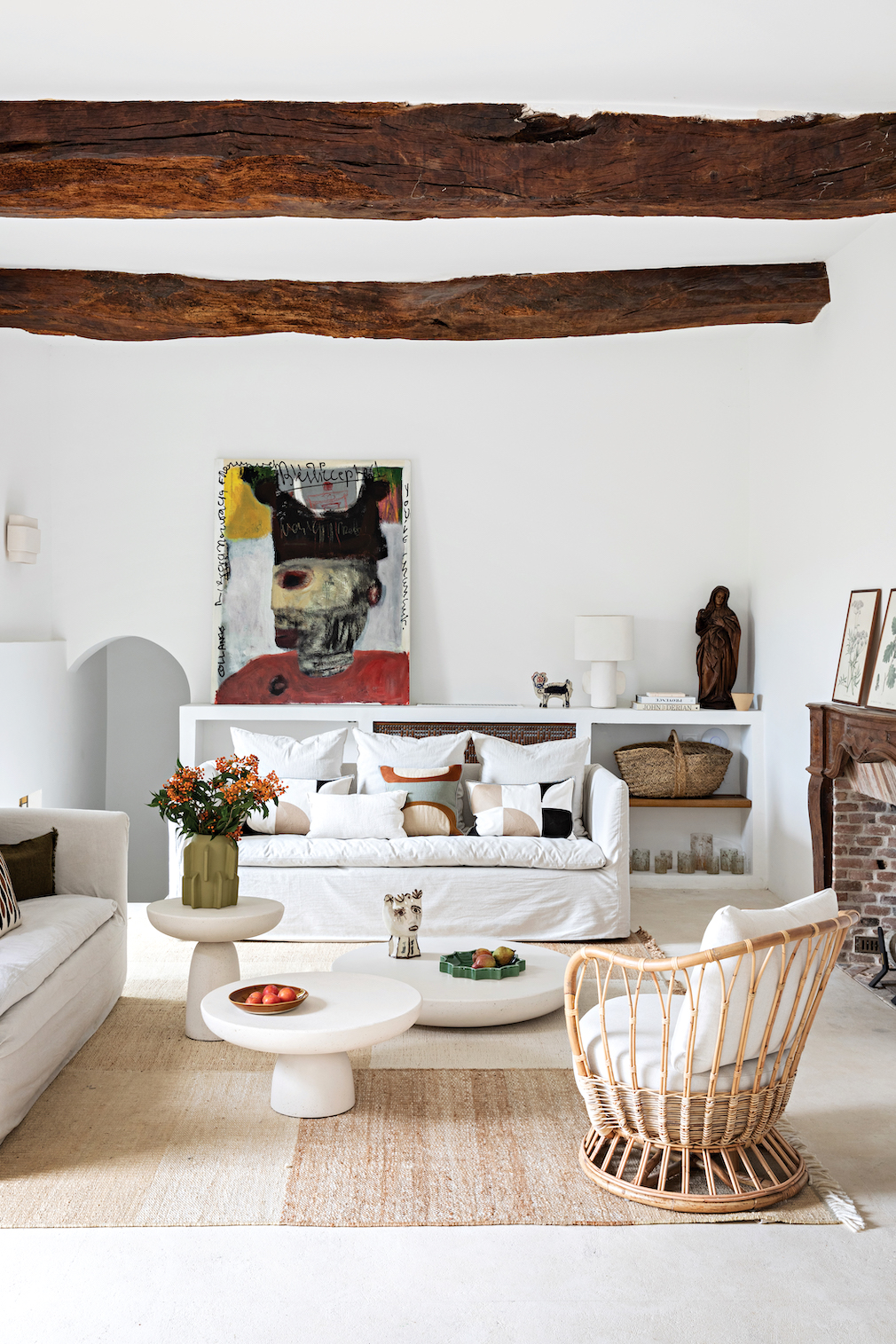
Whitewashed walls appear throughout, a practical choice born of the darkness inherent in old houses, and one that transforms Provençal light into the principal design element. In the Luberon, that light has an almost golden opacity in the afternoons, thick and warm as pressing-season air, and Roux lets it do the decorating. Works by artists Nathalie Collange and Alexandra Ferdinande occur throughout, positioned, Roux admits, somewhat intuitively. “They were placed as they came,” she says with a smile, “and they will likely move over time, depending on my moods and new acquisitions.” There is a pleasing looseness to this, the same spirit you find in a natural wine: alive, unpredictable, resisting the urge to be pinned down.

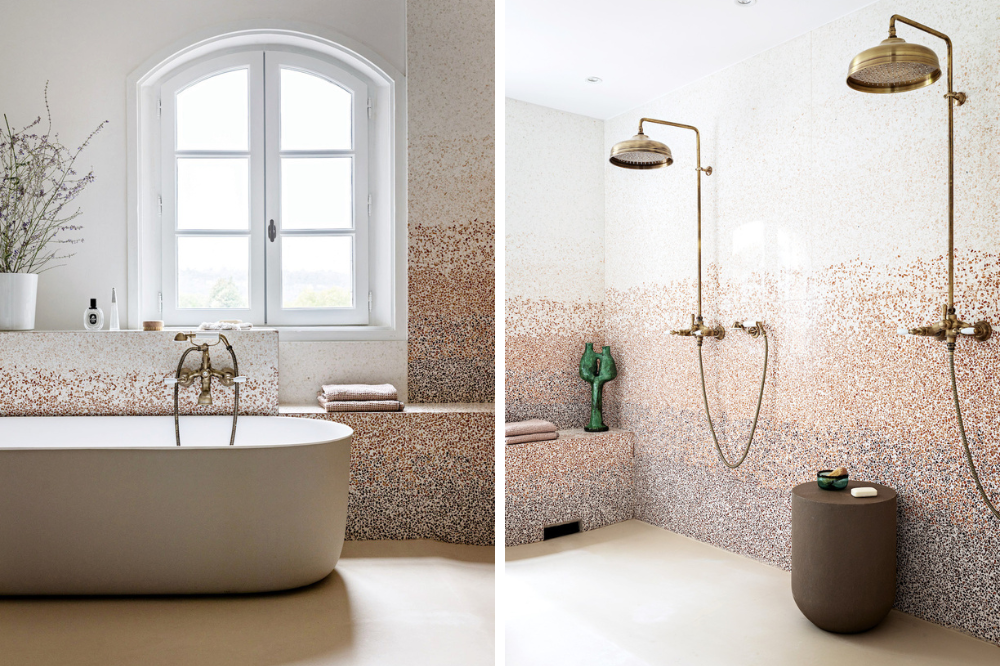
The bedrooms each occupy their own register. Some are intimate and layered, swathed in forest tones with pendant basket lamps; others are airy and almost architectural, with the farmhouse’s original beams running overhead like the ribs of something ancient. The green room — carved from a former garage beside the pool — is the boldest departure. “We chose green because it faces the outdoors,” Roux explains. “I wanted to create a feeling of inside- outside.” The bathrooms are spectacular — one’s terrazzo echoes the ochre of nearby Roussillon, its warm, mineral palette like the iron-rich clays of the hillsides themselves. Others are clad in beige- pink Zellige tiles with large stoneware basins, materials that feel simultaneously elemental and luxurious, as though sourced from the land rather than a showroom. Which, in spirit, they were.
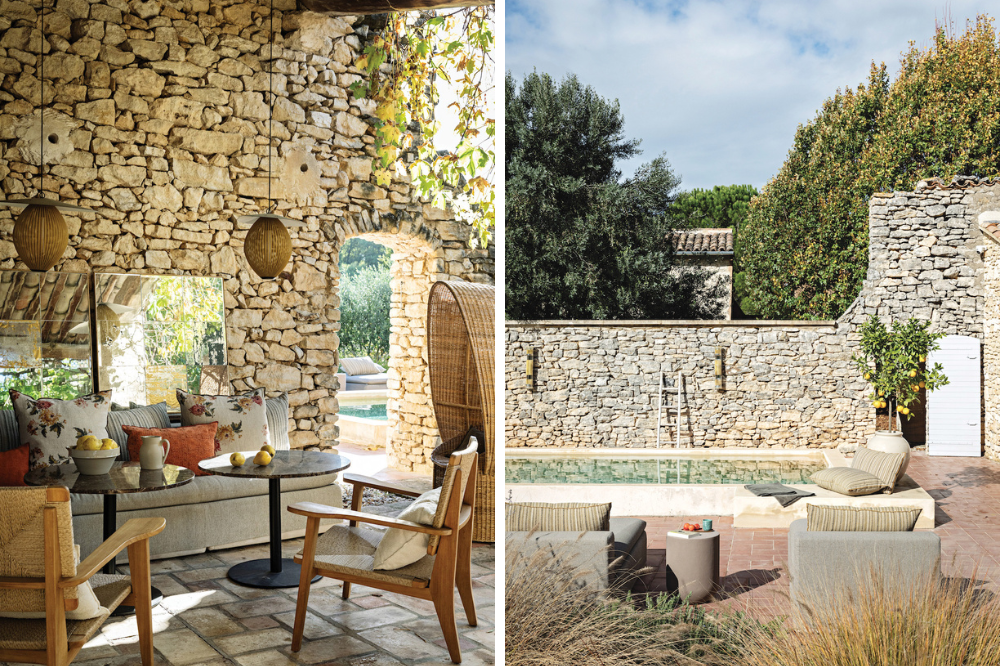

Outside, the transition from interior to courtyard was made effortless by extending the existing tomette tile flooring to the pool. “The circulation felt obvious,” Roux notes, and it shows. Olive trees and lavender were planted where there had been neither. The linden tree, ancient and unhurried, presides over evening aperitifs and family dinners, the gentle ritual of summer in the south of France. “Some enjoy a lazy day,” Roux describes of summers here.
When asked what advice she would offer someone embarking on a similar renovation — a rural French property, a stone house with stories already written into its walls — Roux did not hesitate: Respect the spirit of the place. It is the same counsel a great vigneron might offer a young winemaker handed a storied parcel of old vines. The terroir is already there; your job is not to impose, but to get out of the way and let the place become, once again, exactly what it was always meant to be.
Photography by Yann Deret.
Like what you see? Get it first with a subscription to aspire design and home magazine.