

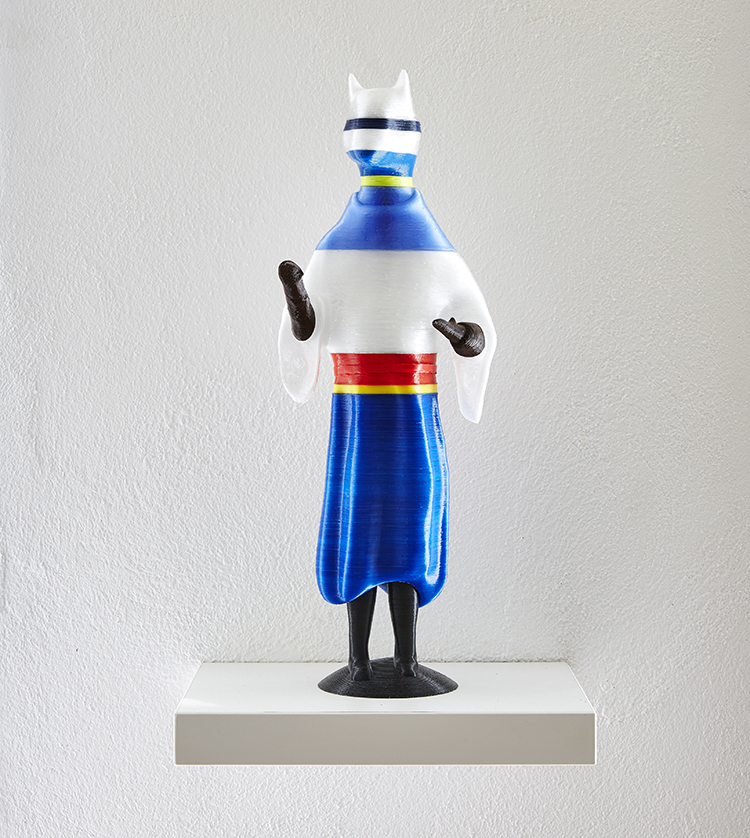

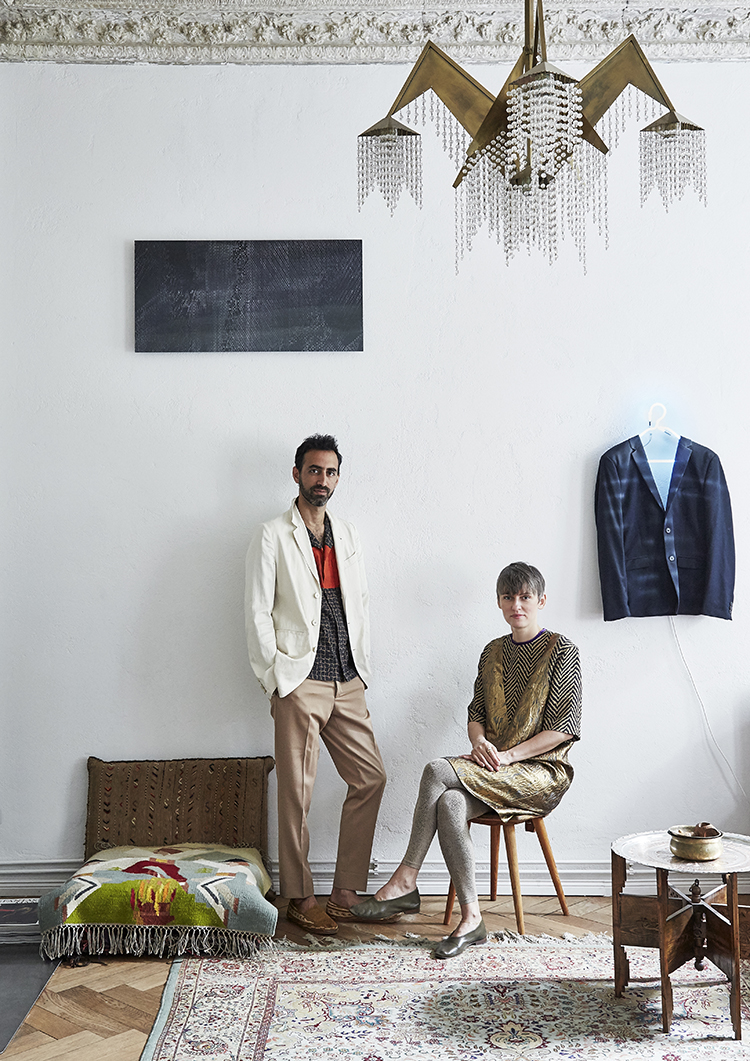

Finding this apartment was a turning point for Kasia Korczak and Payam Sharifi, co-founders of the art collective Slavs and Tatars. Since forming in 2006, members of the collective had practiced apart. Now it was time to come together.
Sharifi is an American-Iranian writer, researcher and artist from Texas who has lived and worked in London, New York, Paris, Moscow and Tehran. Kasia, originally from Łódz, in Central Poland, has lived, worked and studied in London, Arnhem and Brussels. “It was the first time we were both in the same city as a collective, so it was the first time we had a home and a studio,” notes Sharifi.
They chose Berlin as their base. Slavs and Tatars is a research-based artistic practice, concentrating on the region between the former Berlin Wall and the Great Wall of China. Berlin Moabit is situated slightly north of the city center, near Tiergarten and the Reichstag. It was in the former West Berlin, but has working-class roots and was among the last neighborhoods to gentrify. “It’s a microcosm of the whole of Berlin: Most of the city is pretty communitarian, but here you have Germans, Turks, Africans, Arabs and Eastern Europeans all within half a square kilometer,” observes Sharifi.
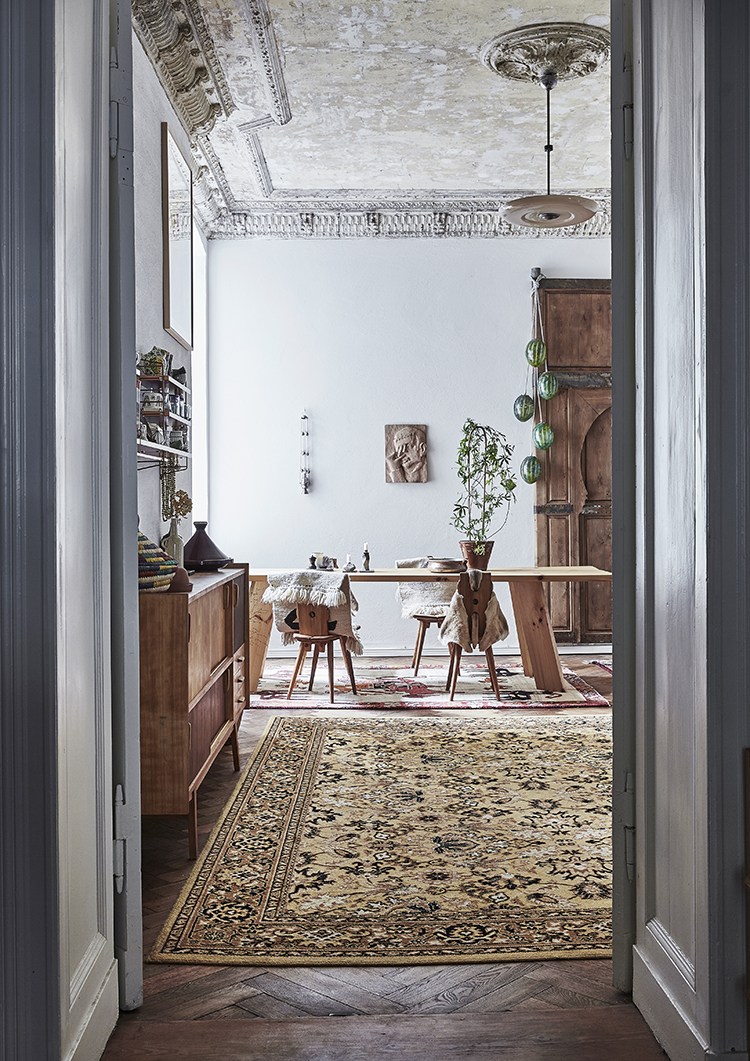
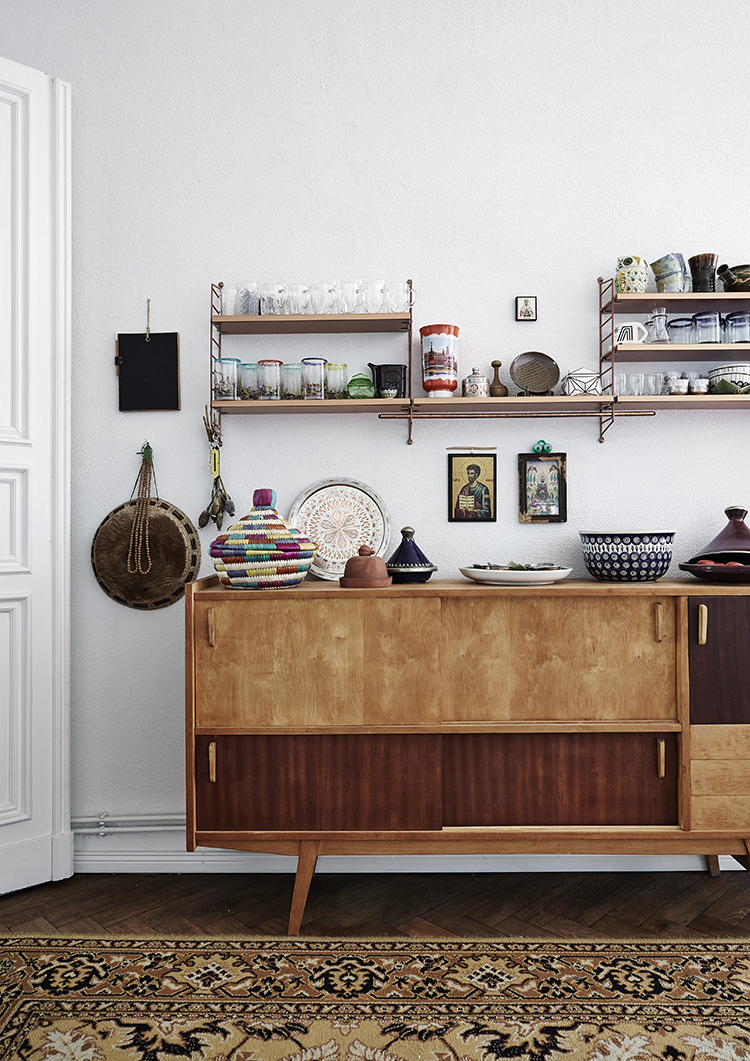
The working-class roots of the area made the features of the apartment even more exciting. “It had many original materials, and really extensive molding on the ceilings,” explains their architect Marc Benjamin Drewes, who worked in collaboration with Berlin-based architect Schneideroelsen.
The 19th-century Gründerzeit origins of the building appealed to Korczak and Sharifi in terms of their artistic practice, too. They formed Slavs and Tatars to envision an alternative idea of modernity that innovates within a tradition.
“Of course, modernity has made ceilings blank slates,” continues Sharifi. “But until the turn of the 20th century, people around the world invested their wealth in their ceilings.” He found the effect of the ornate “pre-modern ceiling, where you can see a relative amount of wealth for a working-class neighborhood” intriguing, and he and Korczak saw its potential to allow their lives and artistic practice to dovetail.
The renovation sought to bring out the apartment’s inherent qualities. “The task was not to destroy anything,” informs Drewes. A lot of time and effort went into painstakingly shaving off the layers of paint by hand, uncovering evidence of the ceiling’s figurative frescoes. “We decided to just leave it like it is, and not paint over it.” “Now you have this really rich texture of the ceiling that defines the room.”
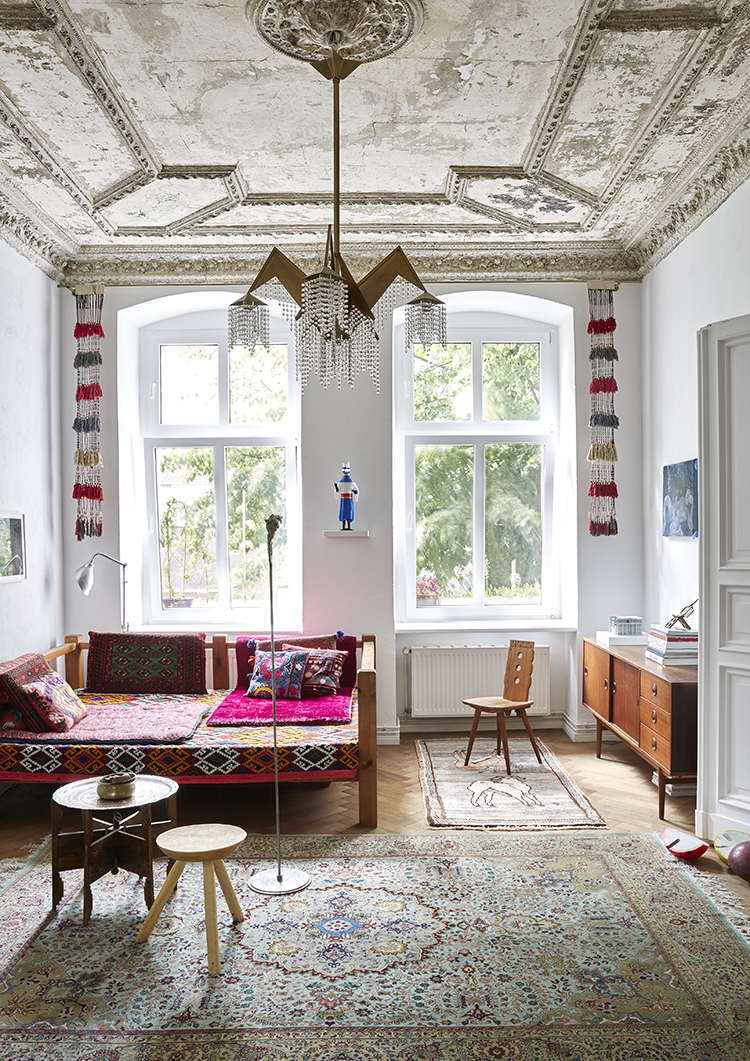
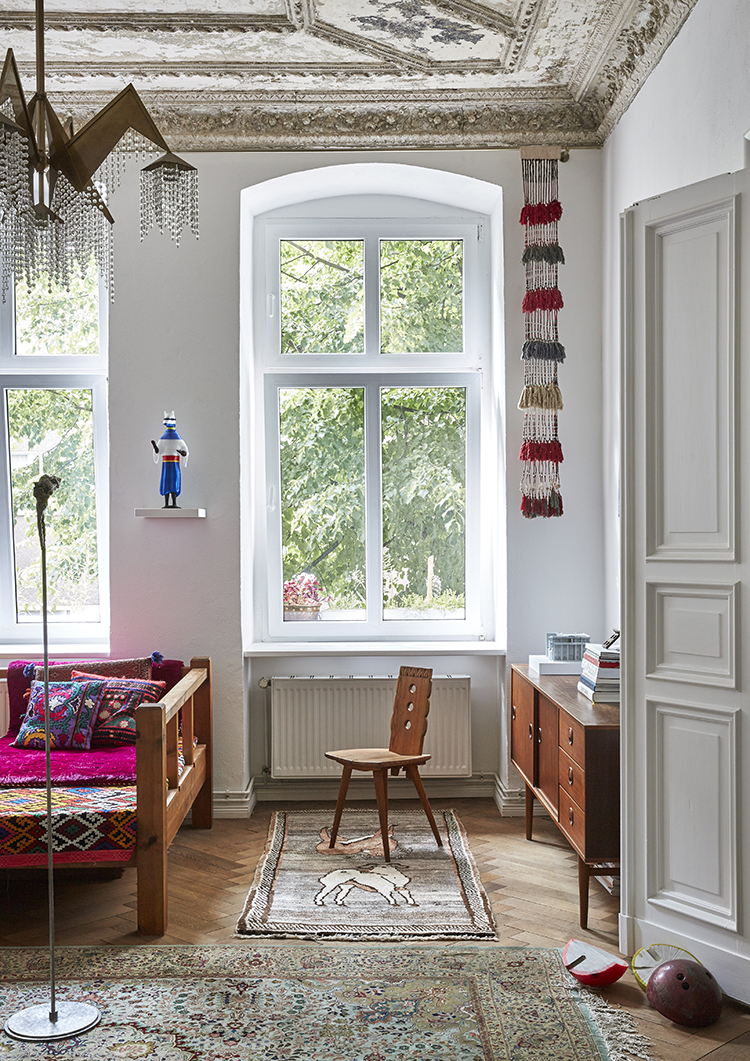
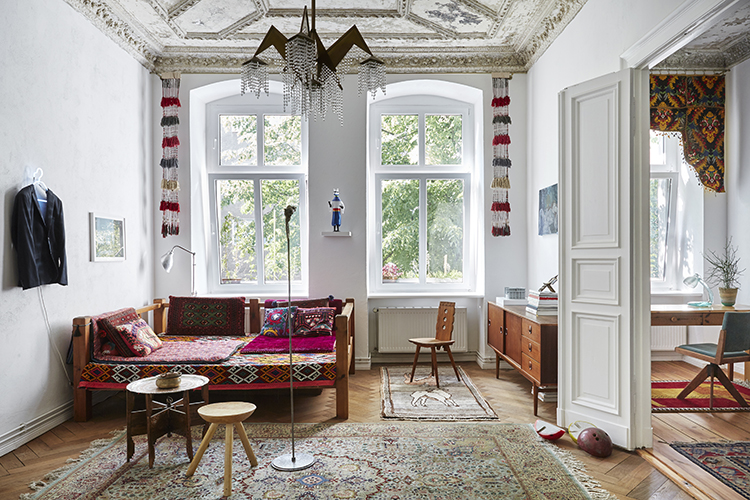

The rest of the restoration involved sanding the old oak parquet and the wooden boards and treating them with a mixture of oil and wax. The doors were stripped and repainted, too, and the walls plastered with a simple roughly textured lime cement.
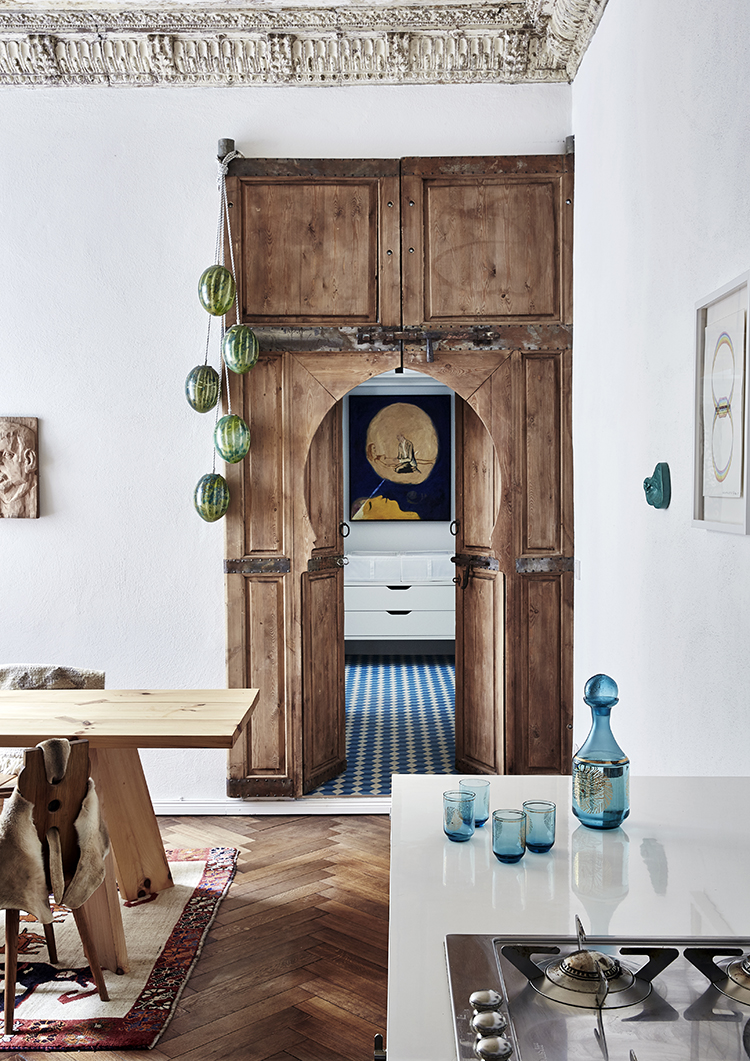
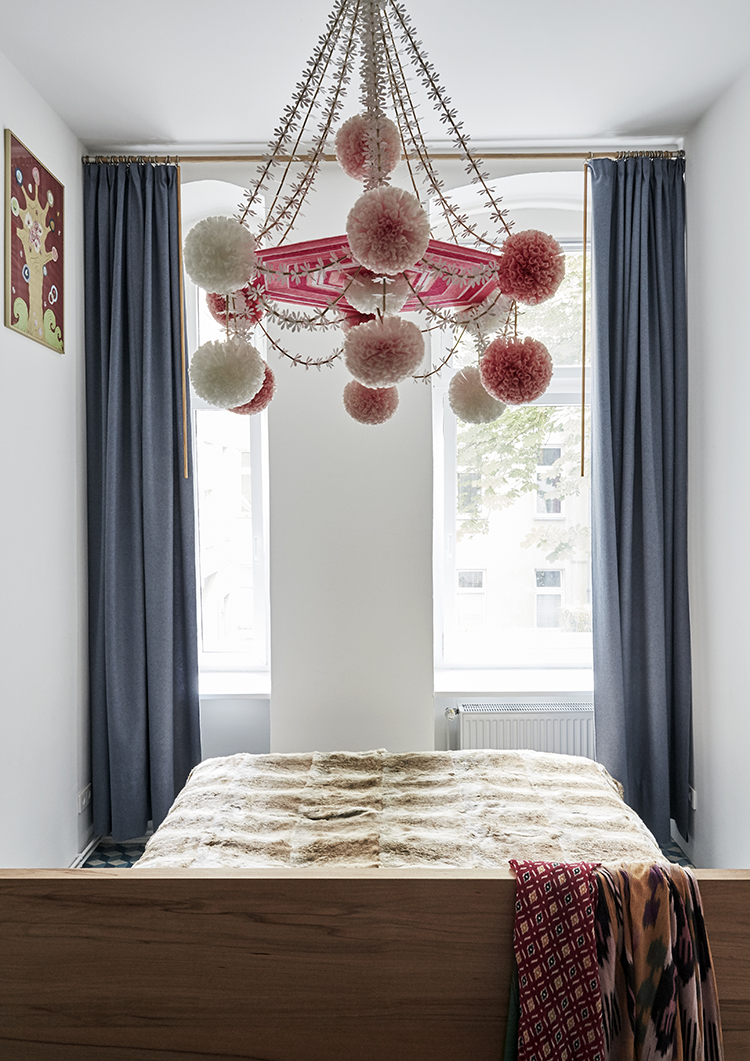
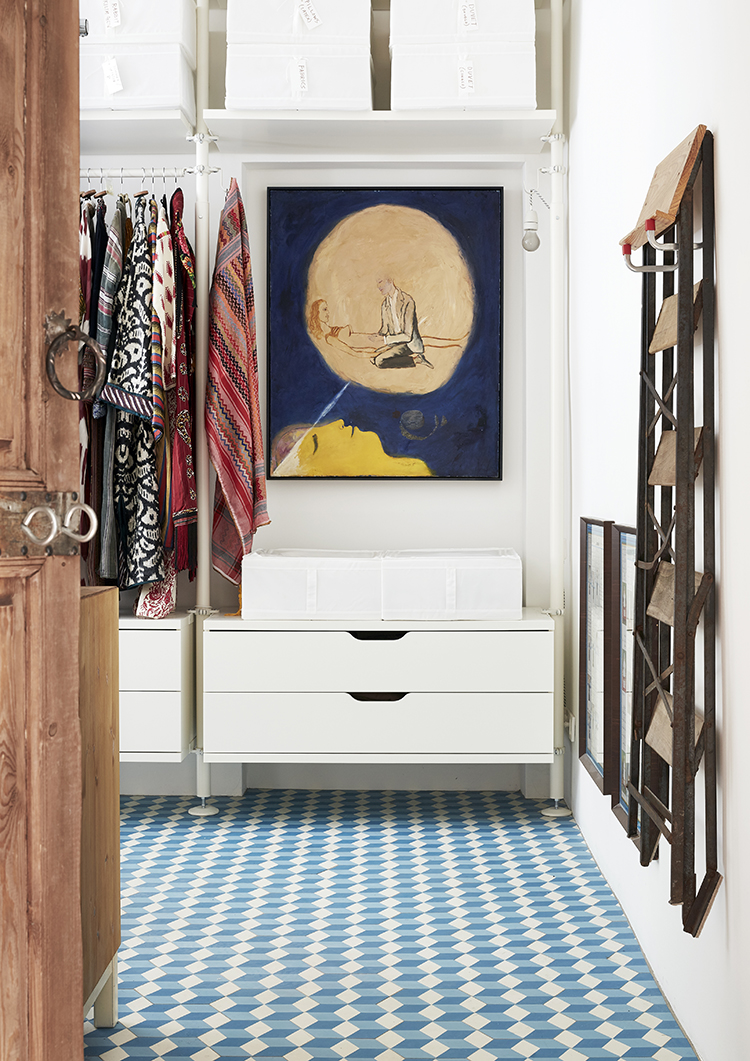
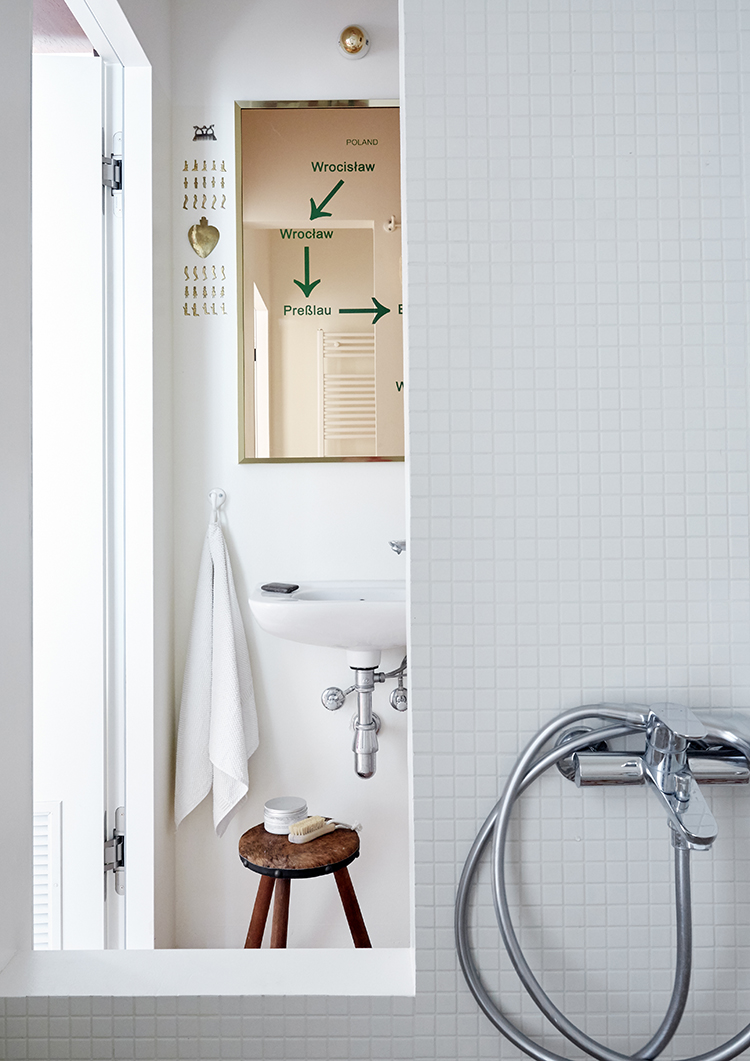
In the back of the apartment, the renovation took on a contrasting approach. These areas, including the bedroom that leads off the Berliner Zimmer via the Moroccan door and new bathrooms, are characterized by a minimalist approach. Walls were added and the bathrooms modernized, and another bathroom was added in the hallway, too. “We went completely modern,” adds Drewes. Details were all but excluded – the door handles have roses for flush installation and the doors themselves have concealed hinges and are flush fitting. The floors – covered in patterned, untreated cement tiles – offset the pristine modernity and, as Sharifi notes, cool the space, allowing it to “breathe.”
The design of the apartment plays modern and pre-modern eras off each other, and the art and furnishings experiment with space and identity. Although Sharifi points out that he’s not anti-modern, a large portion of their artistic practice involves collaborating with craftspeople from Eurasia.
“Slavs and Tatars was created to put pressure on a perceived notion of modernity,” declares Sharifi. “There’s less emphasis on authorship in the crafts as there is in the fine arts…crafts are about actually inscribing yourself in a tradition, and then innovating, but within that tradition.”
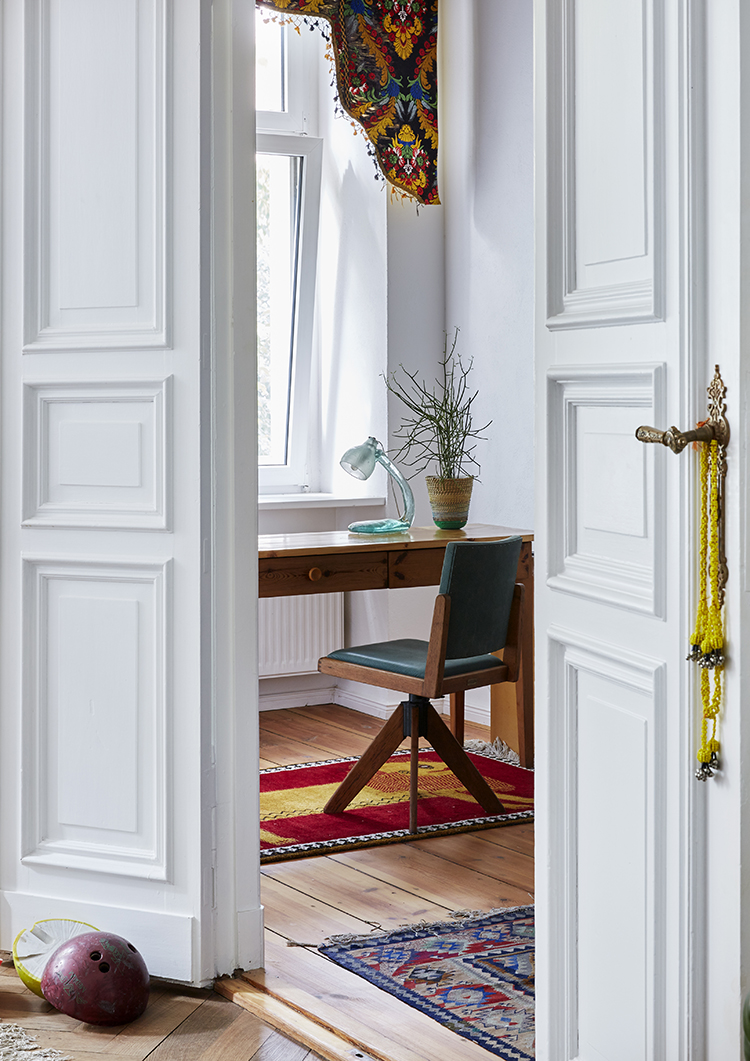
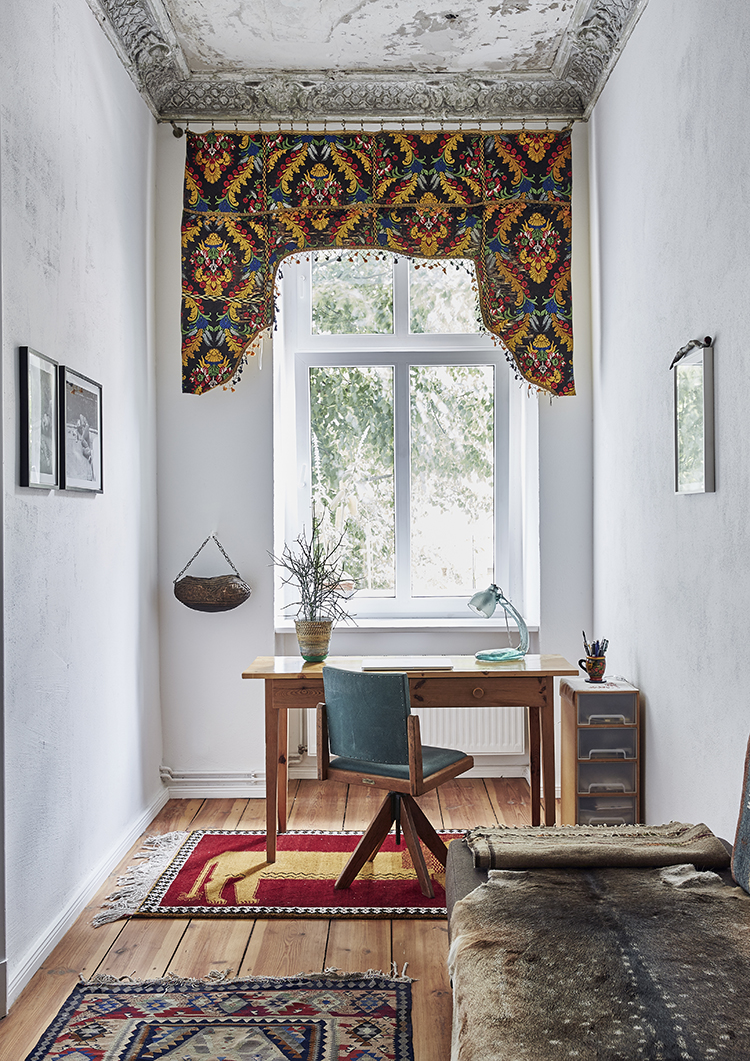
It was very important to the couple that their home be inclusive, too, for the builders who worked on the renovation and the art collectors who visit. “What’s special about our home is that it manages to be an interesting space without being socially exclusive,” states Sharifi. “The idea of hospitality is central to much of our work, and couldn’t be more relevant politically in the current climate.”
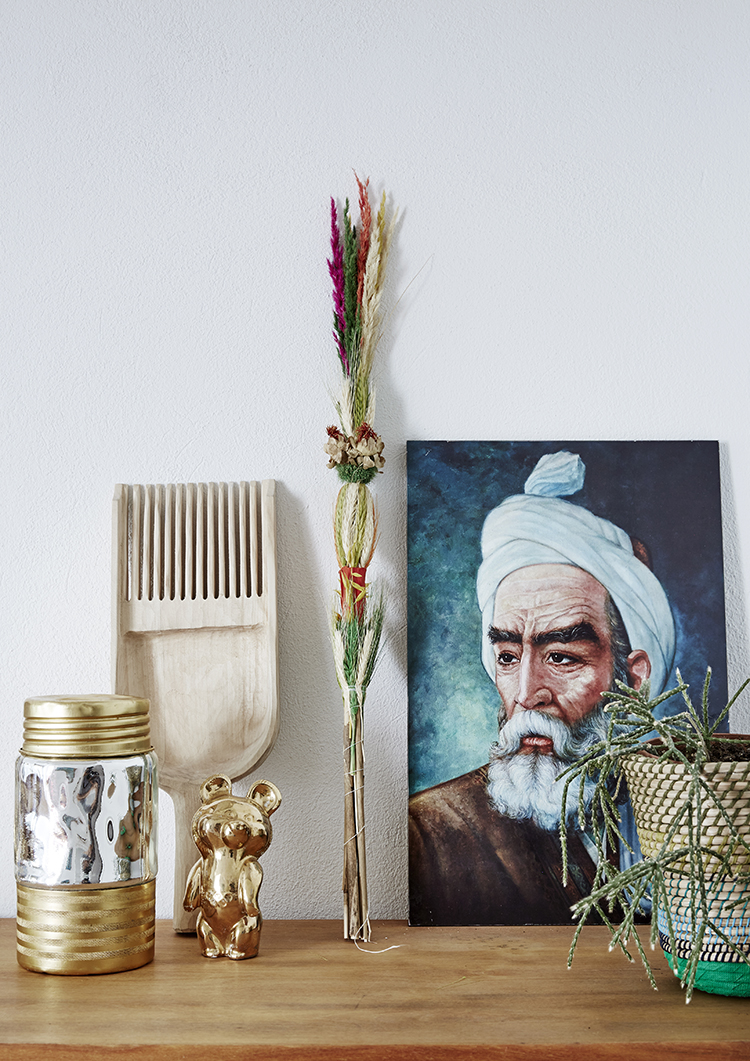
From the anonymous craftsmanship of the ceiling moldings to the furnishings and decorative elements that are drawn from the artisanal traditions of Poland and Iran, given the couple’s backgrounds, the design is collective and inclusive, rather than status-driven.
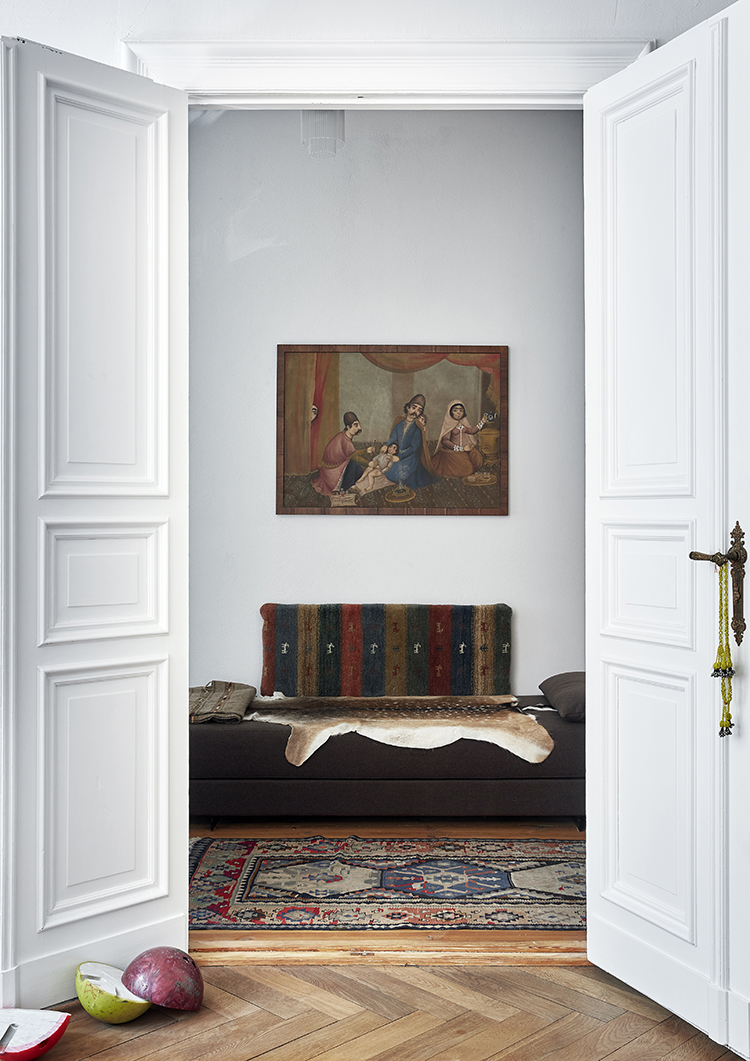
The Iranian riverbed in the living room embodies this democratization of design, too. “This is considered an example of a vernacular architecture you find across Central Asia and the Caucasus,” explains Sharifi. “You find it at roadside stops. You often find it near rivers, hence its name, and in tea houses. And, as opposed to a Western-type seating where a chair is ‘your chair’ or ‘my chair,’ there is no individual space here. There is space for three or four people to sit on it, and there is no delineation of whose space is what.”
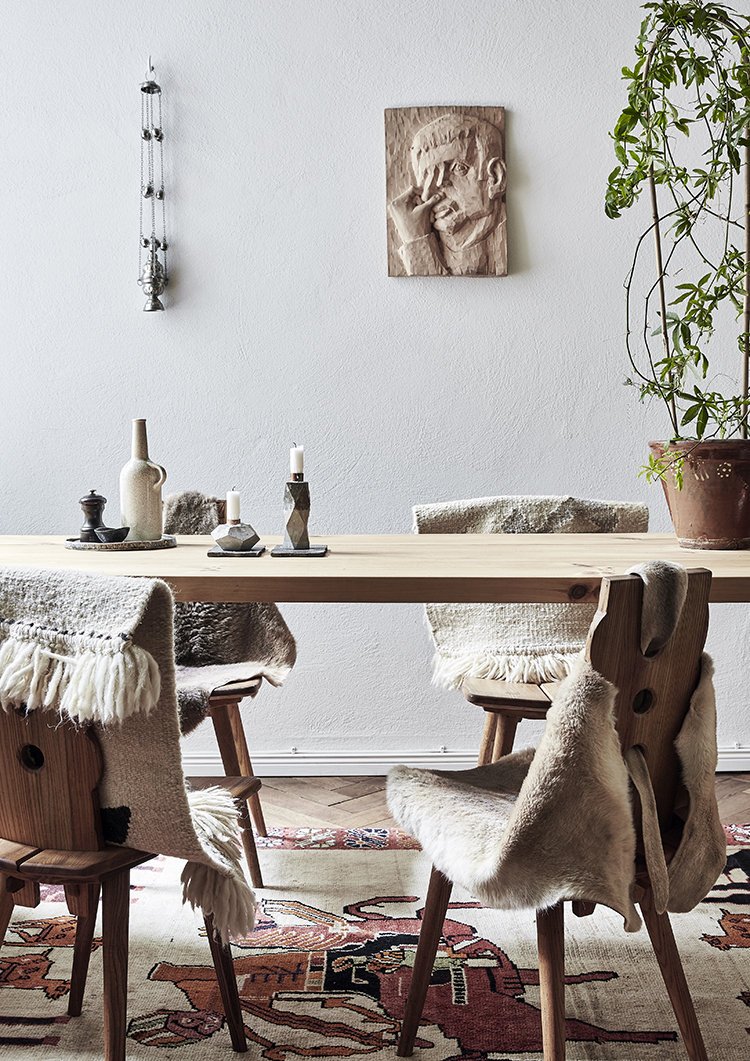
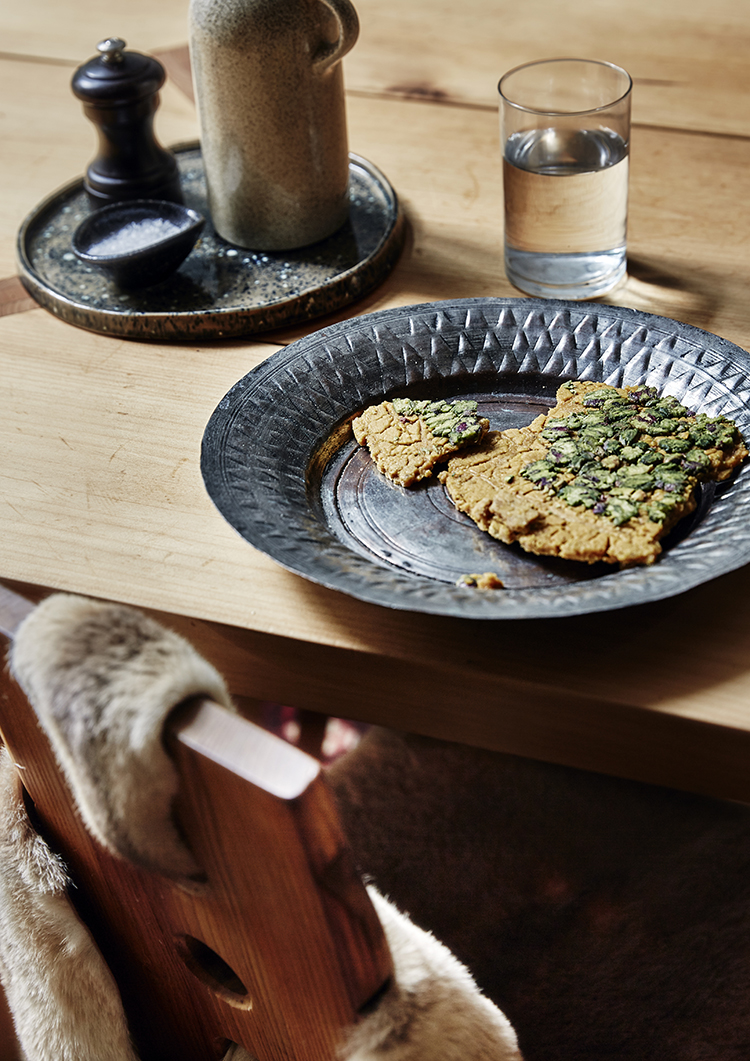
Similarly, the Polish mountain chairs from the village of Zakopane represent an early-20th-century national movement, not unlike the Arts and Crafts movement in England, in which “urban Poles and intellectuals moved to the countryside to rediscover what is quintessentially Polish. It became a kind of cult creative getaway,” informs Sharifi.
The carpets represent another cultural ambiguity that interests Slavs and Tatars. “In Eastern Europe, people put carpets on the walls,” Sharifi explains. “We of course in the Middle East and the Caucasus put them on the floor. We do both in our practice.”
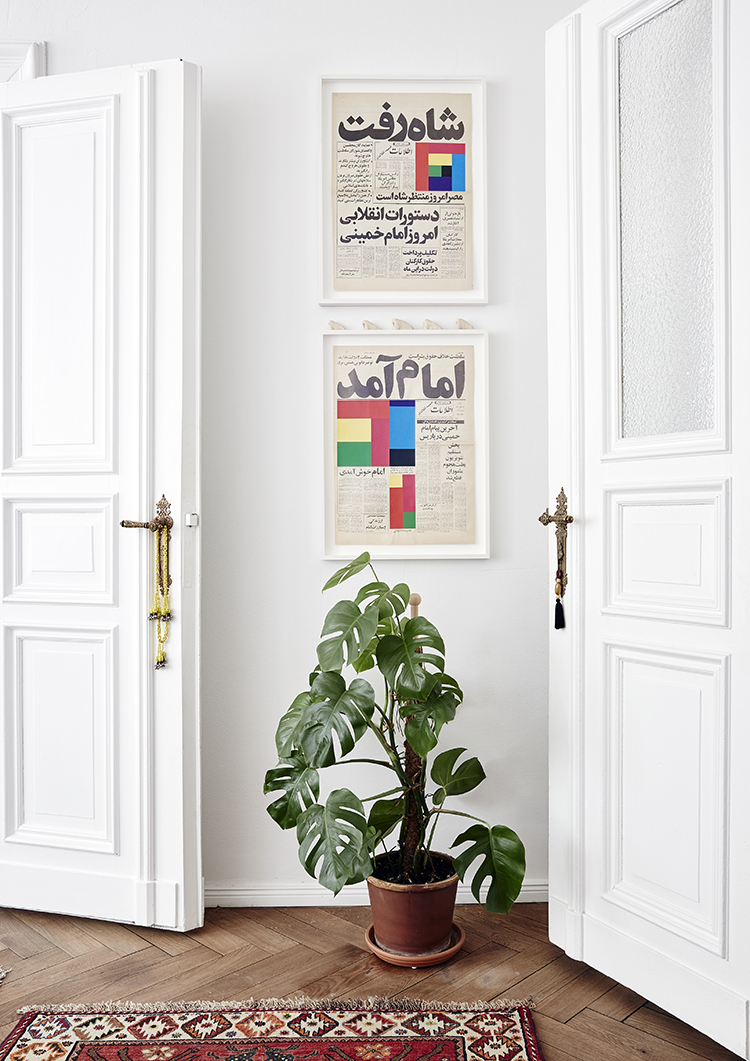
In their home, however, the carpets represent an interest in their design, particularly what he calls a “cult subgenre of figurative rugs,” featuring lions made by nomadic tribes. “They’re always particularly small so they can be carried,” he explains, “And they’re often stitched as a dowry or benediction, to give birth to a boy.”
More generally, however, the carpets are a cultural bridge to a pre-modern era and a corrective to the preciousness of rugs in the West. “In places that make carpets like Iran and Turkey – we’re not precious about carpets,” he says. “They last for a hundred years. Red wine has spilled on my parents’ carpets for as long as I can remember, and you just wash it out.” For Sharifi and Korczak, linking modernity with the past is evident throughout their house. Sharifi cites Antoine Compagnon, a French literary critic, who argues that “the true modernists were actually the likes of Baudelaire who were ambivalent about the passing of the pre-modern era.” He calls them “people with one eye in the rear-view mirror, moving forward, but with a little bit of a conflictual relationship with the past.”
It’s the very ambiguity, the uncertainty and even sense of conflict in certain elements in the apartment that create its unique sense of hospitality. It invites interaction; it invites in the past and the present; it invites interpretation and wine on the carpets.
It is a very particular home for Korczak and Sharifi, but a place where others might feel at home, too. It’s a space that builds bridges.
Photography Courtesy of Greg Cox.
Styling by Sven Alberding.
Like what you see? Get it first with a subscription to ASPIRE DESIGN AND HOME magazine.