


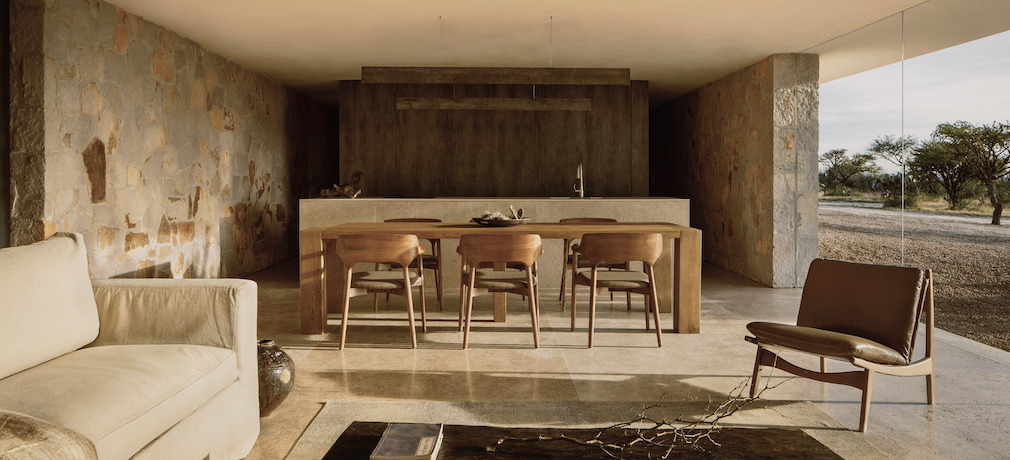
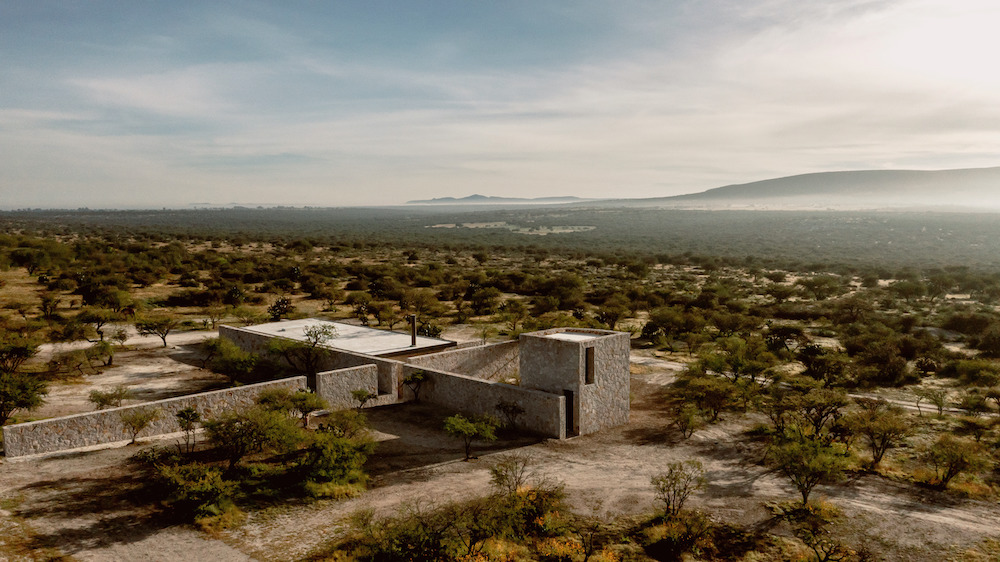

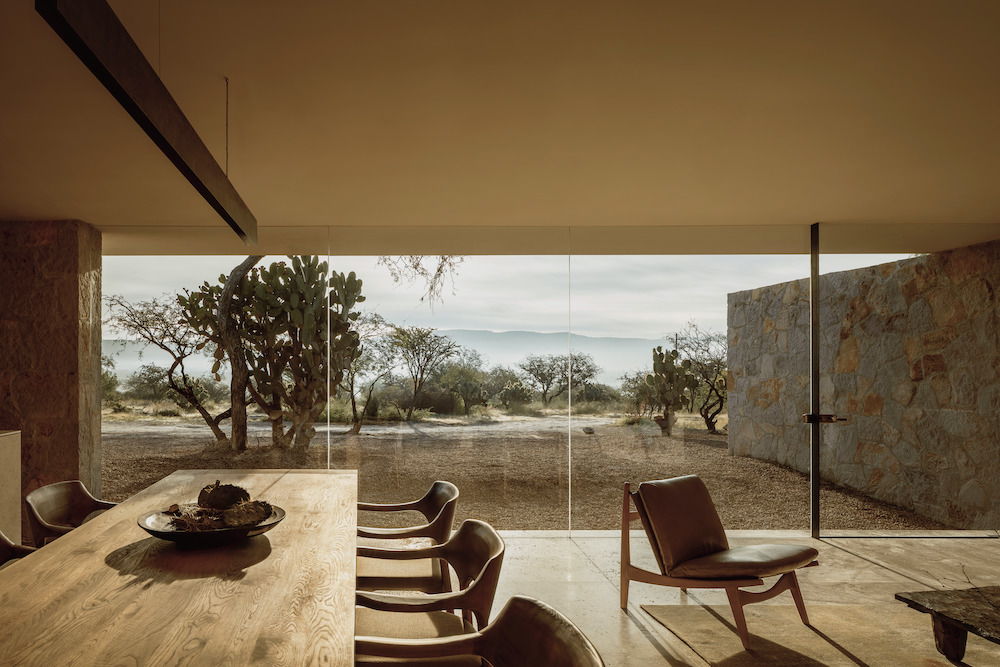
Few locales in Mexico boast a constructive identity as strong as Guanajuato. Northwest of Mexico City, the state is characterized by several rolling mountain ranges, desert fauna and a deep cultural connection with its natural stone; clearly reflected in its architecture, traditional kitchen utensils, aqueducts and even local legends like El Pípila, who carries a large rock on his back to protect his regiment against attacks. Architectural firm HW Studio took all of these facets into account in constructing Enso II, a small home designed in the image of its natural surroundings and winner of the Award of Merit at the 2023 AZ Awards.

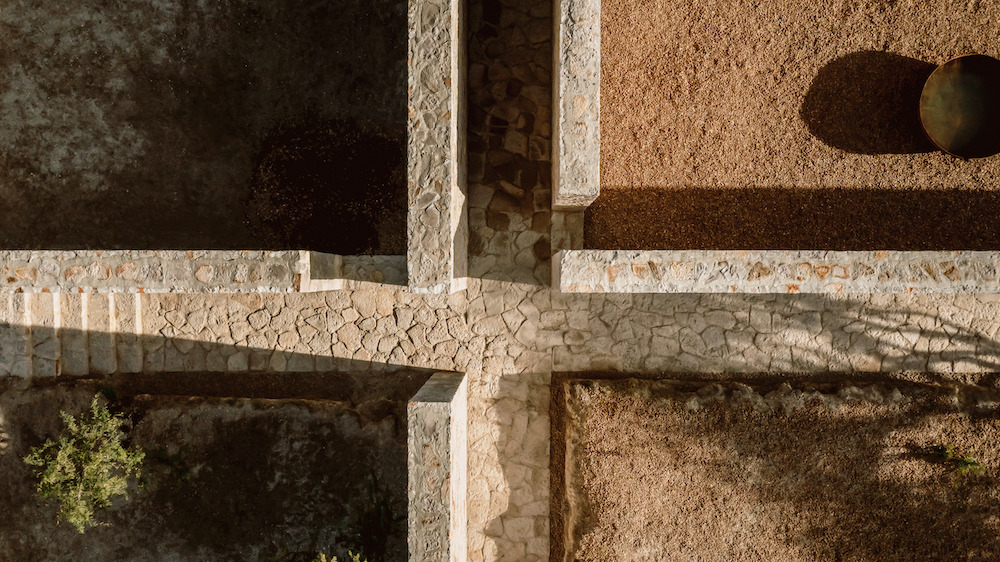
Leaning into the importance of Guanajuatoan stone to the area, the material for this architectural piece was easily selected. In addition, there was a materials bank and capable labor nearby; a dialogue of respect between the structure and its environment was encouraged. The entire complex is organized on the basis of a cruciform plan; thus, the space is divided into four quadrants by a cross of stone alleys defining the paths, framing all moments, and separating one quadrant from the other.
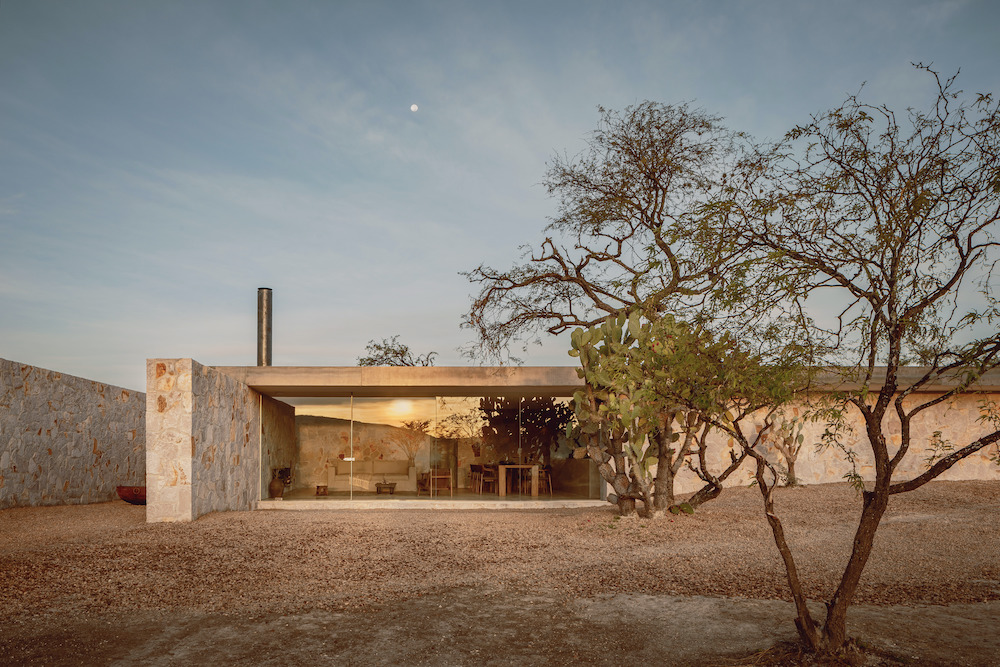

Once divided, a “vocation” was assigned to each of these quadrants: the lower right quadrant receives the inhabitants upon their arrival; it has the vocation of housing an endemic garden that reinforces, protects, and welcomes living beings and humans. The second quadrant hosts the cars; special care was taken to the trees during construction, as they would provide shade to protect the cars from the sun. To top it off, a long, barely arched stone wall protects the entrance, avoids looking inside the house, and emphasizes the horizontal presence of the mountain in the background.
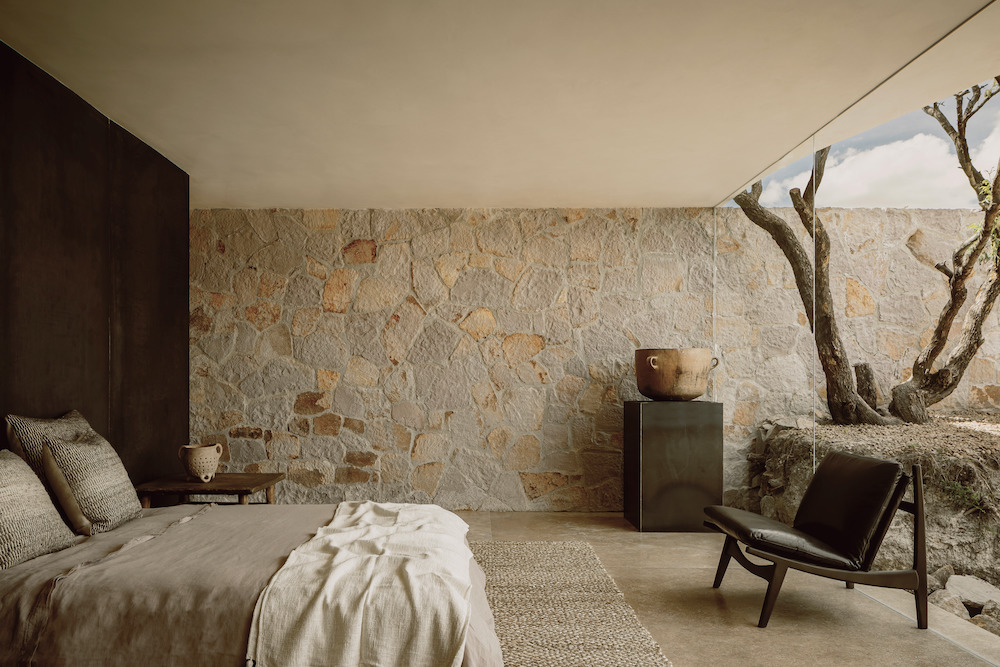
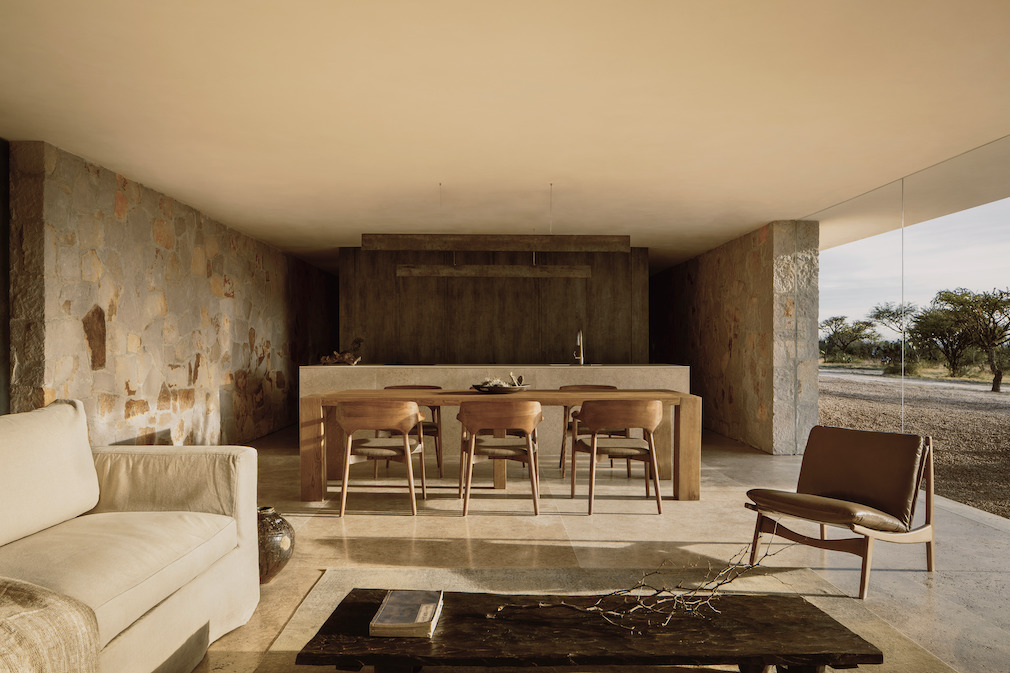
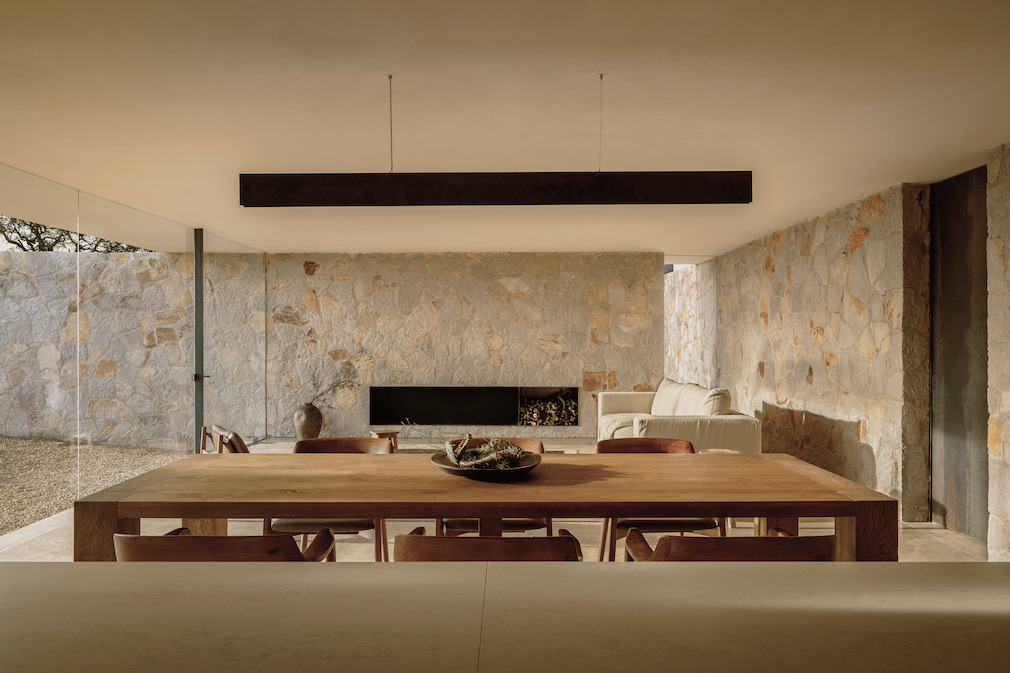
In the third quadrant, there is a one-bedroom house; the public spaces are separated from the private ones by a single volume containing bathrooms, a dressing room, and a service area, which breaks with the open floor plan.
The fourth quadrant houses the office; this is the only visibly prominent vertical element that contrasts with the horizontality of the landscape and the rest of the elements, a gesture that flirts with the iconic volumes of the Santa Brígida mine in Mineral de Pozos.
The dispersion of these spaces forces a permanent pilgrimage between spaces; it forces contact with the earth, the air, and the mountain, like an ancient monastery framing the landscape, but at the same time forming a natural part of it.
Photography by Cesar Bejar.
For more from HW Studio, be sure to read our interview with founder Heath Wagoner, here.
Like what you see? Get it first with a subscription to aspire design and home magazine.