


Artist Stéphanie Montagut likes to contemplate the garden of her home in Montreuil, an exurb of Paris. It is visible through glass sliders in a renovated warehouse that was formerly used to store antiques. “The opening frames a view like a painting,” she observes. “I often sit there before beginning my work, leaning against the banquette, the light and proportions offering calm and inspiration.”
The juxtaposition of industrial space and nature says a lot about Montagut, both past and present. Raised in Périgord, where her grandmother, an extraordinary gardener, kept a farm, she began life as a country girl profoundly connected to nature. But her career as a brand image designer for luxury companies whisked her away to Paris and into a world of extravagance and glamour.
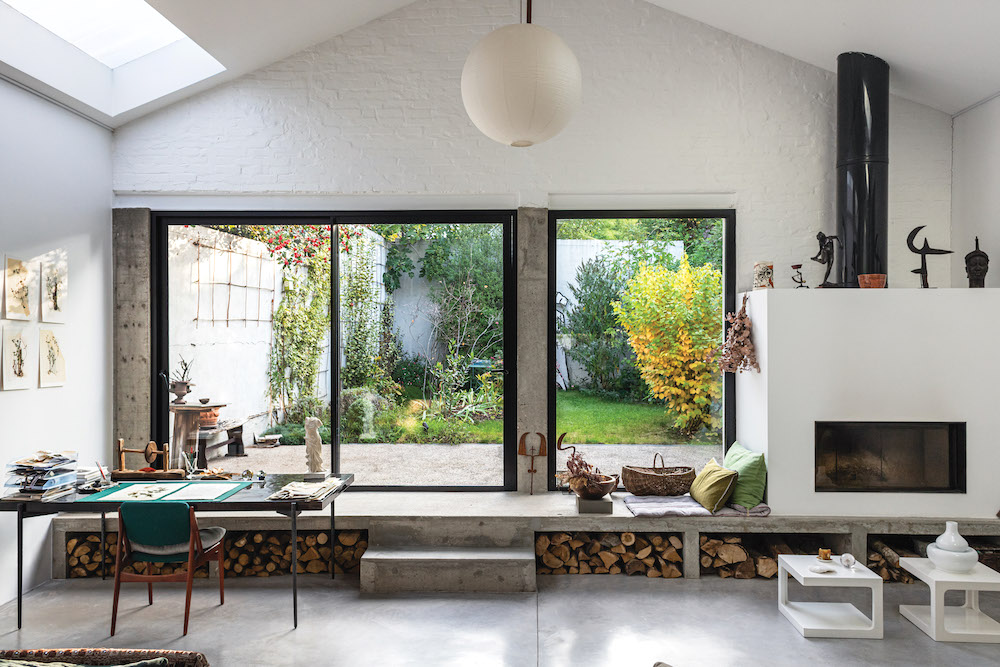

Seven years ago, Montagut and her husband happened on the warehouse in this busy urban enclave and worked with François Pin – an architect known for projects such as the Denon Wing of the Louvre and the Museum of Jewish Art and History in Paris – to convert it into a living and working space. It proved to be a timely refuge. During the isolation of the pandemic, Montagut sought solace in nature again. Inspired by antique herbariums, she began articulating a medium that combined dried plants with words.
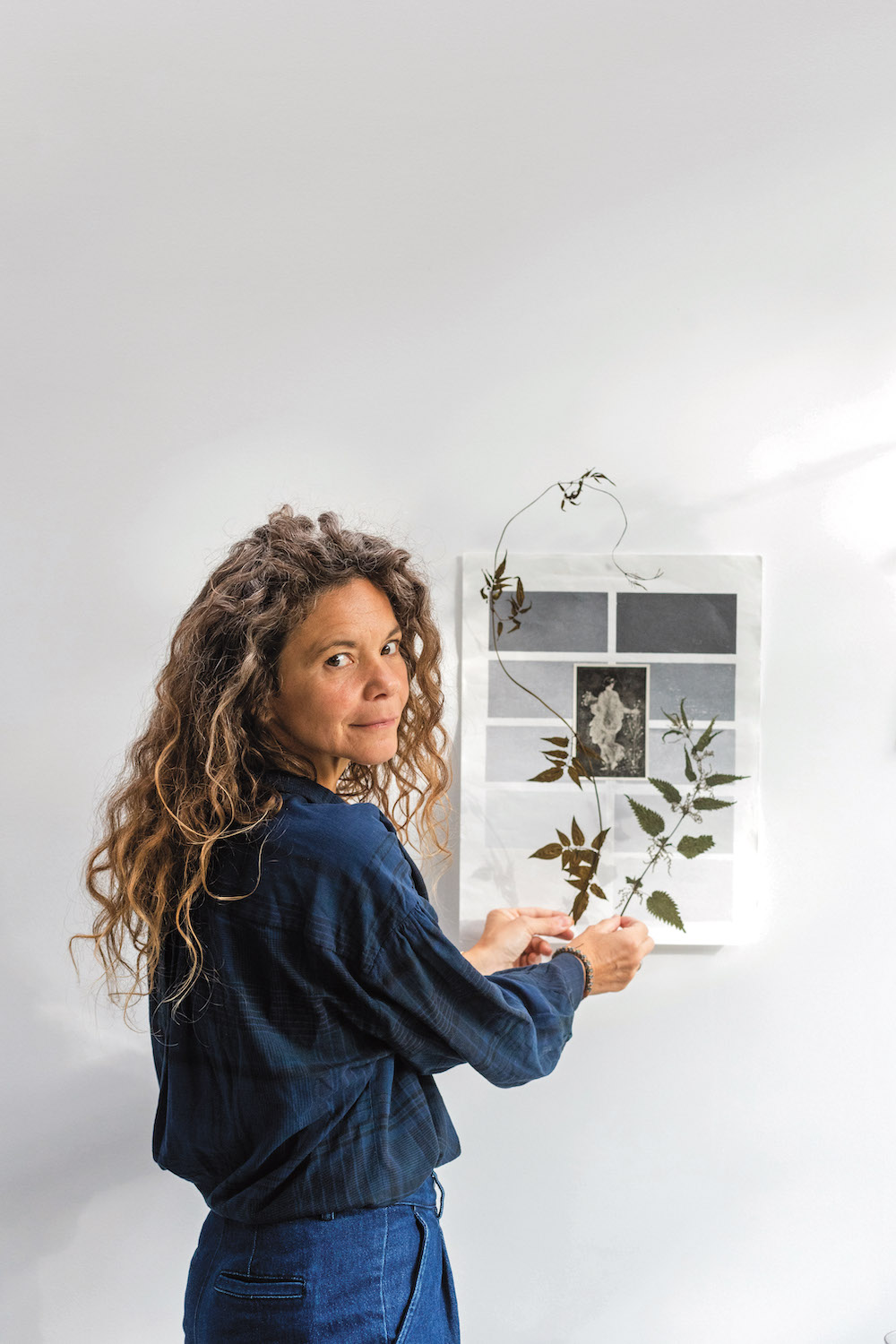
“Over time, my work shifted from arranging nature on neutral backgrounds to creating dialogues between forms, finding echoes between plants and art history,” she relates. Throughout, the renovated space has supported and nurtured Montagut’s art.
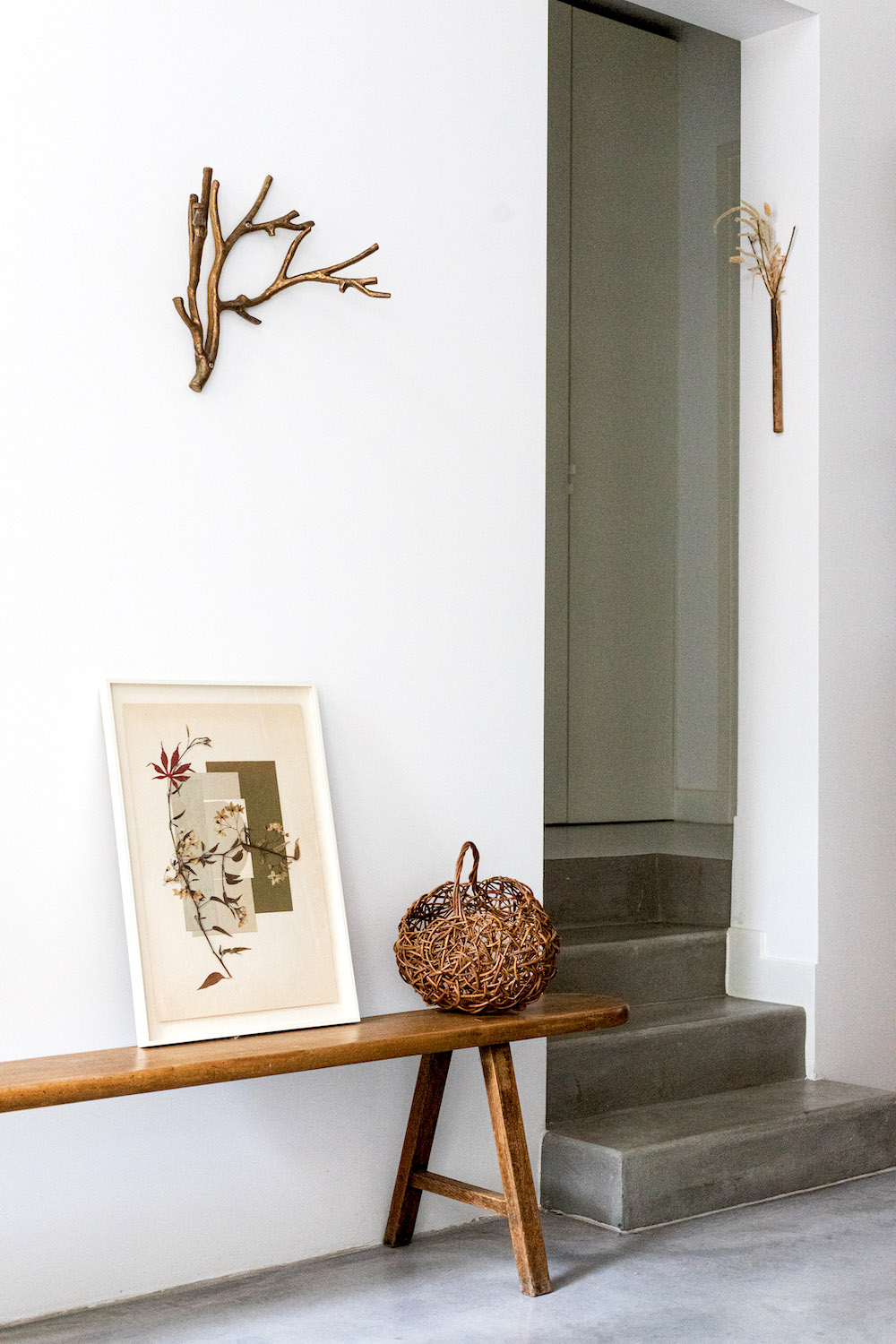
“The light in this house dances throughout the day,” describes the artist. “Rather than thinking only in terms of function, we focused on creating ‘corners’ for different moments – quiet nooks for reflection, spaces for work, areas for gathering. Each corner invites attention, calm and inspiration.”
In both home and art, Montagut evokes a sense of memory and time. Not surprisingly, she is an inveterate forager of flea markets and other purveyors of the past’s artifacts. “I discovered my love for antiques at 13,” she says. “My first find – a set of ironstone plates – sparked a lifelong obsession. I have two ironstone plates left out of the six I bought. The others broke over time. I hardly dare use the last two anymore. What moves me is both beauty and story. These objects have a presence that comforts and inspires daily life.”
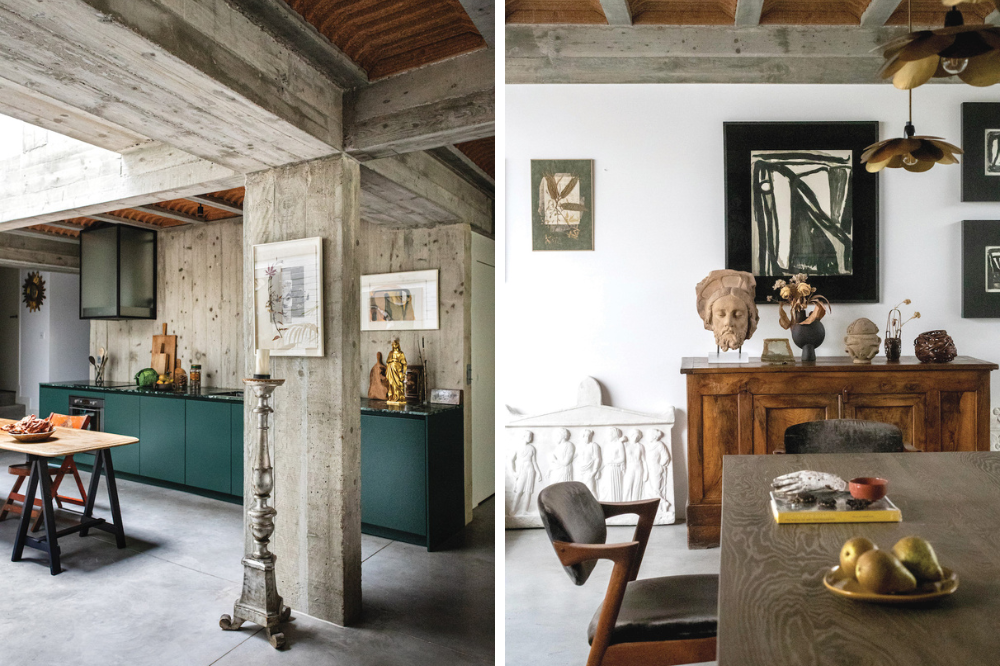

The eclectic décor blends custom items such as a handcrafted dining table by Arnold de Vinck with a pendant from IKEA and higher-end pieces (the living room’s Maison de Vacances sofa and pillows and old plaster casts from Atelier Lorenzi in Paris). But the same sorts of haunts where she unearths vintage finds – dining chairs by Kai Kristiansen, a library ladder and an old wicker fish trap in the living room – are treasure troves for art materials too.
“I assemble frame backs, book covers, engravings, photographs, reproductions of paintings, Polaroids, posters, cardboard, parchment and old papers,” she explains. “I choose them for their visual and aesthetic qualities.” Her selections span the art of classical antiquity, the Middle Ages, Renaissance painting and sculpture, art from the 17th through 20th centuries and Japanese wabi-sabi.
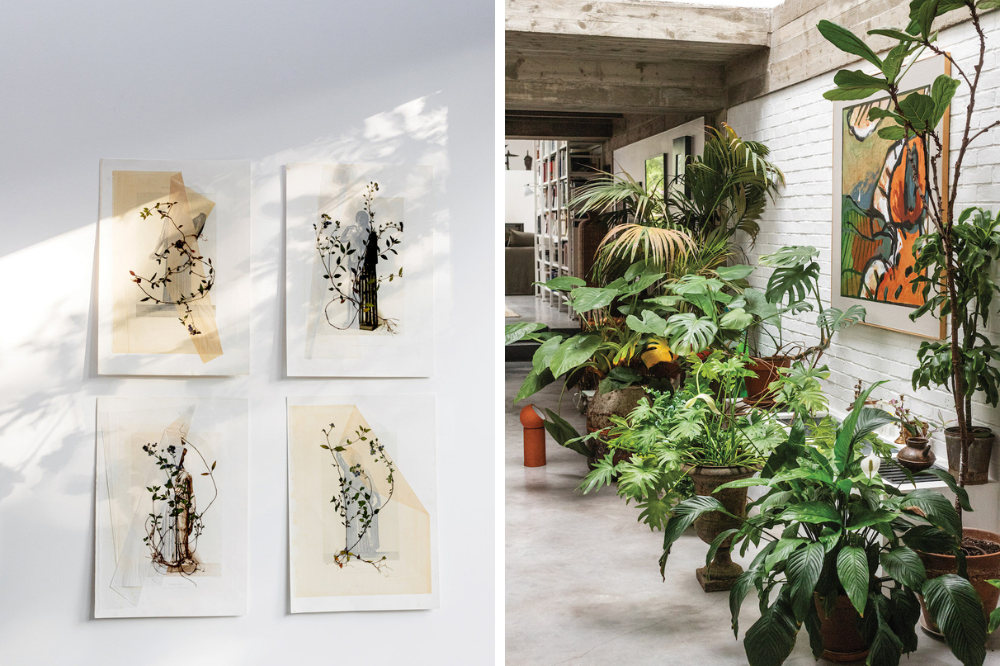
Plant sources for Montagut’s art also vary widely. “If I’m working from a reproduction of a drawing by Auguste Rodin,” for instance, “the plant might come from the museum garden. I pick wildflowers growing in Montreuil or on the sidewalks of Paris. I gather them while traveling or walking, and from the Dordogne, where I was born and raised.”
Absolutely all of it – personal history, art, home, life – Montagut considers as one holistic pursuit. “This is a home where art is not a separate activity; it is life itself, inseparable, immersive and inspiring.”
Photography by Nathalie Baetens.
Like what you see? Get it first with a subscription to aspire design and home magazine.