

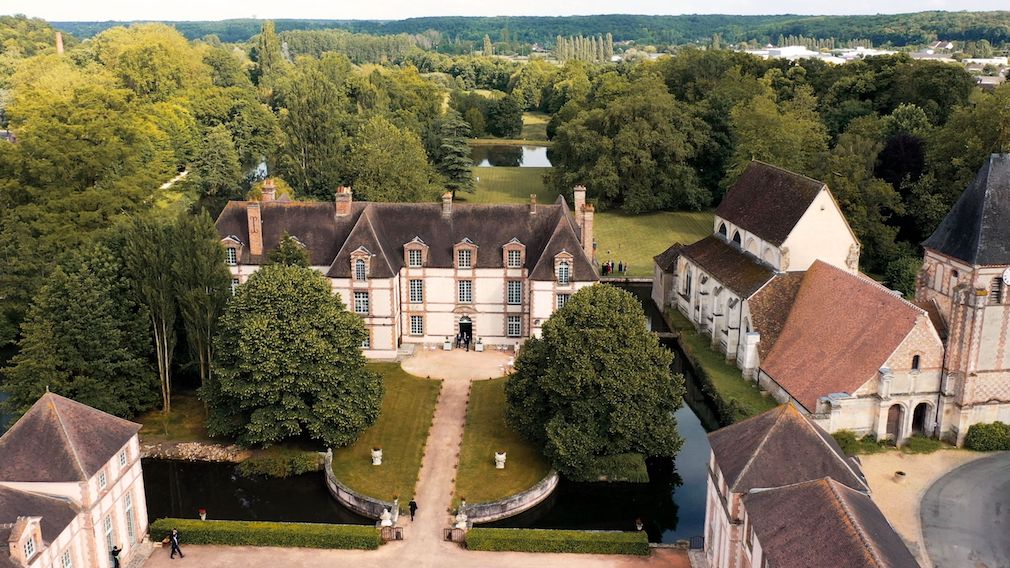

Set along a quiet stretch of the Eure-et-Loir countryside, Château des Joncherets reveals itself slowly; a tree-lined drive, a glimpse of stone through branches, the hush that comes with age. Built in 1620 and shaped by centuries of royal living, conflict, and domestic ritual, the château has never been a static monument. It has always been a place of use, passage, and layered life. Today, following an 18 month restoration of its ground floor, it opens a new chapter, one that honors its past while allowing it to breathe again.
For owners Kate and Paul Méry de Bellegarde, restoration is an act of listening. Each decision begins with what the château already holds: its proportions, its wear, its silences. Rather than imposing a single vision, they invited an international group of designers to work in dialogue with the building itself, encouraging spaces to evolve through collaboration, reuse, and respect. What emerges is not a moment frozen in time, but a series of rooms that feel inhabited, storied, and quietly alive.
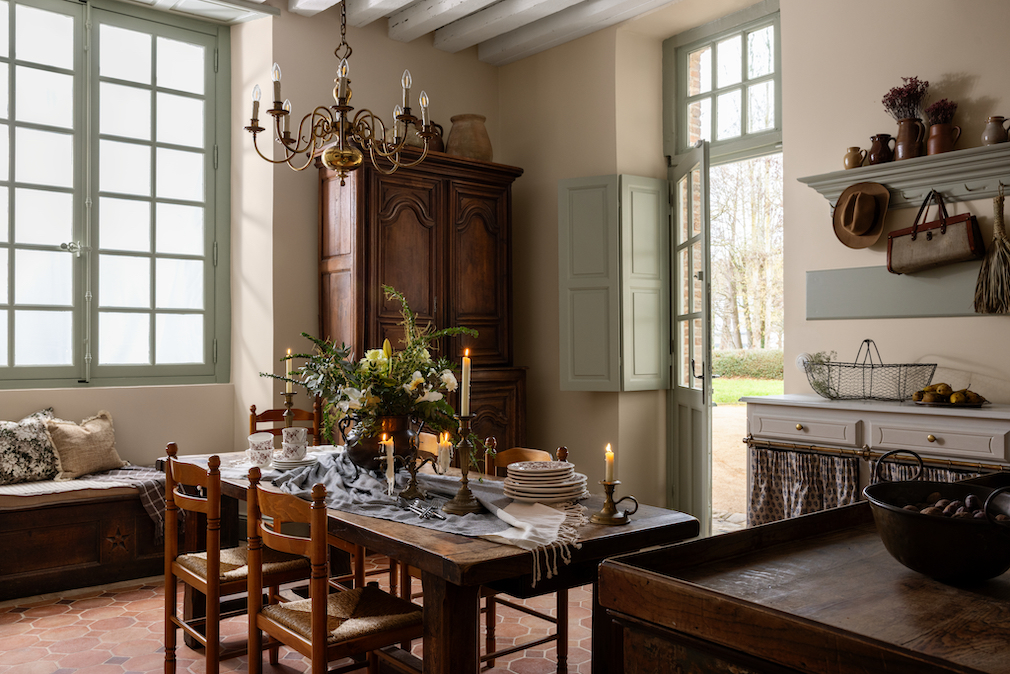

Just beyond the entrance, the south kitchen offers an immediate sense of warmth. Designer Diane Luna describes feeling a kind of museum quiet upon first entering, the reverence one feels when surrounded by objects that have endured for centuries. The kitchen was rebuilt with that same sensibility. Reclaimed brick and beams form a new cooking hearth, cabinetry is assembled from vintage furniture parts, and an antique marble sink anchors the room with quiet authority. Above the cooktop, a hand-drawn ceramic mural depicts a pastoral scene, a signed artwork created specifically for the château. Every surface carries evidence of handwork, patience, and time.
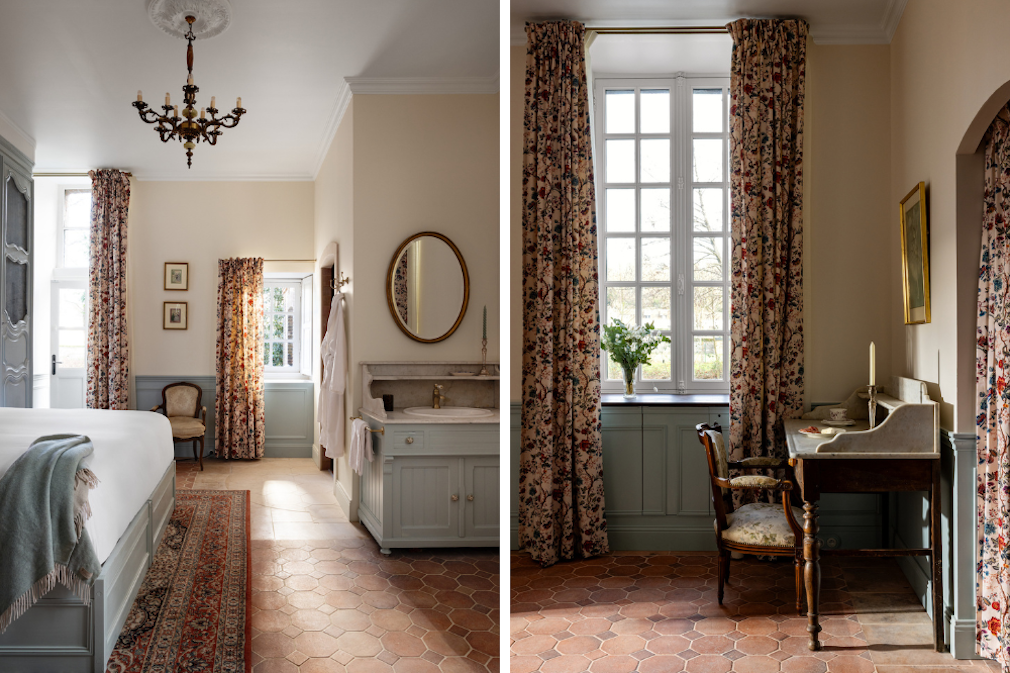

Throughout the ground floor, reuse becomes both philosophy and poetry. In the northwest studio, the largest suite with direct access to the courtyard, architect Iris Merlin of Le Bleu 43 continued the château’s story by giving historic elements new roles. A former fountain is transformed into an intimate shower enclosure. A custom display cabinet from another room becomes a headboard, bedside table, and alcove all at once. Terracotta tiles inspire a palette of warm earth tones, while handcrafted zellige, antique mirrors, and locally sourced furnishings create a space that feels both grounded and deeply personal. The room does not hide its history; it incorporates it.
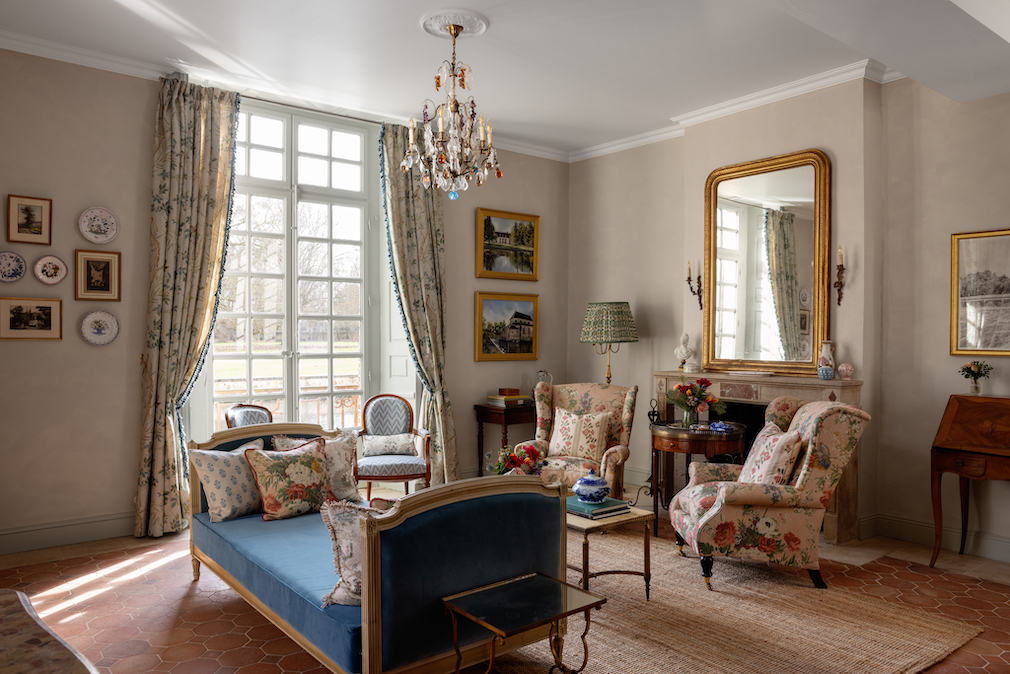
Elsewhere, the interiors unfold through layers of pattern, fabric, and light. Designer Samantha Williams approached her spaces with an eye toward discovery, allowing the gaze to travel and settle. Antiques long housed within the château are joined by found objects, commissioned artwork, and richly textured textiles drawn from classic French traditions. Her aim was to balance formality with approachability, ensuring that grandeur never eclipses comfort. The rooms feel composed, but never staged.
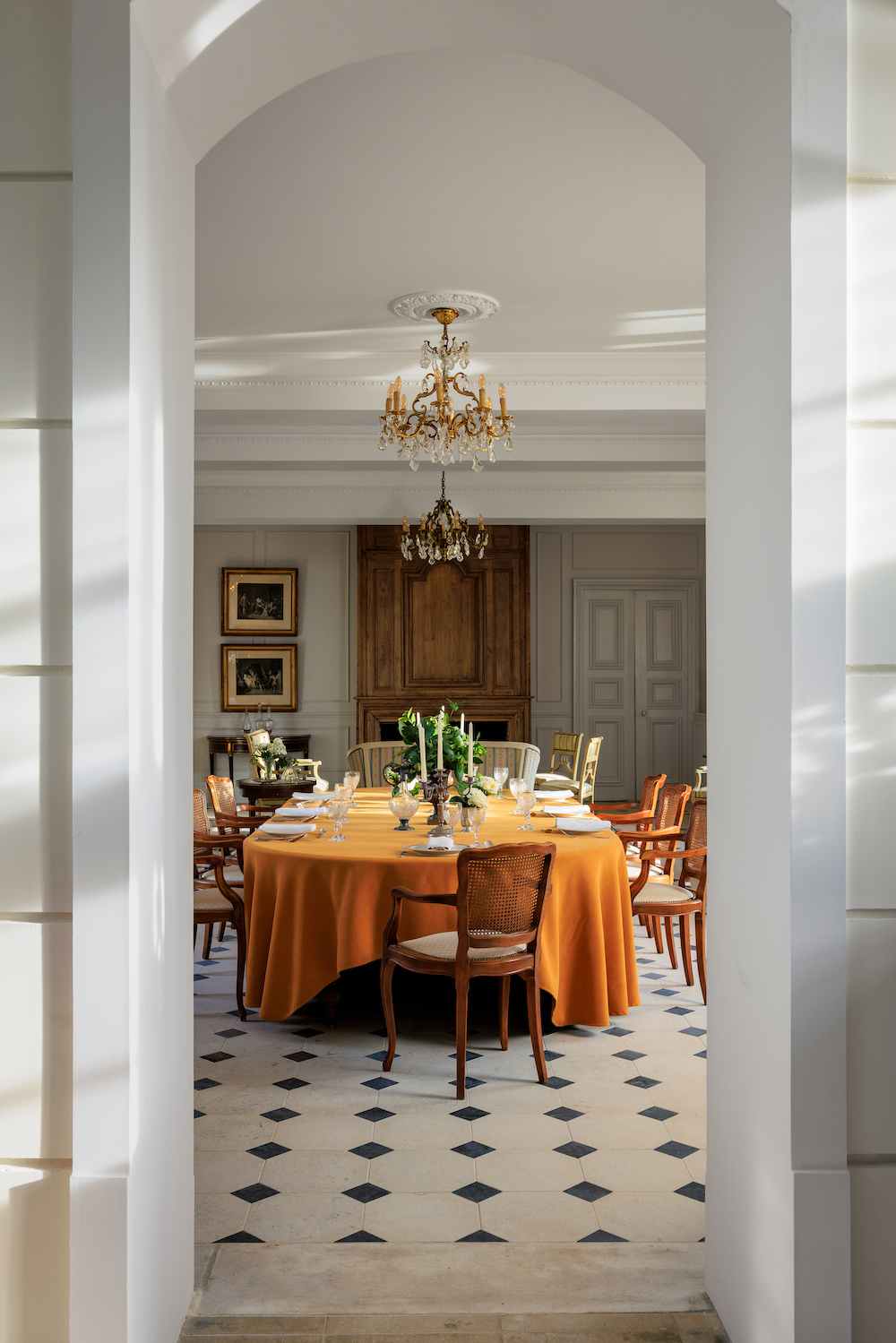

That sense of ceremony reaches its fullest expression in the grand salon. Here, scale and proportion set the tone, and designer Natalie Kraiem responded with restraint and confidence. A vintage gold tablecloth draped across the dining table immediately signals occasion, its soft sheen catching candlelight and crystal. Matching vintage drapery frames the windows, adding warmth and patina. Original wood paneling at the fireplace remains intact, enhanced only by carefully integrated moldings and crystal sconces that reinforce the room’s rhythm without disturbing its integrity. Much of the seating was sourced from within the château itself, complete with original fabrics and wear, lending the salon a lived-in elegance that cannot be replicated.
What unites these spaces is a shared respect for craftsmanship. Local artisans, antique dealers, ceramicists, carpenters, and metalworkers all played essential roles in bringing the designs to life. Materials were chosen not only for beauty, but for resonance with the building’s age and purpose. The result is an interior language that feels cohesive without being uniform, each room speaking in its own voice while contributing to a larger conversation.
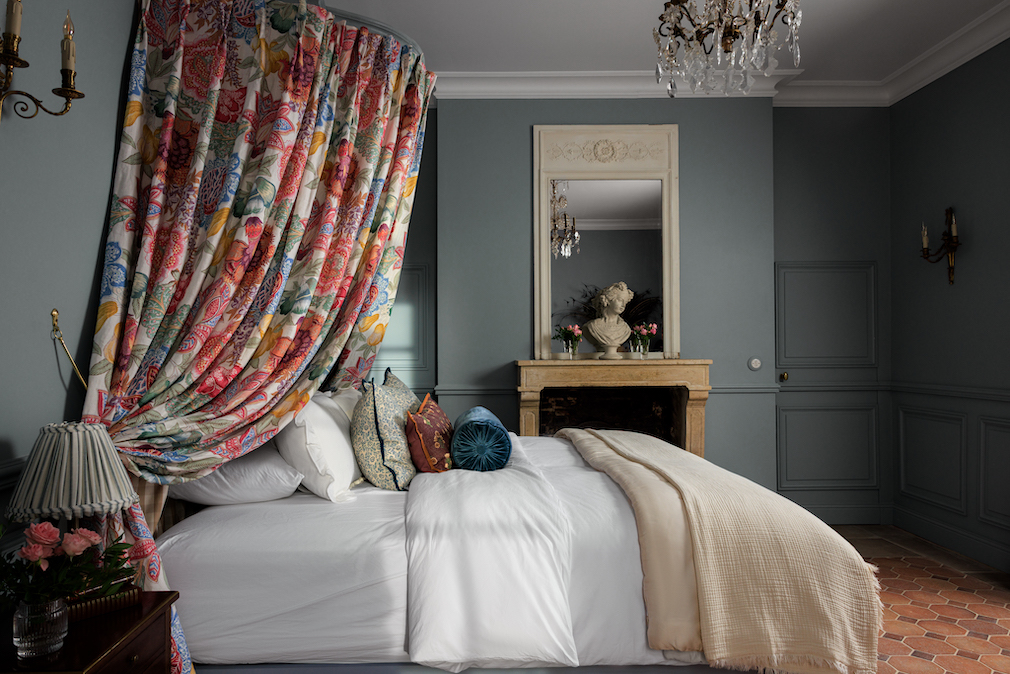
As the restoration continues, the vision for Château des Joncherets extends well beyond the ground floor. The next phase will open the château’s third floor, revealing additional private suites and long dormant spaces, while outdoors, the historic gardens are being thoughtfully revived, including an Alice Waters-inspired kitchen garden that reconnects the estate to the rhythms of land and season. With these evolutions, the château is also reclaiming its role as a place of gathering. Today, it is available for private use, welcoming weddings, celebrations, editorial photo shoots, and cultural or corporate events, hosting up to 200 guests within its walls and gardens. True to its history, these moments are not treated as interruptions but as part of the château’s ongoing life, continuing a legacy of hospitality, creativity, and shared experience.
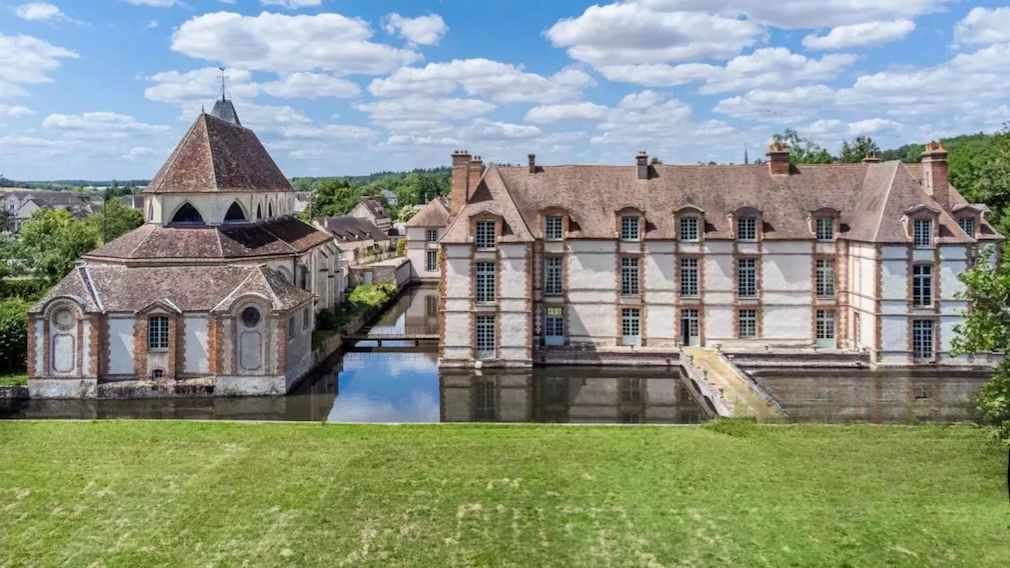
Walking through Château des Joncherets today feels less like touring a restored estate and more like being welcomed into a living home. Firelight, fabric, stone, and story intertwine. The past is present, but not preserved behind glass. Instead, it is carried forward through thoughtful design, human hands, and a belief that history is something to be lived with, not merely admired.
In this latest chapter, the château stands as it always has: a place of gathering, exchange, and quiet beauty, ready to continue evolving for centuries to come.
For more information, visit www.joncherets.com.
Exterior photography by Kim Thompson Steel; Interior photography by Bess Friday.
Like what you see? Get it first with a subscription to aspire design and home magazine.