

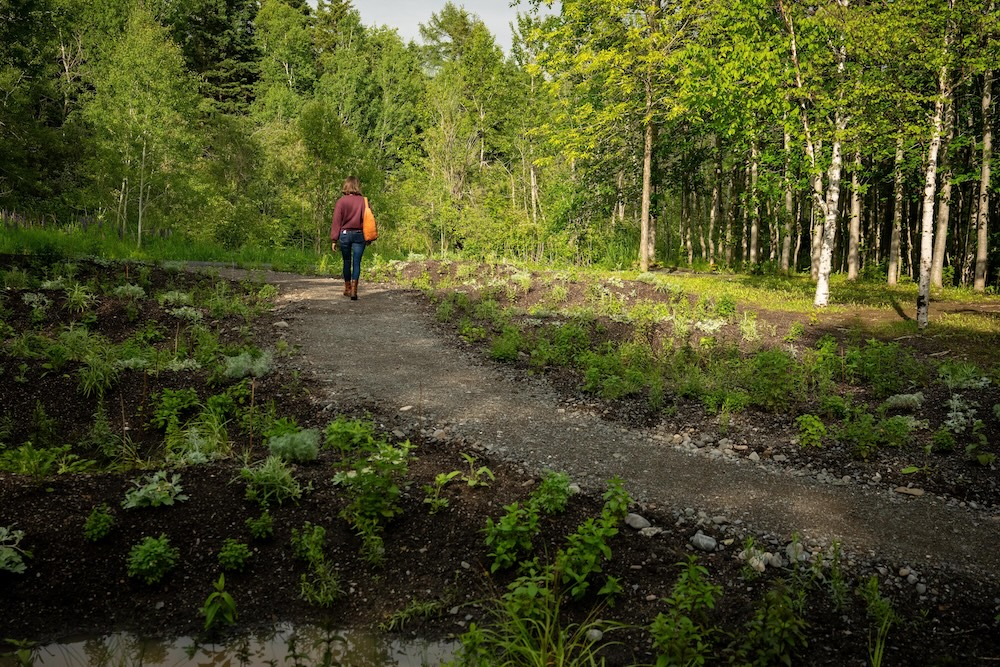

The 27th edition of the International Garden Festival opened to the public this June, but there’s still time to explore the exhibits and watch them evolve through the changing of the seasons. Under the theme Mapping Sensitivity, Artistic Director Ève De Garie-Lamanque invited designers from diverse backgrounds to create gardens through a sensitive, fundamentally inclusive and relational approach.
“This 27th edition once again confirms the unique place the International Garden Festival occupies on the contemporary creative scene. Receiving 204 submissions from 29 countries is a testament to the Festival’s international reach and the interest it generates among creators from around the world. What particularly delights us, however, is seeing these projects come to life and transform throughout the summer,” says Alexander Reford, co-founder and director of the International Garden Festival. “As the plants grow, materials evolve and the light changes, the gardens reveal themselves differently with each visit. It is truly a joy to see visitors of all ages be surprised, play, contemplate, touch and inhabit these creations. It is this meeting of artistic excellence, experimentation and the pleasure of discovery that has defined the Festival’s remarkable character for the past 27 years.”
The festival is open through October 4, 2026. Take a look at the featured designers below:
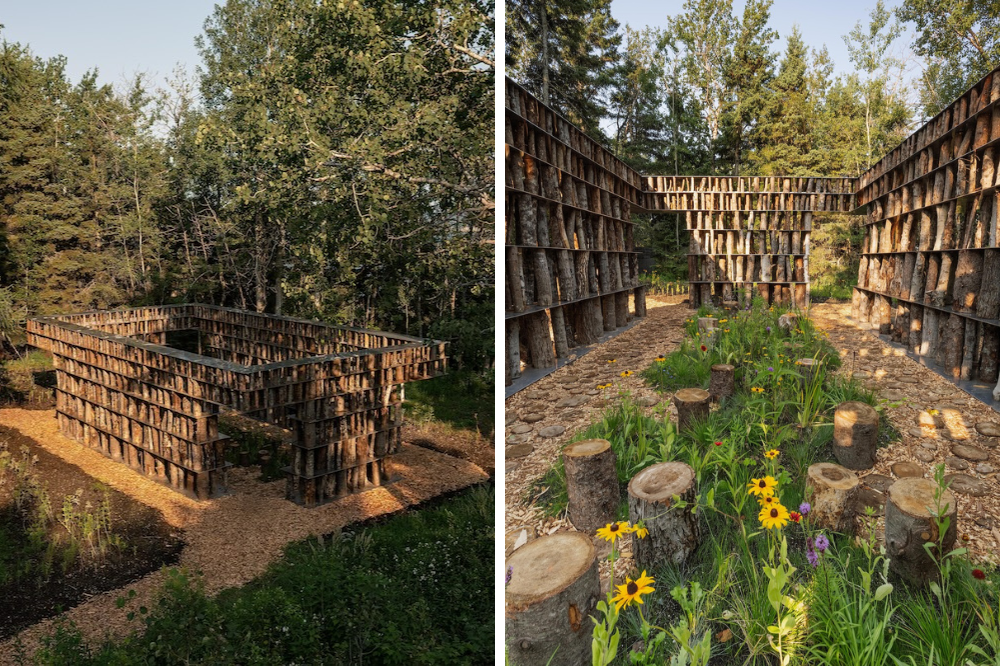

Again, a Garden
Hugh Taylor | Manitoba, Canada + United States
Again, a Garden is a walled garden – a pavilion constructed from cut fallen logs sandwiched between aluminium plates – within which native pollinator species are planted. It traces the flows of life in the garden and its nearby environment. Even as it provides moments for rest and reflection, the garden encourages visitors to become aware of their surroundings as a cycle where decay and life are understood as integral parts of a single system.
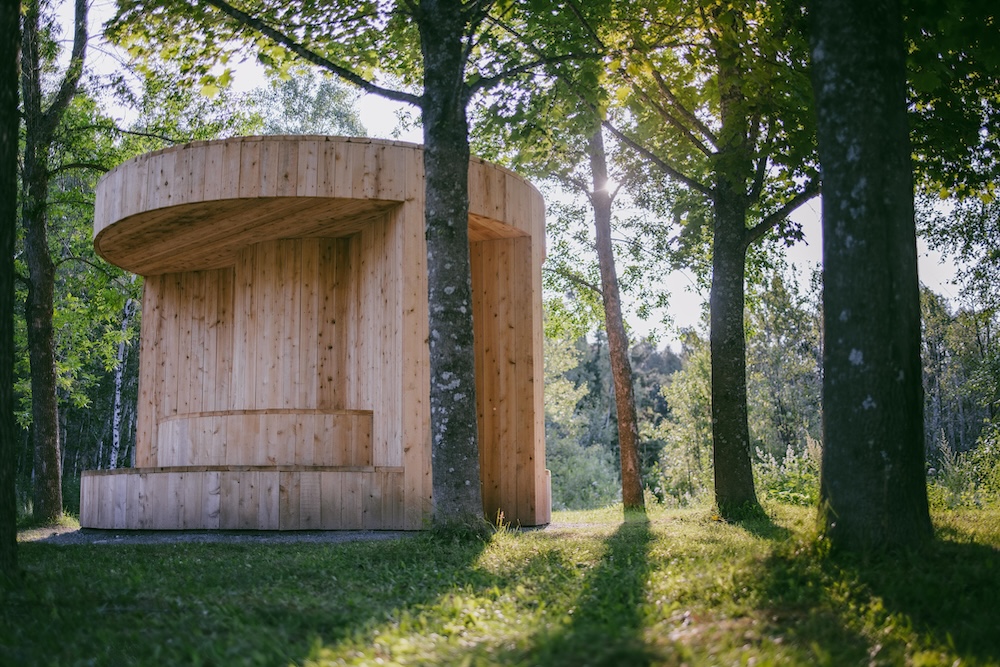
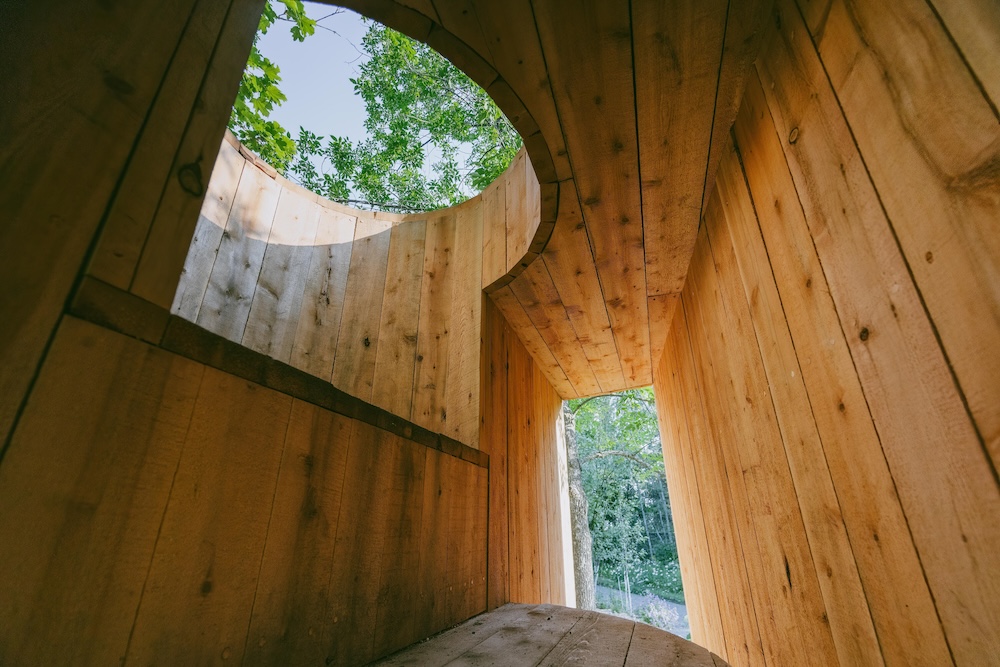
Frame
Ulli Heckmann | Germany + the Netherlands
Frame is an architectural reflection about how we perceive both our environment and ourselves in a given situation. The sculptural object provides curated views and different levels of intimacy to show the complexity of spatial experience and to highlight our viewpoint as the basis of our perception. By inviting us to discover what is not visible, Frame facilitates experimentation with architectural space, as well as body and environmental awareness.

Mentho-artemision
Etienne Lapleau | France
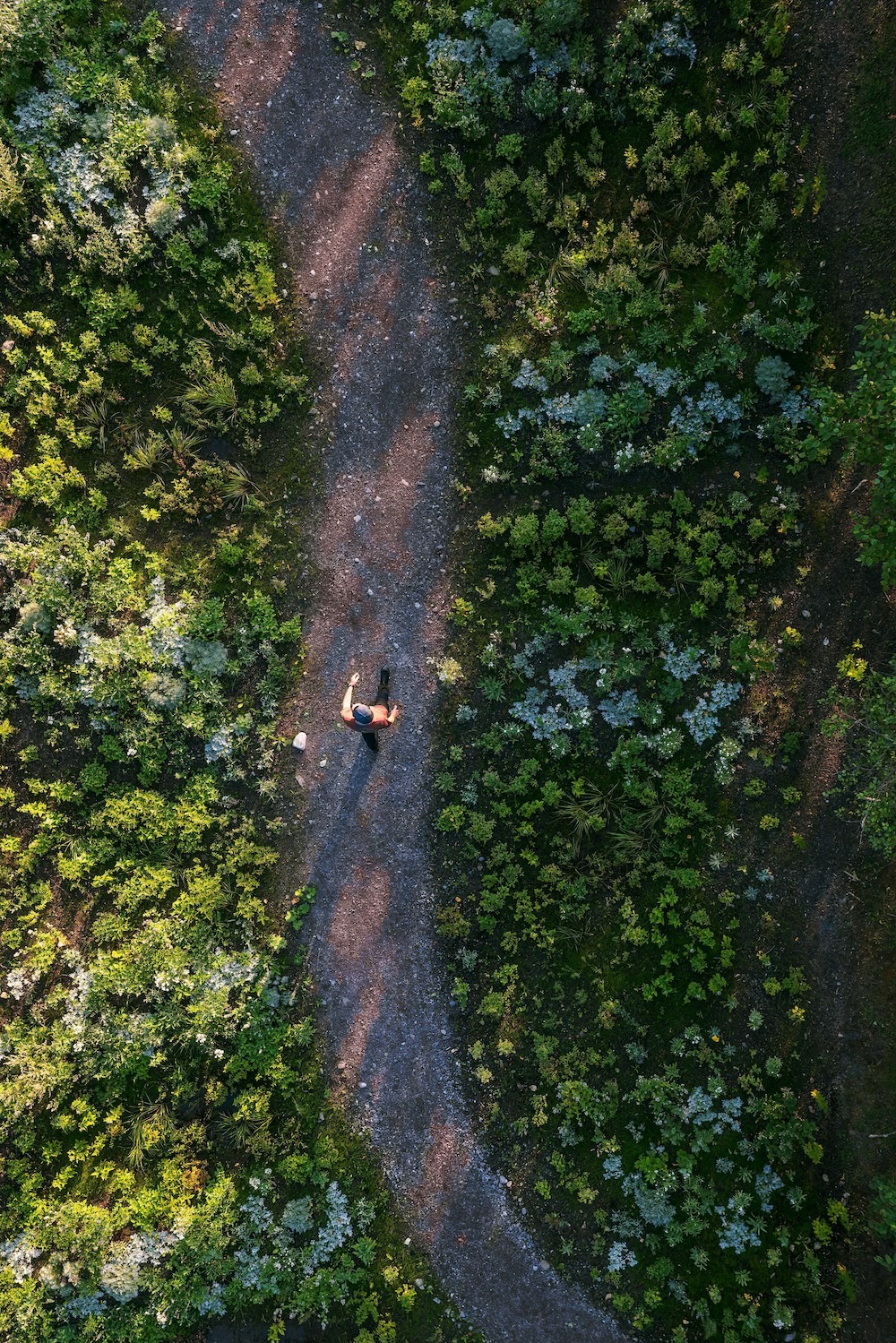
Like a sensitive map, Mentho-artemision reconstructs, in a confined space, contrasting sensations usually perceived at landscape scale. By bringing together the distinct environments in which mint and mugwort grow, the garden condenses sensory perceptions: visitors feel the transitions from dry to humid through sight, smell, and touch.
Tainai-Meguri
Measured Architecture + Tamotsu Tongu, Kumpei Wakino | British Columbia, Canada
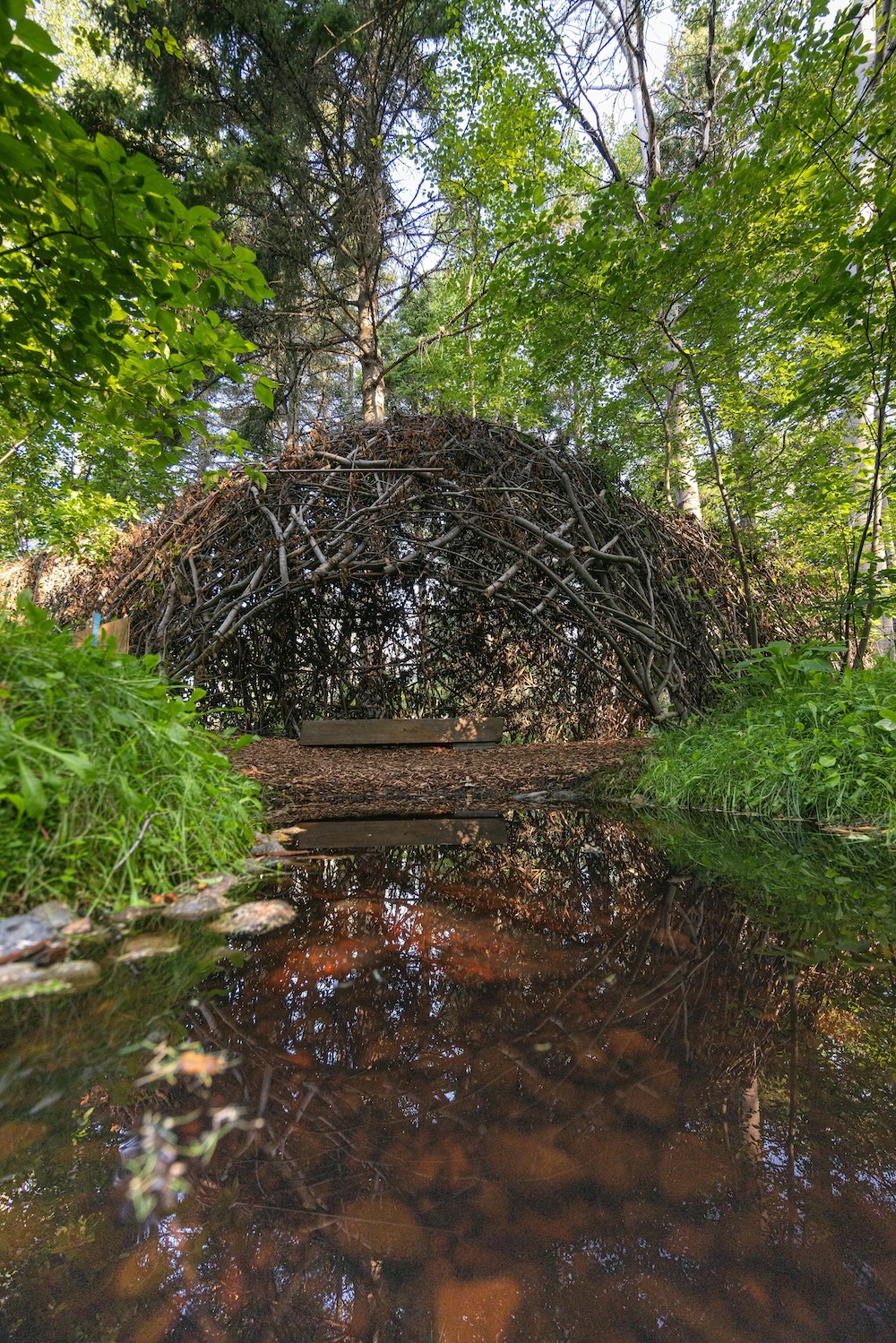
Every day we navigate digital space without question and act as if the screen itself were reality. Yet our perception of the world and our sense of being are shaped by intangible data. Tainai-Meguri envisions this digital space as a cave made tangible by a sweeping arbour. A convergence of nature, water, and light brings about a return to origin – a meditative journey in which inner and outer worlds dissolve.
Worm’s Eye
Ellen Harris | United States
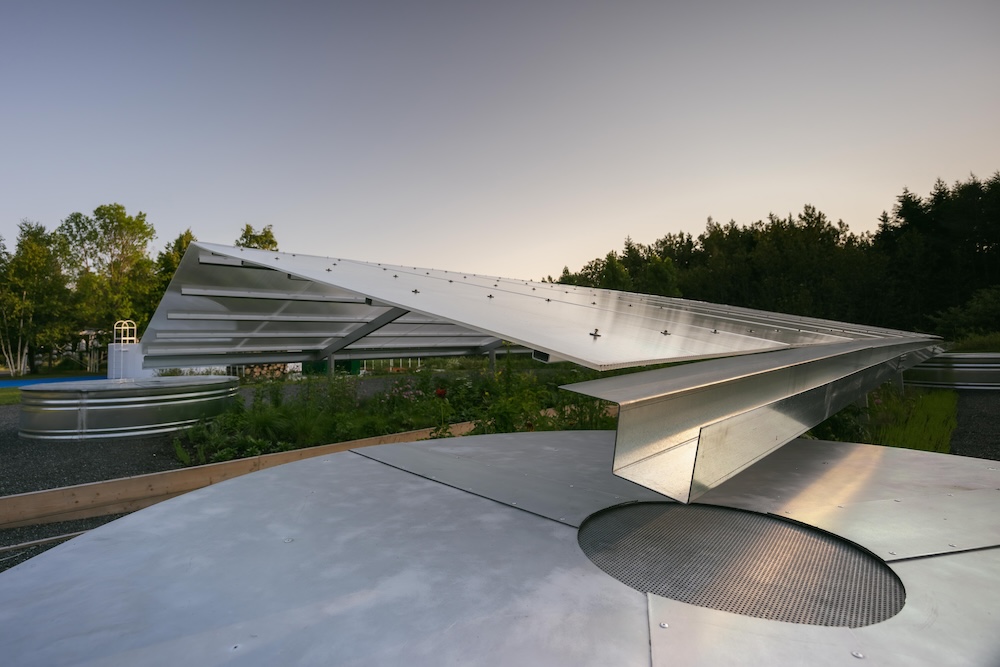
The anthropologist and political scientist James C. Scott identified the cartographic “view from above” as the position from which large-scale entities such as modern states and multinational corporations impose conditions of legibility on the subjects and territories under their control. Worm’s Eye imagines a “camouflage architecture” that frustrates this kind of top-down legibility and encourages visitors to have a different understanding of place: intimate, local, and necessarily partial.
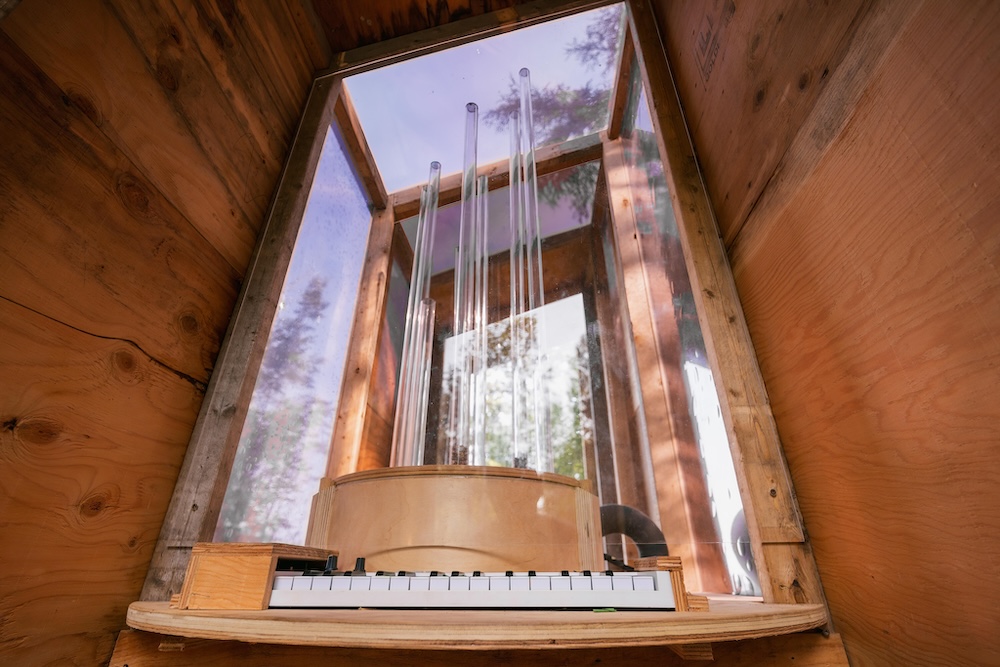
Special Project: Pousses de son
Tom Jacques | Québec, Canada
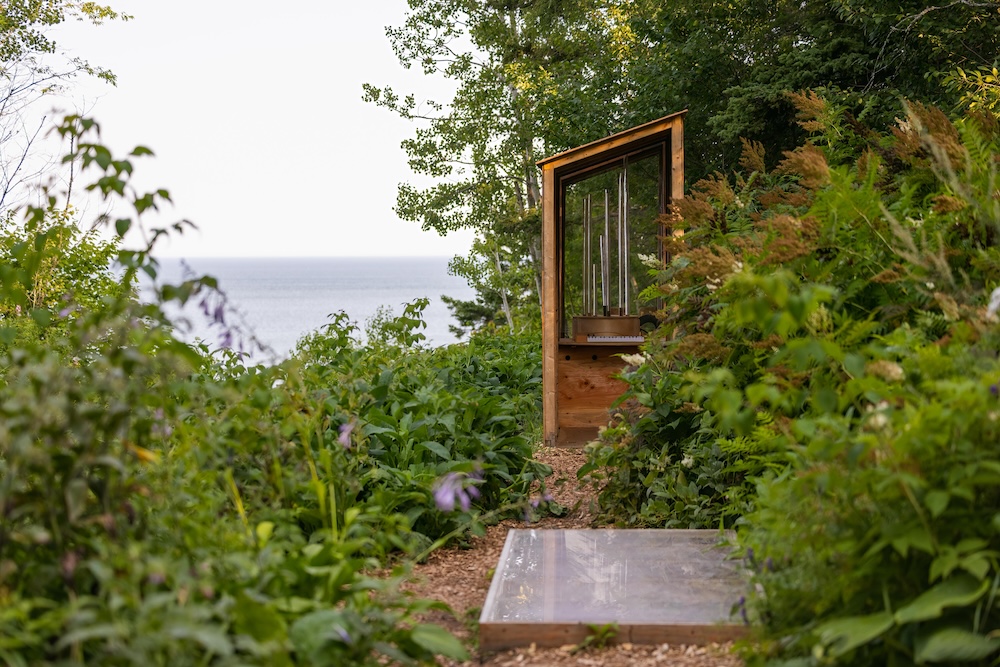
Sound and vibration surround us constantly, yet for many, they play a far less significant role than the visual. In cinema, the soundtrack generally serves the image. In many musical genres, certain noises are avoided — or even ignored — and are not considered integral elements of the music, despite being audible during a performance. Here, this experimental garden places sound at the heart of the experience. Through the acoustics of its environment, it seeks to place the visitor in a listening mode, gently drawing them into the world of the attentive walker and shaping their perception of the surrounding landscape.
Photography by Martin Bond.
Like what you see? Get it first with a subscription to aspire design and home magazine.