


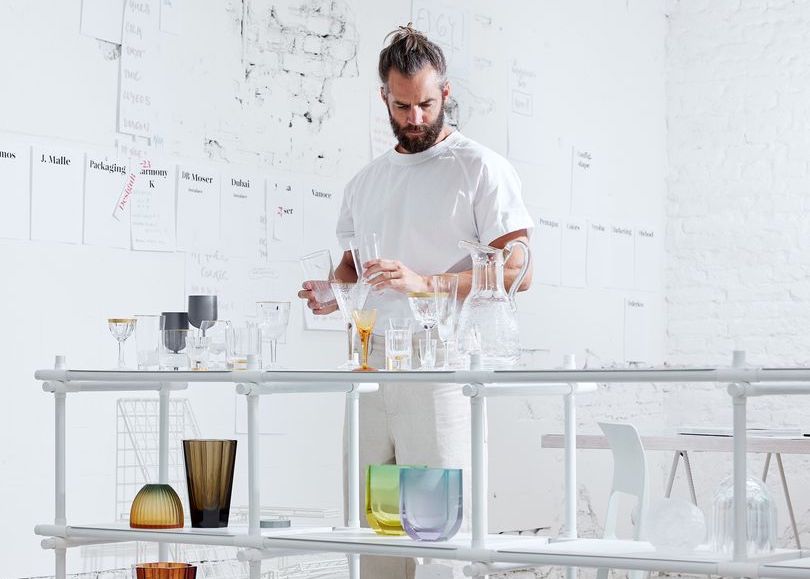


With a philosophy rooted in emotion, experimentation, and the relationship between art and functionality, Plecháč continues to push the boundaries of contemporary glassmaking while honoring its rich heritage. Get to know Jan Plecháč and his creative process in this week’s Maker Monday.
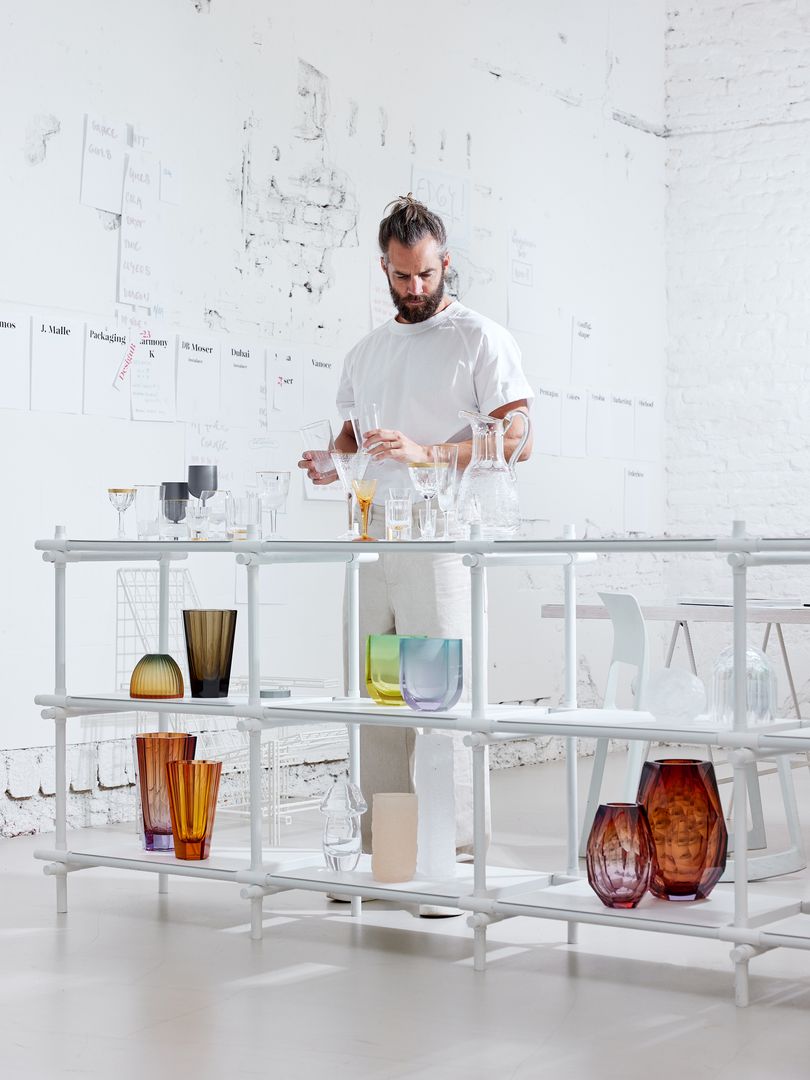

Andrew Joseph: What is the most challenging project you’ve worked on, and how did you overcome it?
Jan Plecháč: It was probably my diploma thesis. It was my first major project where practically everything was at stake, as it is often considered a kind of door opener for a future career. And honestly, that is exactly what happened. This project opened many doors for me, and I continue to draw inspiration from that experience to this day.
AJ: Can you describe a project that you’re particularly proud of?
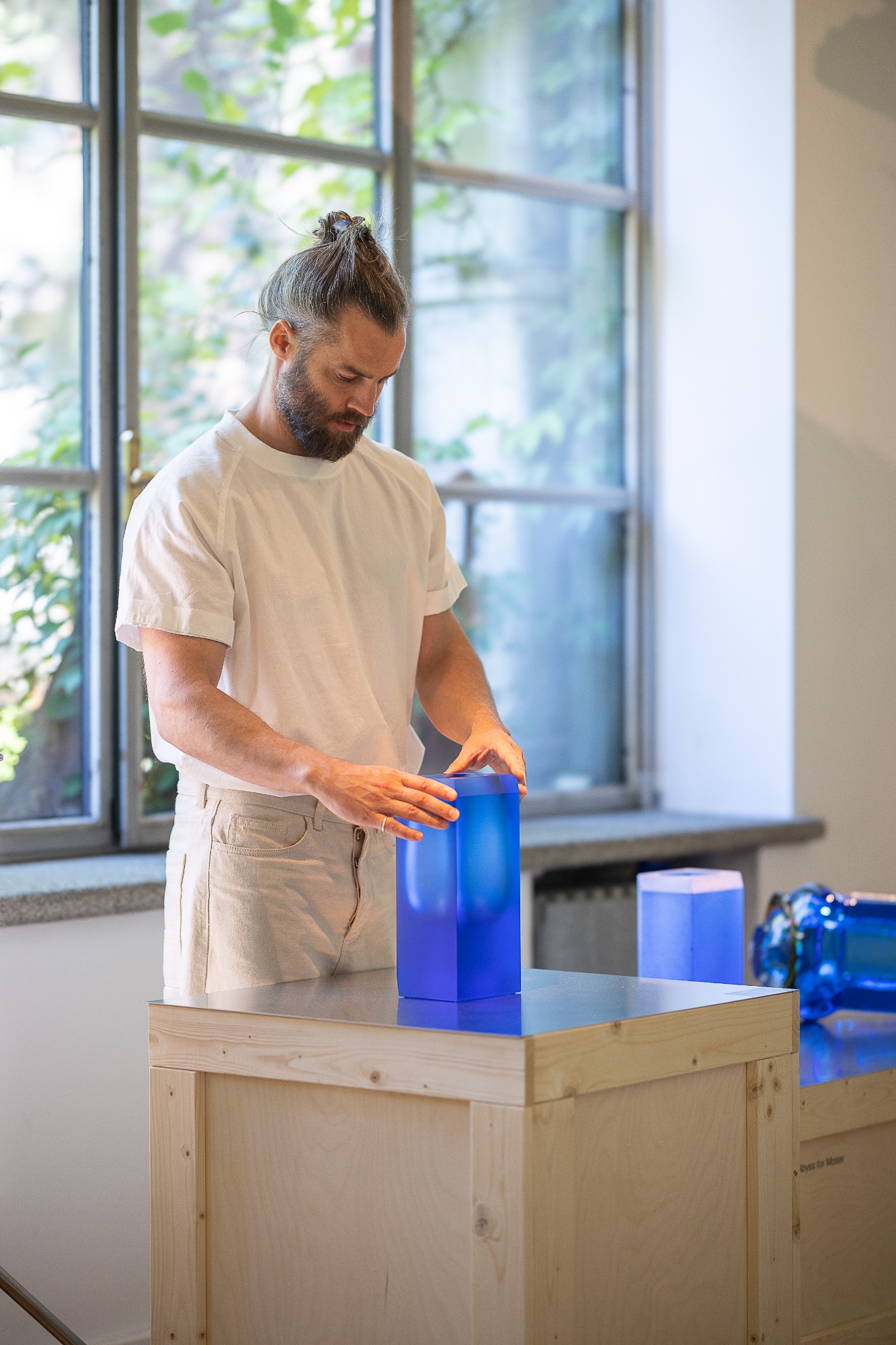
JP: My first collection for Moser, Abyss. It was very important for me to establish my direction and introduce the new vision I had for the glassworks as its Creative Director. Abyss combines all the elements of the company’s DNA while being completely new and contemporary. When you work in the glass industry, you realize how difficult it is to invent something new using the same centuries-old techniques, and I believe I succeeded with this collection.

AJ: Can you tell us about a specific moment in your career that made you feel accomplished?
JP: When the Abyss vase appeared on the cover of Wallpaper magazine.
AJ: What is your favorite aspect of your job?
JP: That I can bring my entire vision of the brand to life. It is not just about design, but about all the different aspects this role entails. It is about the emotion the brand should radiate and the daily contact with the glassmakers, who are absolutely excellent and truly passionate about their craft.
Regarding the design process itself, I love the initial birth of an idea, that moment when I create the first sketch of a new concept and recognize that I have opened an interesting theme. Then comes the moment of materialization, when the idea becomes reality, and you begin to see its potential.
I also adore the moment of the first presentation, when you reveal a new creation for the first time. I have to admit, the entire process is exciting and full of thrills.
AJ: Can you describe a project where you had to work with a specific theme or motif?
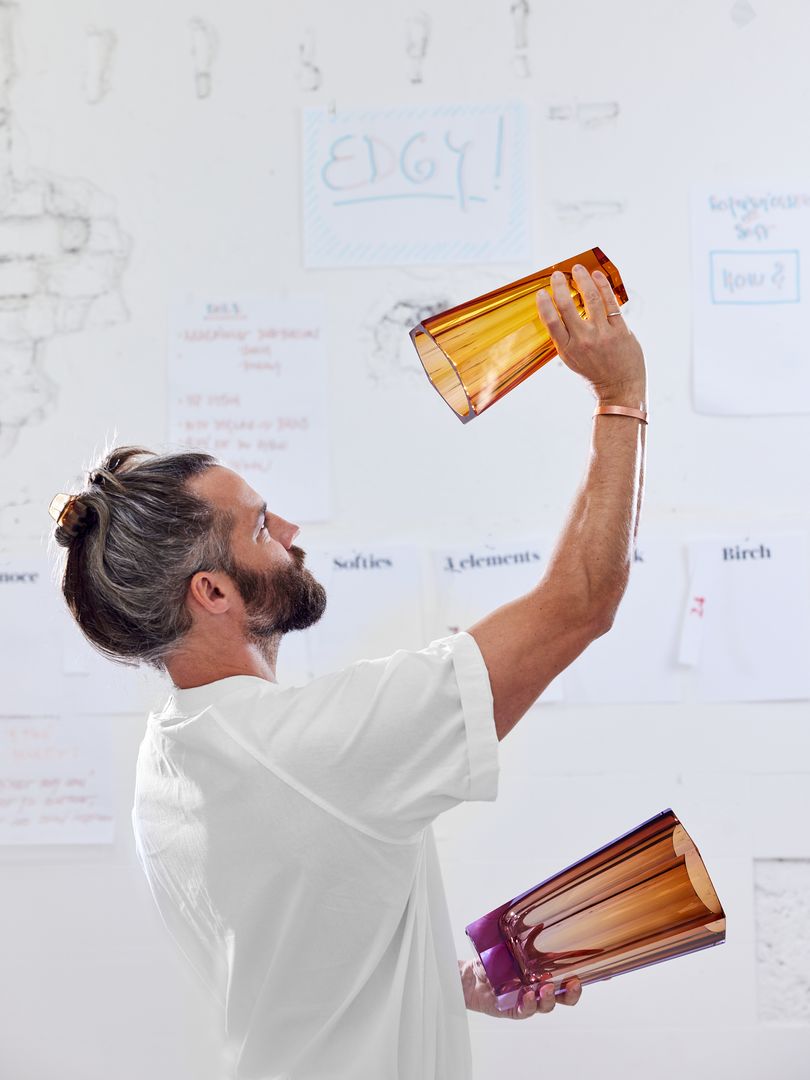
JP: There have been many such projects throughout my career. For example, I am currently working on a collection celebrating the 170th anniversary of the brand. With this collection, I want to revisit the past and bring it into the new century.
My projects are often inspired by something specific, such as nature. When that happens, I try to extract the absolute maximum from the theme. It is not simply about shape, but about capturing the true essence of the subject, including the emotion we should feel when interacting with the object. I then try to incorporate color, texture, form, and something unexpected to capture that essence rather than simply copying natural forms.
AJ: How do you incorporate art into your designs?
JP: I do this very often because my work exists on the boundary between design and art. It is an approach that suits me perfectly and is reflected in almost all my collections.
I have always said that my work lies somewhere between these two disciplines. Recently, a beautiful term has emerged, “collectible design,” which wonderfully combines them. The objects retain their practical value while incorporating elements of art.
Practically everything I create is produced in small series, made entirely by human hands using techniques that are hundreds of years old. We do not only design functional glass, such as drinking sets, but also artistic objects intended to endure over time.
Like what you see? Get it first with a subscription to aspire design and home magazine.