


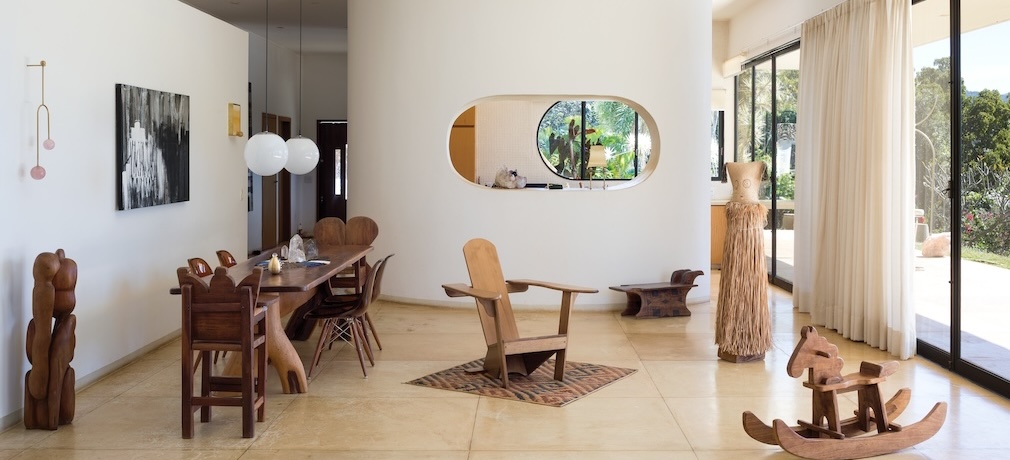
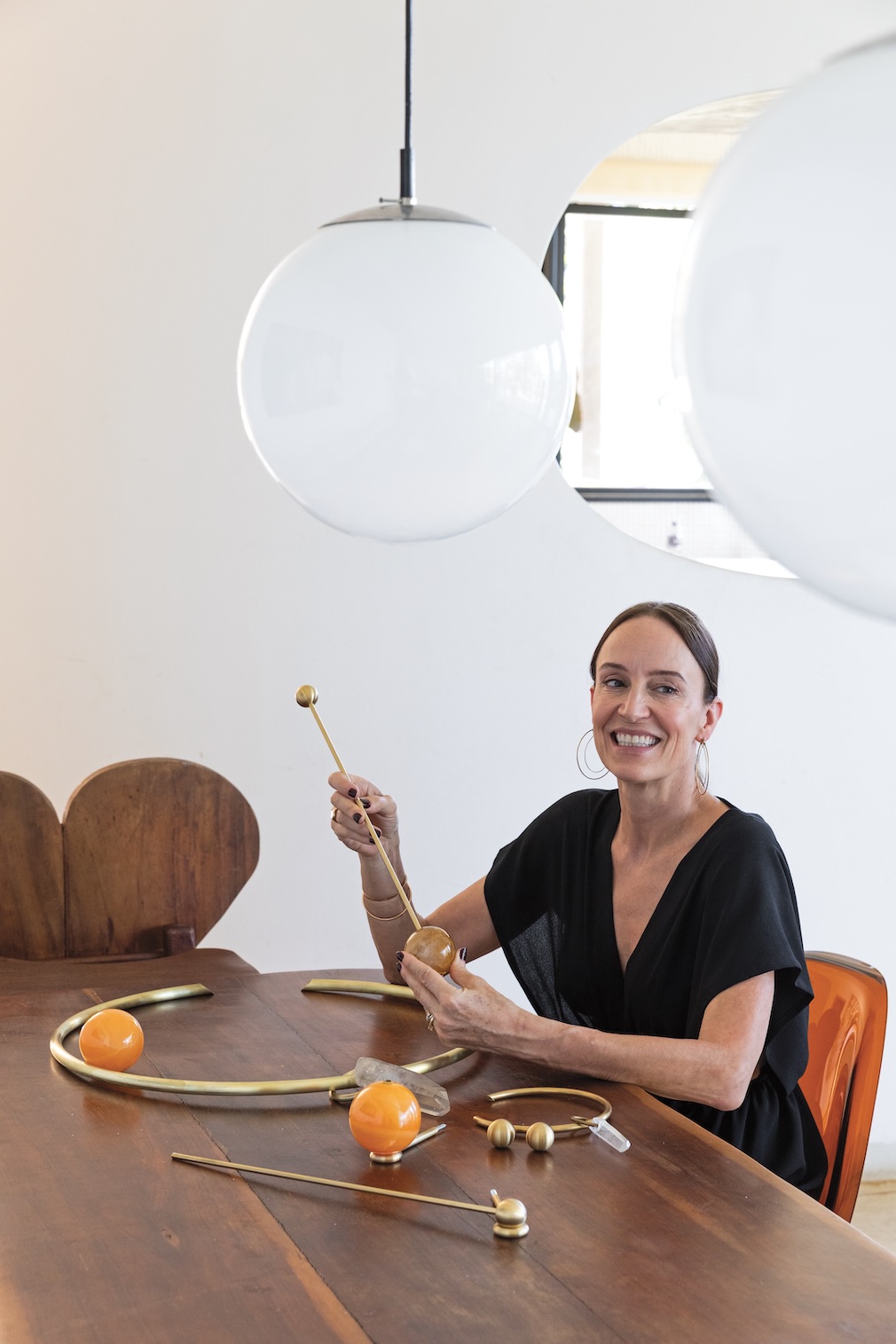

Architect and artist Janet Vollebregt first came to Brazil from her native Netherlands to design a hotel, a project that eventually fizzled. But she and husband Xavier de Bode traveled the country long enough to fall in love with a hillside farm in Alto Paraíso de Goiás, a highland savannah in central Brazil. Reluctant to move across an entire ocean and hemisphere, however, they returned home, only to be drawn back a short while later to purchase a 54-acre plot with an old house on it.
“The first three years I found very heavy, very different from my life in Amsterdam in high heels,” Vollebregt recalls. “I had to get used to all the animals. We slept in the old adobe farmhouse on mattresses on the floor. But after meeting my first tarantula, I never did it again.” De Bode undertook reforesting the land, while Vollebregt began applying her feng shui master skills and her studies in the Japanese energy-healing art of Jin Shin Jyutsu (for which she is a mentor) to envision a healing retreat called O.Sítio. “I wanted to integrate energy and what you feel in a space,” she explains about the compound she would eventually design. “Energy and poetry of a space or object are what count.”

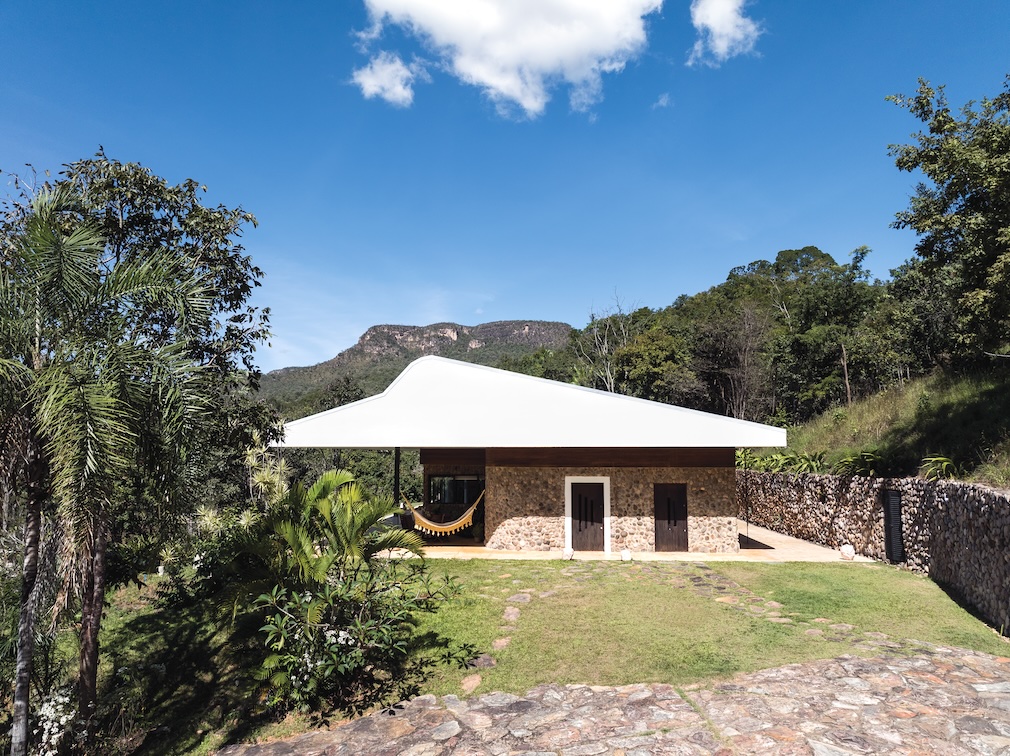

Today, there are three buildings. The original farmhouse was refurbished in 2006 but eventually “eaten by nature,” Vollebregt relates. She wanted its 2150-square-foot replacement to have a “respect for the history of the place.” So in 2022, and after the birth of their children, Zeus and Zahir Amazona, Vollebregt and de Bode erected Casa Arco do Sítio on the site, a stucco-and-clay tile structure whose name refers to the many arched doorways that punctuate the spaces.
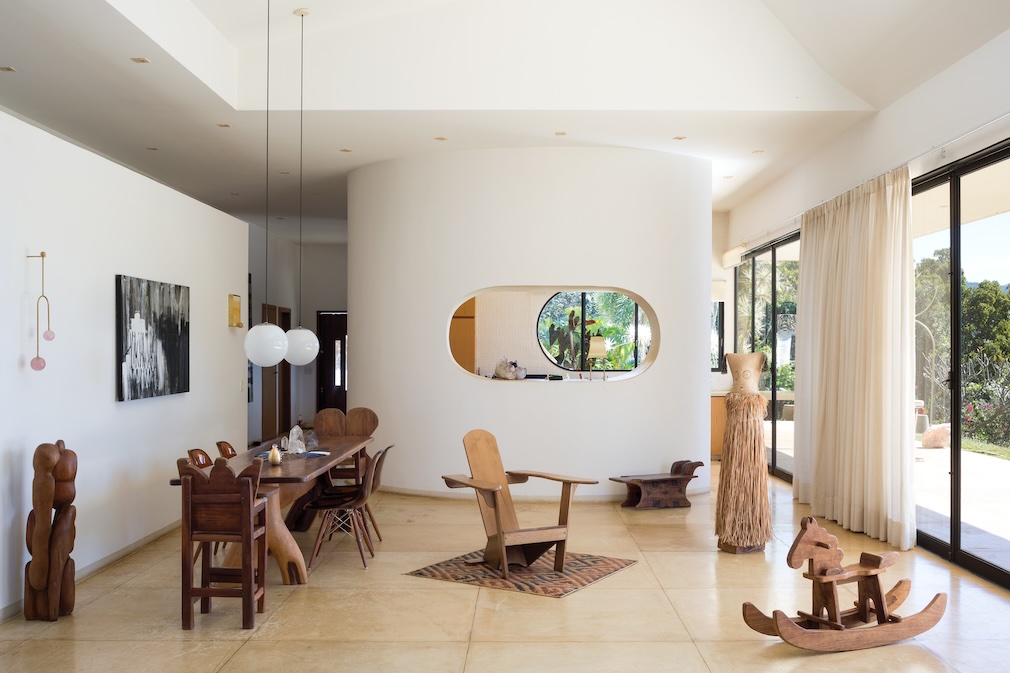
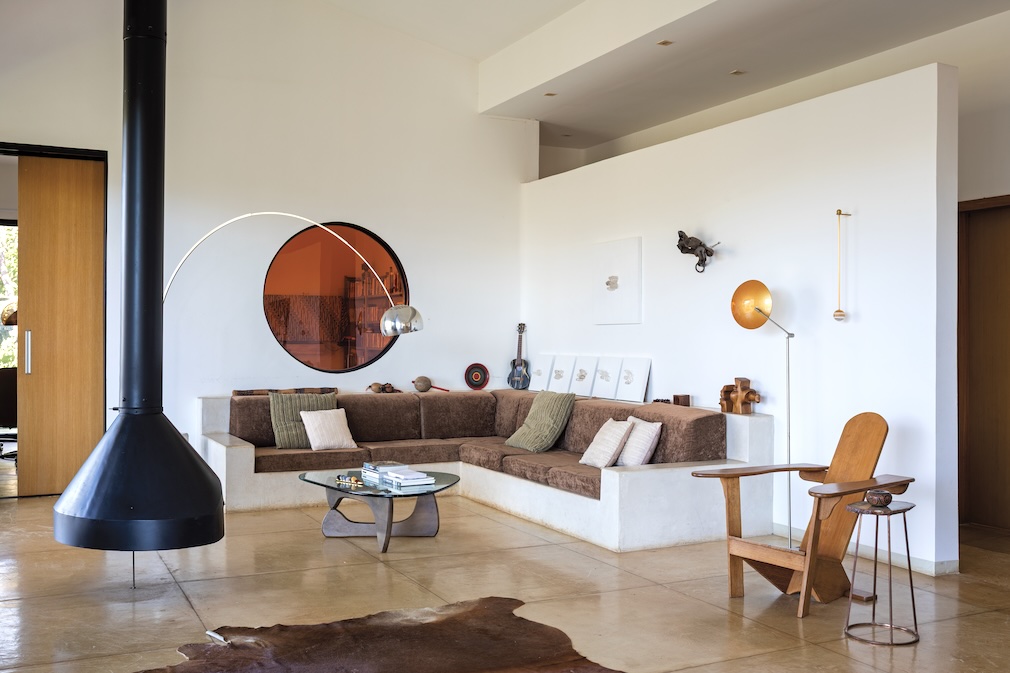
Meanwhile, they had built Casa Alto Paraíso, a 6460-square-foot, three-bedroom, steel and stone structure, between 2010 and 2012. Perched almost 3,300 feet up the slope, it became the main dwelling. Its roofline follows the incline of the surrounding mountains and, like Arco, boasts interior windows and other features that are semicircular or round. When Vollebregt validated her architectural degree at the University of Brasília, one of her professors noticed a natural – and to Vollebregt as yet unbeknown – affinity with the work of the famous Brazilian midcentury designer Lina Bo Bardi, who also employed curvaceous forms.
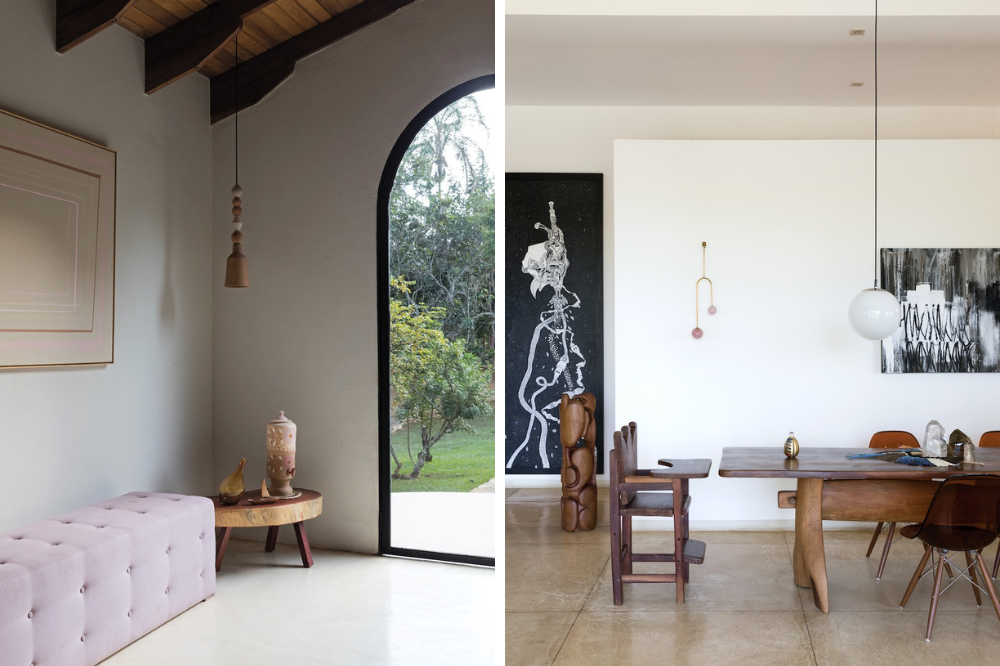

Finally, there is Casa Cabana, made of adobe and recycled materials, which was constructed on the site of a former shed. O.Sítio took years to complete, mainly, Vollebregt notes, “because I was working with local people who could not read architectural plans.” When they dug an access road to the property, she recalls, instead of the earthmover she expected, a group of workers showed up in flip-flops with shovels. The family rents out the buildings selectively when they are in Amsterdam.
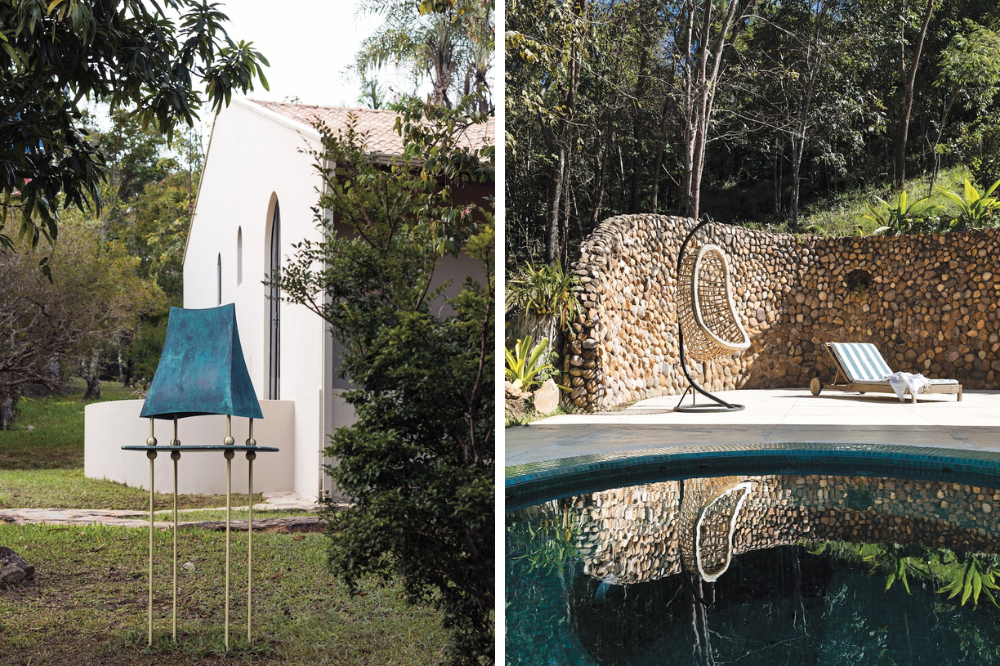
Vollebregt began channeling holistic energies into her artworks at least in part because “O.Sítio is located on one of the biggest crystal plates on Earth,” she says. “When NASA takes photos of the area, it emits light.” But, she adds, “I was also influenced by Buddhism, and other religions and philosophies. I was looking for a universal language.” This translated into works that were also architecturally informed: interactive sculptural installations and objects such as “building piercings,” spirit house-like structures where viewers can leave a message and wishes, totems, tree talismans, cosmic eggs and curvy metal works studded with crystals.
“My work is an invitation to see through things,” reads her artist statement, “to be conscious of the invisible, but sensible.” The retreat she designed in Alto Paraíso is a physical embodiment of that invitation.
Photography by Filippo Bamberghi.
Like what you see? Get it first with a subscription to aspire design and home magazine.