


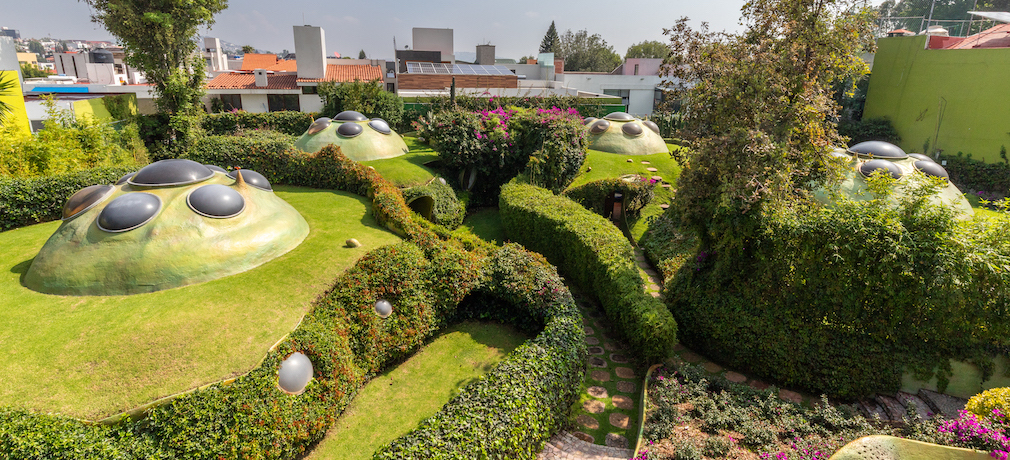
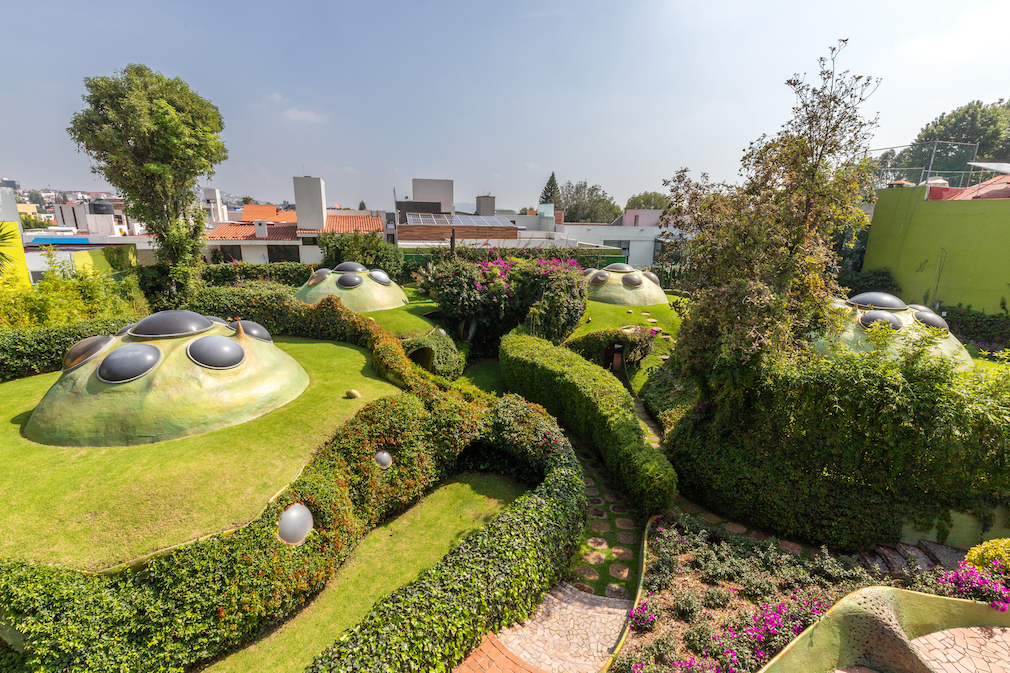

With the exception of factories and warehouses, tall towers and military installations, most architecture gives at least a nod to nature. If nothing else, the view outside gets some consideration, even if the structure itself doesn’t necessarily play nice with the landscape around it. This is especially true when it comes to residential projects. Even the picture windows that punctuated 1950s tract homes were an attempt to open interiors to the outside. Frank Lloyd Wright, of course, was adamant about making a connection with the immediate environment. So too is Mexican architect Javier Senosiain, who makes earth itself a central component of his highly individual organic architecture.
Senosiain, who has drawn from his compatriot predecessors Juan O’Gorman and Luis Barragán, as well as Wright and the Austrian artist and architect Friedensreich Hundertwasser, has long striven to avoid the straight and narrow. “Before we’re born,” he has noted, “we’re floating in our mother’s belly, like astronauts in space or a permanent Jacuzzi, but then we’re pushed into a box, a crib, and we move from one box to another throughout our lives – playpens, bedrooms, square houses, until we die and are put in another box.”

Senosiain’s determination to realize a more liberating, life-enhancing built environment is fully expressed in Conjunto Satélite, a semisubterranean complex located just outside Mexico City in Ciudad Satélite, the urban planning project conceived in 1954 by Mexican architects Mario Pani and José Luis Cuevas as a “city outside the city.” Although metropolitan sprawl ultimately surrounded their vision, Senosiain’s design remains a convincing testament to the possibility of shelter that is not only seamless with nature but also elementally joyful.
The construction system for the Conjunto Satélite habitations consisted of a pneumatic structure used as formwork, onto which 2 inches of sprayed polyurethane was applied. The form was then deflated and the interior and exterior were coated with 1 centimeter of thick fiber cement. This created a structural sandwich, which was later covered with soil and grass. One of the key advantages of the surrounding vegetation is that the grass, shrubs and trees release oxygen through evapotranspiration, helping to counteract pollution. Another major benefit is that the Earth itself acts as an excellent thermal and acoustic insulator. Inside, temperatures remain between 66 and 70 degrees Fahrenheit throughout the year.
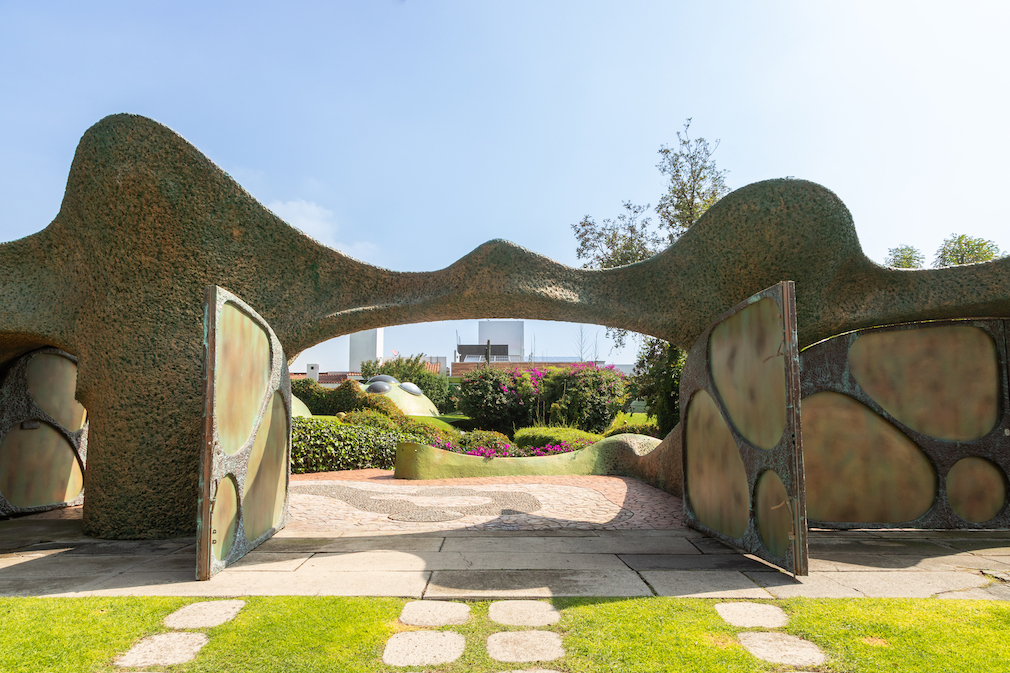
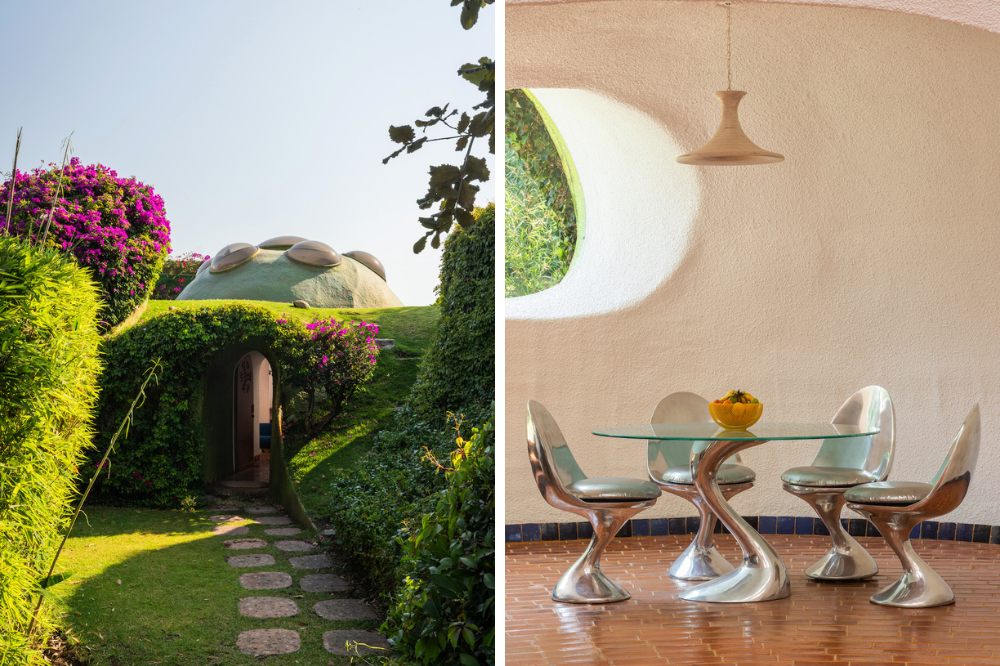

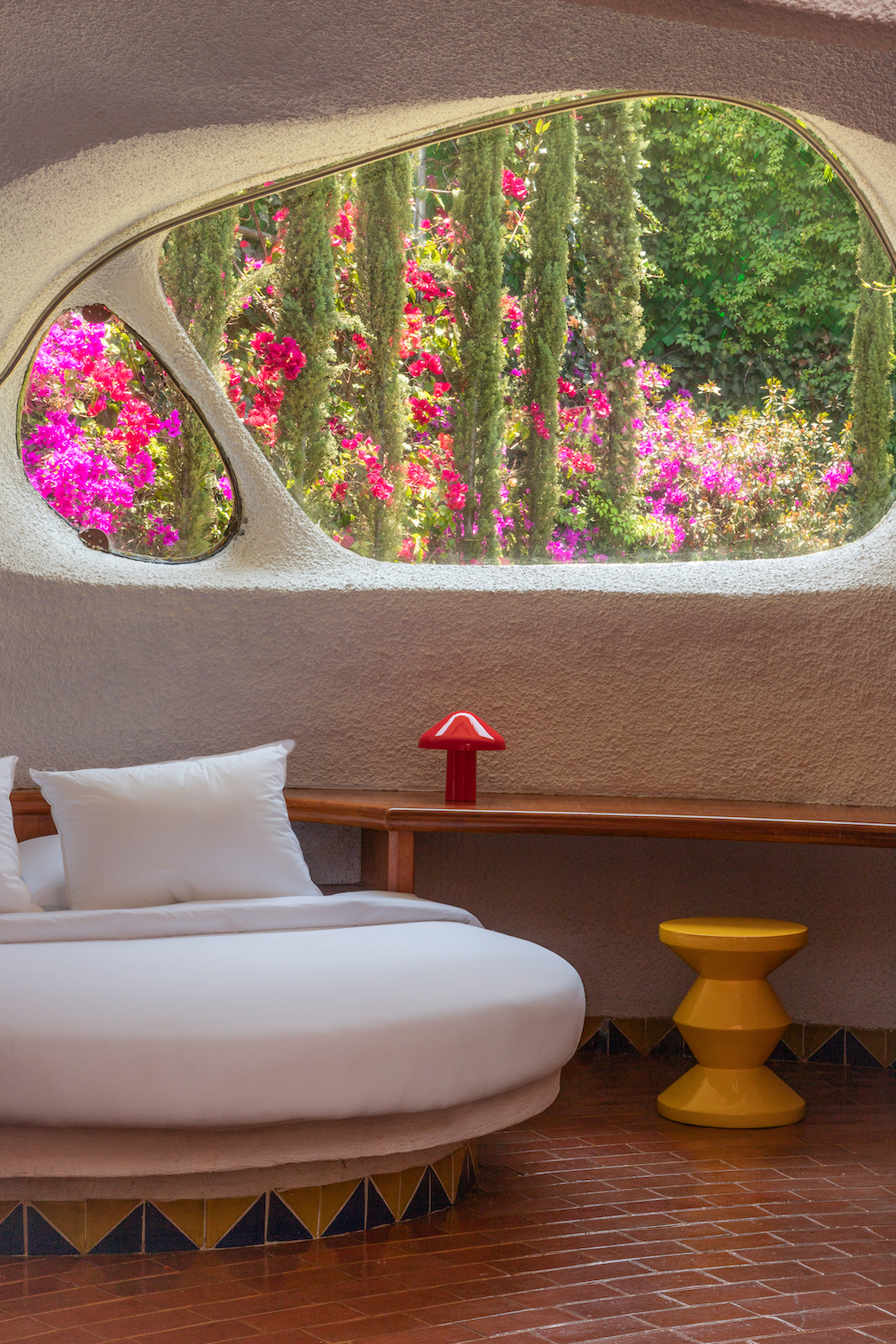
Although spatially linked on the sloping site, each of the four houses has its own pedestrian and vehicular access, its own garage and its own garden. Floor plans resemble a six-petaled flower with a central hub on which the peripheral rooms converge. During the day, the sliding wooden doors of the bedrooms can be opened to create a free-flowing plan; at night, they are closed to provide privacy. Large, irregularly shaped windows and constellations of round skylights bring the sunshine in. Reddish-hued clay tile floors underscore the homes’ fundamental connection to the Earth, and the flowing oneness of walls and ceilings adds to the experience of unrestricted space. Built-in seating follows the curve of the walls, and the kitchen and bathrooms are located along the perimeter, amplifying the essential openness of the spaces.
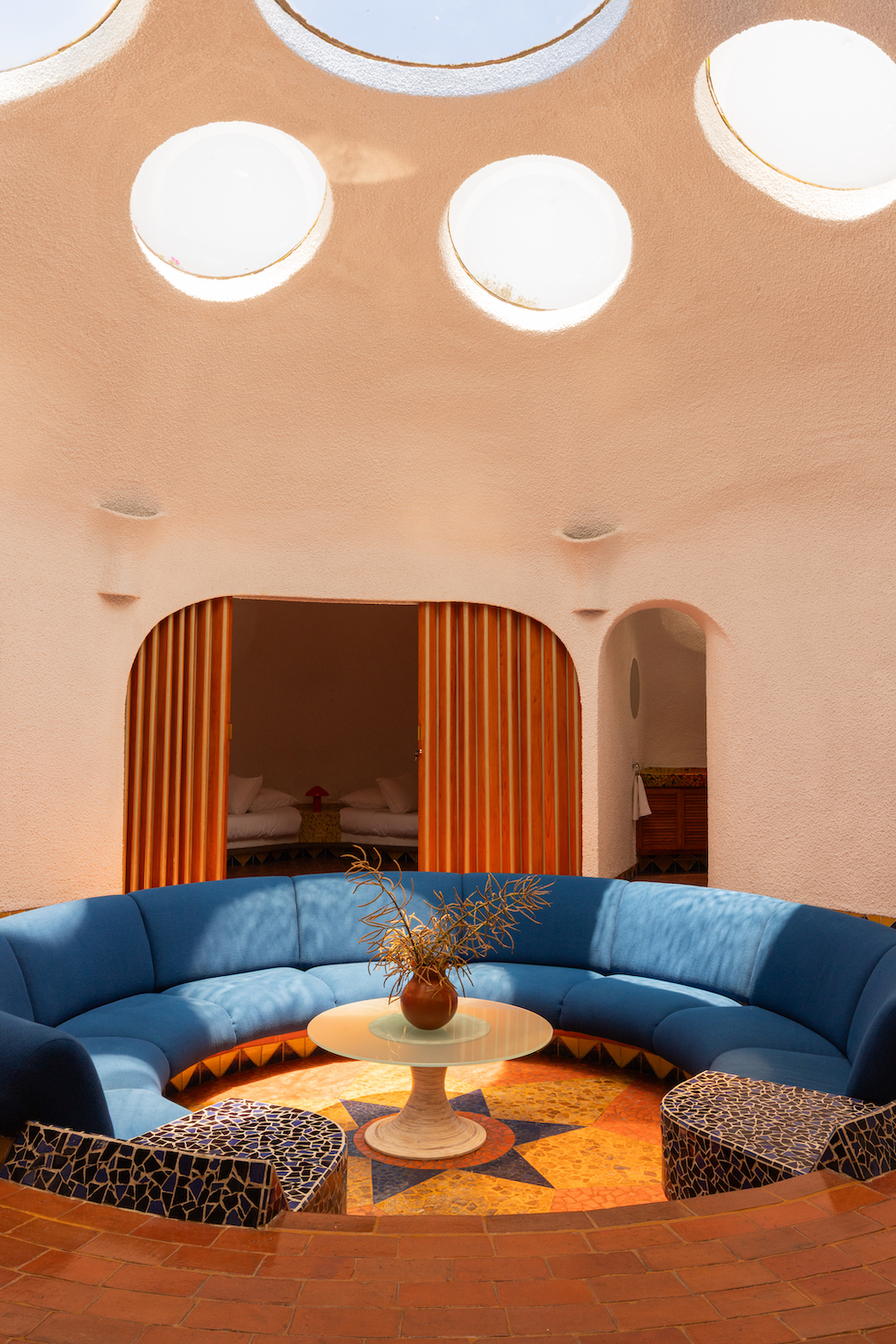
“The interiors,” says Senosiain, “are designed to be harmonious and nurturing. They are concave spaces – like a hug or a shelter – that offer a sense of physical and psychological protection. Straight lines hardly exist in nature. The horizon is curved, gravity curves movement, everything turns in spirals, from the microcosm, such as the cells in our bodies, to the macrocosm, such as the universe and large galaxies. This causes human beings, consciously or unconsciously, to feel more attracted to these organic forms and spaces.”
Photography by Leandro Bulzzano.
Like what you see? Get it first with a subscription to aspire design and home magazine.