


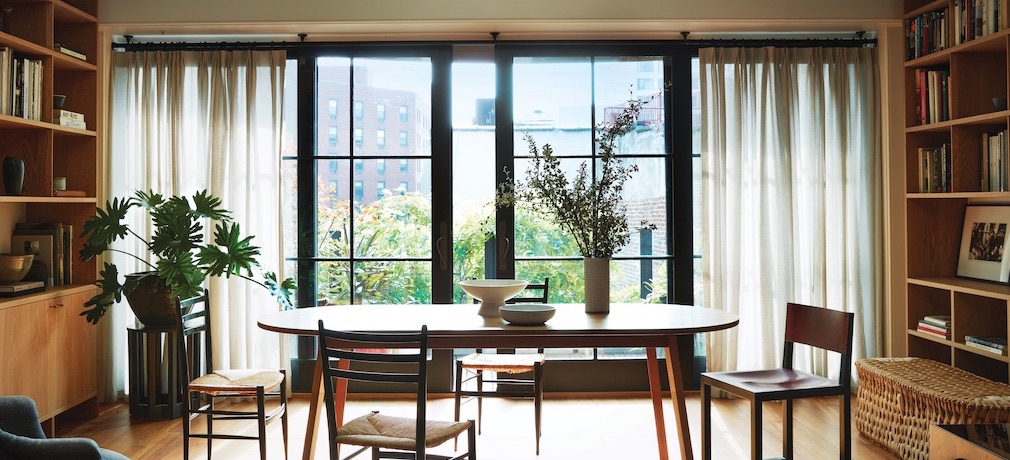


For almost any New Yorker not ensconced in one of Manhattan’s newer, ozone-piercing monoliths, darkness and light are always a concern, as the density of the urban environment generally puts abundant natural light out of reach. But when the sun does shine in, a little bit of shadow makes it all that more special.
When Juliette Spencer, principal of the Brooklyn-based design firm Atelier RO, went to work on a sun-blessed tenement-turned-townhouse in Nolita, she wasn’t afraid to play with the shadier side of the palette. While a light-loving hue envelops the dining room with its wall of windows, Farrow & Ball’s Dutch-inspired Hague Blue gives the sun-deprived foyer a kind of assertive self-possession, a deep luminosity all its own. Spencer applied the same color to the walls and a row of cupboards lining a hallway upstairs, creating a solid, room-like aspect in the passageway.
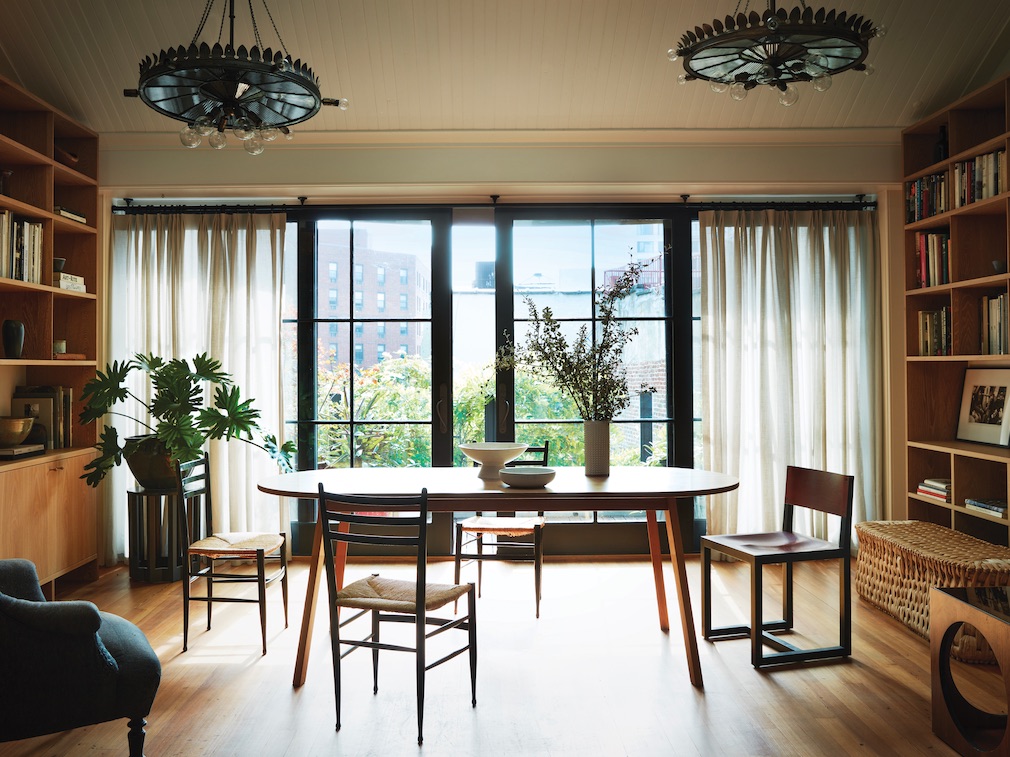

Negotiating darkness and light wasn’t Spencer’s only balancing act. Her clients – he’s an enthusiastic collector and salvager of architectural artifacts, she’s more of a minimalist – needed a mediator of sorts, someone who could parse the needs of both parties and devise interiors in which each felt at home. “The strategy was to create storage solutions that had minimal, clean lines so that the collections could sing,” maintains Spencer. Once relegated to one dark room or scattered atop various pieces of 19th-century furniture, books, pottery and photographs are now more effectively displayed in generously proportioned new millwork designed by Atelier RO and fabricated by Prospect Woodworks. “The most notable example,” adds Spencer, “is in the dining room, where we replaced a sagging, salvaged bookcase with new bookcases on either side of the space inspired by Donald Judd Furniture.”

When it came to furnishings, Spencer worked with the clients’ existing inventory, while adding new pieces. “It was a matter of curating what they had and then adding a few basics that had cleaner lines, such as a new sofa from RH, so that the whole family could watch TV together.” While Spencer did achieve a happy medium, arriving there wasn’t without hiccups. “A Noguchi floor lamp was a bone of contention,” shares Spencer. “She loved it; he did not. We bought it anyway, and now that he sees it in context, he appreciates it and loves its soft, relaxing light.”
Although satisfying both spouses was a must, Spencer paid special attention to the wife’s needs. “Her home was slowly being taken over by the collections, so my task was to bring her voice back in,” explains Spencer. “She’s a book editor, so the new HAY table in the dining area does double duty, providing her with a place to work and access to her library on the new shelves.”
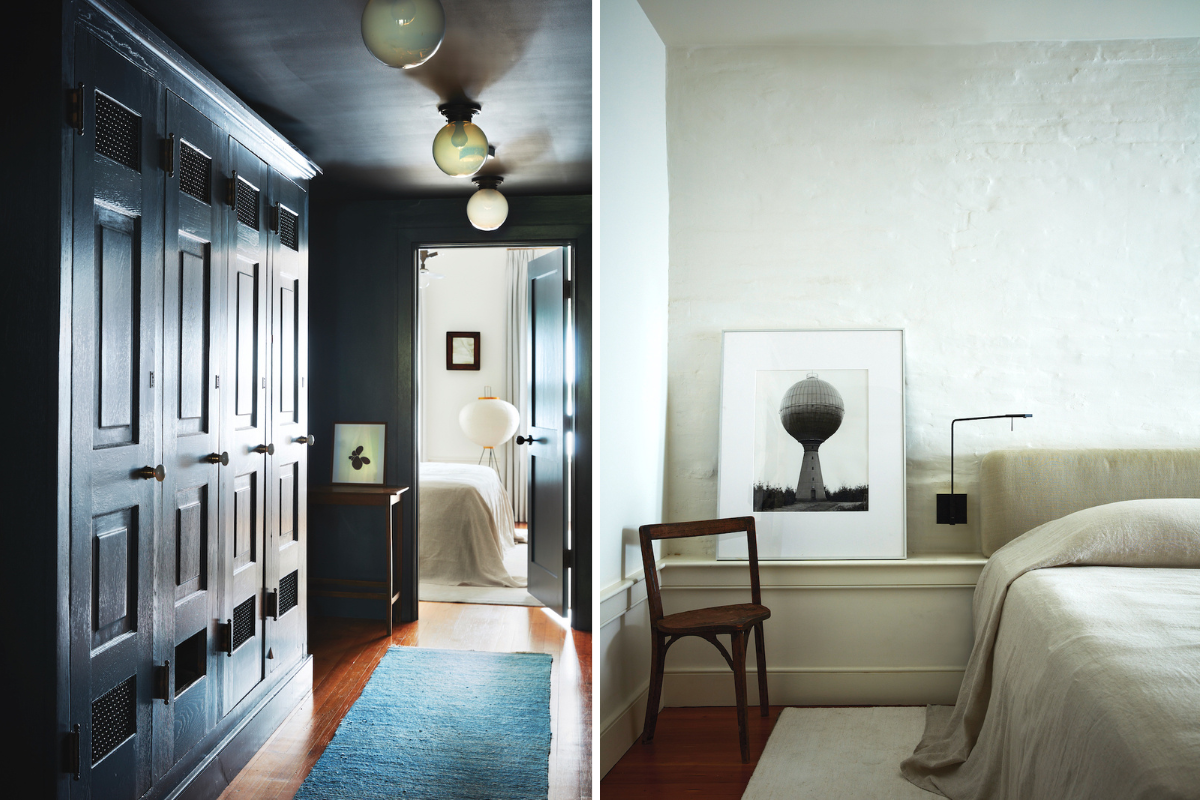

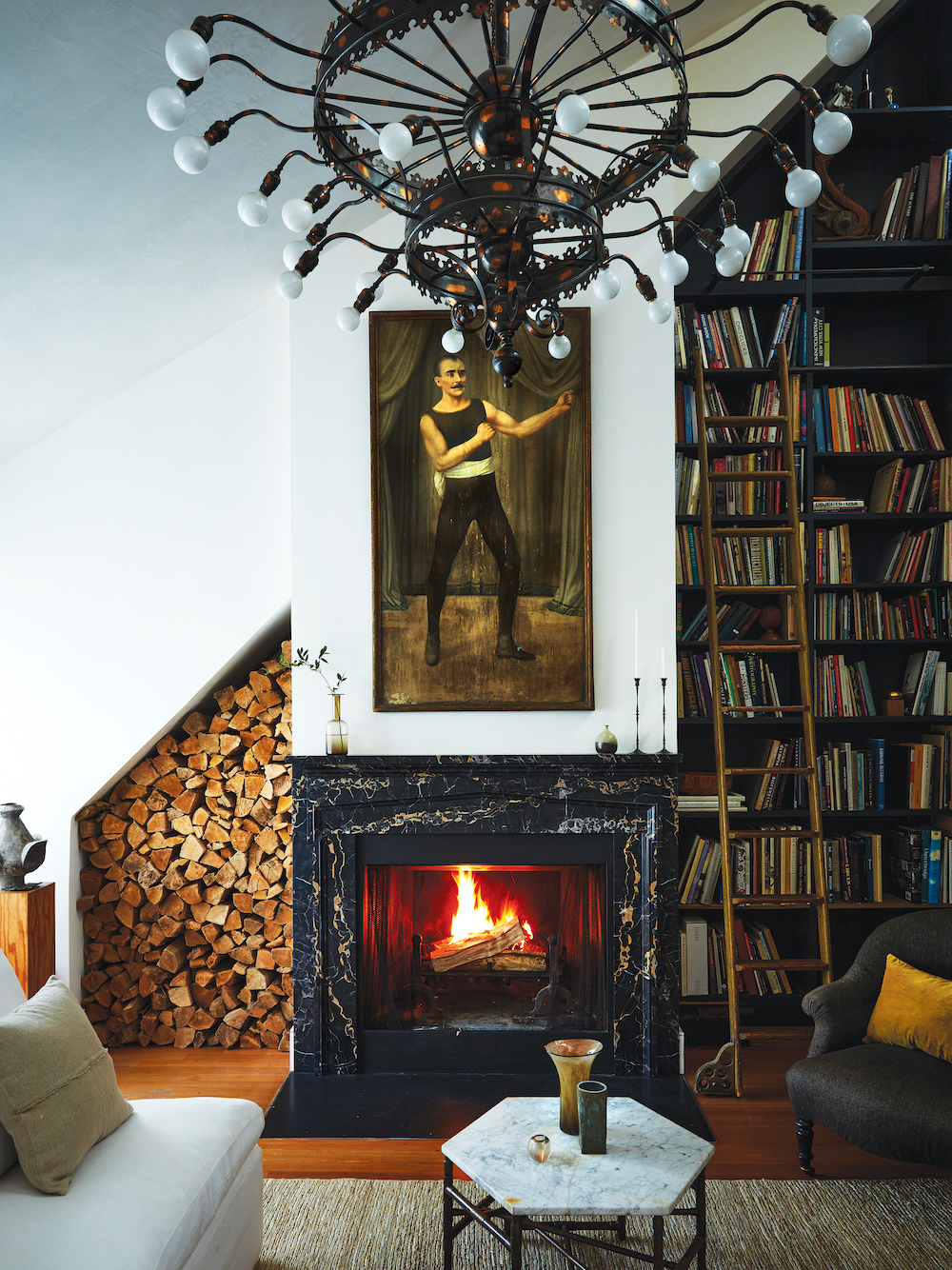
Clean and uncluttered, yet warmly detailed, the revivified residence exudes an urbane charm in multiple modes. Cast in neutral tones, the primary bedroom features minimalist sconces from Viabizzuno and images by the renowned German photographers, Bernd and Hilla Becher, who took industrial architecture as their subject. The living room assumes a more layered look, with a salvaged, crown-like chandelier, towering bookcase and handsome mantel. “The client had previously installed a wooden fireplace from an old school that was about to be demolished, but the material lacked presence,” relates Spencer. “So I had Chesney’s take a mold of the original, and they carved the same profile out of a block of Portoro marble.”
Like a good editor, Spencer gave this home a deep read and translated it into a more articulate expression of her clients’ tastes. And whether flooded with sunlight or tucked away from any window, every corner of it is bright with style.
Photography by Tim Lenz.
Styling by Brittany Albert.
Like what you see? Get it first with a subscription to aspire design and home magazine.