


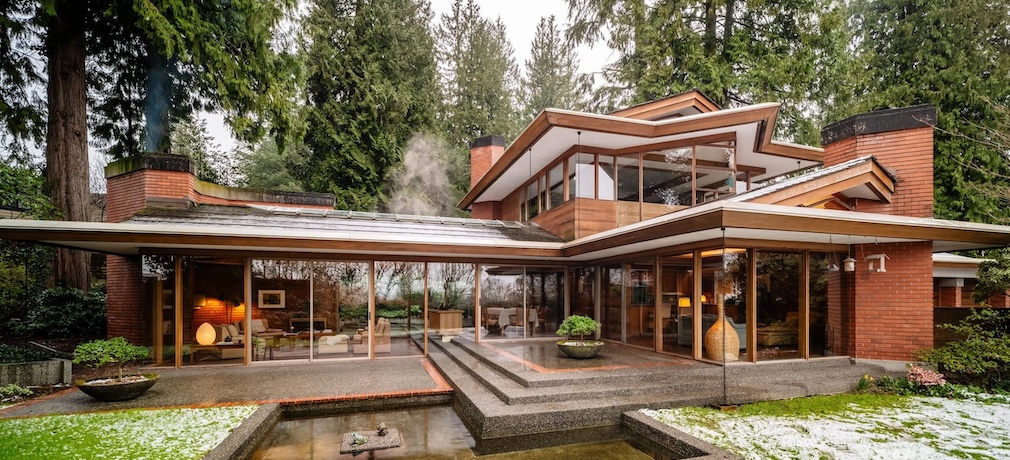
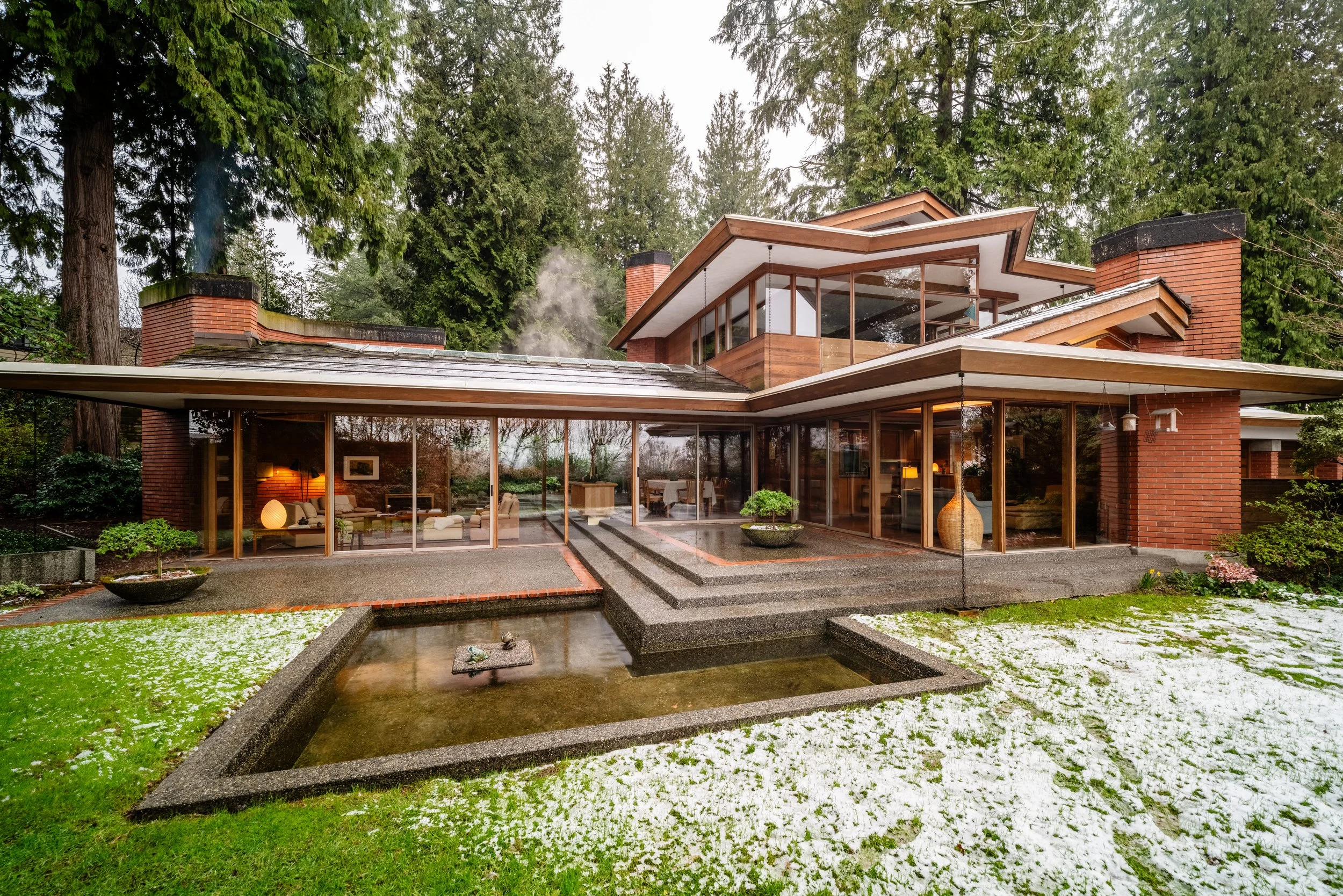

At the end of a tranquil tree-lined cul-de-sac in Buckingham Heights in Burnaby, BC, stands one of the most complete expressions of architect Fred Hollingsworth’s West Coast vision. Completed in 1990, the Lakeside House translates the philosophy of organic, midcentury architecture into the language of the Pacific Northwest — cedar, light, and landscape.
A pioneering figure in West Coast Modernism, Hollingsworth was responsible for some of the most significant residential architecture across Vancouver and the Lower Mainland.
Hollingsworth drew deep inspiration from Frank Lloyd Wright — so much so that Wright even invited him to join the office at Taliesin West. He declined, choosing instead to remain in British Columbia and develop Wright’s Usonian philosophy on his own terms, adapting it to the particular climate and character of the Pacific Northwest.
The result was what Hollingsworth called Neoteric design, an architecture rooted in regional materials, post-and-beam construction, and a careful integration into the natural landscape. Though his foundational work dates to the 1940s, many of his homes are now listed on the North Vancouver Heritage Registry and continue to be featured in numerous architectural publications.

The Lakeside House, completed in 1988, represents a mature expression of this vision. Like Wright’s Wingspread House, one of the last and most ambitious expressions of the Prairie Style, the house is organized as a series of wings extending from a central core — low, horizontal, and spreading deliberately into the landscape rather than imposing upon it. A generous budget and a compelling site allowed Hollingsworth to bring the full range of his ideas to bear, shared as much by Wright’s enduring influence as by his own decades of practice on the West Coast.
Commissioned by the Malmgren family, who had watched the lot across their street for years before it became available, the design was guided by three principles: outdoor living, views to the mountains, and prominent wood throughout. These ambitions found their expression in a cruciform plan that became the organizational basis for the house.
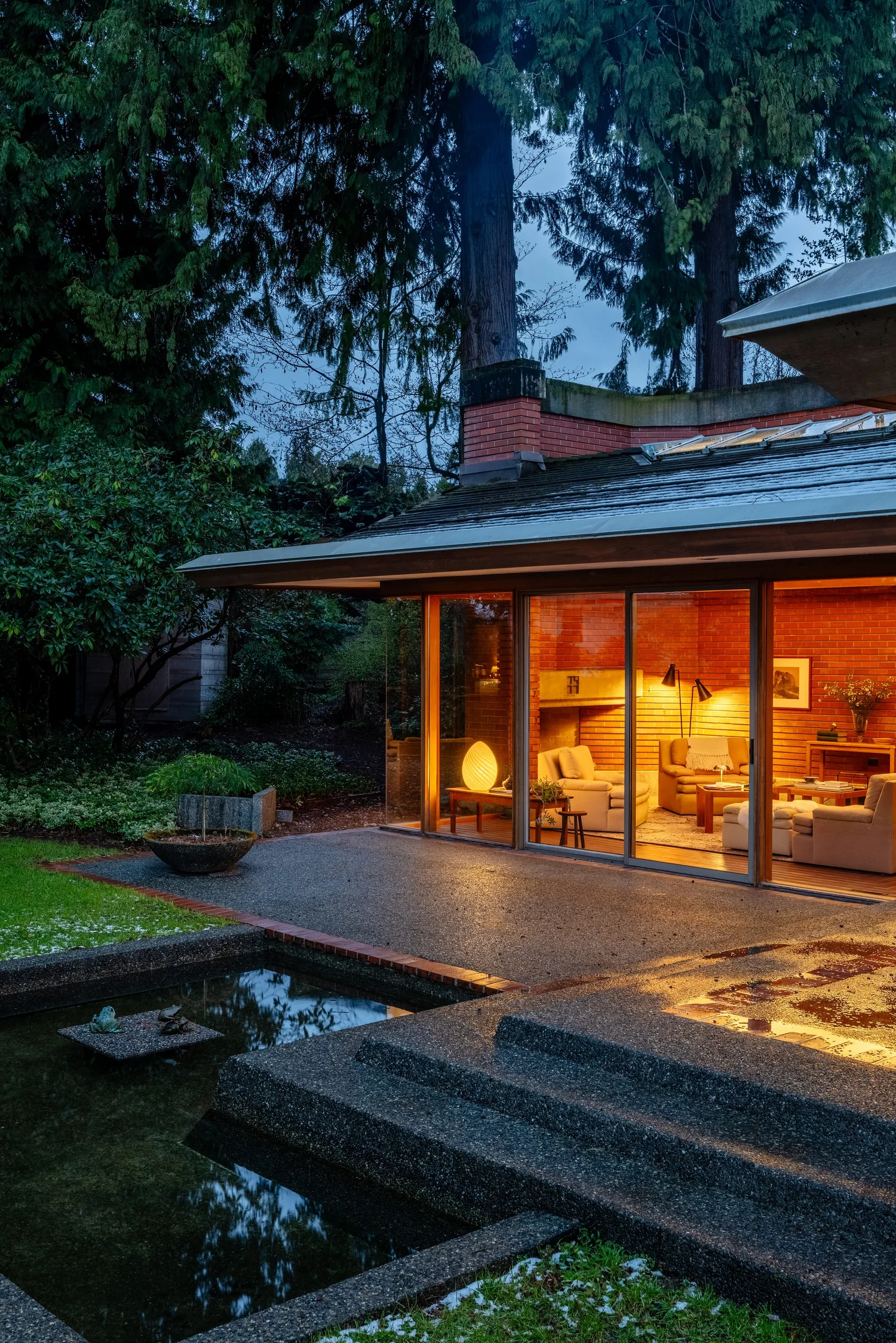
Hollingsworth believed that a building material should be expressed for what it is, never disguised or embellished. At the Lakeside House, this conviction is legible in every surface. Exterior walls are clad in local western red cedar siding of two alternating widths, paired with masonry sourced from Medicine Hat, Alberta. Its deep clay-red is a grounding presence against the tree canopy. Large expanses of glazing introduce a contrasting lightness, dissolving the boundary between inside and out. Together, these elements give the house an earthy yet weightless quality that sets it apart from a conventional Wrightian composition, lending it a character that feels unmistakably of the West Coast.
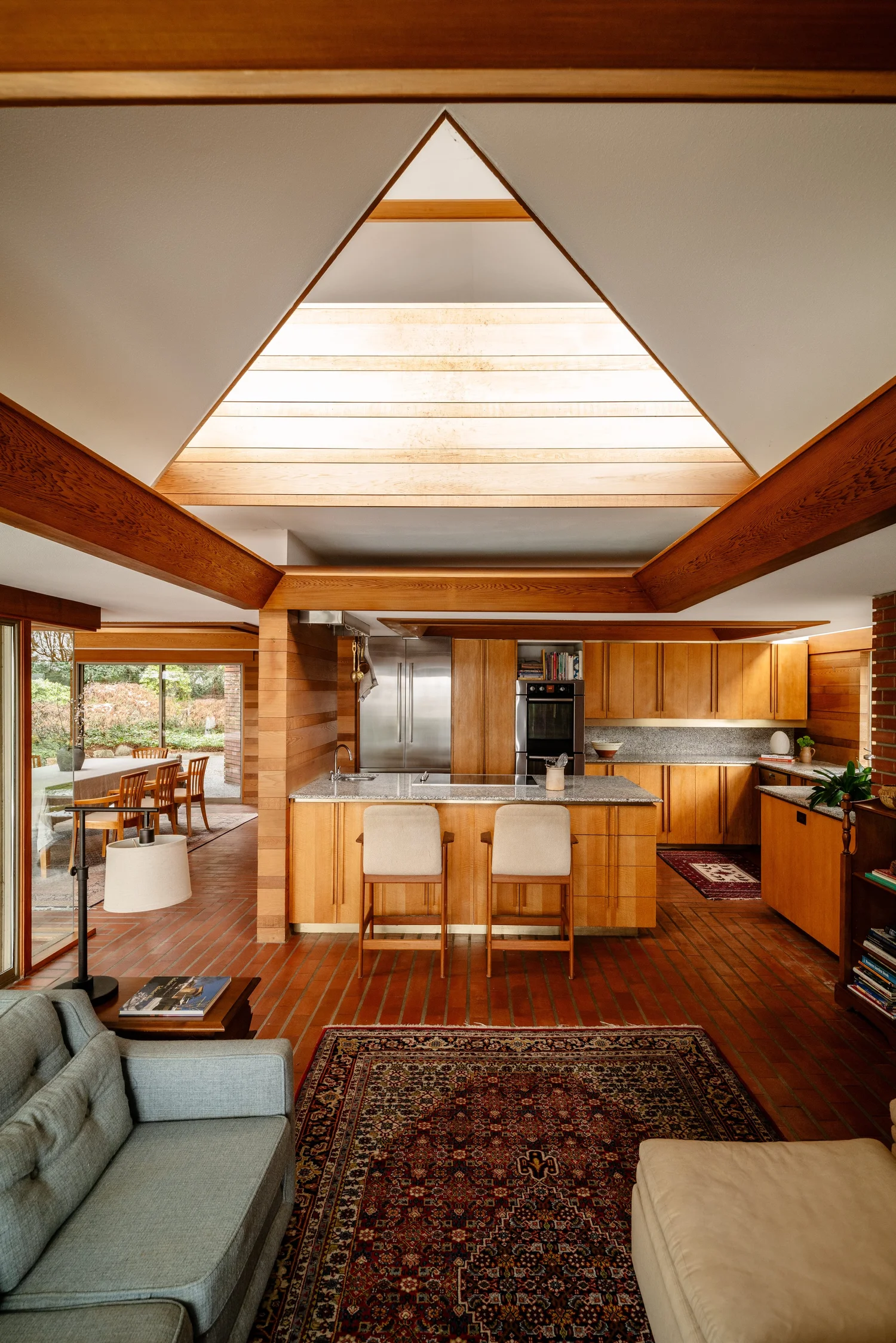
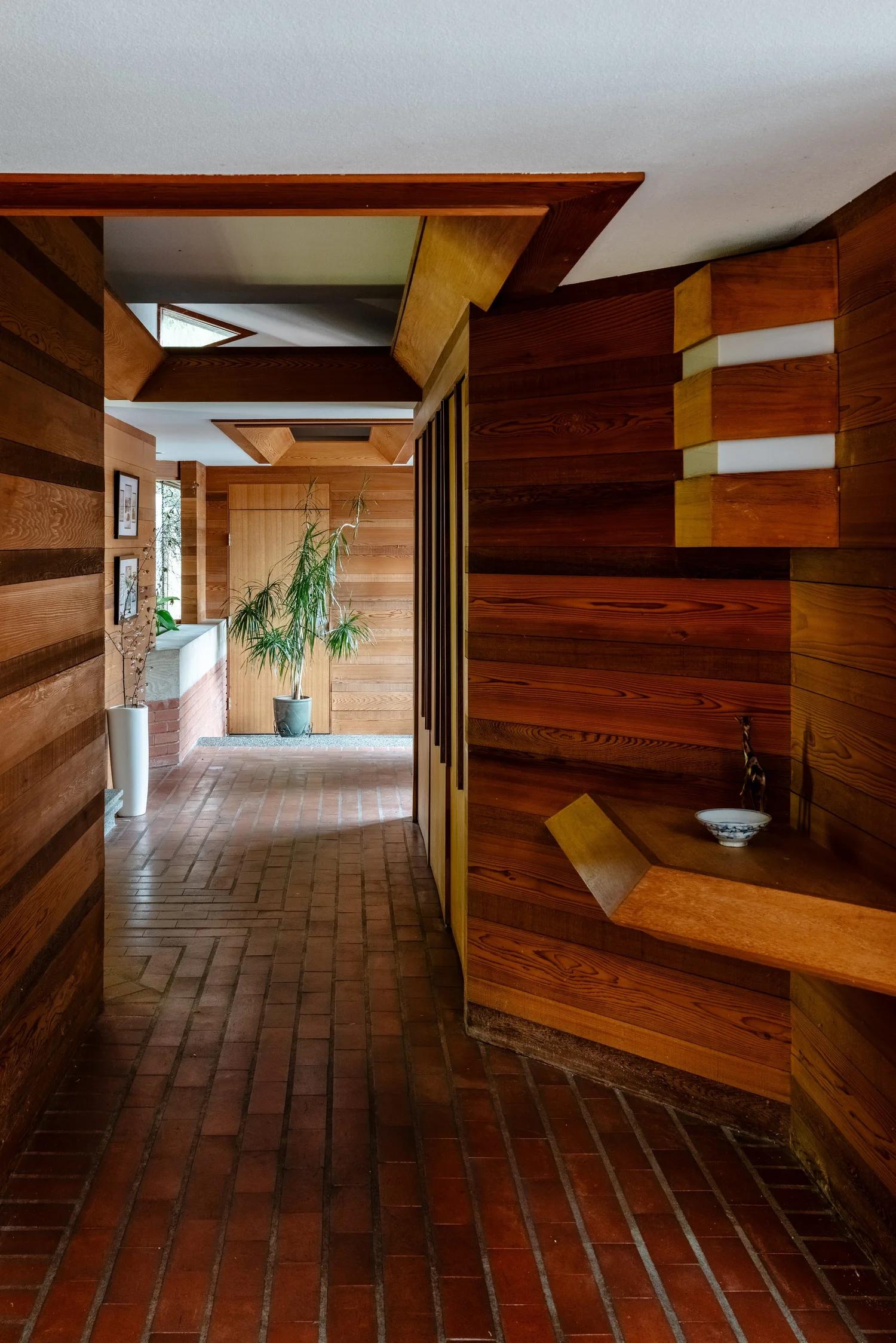
Stepping inside, the earthy quality of the exterior palette continues without interruption. A carefully designed brick floor radiates throughout the main living spaces, its warmth perceptible from the first step inside.
The plan is cruciform in shape, a decision that emerged naturally from the program and the site. Hollingsworth grouped the family room, kitchen, dining, and living areas as a connected series of spaces along one axis, while the guest bedroom, utility rooms, and study completed the cross.
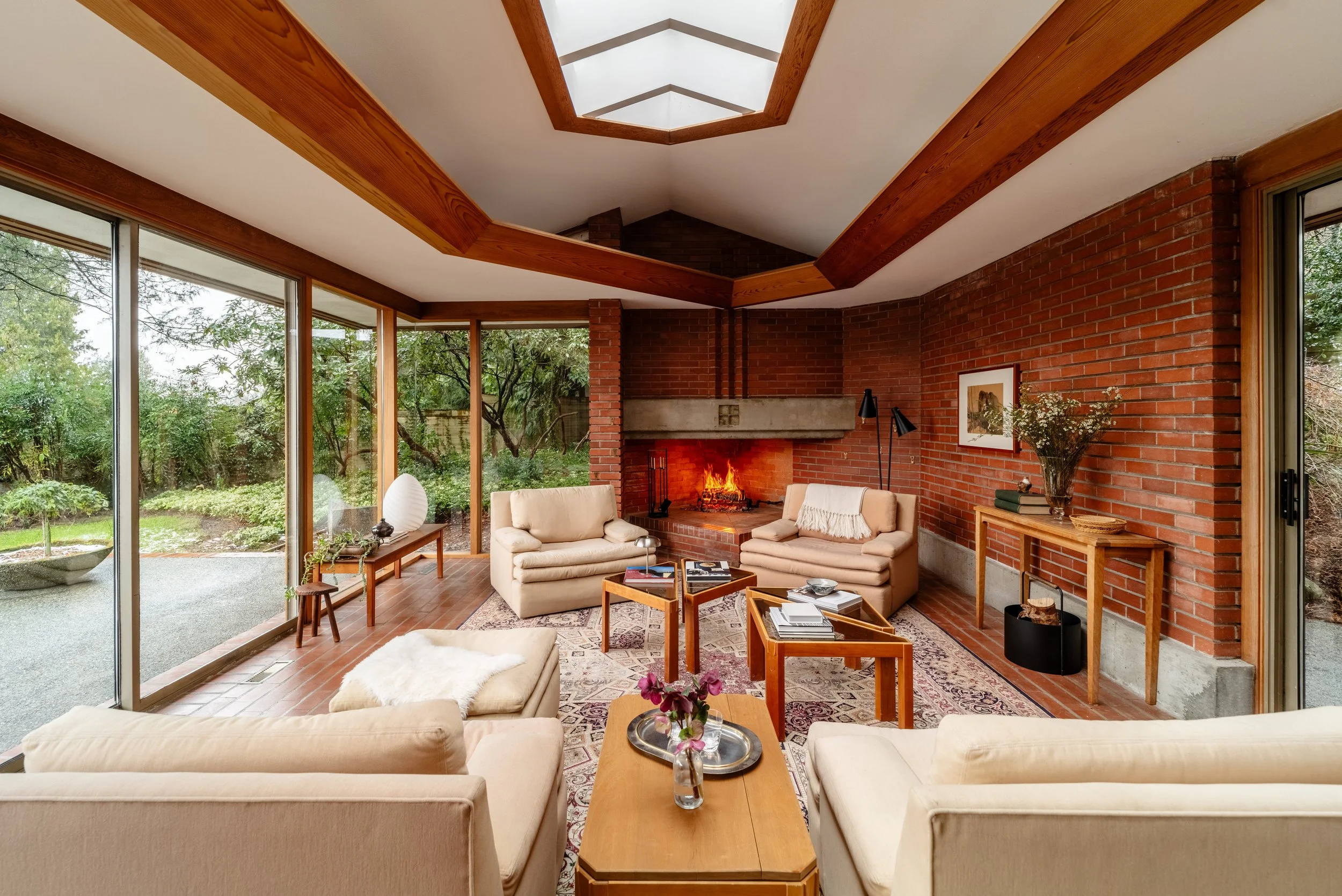

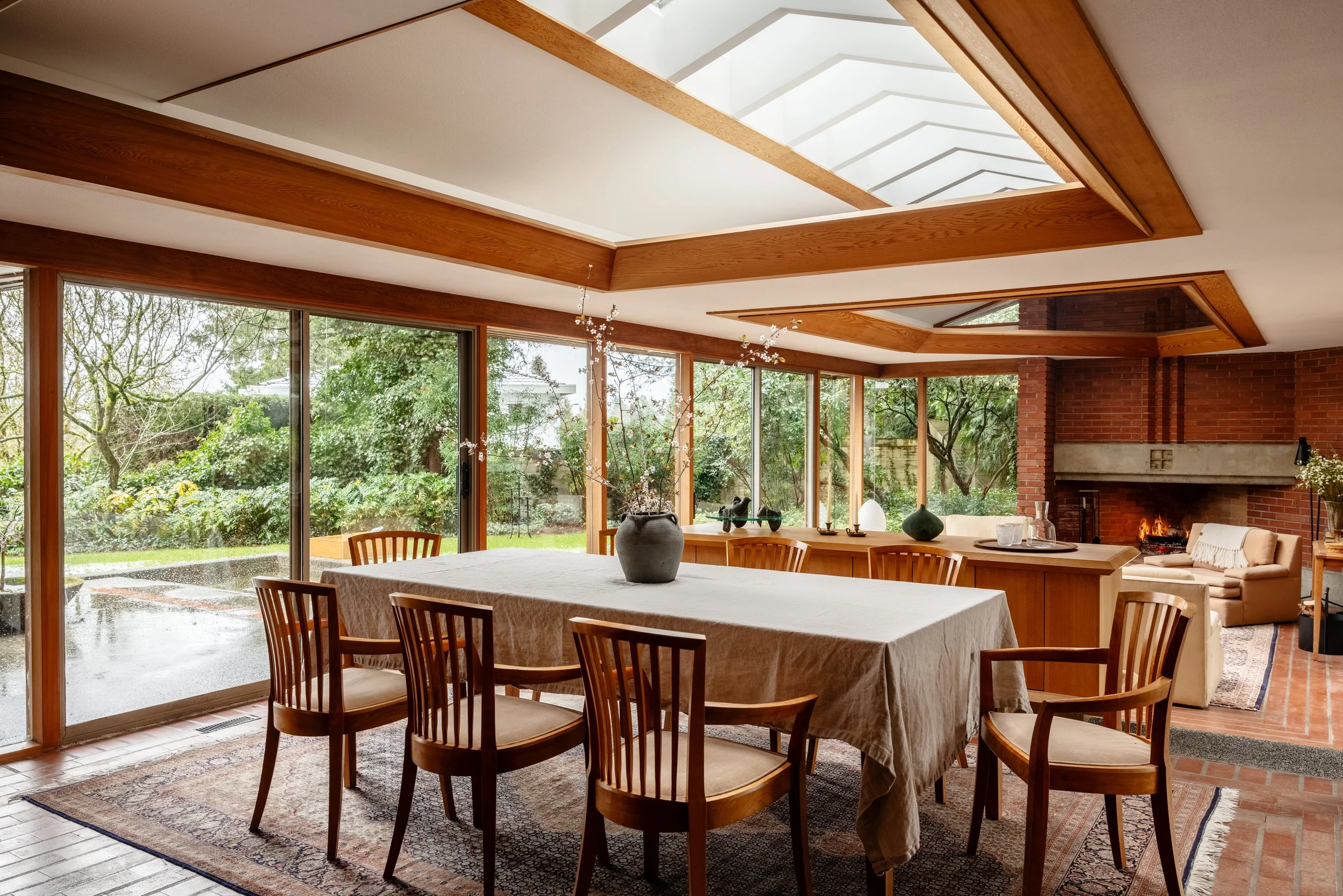
Two fireplaces anchor the living and family rooms respectively, each a composed mass of brick and concrete whose angled hearths echo the triangular geometry that recurs throughout the house.
Rooms flow into one another, defined by subtle shifts in level and material rather than relying upon the doors and walls that typically delineate spaces. The primary bedroom occupies the upper floor, positioned northwards to capture views across the city to the mountains beyond.
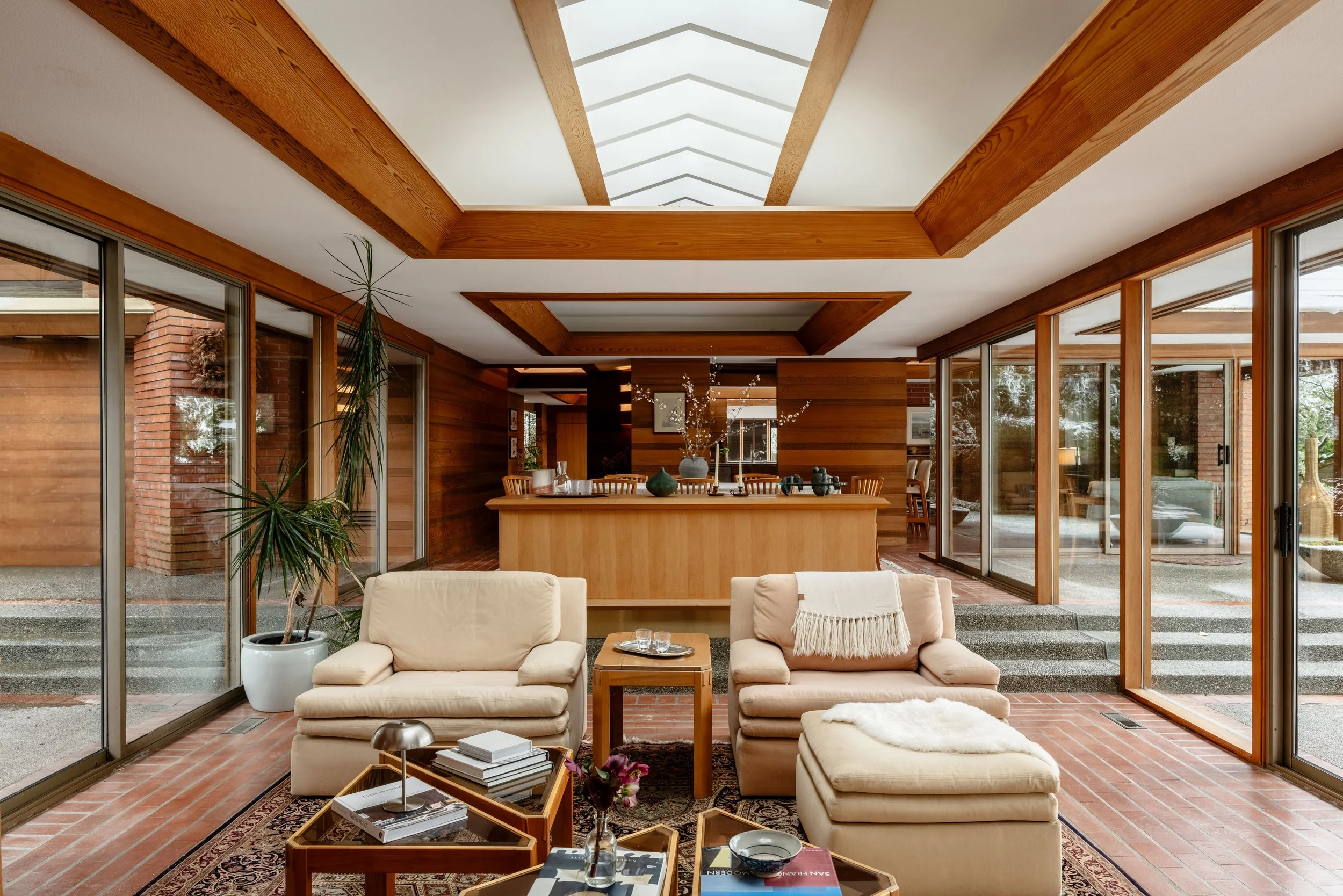
If the plan is the home’s organizational logic, light is its animating force. A large ridgeline skylight bridges the living and dining spaces, washing the cedar-finished interiors and vaulted ceilings in a diffuse, even glow that shifts with the weather and the hour. Combined with the floor-to-ceiling cedar-framed glazing that opens the main rooms to the garden, the interior feels luminous even on the most grey of coastal days.
This quality of light follows you through the house. Ascending to the upper floor, a triangular skylight draws a shaft of natural light down through the cedar-lined stairwell, illuminating the exposed aggregate treads below. It is a considered moment where the staircase acts as a lantern within the house, marking the transition between the social spaces below and private quarters above.
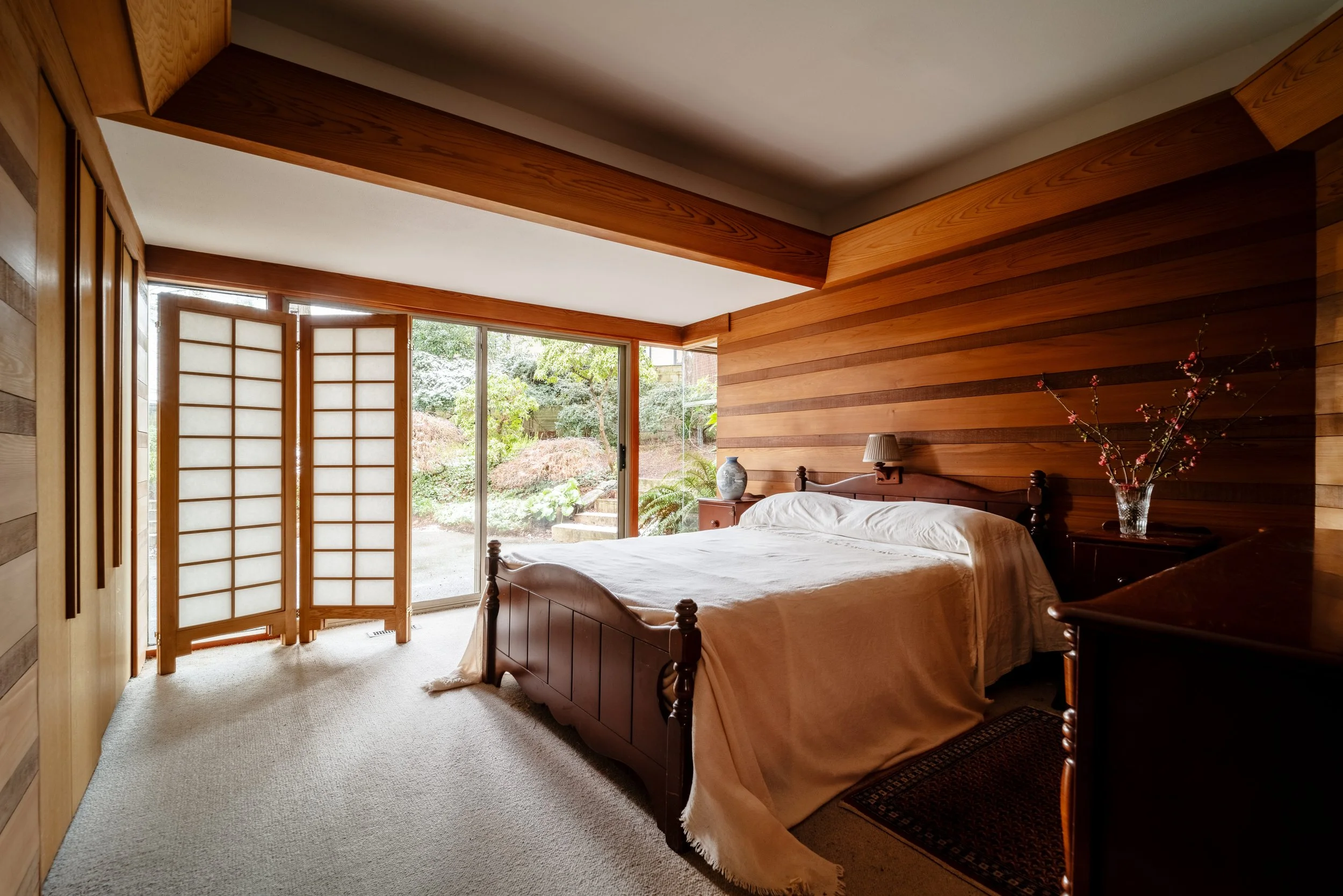
For nearly four decades, the Lakeside House has served as a quiet sanctuary, operating as Hollingsworth had intended — a home inseparable from the landscape it inhabits. Carefully preserved and deeply considered in every detail, it stands as one of the architect’s most complete statements of his Neoteric vision. Its next custodian will inherit more than a piece of exceptional architecture. They will inherit a way of living.
Photos courtesy of West Coast Modern.
Like what you see? Get it first with a subscription to aspire design and home magazine.