
As Interconnected Changeable Environments, the Showhome Experience by Jennifer Farrell continues to unfold, attention turns to one of the most transformative elements in the design process: light. More than a practical necessity, lighting serves as the emotional architecture of the project — shaping mood, guiding movement, and creating moments of connection throughout the three environments. In this chapter, aspire follows Farrell’s exploration of illumination as both art and atmosphere, where sculptural fixtures, layered lighting, and carefully choreographed transitions reveal how light has the power to transform not only spaces, but the way we experience them.
Lighting plays such a powerful role throughout the Showhome Experience. How did you approach lighting as part of the overall design narrative?
Jennifer Farrell: Lighting is the emotional architecture of this project — it’s the connective tissue that binds the three homes into one living narrative. From the beginning, I knew that sculptural fixtures would become visual anchors that guide the eye and set the tone. Every room begins with a lighting intention: how do we want someone to feel the moment they step inside? That question shaped every decision, from the softest cove glow to the most dramatic statement piece.
Do you see lighting primarily as functional, emotional, or sculptural within this project — or a combination of all three?
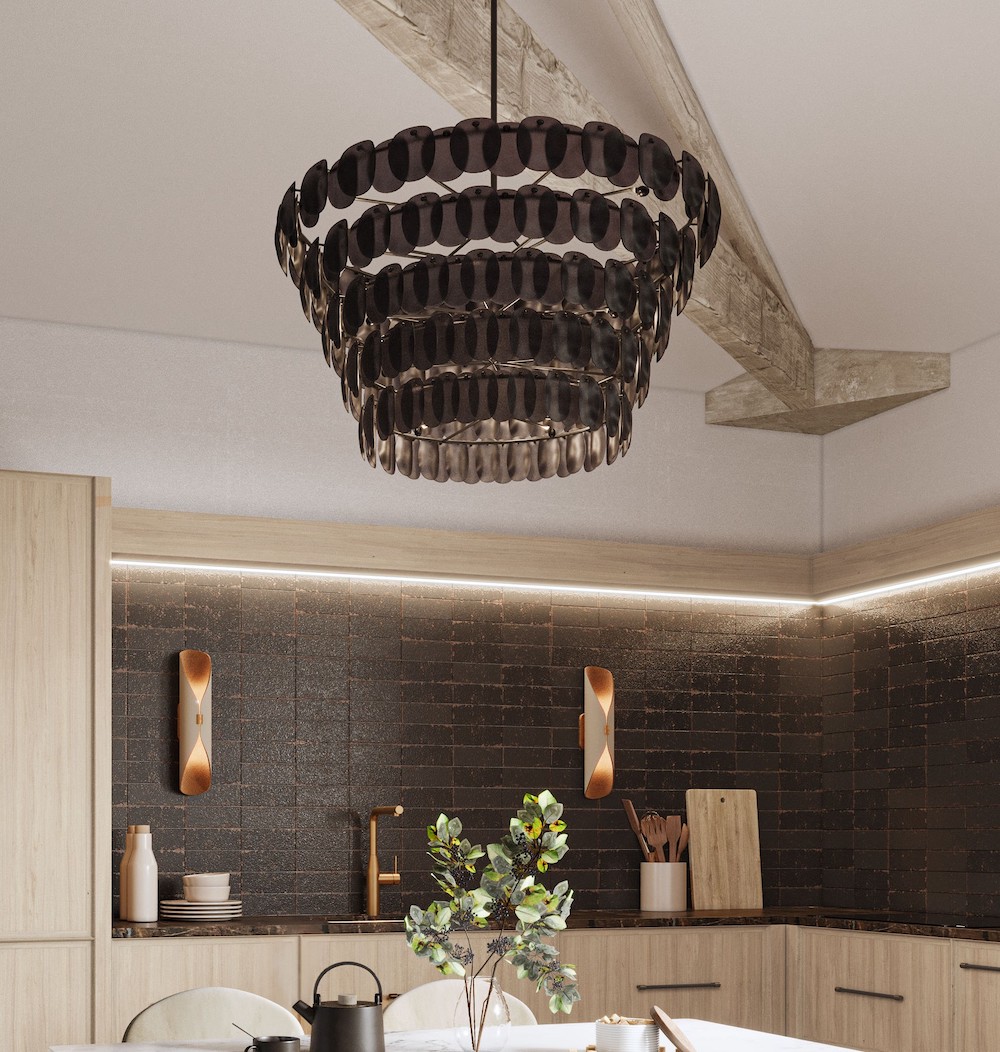
JF: For me, lighting is always a fusion of function, emotion, and sculpture — but in this project, the sculptural dimension takes center stage. I chose pieces like the Uroko Pendant from Kalco – bold, dramatic pieces that don’t just illuminate; they create a sense of celestial movement that becomes part of the storytelling. At the same time, every beam and shadow is carefully calibrated to support livability. The result is lighting that works beautifully, feels deeply, and looks unforgettable.
How does lighting help bring the concept of Interconnected Changeable Environments to life?
JF: Light is the most fluid design element we have — it shifts, adapts, and transforms with extraordinary subtlety. By using tunable architectural lighting alongside expressive pieces, we created environments that evolve throughout the day. Light becomes the bridge between spaces, allowing each home to maintain its identity while still feeling part of a larger, interconnected ecosystem. It’s the quiet storyteller that unifies the entire experience.
LIGHT AS STORYTELLING
In many of the spaces, lighting feels like a central design moment. How did you use light to shape mood, atmosphere, and movement throughout the homes?
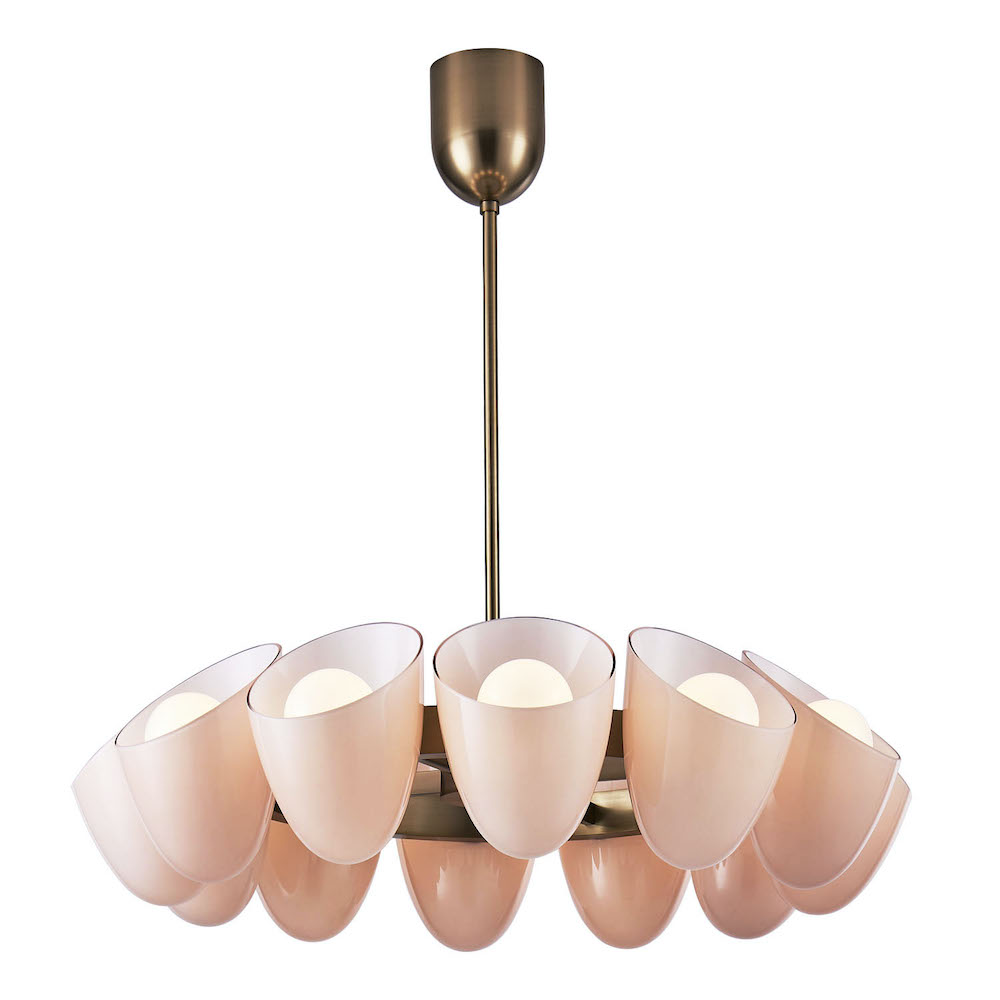
JF: I like to think of designing lighting in the same way a director shapes a scene: with intention, rhythm, and emotional pacing. Sculptural fixtures like the ice-pink Cocoon Chandelier from Kalco create moments of pause, while recessed architectural lighting guides movement with a soft, cinematic flow. Each transition is deliberate, shifting from warm intimacy to expansive openness. The lighting becomes a narrative arc that carries you from one environment to the next.
Were there moments where lighting became the defining feature of a space rather than a supporting element?
JF: Absolutely — several rooms were designed around the lighting. The great room in Center House, for example, is centered around a custom installation by Kalco. It’s really a fantastic process for a designer, to get to work with expert artisans to craft something unique that no one else in the world has. We have seven organic-inspired pieces in multiple sizes, whose clustered branching form becomes an illuminated tumble of floating leaves overhead. That custom sculptural lightwork sets the emotional tone and informs the two-story custom mural that becomes its backdrop. In these moments, lighting isn’t just part of the story; it’s the hero.
How do you choreograph light as someone moves from one environment to another?
JF: I think of transitions as emotional thresholds. We use layered lighting — from subtle floor washes to glowing coves — to create a sense of anticipation and reveal. Sculptural pieces act as beacons, drawing you forward and signaling a shift in mood. The choreography is gentle but intentional, guiding the body and the senses simultaneously.
NATURAL LIGHT VS. ARTIFICIAL LIGHT
How did you balance natural light with architectural and decorative lighting throughout the property?
JF: The homes are bathed in extraordinary natural light, so the goal was to complement rather than compete. We used high CRI architectural lighting to maintain color fidelity as the sun shifts, and decorative pieces add warmth and softness as daylight fades. The balance is dynamic — natural light leads during the day, and our layered lighting takes over seamlessly at dusk. It creates a harmony that feels effortless.
What role does the time of day play in how these spaces are experienced?
JF: Time of day is everything — morning light brings clarity, afternoon light brings warmth, and evening light brings intimacy. Our lighting plan mirrors that rhythm, with tunable temperatures and dimmable layers that adapt to the home’s natural cadence. Fixtures glow differently at night, becoming more sculptural and atmospheric. The home feels alive because the lighting responds to the passage of time.
Are there specific materials or surfaces that respond particularly beautifully to changing light?
JF: Absolutely — the stone, plaster, and warm woods throughout the homes come alive under shifting light. The metallic finishes – especially the hand-applied artisan finishes – catch and reflect light in a way that feels almost kinetic. Textured surfaces deepen as shadows lengthen, creating a sense of dimensionality. It’s a dance between material and illumination.
SCULPTURAL LIGHTING + FEATURE MOMENTS
You’ve spoken about lighting as art. Can you share more about the sculptural lighting moments within the homes?
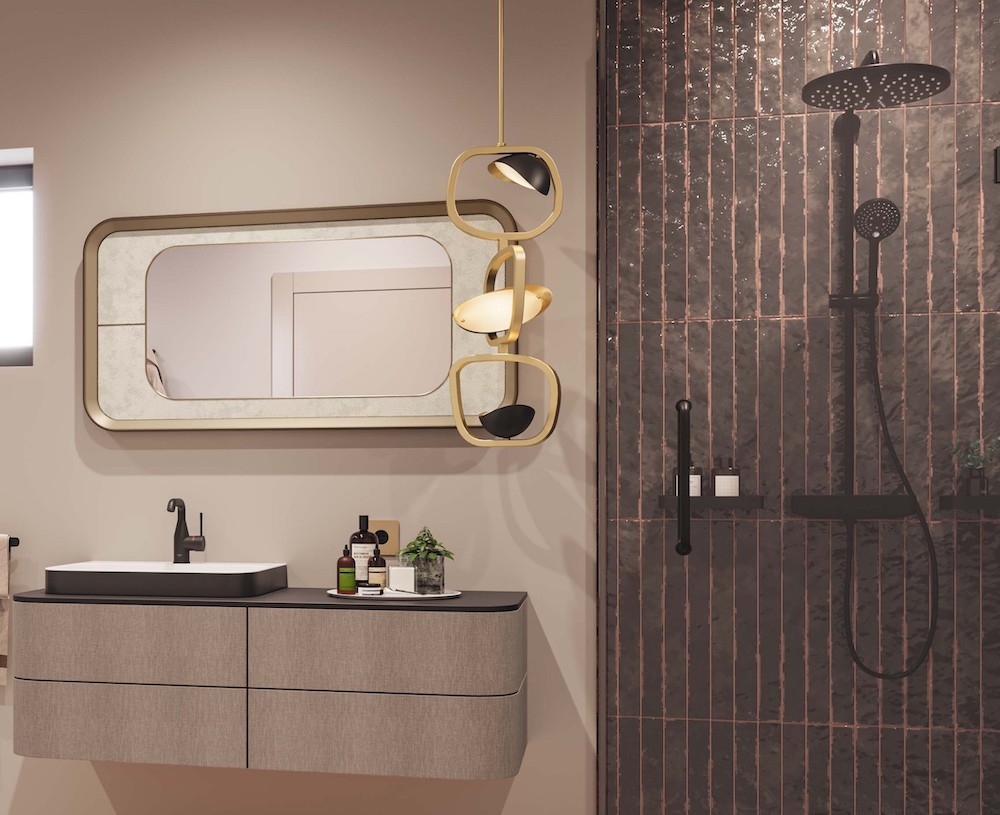
JF: Many of the lighting pieces were chosen specifically for their sculptural presence. Like in the Extension House Bath Suite, where I’ve hung the Kalco Onyx Pendant in a surprising place. It looks like an abstract sculpture of birds on a perch and brings a sense of artistry – and even a touch of whimsy – to the suite.
How do large-scale lighting elements interact with the historic architecture of the property?
JF: The contrast between contemporary sculptural lighting and historic architecture creates a powerful dialogue. With artisanal finishes and organic forms, the focal fixtures feel like modern heirlooms that honor the past while pointing toward the future. Their scale allows them to hold their own within the grand proportions of the property. The result is a seamless blend of heritage and innovation.
LAYERING LIGHT FOR LIVABILITY
How do you layer lighting — ambient, task, and accent — to create both beauty and functionality?
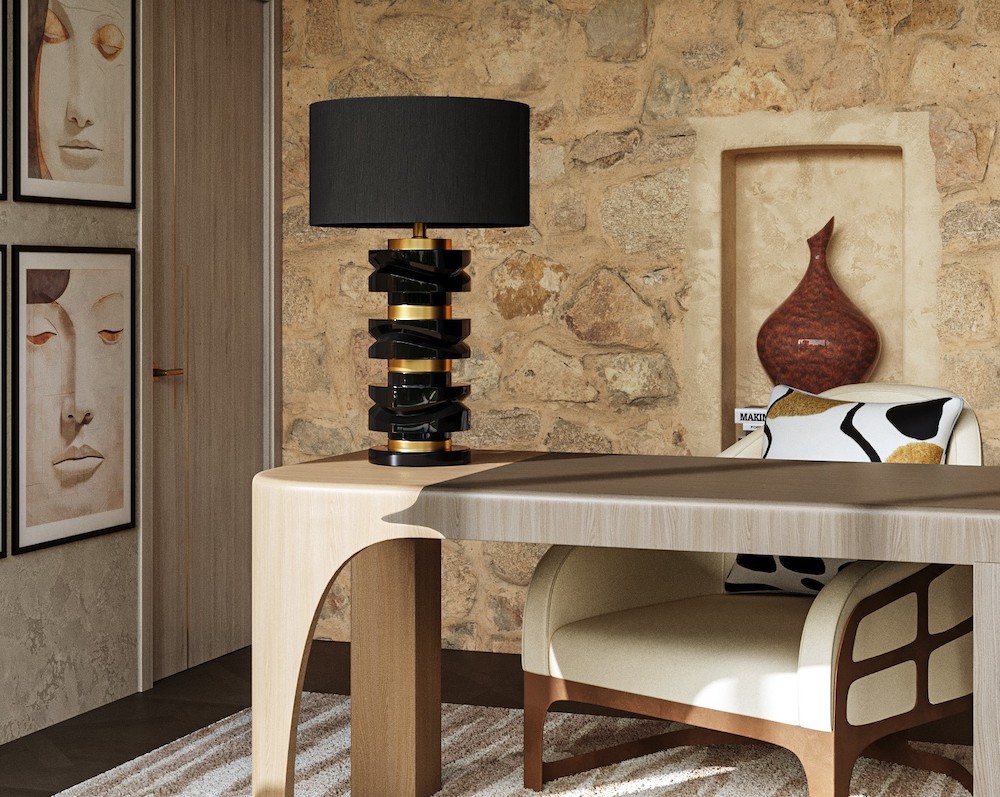
JF: Layering is the secret to livable luxury. We start with ambient architectural lighting for clarity, then add task lighting for precision, and finish with accent lighting to sculpt the mood. Decorative pieces, like my Meteor Table Lamp from Global Views, become the emotional layer — the jewelry of the room. Together, the layers create a space that is both highly functional and deeply atmospheric.
In everyday living, what makes lighting feel truly successful in a home?
JF: Successful lighting disappears when you don’t need it and delights you when you do. It should support daily rituals — cooking, reading, relaxing — without calling attention to itself. But when you look up and see a piece like Uroko or Cocoon, it should spark a moment of joy. That balance of subtlety and spectacle is what makes lighting truly work.
How does lighting contribute to comfort, wellness, and the overall sensory experience?
JF: Light affects everything — our circadian rhythms, our emotional state, even how we perceive temperature. By using warm, high-quality light sources and sculptural pieces, we create environments that feel nurturing and restorative. Soft shadows and gentle highlights calm the senses. It’s wellness through illumination.
MATERIALS + FINISHES IN LIGHTING
How do finishes — from warm metals to glass and stone — influence the quality and feel of light?
JF: Finishes are the alchemy of lighting — they determine how light behaves. Hand-applied finishes, brushed metals, burnished and vintage tones as we have on our Signature Hardware door handles and our Corston sockets and switches – all those warm finishes diffuse light in a way that feels warm, tactile, and human. Glass elements soften and refract, while metal adds depth and shadow. The interplay creates a sensory richness that elevates every space.
Were there specific finishes or materials that became signatures throughout the project?
JF: Warm artisanal metals became a defining thread. Aged brass, matte black, and polished graphite are interwoven throughout all three homes. Their finishes echo the natural materials used throughout — stone, wood, and plaster — creating a cohesive palette. These finishes bring a sense of handcrafted authenticity that grounds the modern forms. It’s a signature that feels both timeless and contemporary.
COHESION ACROSS THREE ENVIRONMENTS
With three distinct homes, how did you create continuity through lighting while allowing each to have its own identity?
JF: We established a shared lighting language — warm tones, sculptural silhouettes, and artisanal finishes — and then allowed each home to interpret that language differently. Modern, oversized organics serve as the connective thread, appearing in different forms and scales across the environments. Each home has its own personality, but the lighting creates a sense of familial resonance. It’s unity without uniformity.
REFLECTION / TAKEAWAY
Looking back, what lighting moment best captures the spirit of the Showhome Experience?
JF: The moment you step into Center House and see the custom Kalco creation of glowing clusters of leaves, floating in mid-air with a two-story mural and limestone walls as its backdrop — that’s the soul of the project. It captures the interplay of art, architecture, and emotion that defines the entire experience. It’s bold, poetic, and deeply connected to the home’s narrative. That opening moment tells the whole story.
What do you hope designers and homeowners take away about using lighting more intentionally?
JF: I hope they see lighting not as an afterthought, but as the foundation of emotional design. A fixture can transform a room before a single piece of furniture is placed. Light shapes how we feel, how we move, and how we connect with our environment. Intentional lighting is the most powerful design tool we have.
If lighting could tell the story of this home, what would it say?
JF: It would say: I am the thread that binds these worlds together. I shift, I soften, I reveal — guiding you through spaces that are interconnected, changeable, and alive. I bring warmth, wonder, and a sense of belonging. I am the quiet narrator of this home’s journey.
Like what you see? Get it first with a subscription to aspire design and home magazine.