


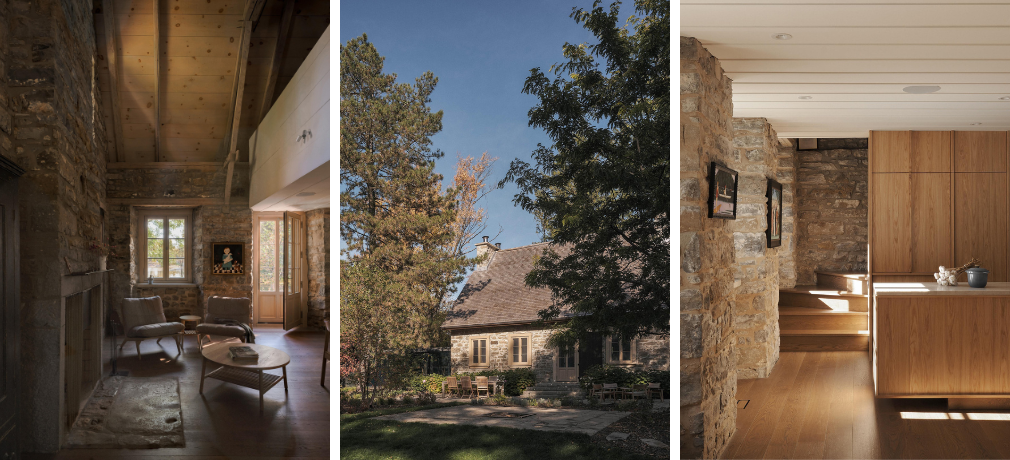
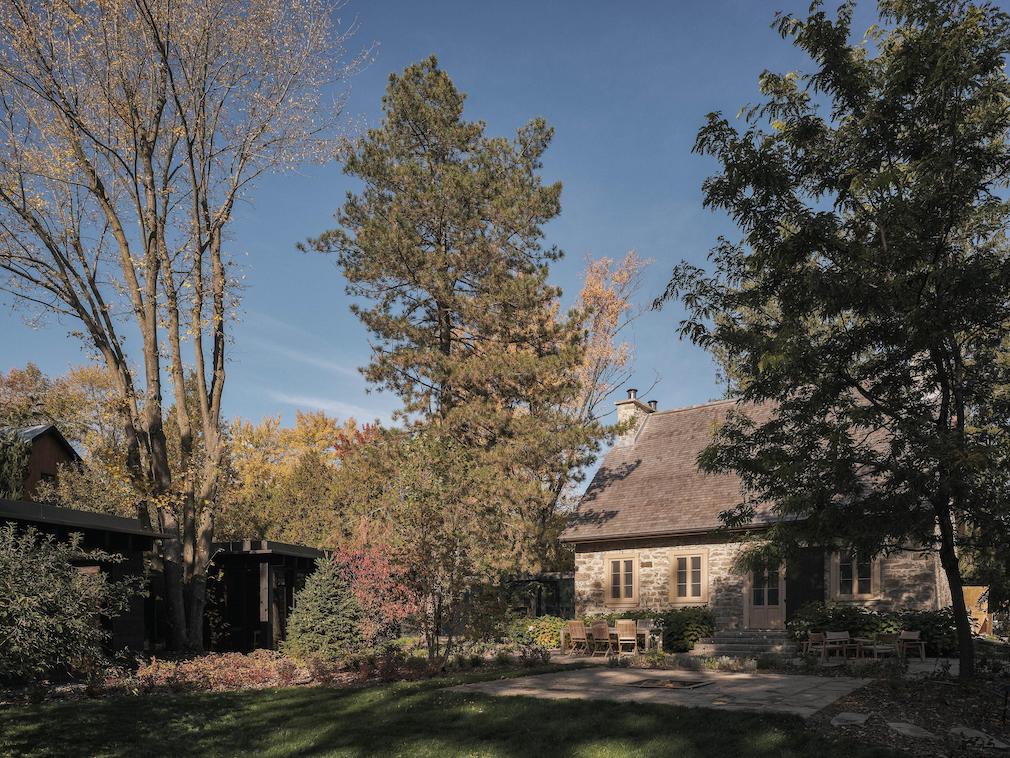

Just north of Montreal sits the stately Aubé House, a Maison des Patriotes dating back to 1811. It exists within a vast garden along the banks of the Rivière des Mille Îles, once part of extensive agricultural lands. This heritage home has been inhabited by the same family for decades, and as the family grew over the years, the large garden gradually became the setting for a multigenerational architectural story.
Around the historic house, the residence of artist Geneviève Jost was first built — what would become “The First House”. Her eldest daughter later took possession of the ancestral home, and the large garden became witness to a series of additions and transformations. The house underwent several modifications to meet the needs of its occupants, but without a comprehensive architectural vision surrounding this singular ancestral building.
Long committed to the preservation of the Aubé House, the owners ultimately wished to give it new life, turning to yh2 Architecture to restore it to its original state, while expanding the welcoming capacity of this family home. Exterior restoration, a complete interior reconfiguration, and the addition of a contemporary extension mark the beginning of this new chapter.
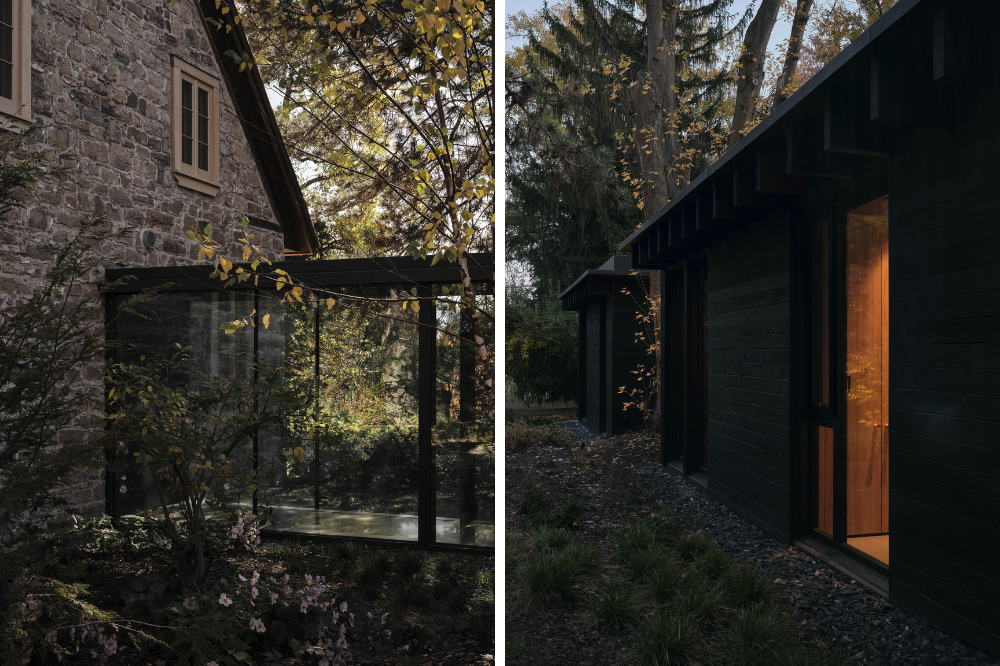

The intervention primarily aims to restore the house’s original authenticity, while responding to contemporary needs. The objective is to establish a harmonious dialogue between past and present, highlighting the historic building in relation to a contemporary addition.
On the façade, several superfluous additions were removed to recover the purity of the original form, including the demolition of an extension, replacement of doors and windows with double-glazed models, subdivided into multiple panes to reproduce the appearance of the original openings, and the removal of skylights and restoration of the original cedar shingle roof.
Revealing the structure allows these architectural details to be celebrated. Portions damaged by time have been restored to the original, sometimes with newly expressed junctions that allow the old and the new to coexist.
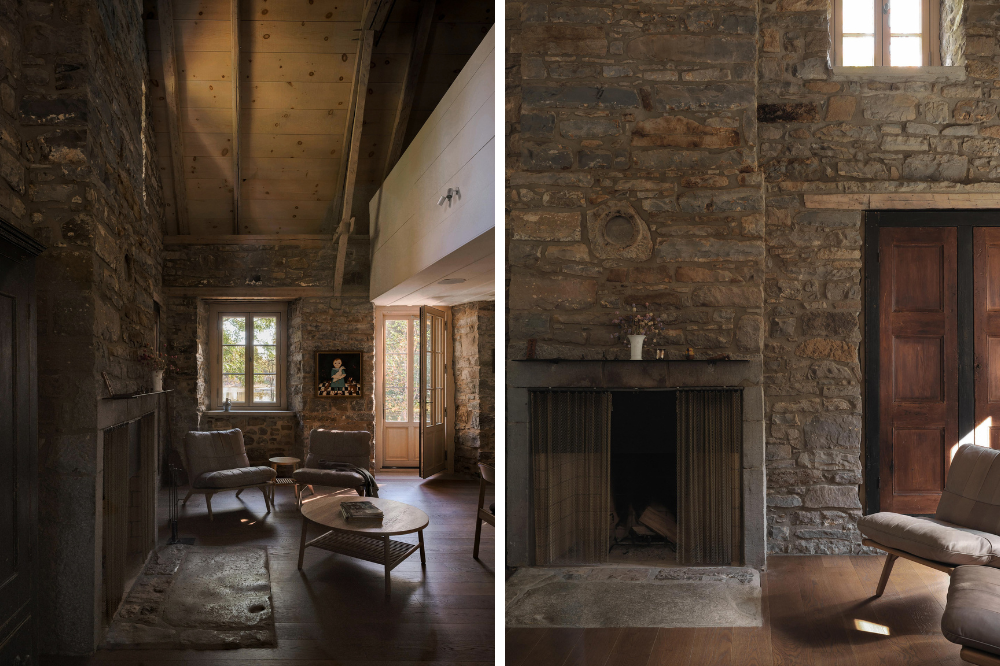
The interior intervention favors a minimalist approach, introducing limited new materials and instead encouraging a dialogue between historic elements and contemporary insertions. Positioned within the new double-height space, the fireplace regains its central role as the heart of the living area, while reinforcing the verticality of the space. This new volume allows for an enriched reading of the timber structure, while organizing its spaces within the large square volume that contains the kitchen, dining room, and living room.
Carefully restored stone walls reveal the raw and authentic material of the period.
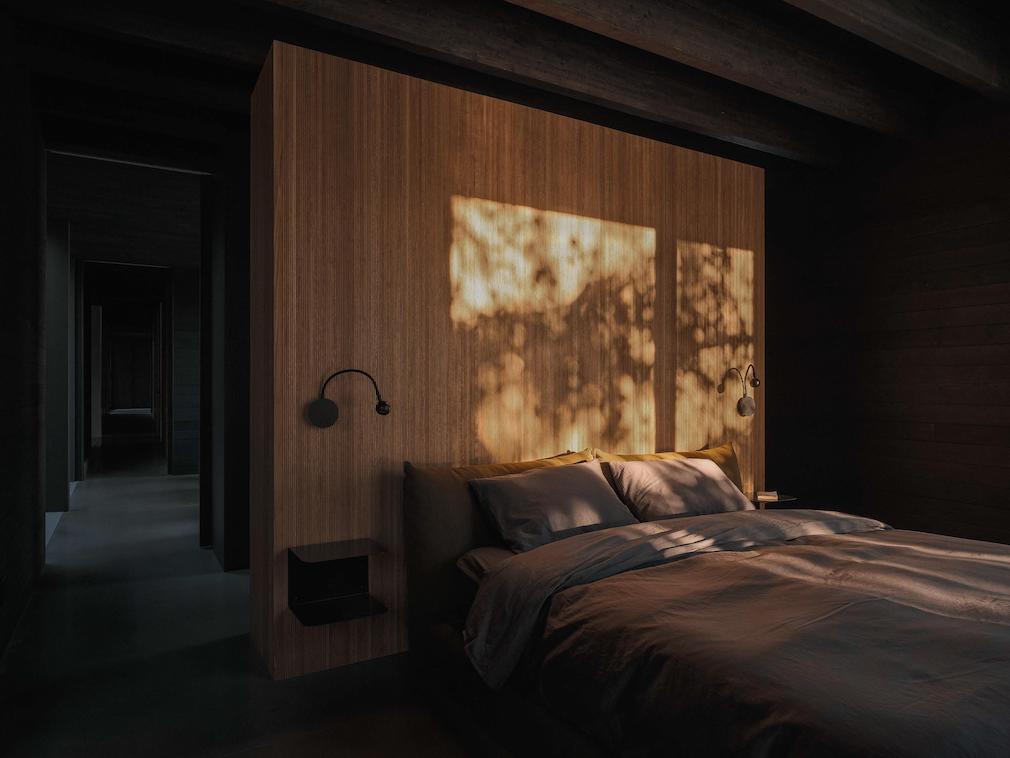
The primary bedroom opens to expansive outdoor views. Being slightly advanced and separate from the ancestral building, it enjoys a sense of privacy despite the presence of numerous windows. Natural light, filtered through the trees, creates plays of light and shadow throughout the room, enlivening the space.
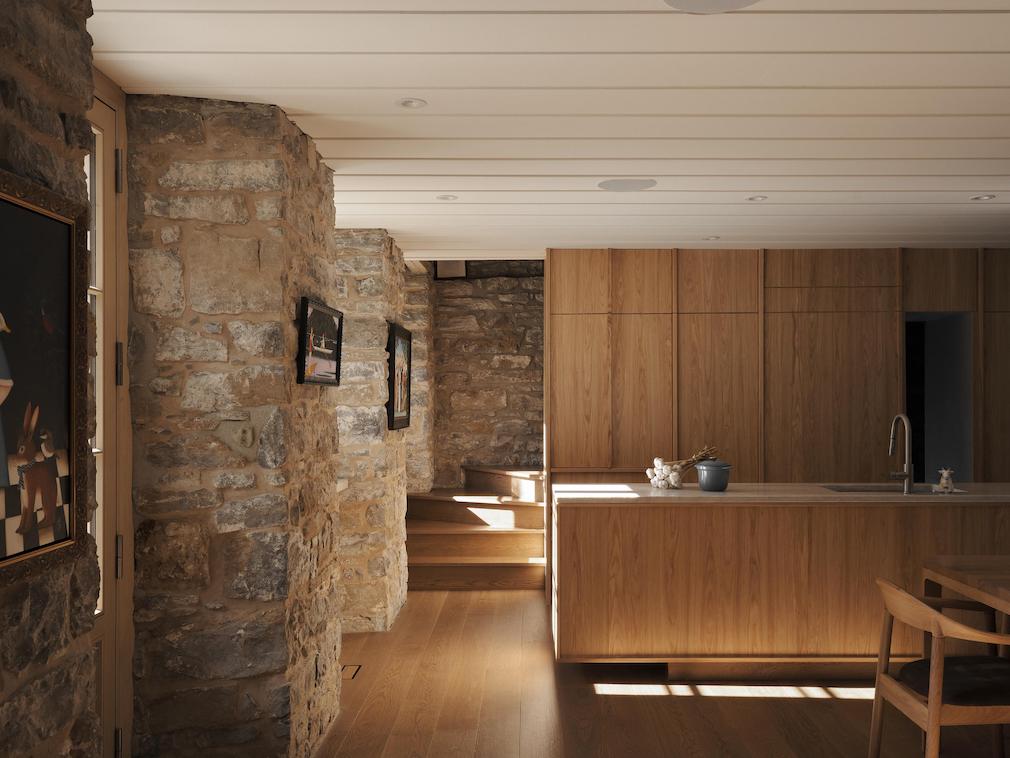
Every space, whether indoors or outdoors, bears the mark of this interplay between heritage and modernity. The buildings together form a coherent whole, where each element finds its place while contributing to the collective identity of the site. The dialogue between the original structure and the contemporary additions is not merely a matter of form, but a genuine commitment to preserving the site’s heritage, while ensuring its longevity.
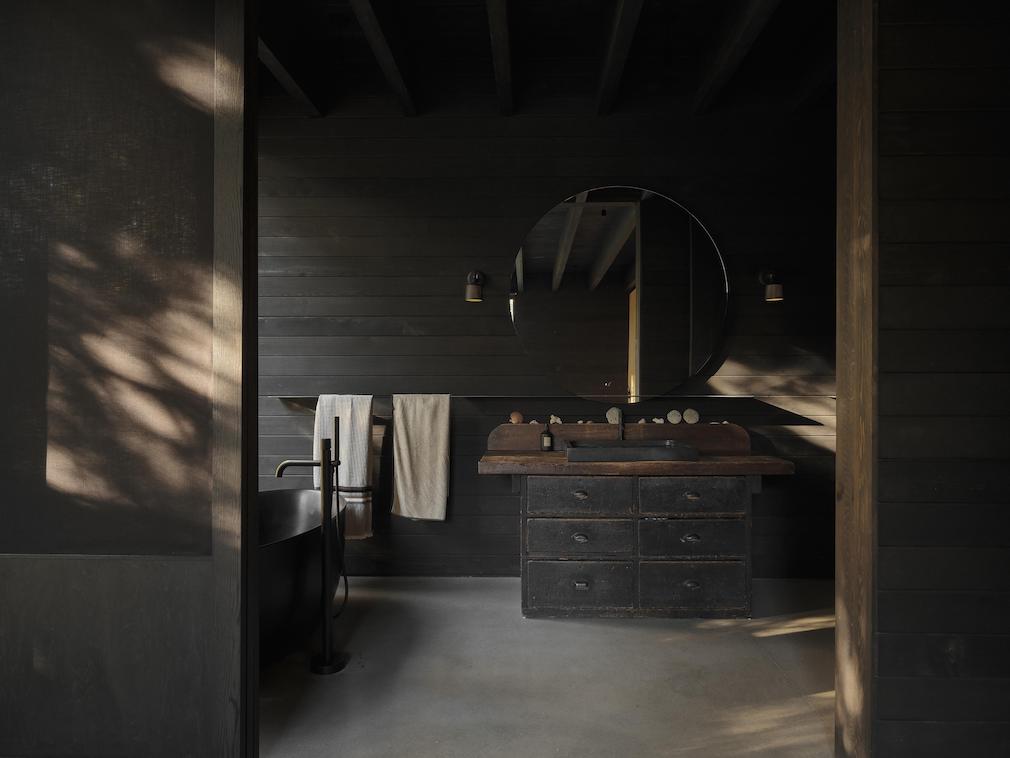
Through this intervention, the house finds itself at the heart of an organic and harmonious whole. This project is a dialogue between past and present that transcends generations. Thus, the house has been transformed into a place of convergence, the center of a shared life that unites four generations. Today, three buildings share this large garden, each contributing its own unique story to the site’s history.
The ancestral home, far from remaining frozen in time, becomes a repository of memory — the memory of a place that is constantly being written, reinvented, and passed on.
Photography by Maxime Brouillet.
Like what you see? Get it first with a subscription to aspire design and home magazine.