




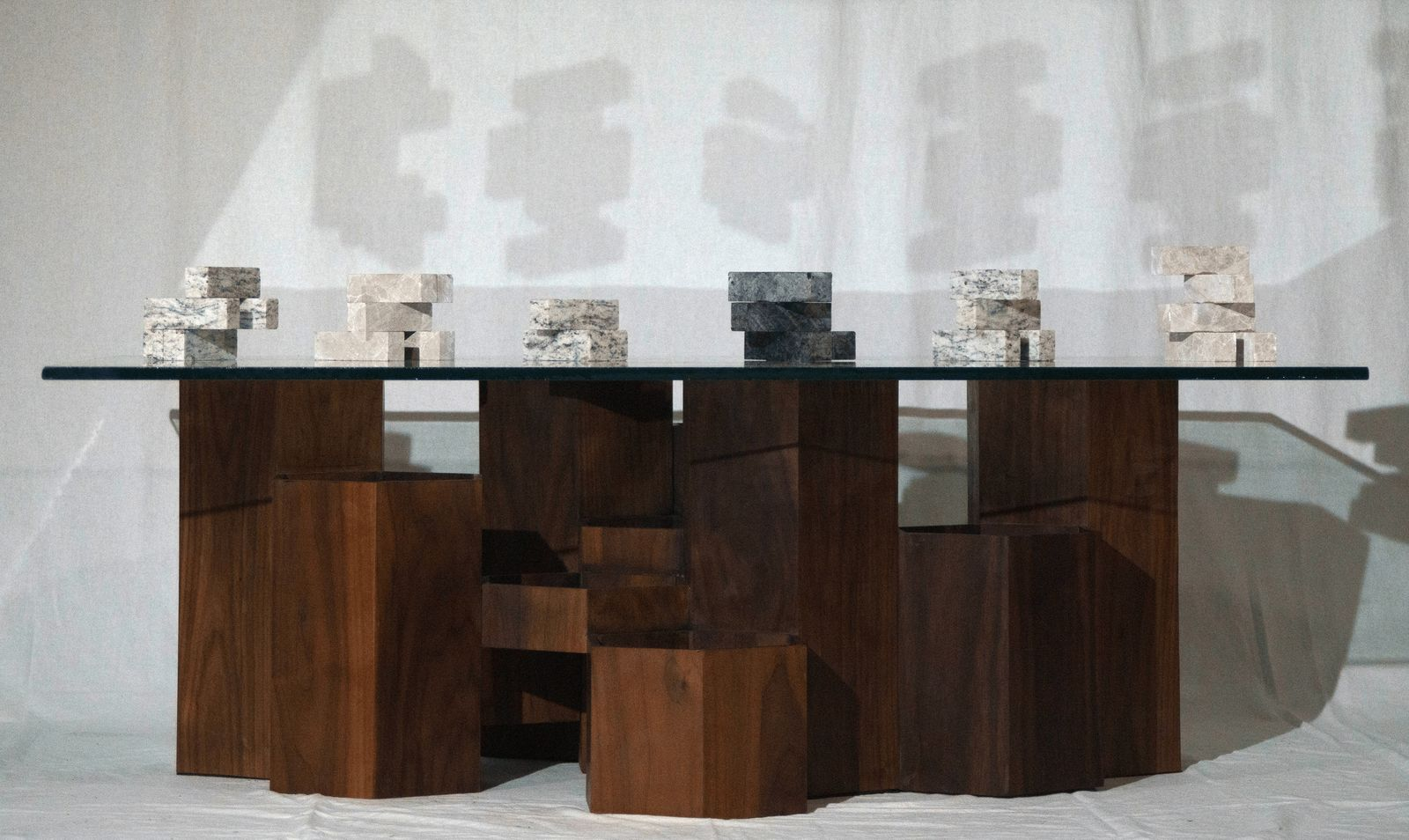
The Honeycomb Coffee Table, studio apotroes’ inaugural piece, reimagines the structure of a beehive through stacked hexagonal wood forms topped with a sleek glass surface.
Andrew Joseph: How do you stay creative and inspired?
Brianna Love: It is easy to become overwhelmed with designing, especially when the collection or pieces explore more emotional aspects of my life — like my Annie Comb Collection, which was inspired and named after my late paternal grandmother — so switching mediums is helpful. I’m a big advocate of switching between left and right brain to keep creativity flowing. If I’ve spent all day on the computer, I like to switch it up and cook an overly involved dish and riff on the recipe — something that I can nurse like a whole chicken, bread from scratch, or a pot of beans. If I need to take a longer break, I will start a new ferment because that gives me something to nurse each day and daily tasting shocks the senses — exposing me to something so temporal and unique it catalyzes a new idea. Sometimes I switch to something less involved, like reading a book, or watching a film (old Polish and Ukrainian films are my go-to, but generally I’m a huge fan of films with definitive world-building). The most obvious throughline as seen in my work is just spending time with family and friends, who are often a huge inspiration and source of creativity for me. New memories formed through those conversations and experiences provide me with many launchpads for larger ideas and narratives I want to explore and make each piece a love letter to my community.
AJ: What inspired you to become a designer?
BL: I’ve been making things and crafting since I was a kid. I’ve always had an interest and drive to create. I started making model furniture and dioramas/scenes/sets based on things I was interested in or saw and wanted to recreate. These little models brought me a lot of joy as a kid. I really enjoyed spatial planning and organization, but I didn’t know that was a formal job, so that part of me took a little break, and I explored other avenues of creating and designing. I spent many years designing and planning my annual veggie garden, which was encouraged by my family, who benefited from the free food, but also saw the joy it brought me. The garden fed me in a literal sense, but also allowed me to better understand spatial design and gave me free produce to explore cooking, something I was so passionate about for many years that I thought I would become a chef.
Around this time, I also began to develop a deeper understanding of chemistry, which, outside of every creative pursuit, is my oldest love. I was slowly discouraged from seriously pursuing the culinary arts and encouraged to pursue chemistry, because I had a knack for it, but pure chemistry, as fun as it was, wasn’t enough. I loved that I could create new things that could help people using chemistry, but I felt so many scientific discoveries never moved beyond discovery. I wanted applications and integrations because my drive has always been to help people and improve the world. By chance, I saw a neonatal hospital online the summer of my junior year of high school, and it hit me that I could combine all my interests and passions into a more defined career as an architect and designer. I could design spaces that served people. Spaces that were designed for them, and through a holistic lens. I eventually came back to furniture design a few years ago, because it was my earliest love, and it still brings me a lot of immediate joy. It also allows me to test and integrate more experimental materials at a smaller scale and explore more personal and emotional elements through design.

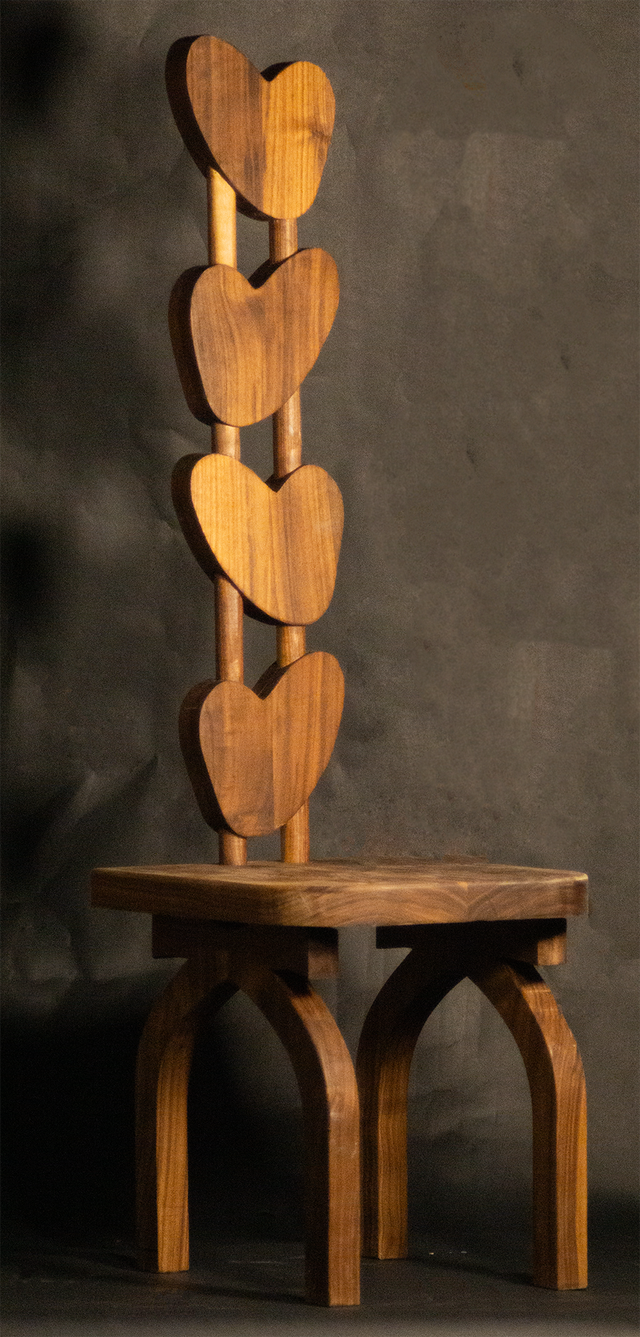
Chair No.9 from studio apotroes’ Annie Comb Collection stands as the tallest and most personal piece in the series, its stacked heart forms offering a sculptural sense of warmth and support.
AJ: What’s a new hobby/skill that you have learned recently?
BL: This past May, I graduated from Columbia with a dual master’s in architecture and real estate development, so I’ve taken the time since to decompress from the intensity of those programs while also running studio apotroes to take up some hobbies like embroidery, which is something I’ve always wanted to do. I did a lot of the older “grandma” hobbies as a kid, but embroidery was one of the ones I didn’t do, but wanted to explore. I’ve only made a kit so far, but I’m working on some gifts for friends and family as well as updating my different pieces in my wardrobe with little things.
AJ: Can you tell us about a design trend you are excited about?
BL: I’m not normally one big on trends, because they’re antithetical to sustainability and personal style, but I do really hope that furniture or decor as a commemorative gift becomes a thing again. Personally, I think it’s super chic to gift a custom piece of furniture to someone, or even pool money together with friends and family to bring to life a custom piece to commemorate a marriage, move, birthday, or any milestone. I love commemorative objects; they are very chic. I’ve read about how, by the time most people are getting married today, they already have most of the traditional items on a registry, so a wedding registry is becoming obsolete. My friends and family know I’m a huge proponent of gifts being either incredibly practical and the exact thing the receiver wants, or something so unbelievably decadent they would feel slightly foolish for buying it, even though it’s something they would love. I do think the social landscape is ripe for commissioned furniture as a gift to be due for a comeback, given the changing social landscape.
AJ: What’s your favorite cocktail?
BL: Either a Paloma, I love grapefruit, or a Bellini because I love bubbles. I love fruit and love fruity drinks.

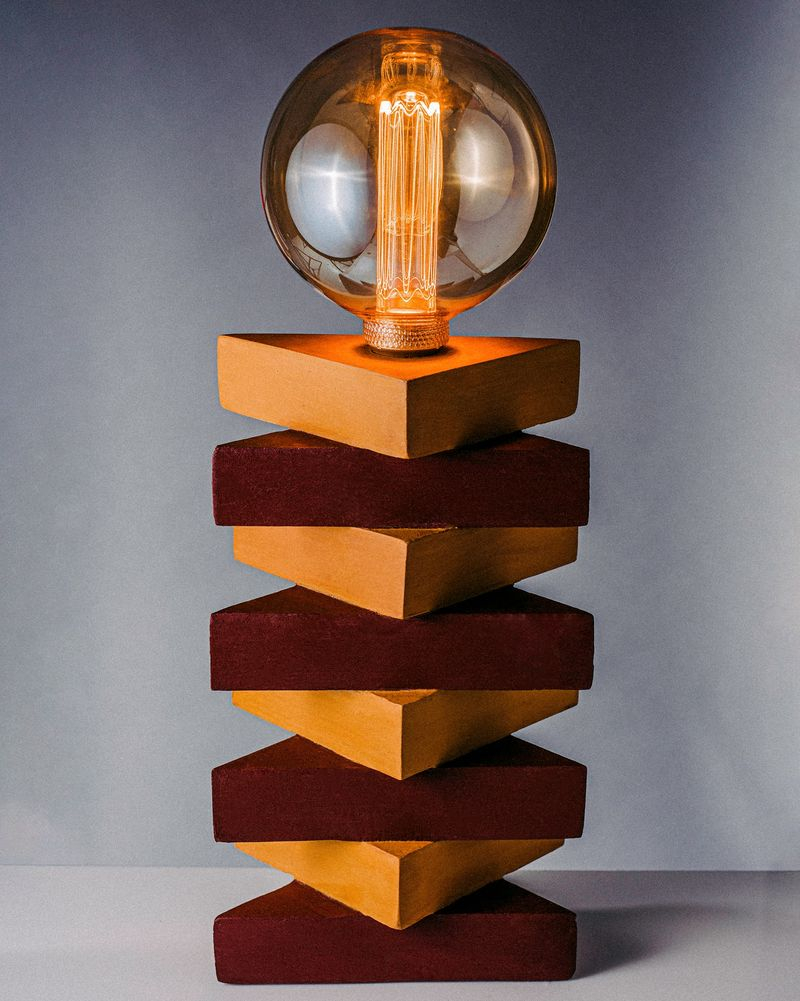
Vertical & Elongated is a subtle yet striking table lamp, where alternating brown and cream triangular wooden pieces stack into a sculptural tribute to the verticality of life. Photo Credit: William Mullan
AJ: How do you incorporate sustainability into your designs?
BL: Sustainability is at the core of everything at studio apotroes, because it’s at the core of me (my focus in undergrad was in geohealth). Growing up in South Texas, I was keenly aware of water use because we nearly always had water restrictions teetering on the edge of drought or firmly planted in one. I also cared deeply about animals and was fascinated/curious about the natural environment. The relationship between humans, animals, plants, and the microbes that fuel life on this planet has been of great focus throughout my life. I realized that while some materials are gentler on the environment, sustainability is a multi-variable equation that has to be assessed along a few different lines; like finance, physical accessibility, and culture, in addition to the purely environmental aspect. Since it is at least a 4-variable equation, there are infinite ways to reach 100%, meaning sustainability doesn’t have a singular aesthetic. It is not a singular look you can pick off a shelf. It is a set of practices, it is habitual, a devotion and belief that a better tomorrow exists because you are actively building it today. It is a lifestyle that needs to exist without an aesthetic in order to achieve the outcome of a better tomorrow, because it needs to be inclusive.
When I design pieces, I design pieces that first and foremost will be loved (not necessarily by everyone, but loved regardless) because to love something is to care for it. Caring reduces the likelihood that you will toss it for something else. While I do design for the item to last, I am also pragmatic (and incredibly clumsy myself), so there are ways to repair each piece. Maintenance is part of love; it’s part of those habits, it is sustainability because it reduces your need to buy a replacement. Materiality is also a factor. I typically only use materials that can be recycled or returned to the earth without polluting it. While I firmly believe that all materials have a place, I do not think plastics generally have a place in furniture and decor, and I actively design without them. I also don’t think conventional concrete has a place in furniture and decor, given its massive environmental footprint. These aren’t materials you will find in my pieces because they are environmentally taxing, difficult to repair, and are not the most biodegradable, leading to them getting discarded. I love wood, and I love using lesser-utilized local species because there are so many beautiful woods out there beyond white oak and walnut that most consumers are not aware of. Additionally, their locality makes them less carbon-intensive while allowing us to connect more directly with the world around us.
AJ: What is your favorite type of furniture to design?
BL: I feel like people know me for my chairs, and I’ve designed a lot of them, and I do enjoy designing chairs. Lately, though, I’ve gotten really into bed design. I’ve designed a few, even before I started designing chairs, and I’m hoping to build one when I move soon. I think a lot of modern beds lack personality and fun, and the three most recent I’ve designed all have owners out there, but I am waiting for them to find me. So if you’re looking for either an impressionist, coastal fauvist, or MCM meets space race, reach out.
Like what you see? Get it first with a subscription to aspire design and home magazine.