



Andrew Joseph: What is the most challenging project you’ve worked on and how did you overcome it?
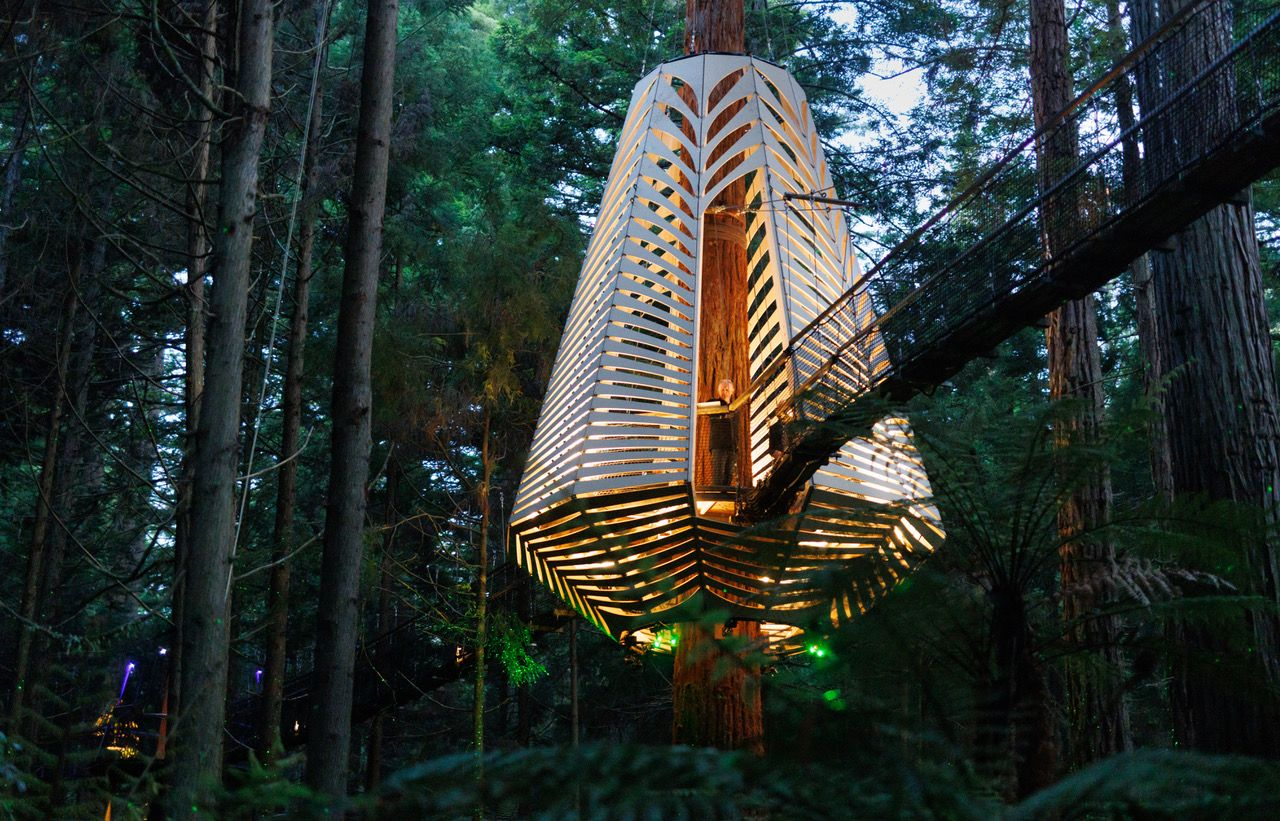
David Trubridge: Horoeka (pictured above), a 9m high walk through ‘pod’ design on a suspended walkway in a giant redwood forest in Rotorua, New Zealand. The 2-ton structure had to be built in situ and, like the platform it surrounds, was suspended from the tree. I designed it in components that could be carried into the forest, hoisted into place with a petrol winch and bolted together by riggers who were also swinging around on ropes. My biggest worry was that the segments would not fit together with no level baseline to start from.
AJ: How do you stay creative and inspired?
DT: My problem is more like how not to be creative – I can’t help it, it is an internal imperative! And that comes largely from many days spent in nature, as wild and remote as possible. Nature is my inspiration for all the designs in the David Trubridge Lighting range. For example, the Tui light is inspired by New Zealand’s native bird, the Tui. The three-sided Toru light is the third of our pendant lights inspired by microscopic diatoms which live in water and produce over 50% of the oxygen we breathe.

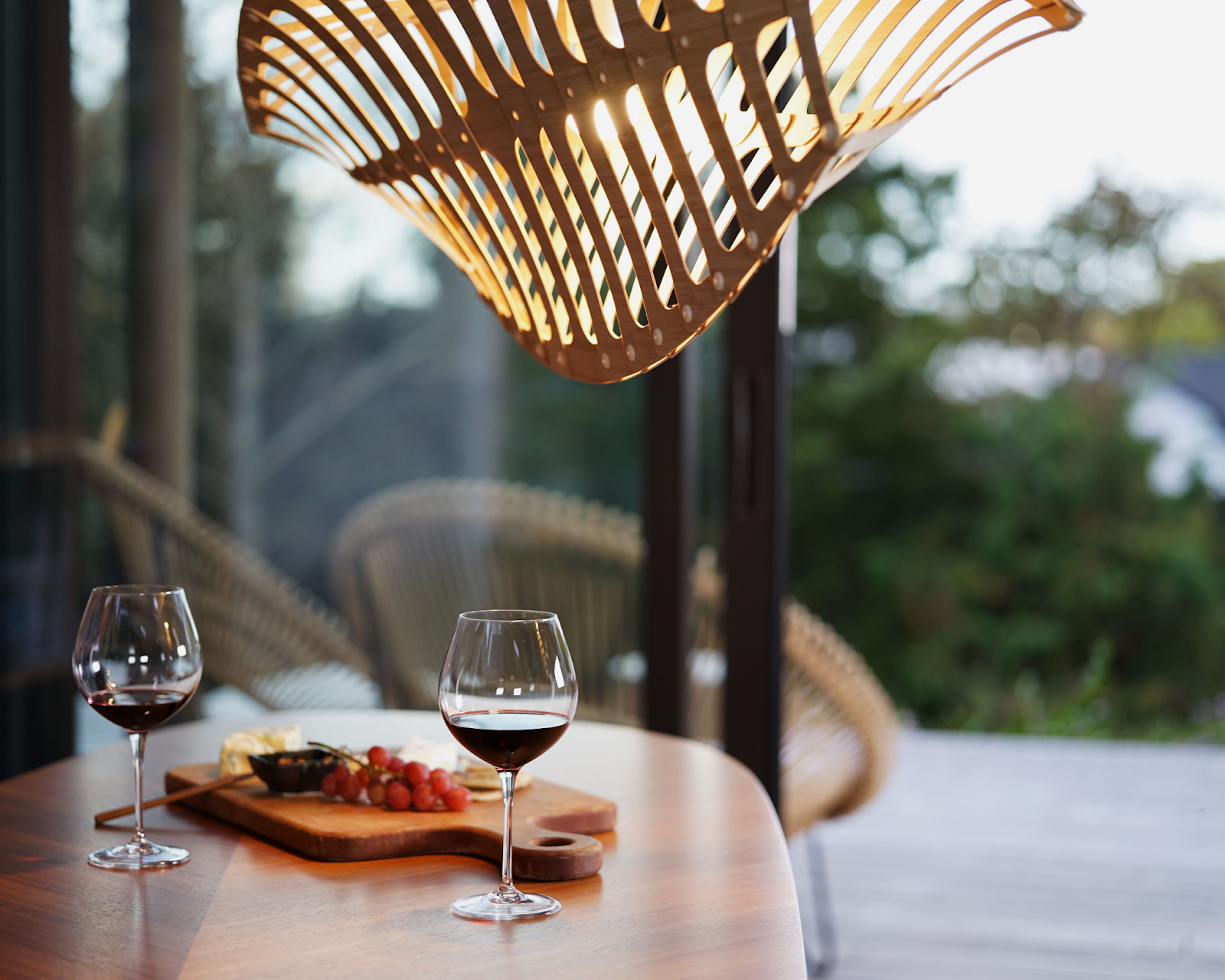
The Toru light is a pendant light that combines modern elegance with natural beauty, featuring a unique three-sided shape inspired by diatoms and named after the Te Reo Māori word for “three”.
AJ: Can you tell us about a specific moment in your career that made you feel accomplished?
DT: The first time I exhibited at Salone del Mobile in Milan, my Body Raft was picked up by Cappellini, one of the most important Italian design houses. I went to Milan as a craftsman/designer and returned as an international designer and to the start of a new business.
AJ: How do you incorporate sustainability into your design?
DT: I don’t feel like I “incorporate” it because it is an absolutely fundamental criterion of my design practice, informing every decision we make. My real concern is that we are nowhere near sustainable enough.
AJ: How do you balance functionality and aesthetics into your design?
DT: A good question: there is a design/creative continuum with pure aesthetics (e.g., a painting, art) at one end and pure function (e.g., a carburetor) at the other end. Where you sit on that line is the designer’s choice. I give more weight to aesthetics because my designs are for the decorative effect, but of course, they still have to work.
AJ: What is the most important skill for a successful designer?
DT: Not following fashion.

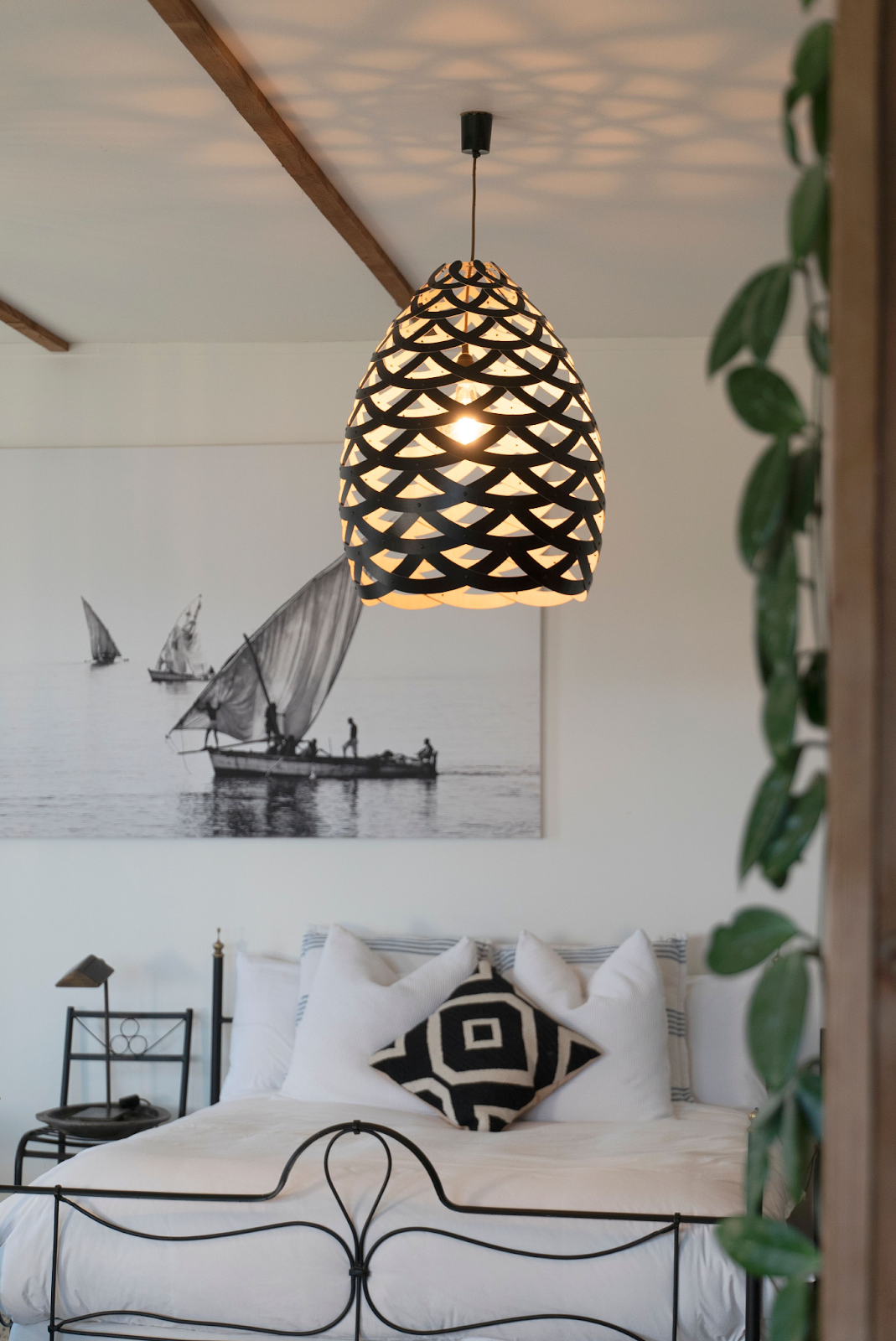
Tui, a native bird of New Zealand, with their drumming wing-beats and unique songs, inspire the Tui light, featuring white wattles and a necklace of interwoven rings.
AJ: What is your favorite type of furniture to design?
DT: Loungers; graceful objects that encourage people to relax.
AJ: What is your favorite design tool to use?
DT: A 0.5mm, B click pencil and a Moleskine workbook.
AJ: What is your design pet peeve?
DT: Greenwashing, especially amplifying a single good aspect of a product to deflect attention to other irresponsible qualities.
Like what you see? Get it first with a subscription to aspire design and home magazine.