


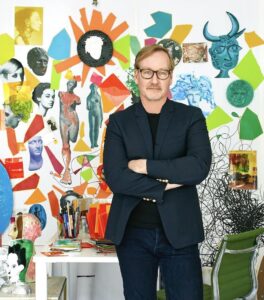


Andrew Joseph: Who is your style (or design) icon and why?
Doug Meyer: David Hicks had the most profound influence on me. Starting at age 10, my mother bought me all of his books as they were released. I devoured each one and still have them all. I’ve probably looked through them thousands of times (and that’s no exaggeration).
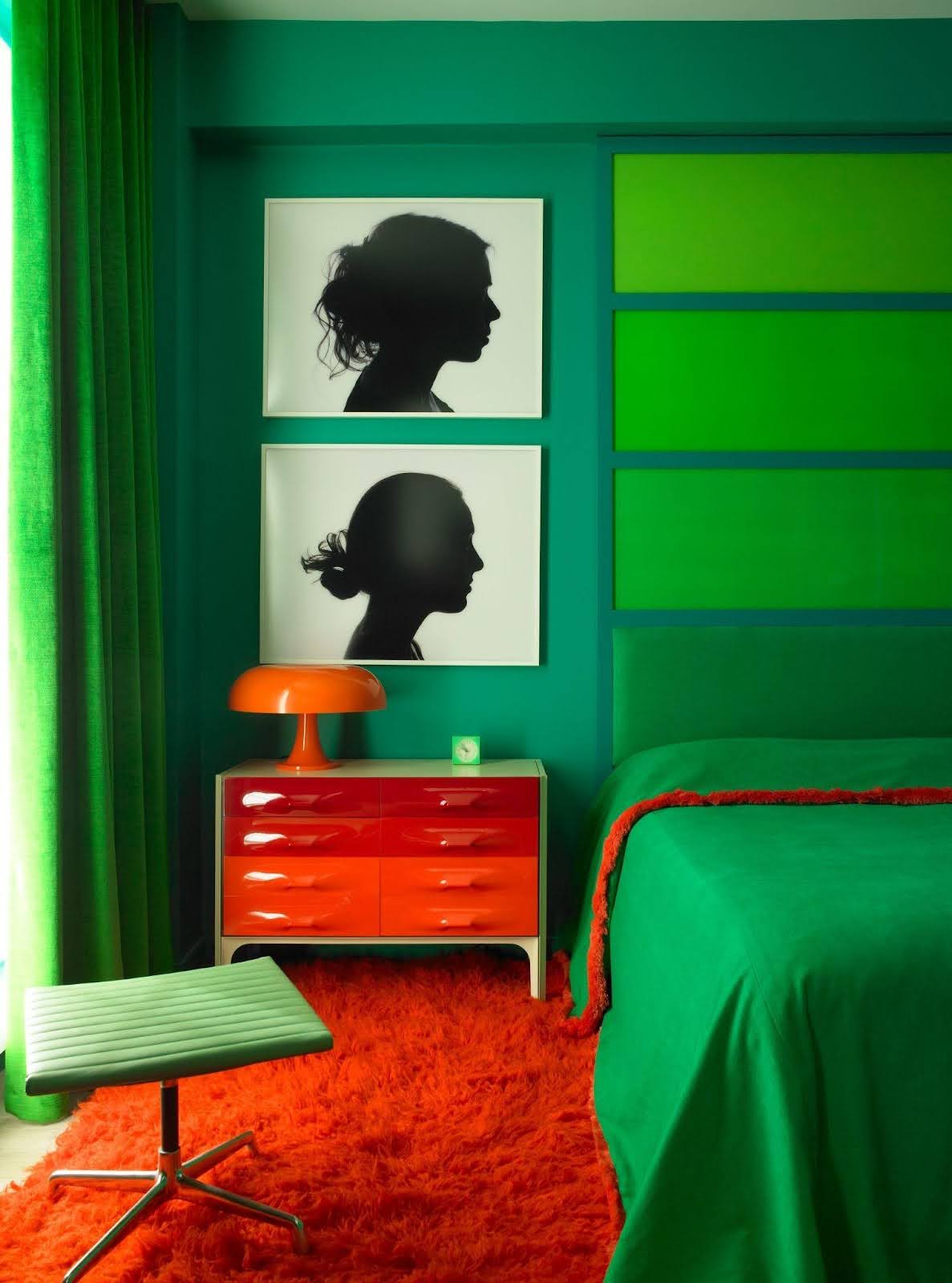
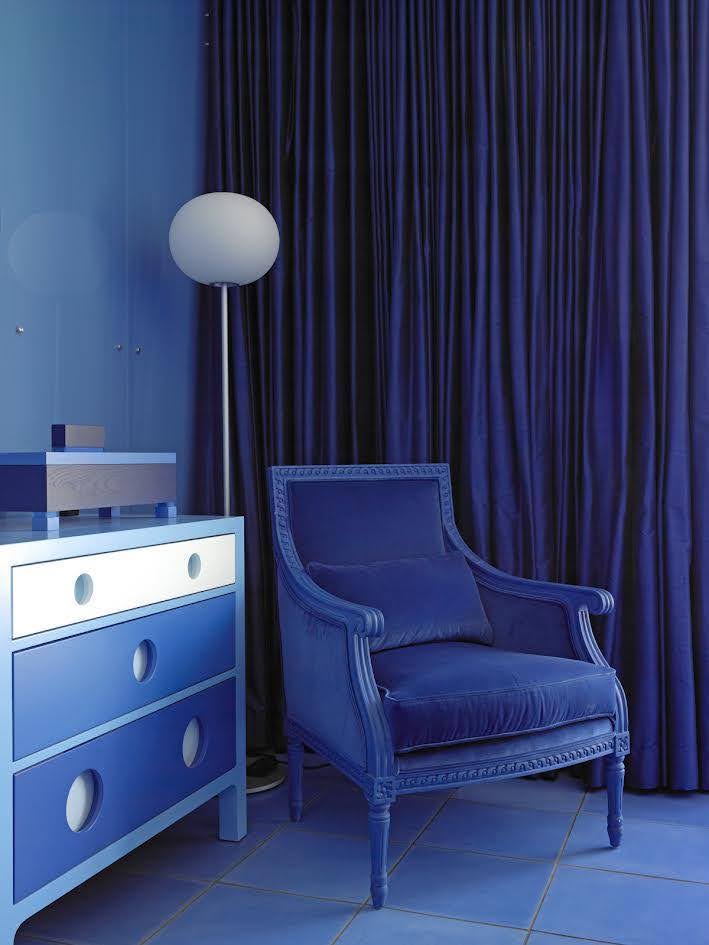
From Hicks, I learned how to skillfully mix various periods with modern pieces and environments. He had a brilliant sense of graphics within a space — bold color blocking, striking signature prints in wallpaper, fabrics and rugs — balanced with strong solids. His color combinations were unexpected and beautiful. A painted bergère chair, minimal but powerful art — every detail carried weight and intention.
A Hicks-designed space is always immediately recognizable, entirely unique and in a class by itself. Many have tried to emulate his style — few succeed. His minimal layering is deceptively complex; it’s a sophisticated mix of high-end and more accessible pieces. But the truth is, to pull it off, you need truly exquisite elements. Fabulous pieces are essential.
I never tried to recreate a “Hicks look.” Instead, I absorbed his philosophy and (hopefully) learned how to create extraordinary, one-of-a-kind spaces of my own.
AJ: What is your favorite design trend from the past?
DM: I really dislike “trends,” but I do love a movement — and one of my favorites is the Bloomsbury movement. I’ve always been deeply inspired by Bloomsbury artists Vanessa Bell and Duncan Grant, particularly their home, Charleston.
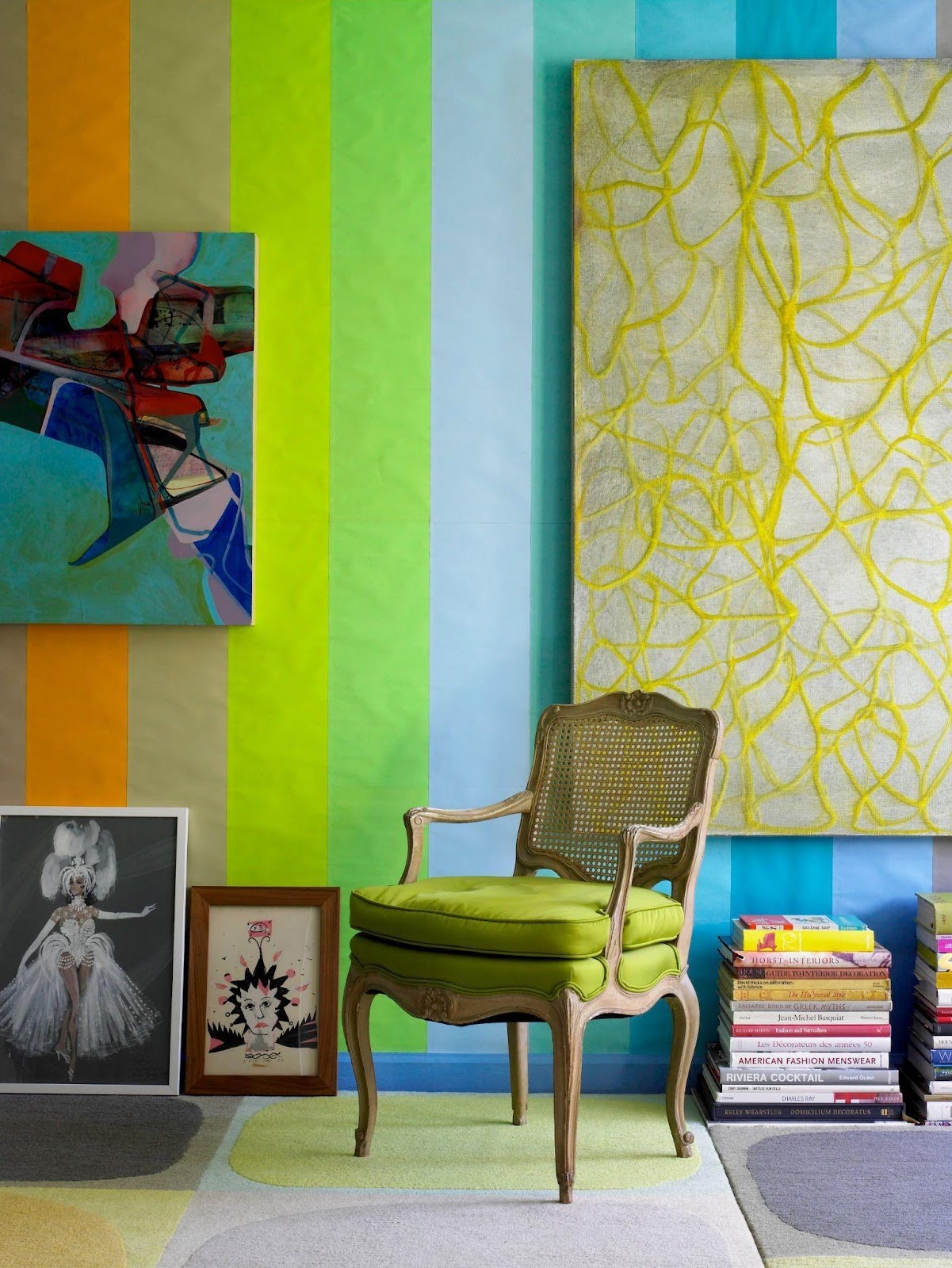
Charleston wasn’t just decorated; it was transformed into a work of art. They painted the walls, embellished the furniture and created a space that was quirky, unconventional and utterly beautiful. It transgressed traditional notions of interior design — it wasn’t about decoration, but about expression. It was the vision of artists who saw the world differently and wanted to live surrounded by that vision. Always inspiring.

AJ: If you weren’t a designer, what would you be and why?
DM: I’ve always been drawn to the idea of being some sort of investigator or spy. I love research — gathering data, analyzing information, uncovering connections, solving complex problems. Think of it as a cross between Fox Mulder from The X-Files and Daniel Craig’s James Bond.
AJ: How do you stay creative and inspired?
DM: Hands down: travel. Exploring new places and cultures is the most inspiring thing you can do. Mentally and visually, you learn so much. You see how people around the world live, but you also realize how much we all have in common.
I’m generally a talker, so it always surprises people when I go somewhere new and become really quiet. It’s not because I’m unhappy or unwell — it’s the opposite. I’m completely overwhelmed, in the best way, just trying to take it all in.
There’s so much to absorb: the architecture, materials, color combinations, proportions, art, atmosphere — everything. It’s exhilarating.
AJ: What’s your design pet peeve?
DM: That’s a loaded question — I have many. First of all, some (maybe many) might call me a bastard for saying this, but I really struggle with how everything looks the same these days.
I’m talking about those trendy modern furniture pieces — chunky, tubular, kind of awkward — usually upholstered in boucle or velvet, trying to pass as sculptural. Sure, some are successful, but most are just poor knock-offs from big-box stores, which makes them feel instantly dated to me.
Like with most trends, when this look first emerged, it was fresh, exciting and fabulous. But now it’s everywhere, and that saturation strips it of originality. That’s exactly why I have issues with trends — they date things so quickly.
I could go on (and usually do), but anyone close to me knows this has been my rant for the past four years.

AJ: What is your favorite design tool to use?
DM: A pencil and sketchbook. I’m old school — I studied at Parsons School of Design in the late 1970s and grew up illustrating and drawing spaces by hand. For me, hand drawing conveys a space in a way that feels more real, personal, and compelling.
CAD renderings often appear sterile or artificial. In contrast, a hand-drawn sketch brings a sense of mystery and artistic presence to a project. There’s also an immediacy to it—drawing something in front of a client creates a connection and communicates your vision in a more intuitive, emotional way.
Also, I draw really well.
AJ: What is your favorite design-related quote?
DM: “Trendy is the last stage before tacky.” – Karl Lagerfeld
Like what you see? Get it first with a subscription to aspire design and home magazine.