
Studio AHEAD is a San Francisco-based art and design collective founded by Homan Rajai and Elena Dendiberia. Drawing from their diasporic experiences, the team believes strongly that there is no universal idea of functionality that fits all cultures and people, and employs a “borderless” approach to their design, while still maintaining roots deeply embedded in Northern California’s history. What remains constant is an appreciation of tradition and craftsmanship. Studio AHEAD launched its production arm in 2019 and in 2020 began publishing California: A Journal, which chronicles Northern California’s vibrant cultural history. Today’s Maker Monday features Elena, an internationally exhibited artist with a sensual approach to art and design. She brings together the tactile experience of her art with a design vernacular that evolves through close collaboration with artists, craftsmen, and fabricators.
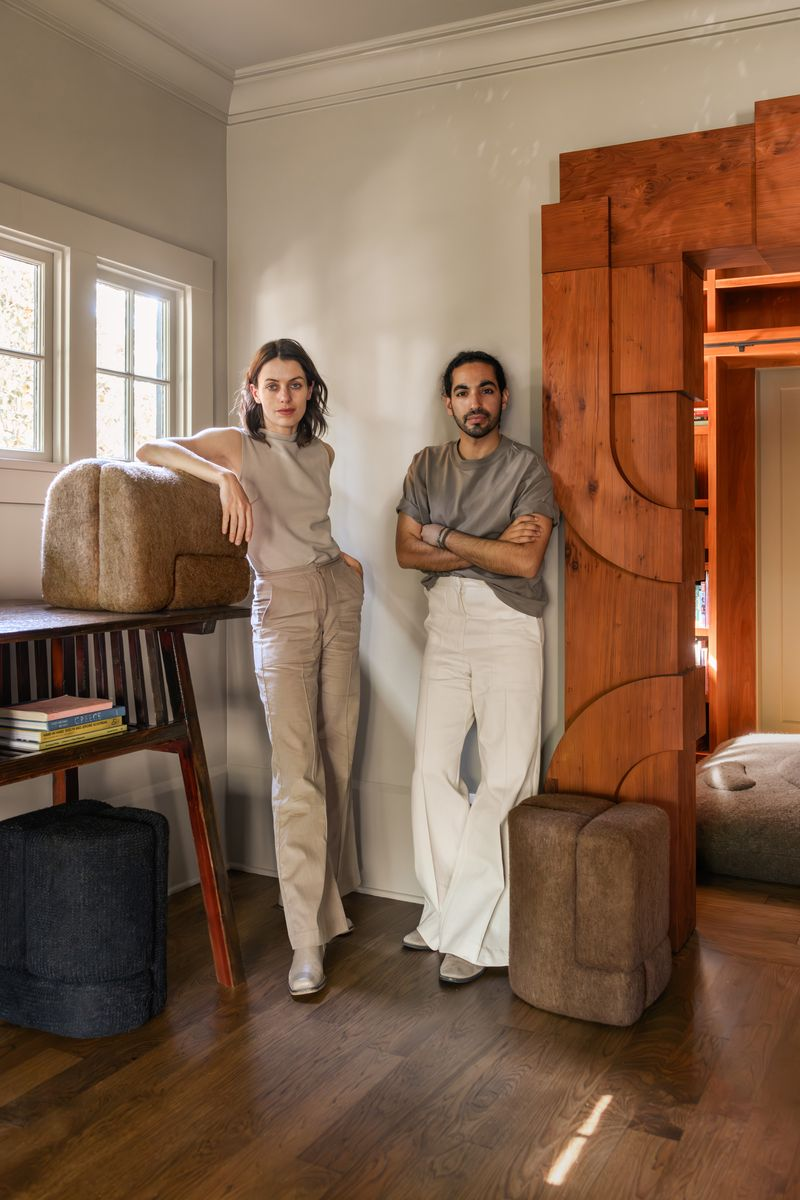
Andrew Joseph: Describe your design philosophy in three words.
Elena Dendiberia: I love using the “New Silk Road” metaphor for our studio practice, looking at the Silk Road as a movement that embraces diverse cultural backgrounds, creating an exchange route for ideas, crafts, and movements.
AJ: What inspired you to become a designer?
ED: I hold degrees in architecture and studio art. During architecture school, I often felt too artistic and unstructured compared to my more studious architect friends. This feeling shifted when I started my MFA program; I began seeking more functionality in my work, moving away from pure artistic expression. On the other hand, my art practice felt solitary, and I craved being part of a broader community. Design represents the best of both worlds for me. I like to think of design as a less ego-driven practice that connects the wonder of artistry and craftsmanship with functionality.
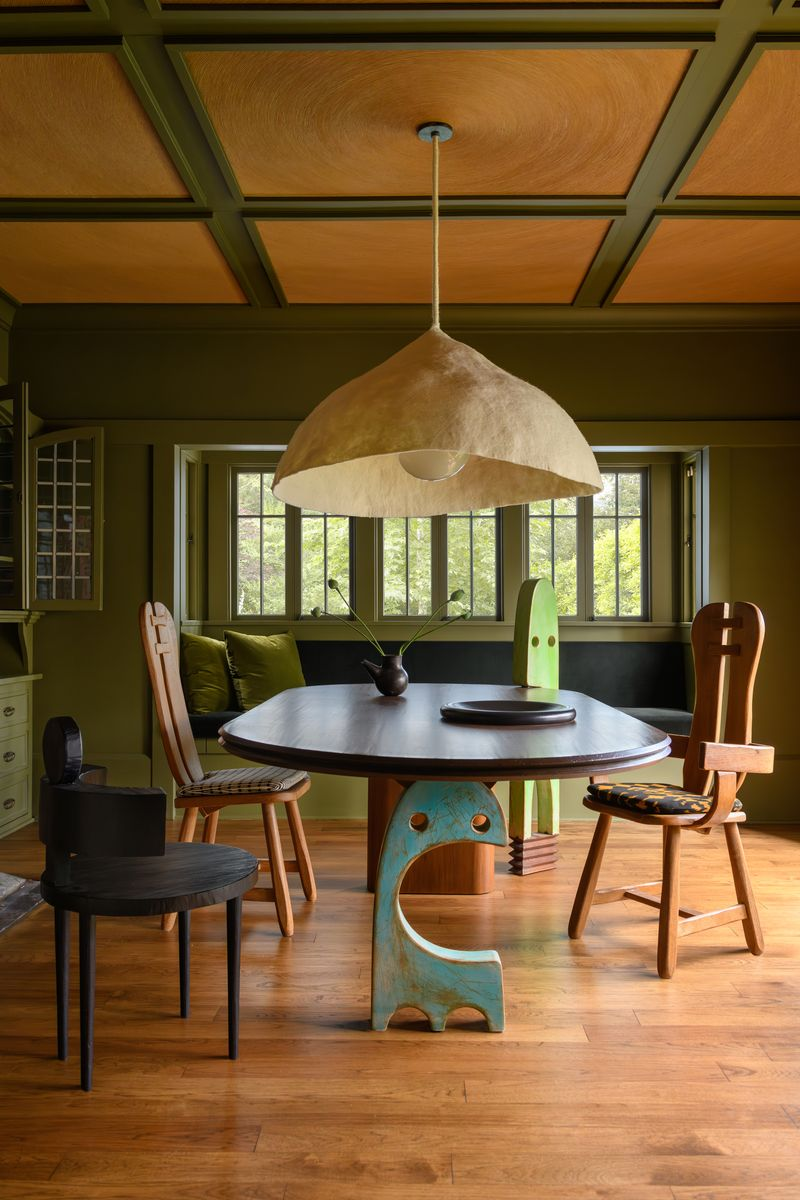
Studio AHEAD not only creates objects but also designs spaces shaped around each client’s needs.
AJ: Can you tell us about a project where you had to incorporate a client’s personal collection into the design?
ED: Our recently published Berkeley project is a great example. Over plates of heirloom tomatoes and basil picked from the garden, our clients would share with us anecdotes of their travels, and we’d reply with stories of the artists we introduced them to. They loved to host, but their dining room had become more like a storage unit for their now-grown children’s belongings. We wanted to bring this room back to life and make it translate the clients’ personalities and passion for travel, reflected through their collected art and objects brought from various trips. We created a dining table using two sculptures from the client’s collection. One was serendipitously titled In Conversation by Texan artist Jeffie Brewer, which we repurposed. One sculpture became a support leg acting as a pillar for the table, while another taller “guy” now eats at the table.
AJ: How do you approach a new design project?
ED: With a great deal of curiosity and openness. I am Russian, and Homan is Persian, and our clients come from various cultural backgrounds: South Korea, China, Russia, the Jewish Diaspora, Persia/Iran, India, Venezuela, and the Upper East Side (which is a reality in itself!). So, we never assume we know how people exist, an assumption we often see in design. Instead, we ask many questions and learn from our clients before we even begin designing.
We start by asking very simple questions, for instance: How do you like to sit? A question like that has so many cultural implications and so many design opportunities.
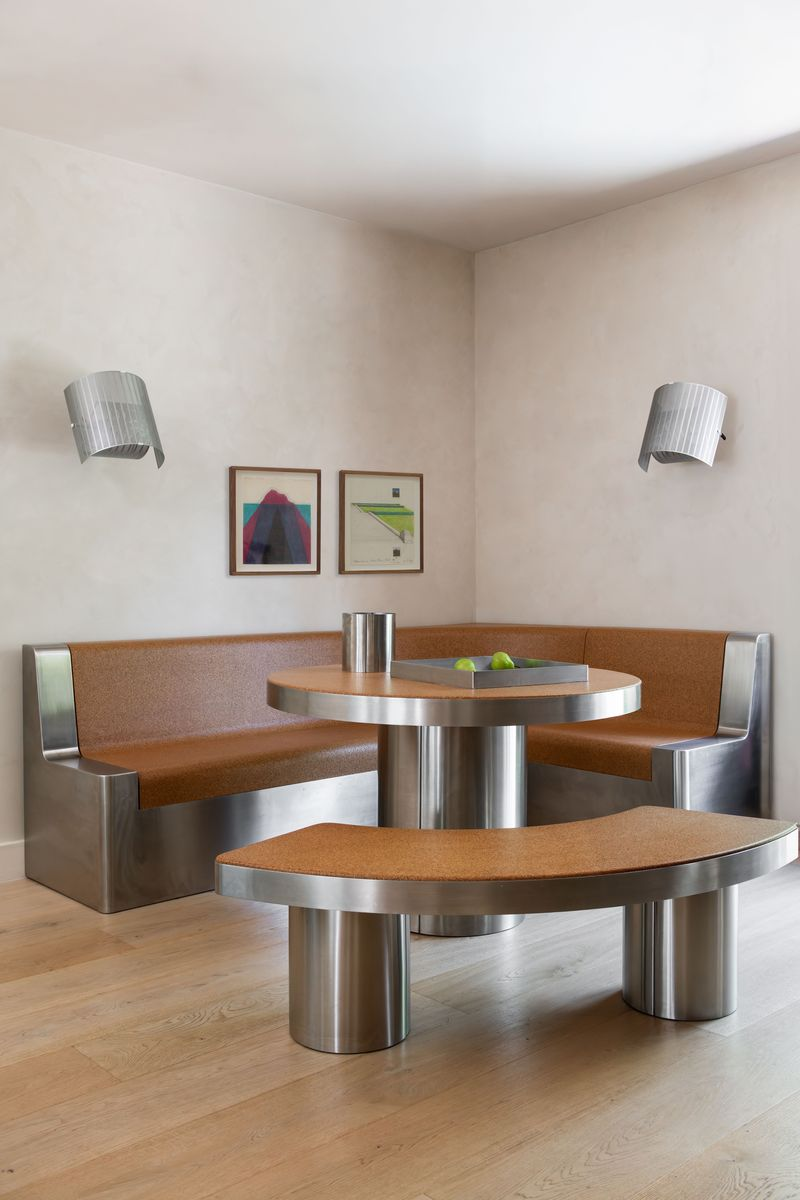
Cork Table & Bench
AJ: What is a specific moment in your career that made you feel accomplished?
ED: We are lucky to experience these moments often with our projects. I love when spaces develop over time to reflect our clients’ personalities. It feels right to leave room for spaces to evolve and grow with the energy and passion of the people who inhabit them; it means we didn’t suffocate them with too much design and one way of existence.
One of our clients from South Korea likes everything low and loves to sit on the floor. We took note of this and custom-designed a large-scale coffee table with rounded edges, so that when she sits on the floor cross-legged, she can tuck her legs under comfortably. It’s the right height for her to work, read, eat. It’s one of her favorite features in the space we designed. Last time we were there, we were happy to see she was doing a ceramic project on the coffee table. That’s a success for us to see the space we designed being lived in!
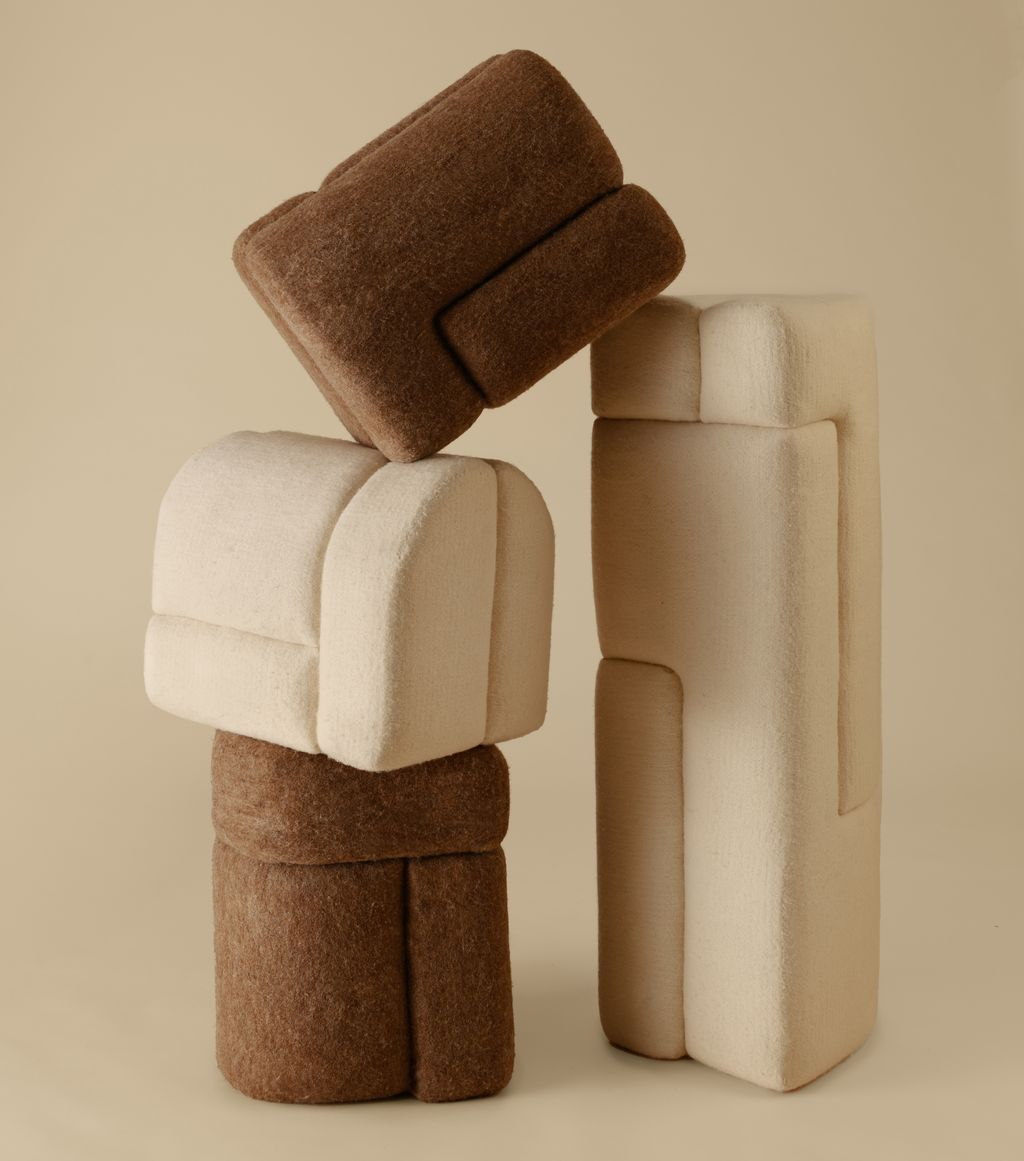
Sheep Stool & Bench in Brown & Cream
AJ: Can you tell us about a project where you had to incorporate sustainable materials into the design?
ED: We love deep diving into material research. Our Sheep furniture collection is entirely upholstered in locally sourced sheep wool felt, a fully renewable and biodegradable nature’s wonder of a material. The wool is produced in Sebastopol and comes from sheep herding communities that are primarily in West Marin and Sonoma. We resonate with felt on a personal level since it has a deep connection to both Russian and Persian cultures. There’s beauty and warmth to the unrefined quality of wool felt that brings you back to nature, something hard to find in commercially produced boucle alternatives.
We also just released a new capsule collection of furniture made in cork and metal. Cork is another example of a regenerative material, made from the bark of a tree that can be harvested every 9 years and leaves the tree unharmed.
AJ: What’s a new hobby/skill that you have learned recently?
ED: I started dream journaling about six months ago, and it has become quite a transformative practice for me. I keep it simple: first thing in the morning, before the dream image fades, I put it in my notes, following a few simple questions: How did this dream make me feel? What question does this dream ask me? Where did it happen? What sounds did this dream have? It is amazing how our subconscious communicates with us through dreams. Do I see visuals in my dreams that get translated into my work? Definitely!
Like what you see? Get it first with a subscription to aspire design and home magazine.