

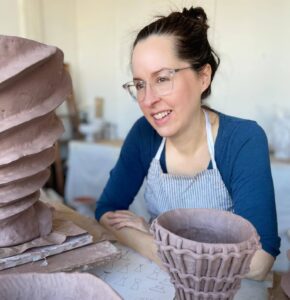


Old Enchantment is a series that calls on the horizontal sublime of Rothko and Turner, and takes shelter in its own simplicity.
Andrew Joseph: What inspired you to become a designer/artist?
Ellen Robinson: I was deeply inspired by works like Louise Bourgeois’s jewelry and Giacometti’s furniture — how sculptural concepts can be transformed into functional objects while retaining the same underlying ideas. What sets the functional pieces apart, for me, is their intimate nature. Because they are objects you physically interact with.
AJ: Can you describe your design philosophy in three words?
ER: Loose, handmade, spanning time.
AJ: How do you approach a new design project?
ER: One of the things I love about my design process is how iterative it is. I might create a piece multiple times before I’m satisfied with the proportions — the way the foot tapers to meet the body, the delicacy of the lip. I enjoy refining and experimenting with different elements, continuously tweaking until it’s just right.

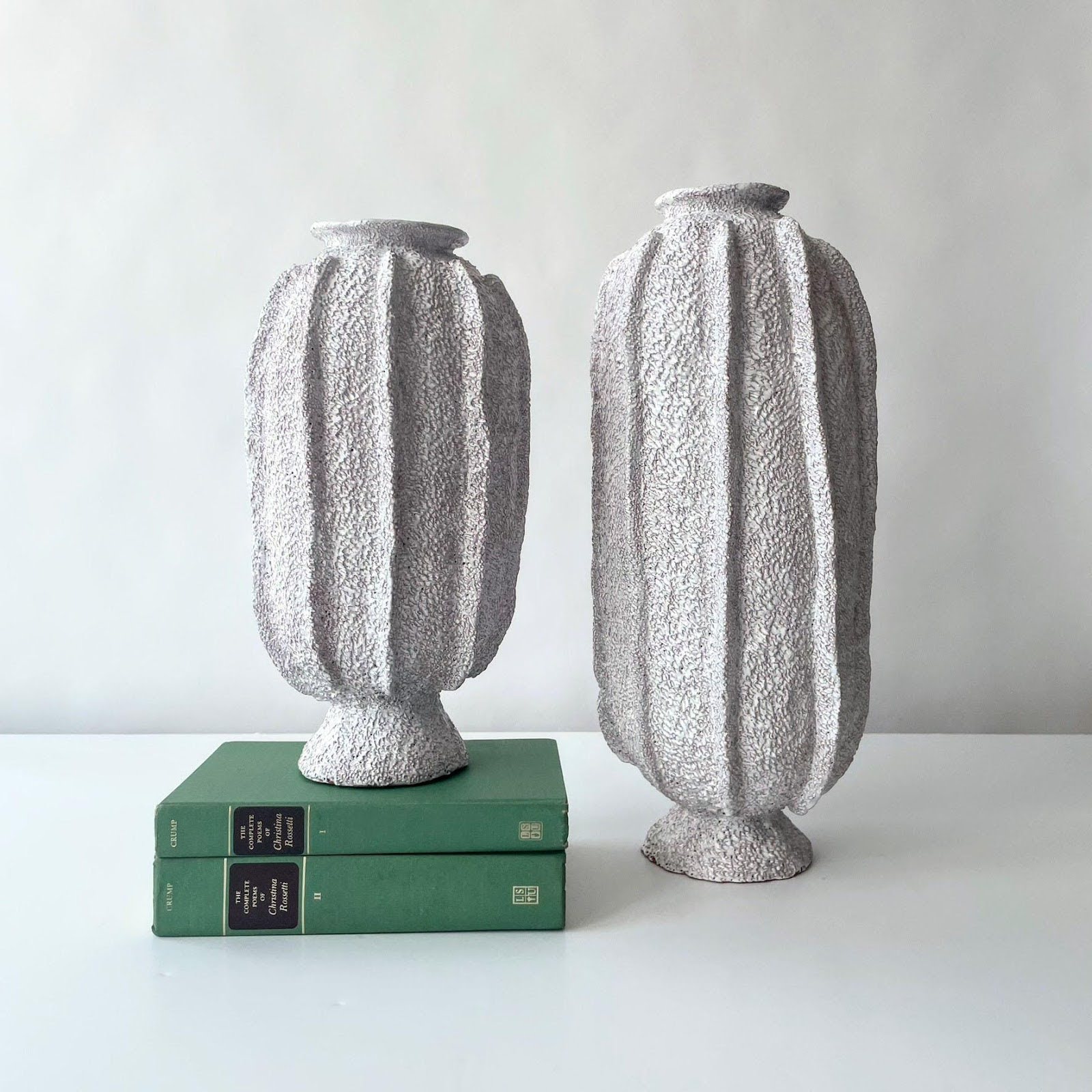
The series Sea Garden evokes the organic relics of fossilization or forms hewn from coral.
AJ: Can you tell us about a design trend you are excited about?
ER: We’re traveling back in time, but I’m fascinated by pre-Columbian tripod bowls. I first encountered them, somewhat unexpectedly, at the Sèvres Museum, and they knocked my socks off.
AJ: What is your favorite place to find inspiration?
ER: The Metropolitan Museum is my happy place. There are an infinite amount of things to see. The Palissy and Saint-Porchaire ceramics and Cycladic galleries are some favorites.
AJ: What is the most important skill for a successful designer?
ER: Resilience. I told myself when I started my business that I wasn’t going to let hurt feelings or rejection, or anything like that stop me. It’s amazing the results that you can get when you pour all your energy into a single enterprise. Things almost inevitably start to happen.

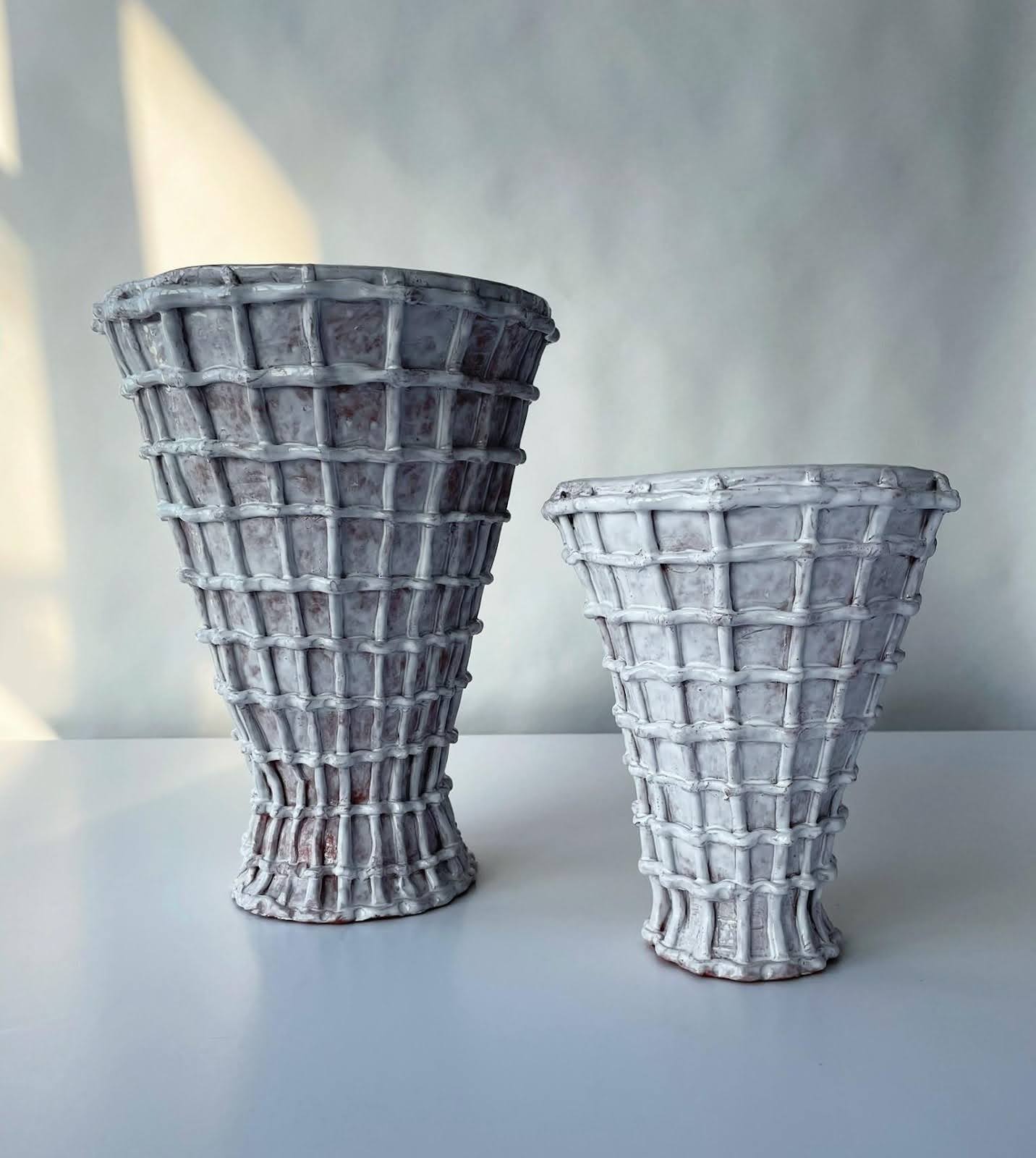
The series Visible Trace references a modernist concept reimagined in a classical form. “When I first made a grid … I thought it represented innocence.” – Agnes Martin
AJ: What is your favorite thing about being a designer?
ER: I’m a huge tennis fan, and I was really struck by something a commentator said about Serena Williams: that she could win her match simply by being Serena. That idea resonates with me as a designer — my best work comes when I’m fully myself. It feels like an authentic expression of my truest self. Also, the flow state that comes when you’re fully absorbed in what you’re doing — it’s one of the best feelings.
AJ: What is your favorite design-related quote?
ER: Louis Kahn said: “You say to brick, ‘What do you want, brick?’ Brick says to you, ‘I like an arch.’ if you say to brick, ‘arches are expensive and I can use a concrete lintel over an opening. What do you think of that, brick?’ Brick says: ‘I like an arch.'”
Like what you see? Get it first with a subscription to aspire design and home magazine.