



Searching for the Light
Andrew Joseph: What inspired you to become an artist?
Geppy Pisanelli: I’ve had a propensity for drawing since I was a child. My earliest memories date back to when I was 7-8 years old, but my mother recalls that I was drawing even at the age of 3. My first oil paintings, created when I was 8-9 years old, depicted a view of Capri, a landscape and a cougar descending a rock. As Picasso famously said, “All children are artists. The problem is how to remain an artist once you grow up.”
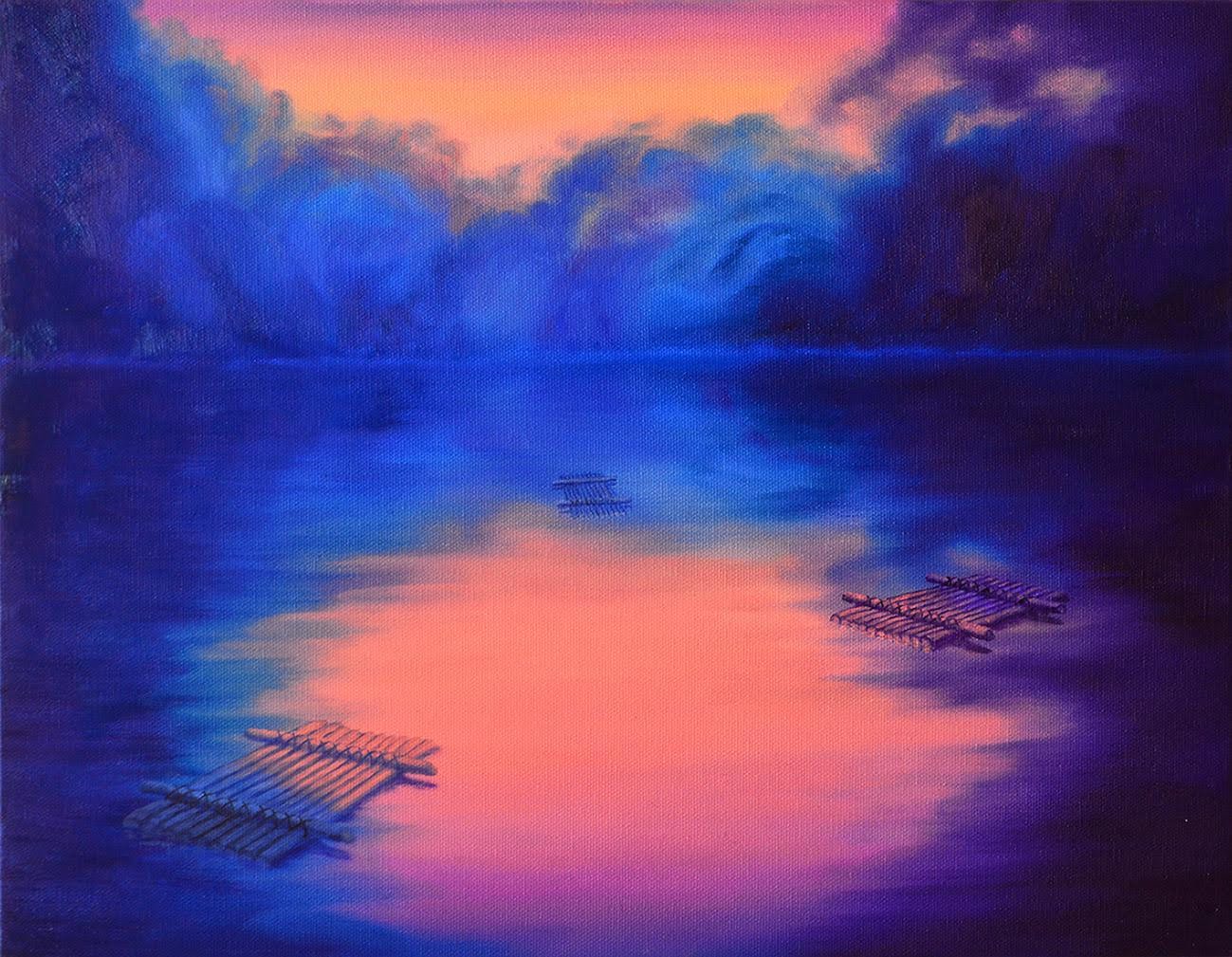
Fortunately, I must say, my need to express myself through drawing persisted into my adult life. Initially, my painting approach was very calculated. The setup was lengthy and complex, and I would obsess over the preparatory stages of the drawing. Now, I allow myself more freedom. In terms of subjects, I endeavor to analyze the fundamental questions of humanity: Who are we? What is the meaning of our existence? How should we relate to the complexities of life? The subjects that most captivate me are archetypal and timeless images, which I select from what I define as the smallest units of survival, common to all people and latitudes. For example: rafts, tents, shelters. Though I never neglect composition and the interplay of light and shadow.
AJ: How do you approach a new work/project?
GP: I usually approach a new work or project with a conceptual and compositional exploration that seeks to unearth the fundamental narrative or thematic core I wish to explore. For instance, in the painting cycle “Hidden Lights,” my initial approach was driven by the narrative and compositional need to explore the contrasts and relationships between the natural and artificial worlds. This conceptual framework informs my choice of subjects, settings and motifs.
The planning phase is critical, where I sketch and experiment with various compositional frameworks to find the perfect balance between elements. My work is deeply rooted in the exploration of light and shadow, both in a literal and metaphorical sense, which requires meticulous attention to the technical aspects of painting to ensure that the light, whether natural or artificial, perfectly encapsulates the intended mood and message.

The Signal and the Blind
AJ: Can you describe a work that you’re particularly proud of?
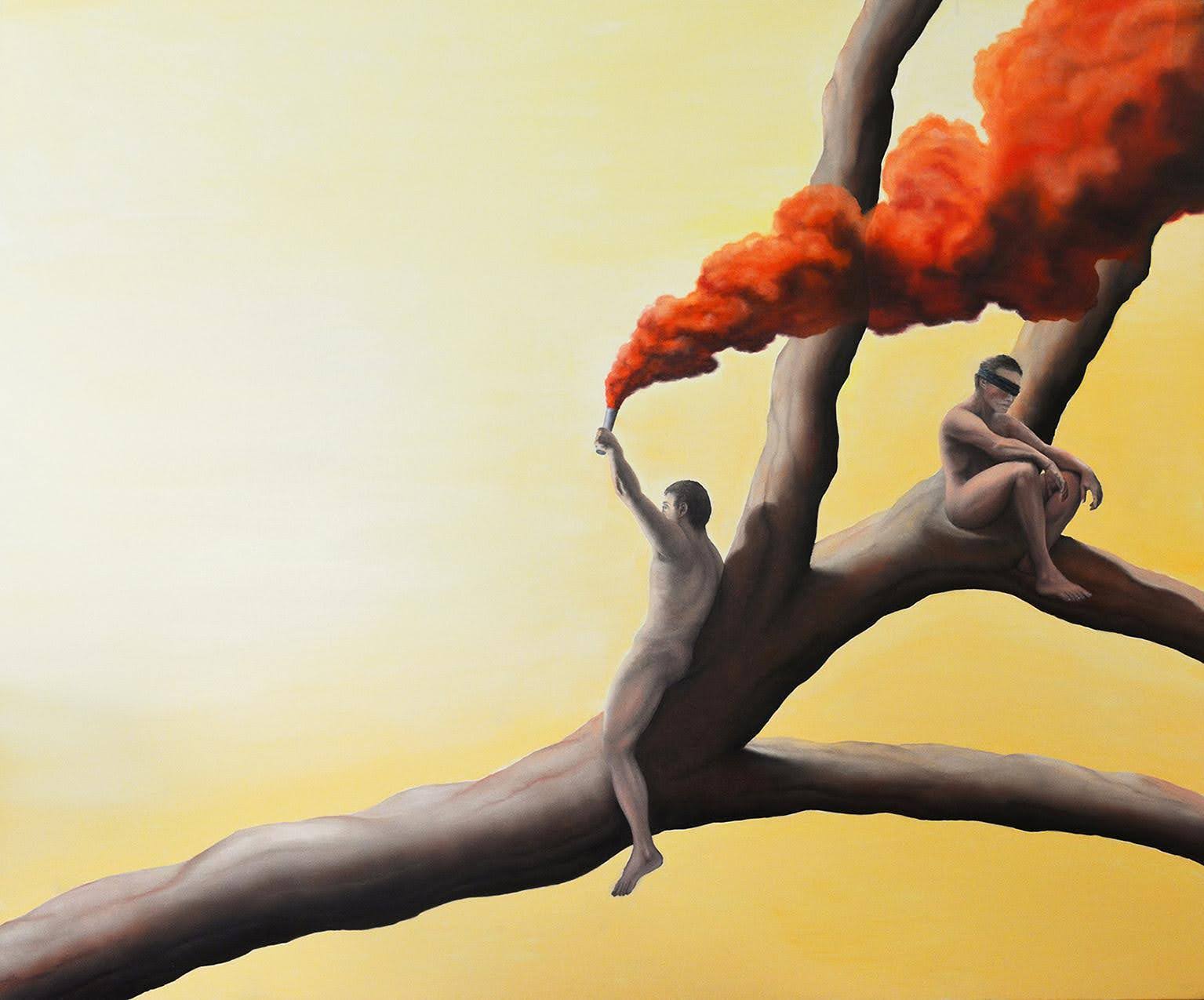
GP: I do not have a favorite work, maybe I have a group of them. But if I have to choose one, I pick one from my most recent paintings that will be featured in the exhibition that I will have in New York at GR Gallery entitled “Hidden Lights”. The painting is entitled “The signal and the blind”. We see two human figures immersed in a yellow bright light and perched on a tree trunk that seems to have fallen but whose beginning or end cannot be seen. One of the two characters holds a torch emitting a smoke signal, seeking to attract the attention of someone beyond the visible horizon. The other figure, however, is located in the opposite position and is blindfolded. What does this represent? Is this perhaps the plastic representation of man’s different attitude when faced with a problematic situation? Could the image depicted in the painting be related to one of the many imminent dangers for humanity? Don’t we often see some people that are aware of the danger and that are trying to warn others, while some choose to remain oblivious? The meaning of this work remains coded. The spectator always has the last word. The way he feels creates different levels of interpretation.
AJ: What’s the best piece of advice you’ve received as an artist?
GP: To be honest, despite being friends with different artists, I’ve never received advice that I would consider the best. However, I can use this space to share something that has been useful for me, and perhaps it might be useful to other artists reading this interview.
Firstly, one transformative step I took was moving to New York City. This city, while notoriously difficult due to its high cost of living and competitive nature, is a breeding ground for artistic and professional opportunities. Its vibrant cultural scene offers an unmatched array of events, exhibitions, and a dense network of professionals from all corners of the arts sector. For any artist willing to navigate its complexities, New York City can be a pivotal platform for career development, providing encounters that can lead to a step forward in visibility and engagement with influential figures in the art world.
Secondly, the importance of dedication and focus cannot be overstated. The artistic path demands a significant investment of time and energy. Consistently working hard and honing your craft is crucial. Equally important is maintaining a keen focus on your research and creative exploration. This means continually educating yourself, experimenting with new techniques and ideas, and staying true to your artistic vision while being open to evolution and growth.
Thirdly, actively participating in the art scene is essential. This involves more than just creating art in solitude; it means stepping out into the world to engage with it. Attending gallery and museum openings is not merely about viewing art, but about immersing yourself in the art scene. These events are opportunities to meet other artists, curators, critics, and collectors. Networking at these gatherings can lead to collaborations and exhibitions opportunities. The more you connect with people, the more you expand your possibilities, drawing inspiration and gaining support from a community of like-minded individuals.

Warm Rock
AJ: Can you describe your creative philosophy in three words?
GP: Reflective Theatrical, Evocative, Visionary.
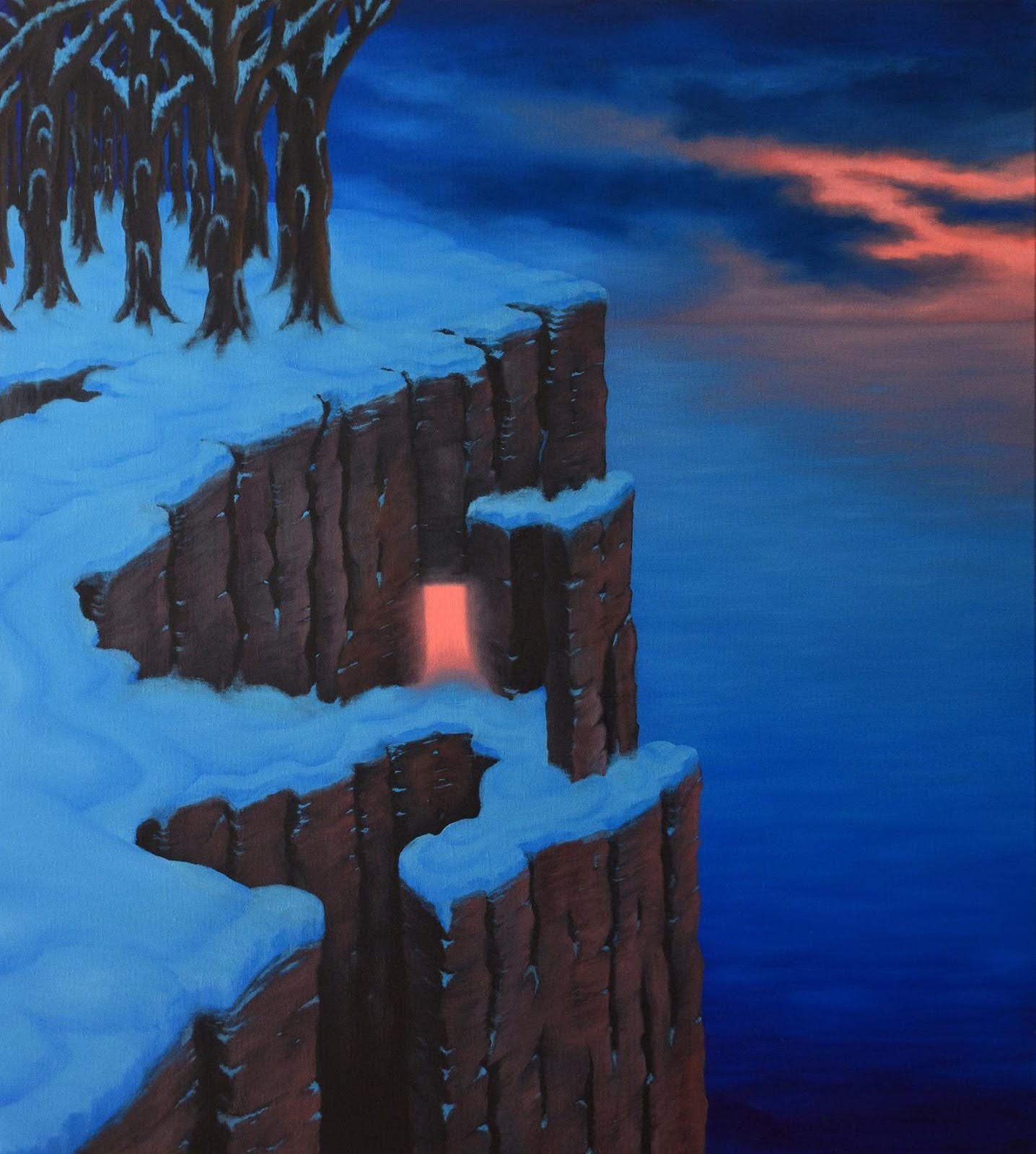
Reflective Theatrical: These words reflect my method of deep contemplation and expression, aiming to engage viewers in a dramatic, theatrical and visually impactful manner that mirrors the depth of universal themes depicted in the paintings. I use theatrical because even when the paintings represent a landscape or a natural element, they are constructed as if they were on a theatrical stage in terms of composition, colors, lights and shadows. But in this case, it is a theater that is at the base of tragedy not comedy.
Evocative: My art is designed to evoke emotions and provoke thought. Each piece is crafted not just to be seen but to resonate with the viewer, prompting reflections on broader themes such as the meaning of existence, or the human condition. This evocative quality is making a memorable and engaging impact on the viewer on a deeper emotional level.
Visionary: I describe my creative philosophy as visionary because, through my work, I aim to encourage viewers, or at least I hope to, to see beyond the immediate and traditional, by proposing a new visual language. I believe that painting, ultimately, is a language. To be understood as a new language, it must have its cultural roots deeply embedded to establish a new visual lexicon. Every innovation begins with its own tradition. I also favor the term “visionary” because I hope that after viewing my work, people will start to reflect on the use of imagery and motifs that carry deeper meanings and associations, ultimately leading them to ask more questions.
AJ: How do you stay creative and inspired?
GP: I keep myself immersed in a wide range of subjects, not only within the realms of art but also in literature, philosophy and science. This interdisciplinary approach often sparks new ideas and perspectives that are important for my creativity. I also regularly visit museums and galleries, and interact with people of the art world, which keeps my creative ideas flowing. Seeing also how other artists express themselves helps me reflect on my own pictorial language and explore new horizons in painting.
But regarding what the great German painter Gerhard Richter calls the daily practice of painting, I have to say that this process is the real process that keeps me creative and inspired. It is a daily necessity for me as it represents my way of thinking; I think through images. This process is my way to understand, decipher, and build reality with images. This way of thinking through images allows me to delve into deep philosophical questions, which motivates me to explore and express the complexities of human conditions and existential themes through the art of painting. Thus, this way of thinking is part of my being. However, there is a difference between thinking about a painting and the act of painting. In this case, I can divide my practice into two phases. The first is thinking about a painting in abstract terms, the idea of it, followed by a phase in which I start to define the structure of the work using drawing, which is a fundamental step in defining the composition of the painting. This highly complex process determines almost the final product, where only sizes and colors are missing. Then, I begin the second phase, where after transferring the drawing onto the canvas, I start the act of painting. During this phase, further editing of the image could occur, meaning the original project can still change in terms of drawing, color, or composition until the work is finished. As you can see, painting is a process that could theoretically continue even after the work is completed. In fact, sometimes I rework paintings months or even years later.
Like what you see? Get it first with a subscription to aspire design and home magazine.