


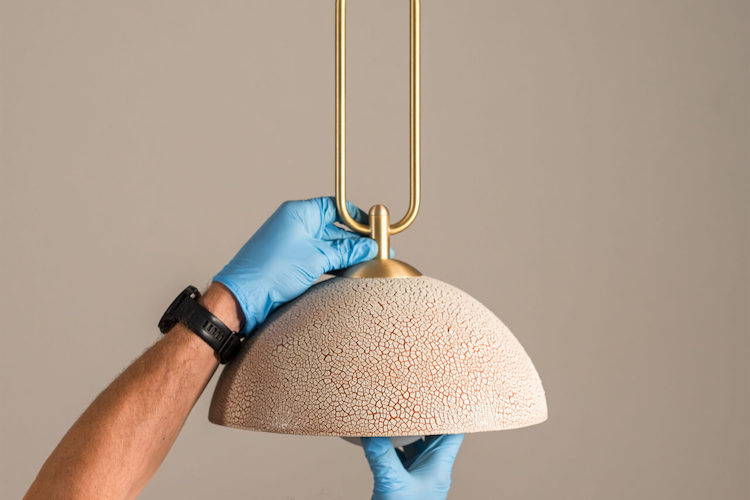



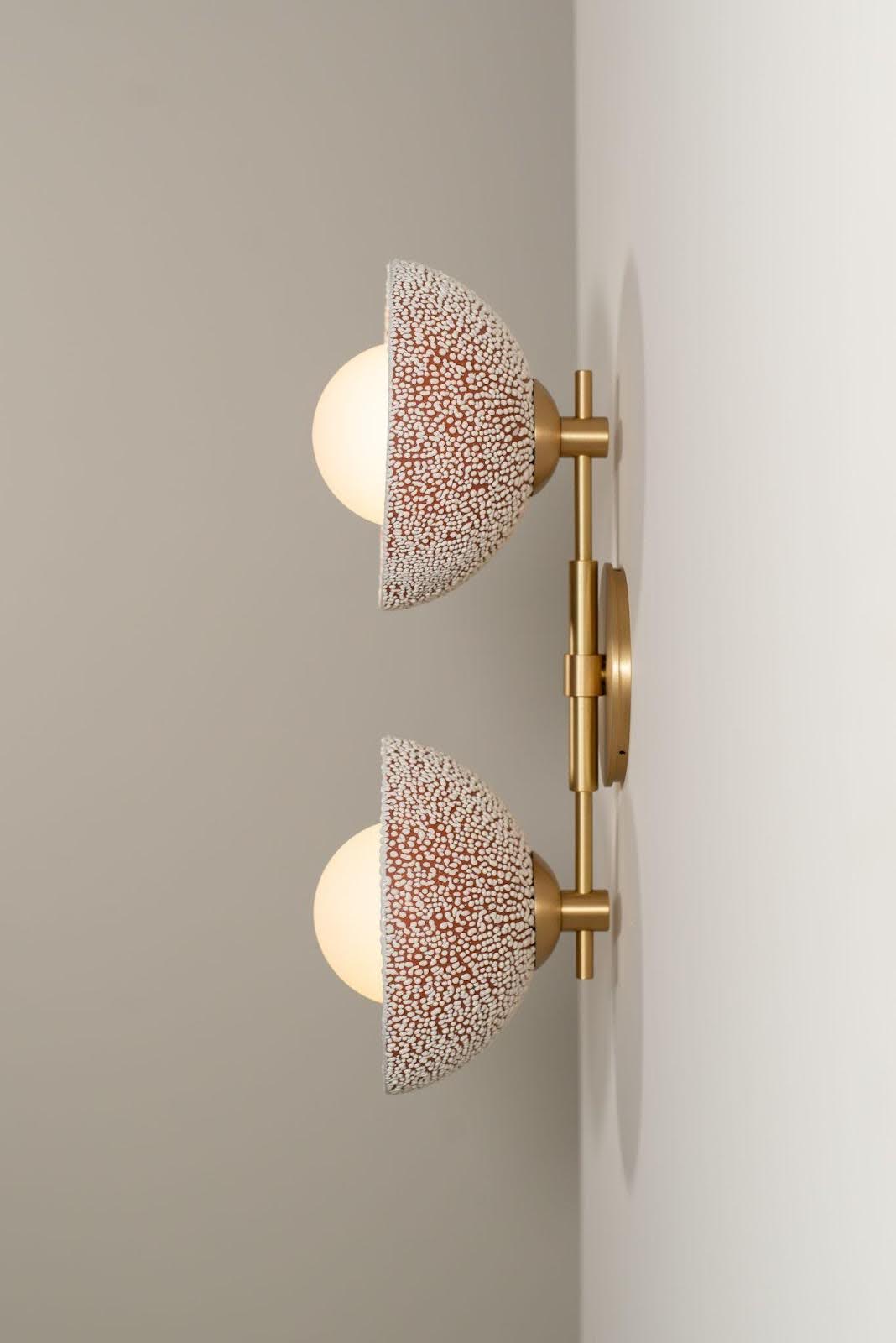
Inspired by the quiet drama of material contrast, the Dixon Double Sconce layers warm brass with hand-blown glass orbs, cradled by terracotta shades glazed in white beads.
Andrew Joseph: What inspired you to become a designer?
Jeff Nordhues: Growing up in central Nebraska, the idea of “designer” didn’t exist. I built houses and fixed rentals with my dad, and I was good at working with my hands, so my plan was to go into construction. I always liked art though, and in high school, my art teacher encouraged me to go into industrial design. It took some work to convince my parents that art school was a good idea, but I got a scholarship to the Art Institute of Colorado and didn’t look back. In fact, art school was the first place where I went from the kid who didn’t care to the kid who would restart a project the night before the deadline just to get a detail right.
In school, it was the post-war case study houses that made me really excited to explore the connection between beauty and function, and ultimately landed me in lighting.
AJ: What’s your favorite aspect of your job?
JN: Seeing how designers use our pieces in their spaces. There’s huge satisfaction in seeing that the vision I had in one of our pieces has a place in someone else’s art. It’s exciting and validating.
AJ: How do you balance functionality and aesthetics in your designs?
JN: One year for my birthday, my wife made me a shirt that just said “streamlined” on it because I’m obsessed with simple solutions. So with lighting, I spend most of my time solving where the wire goes, how to keep UL happy, and how to make the connections beautiful without overcomplicating any of the details or the design itself. I feel, with lighting, aesthetics can’t really beat out function, so we do go back to the drawing board if we have something beautiful but doesn’t produce enough light.

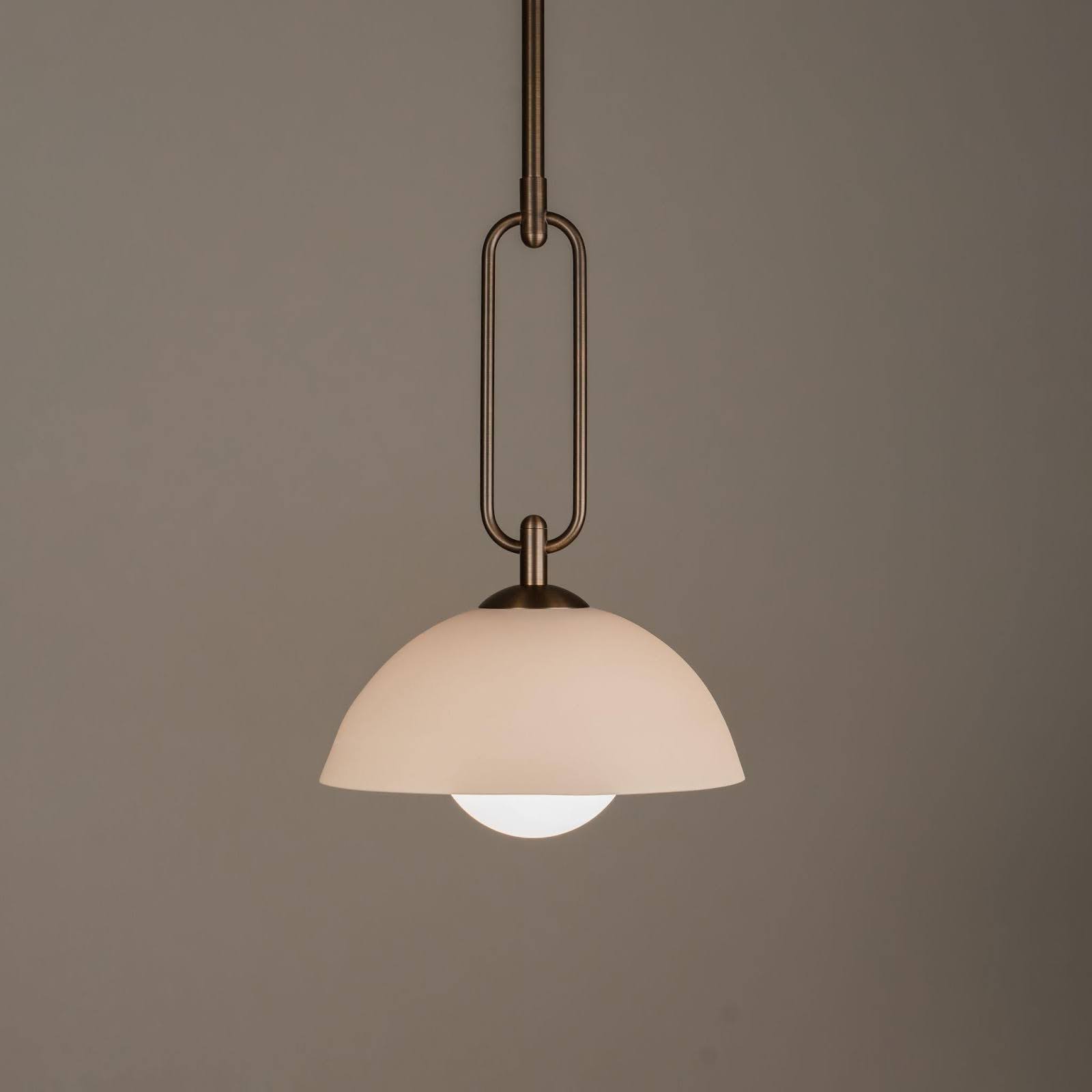
With a soft arc and seamless connections, the Bancroft Pendant balances restraint and warmth.
AJ: How do you stay organized while working on multiple projects?
JN: We’re small enough right now that I’m designing, making, and running the business, so sometimes I feel like my brain resembles a spiderweb — nothing’s really linear, but if you look closely, there’s a method to the madness. The method usually involves a ton of sticky notes, a production system we’ve built out in Notion to keep track of each fixture, and my wife dropping subtle (and not so subtle) reminders about deadlines.
AJ: If you weren’t a designer, what would you be and why?
JN: If money wasn’t a consideration, a sculptor. I see the shapes of things, and I like to explore what I see and get lost with my hands.
AJ: What’s your design pet peeve?
JN: It drives me crazy when you see a design that clearly took the easy route during production. What usually happens is that a designer comes up with a beautiful design without understanding the methods of making a product, so they end up having to make too many concessions instead of finding a better way for the material or rethinking the design. Good design is a conversation between imagination and material, and if both aren’t balanced, the end result suffers.

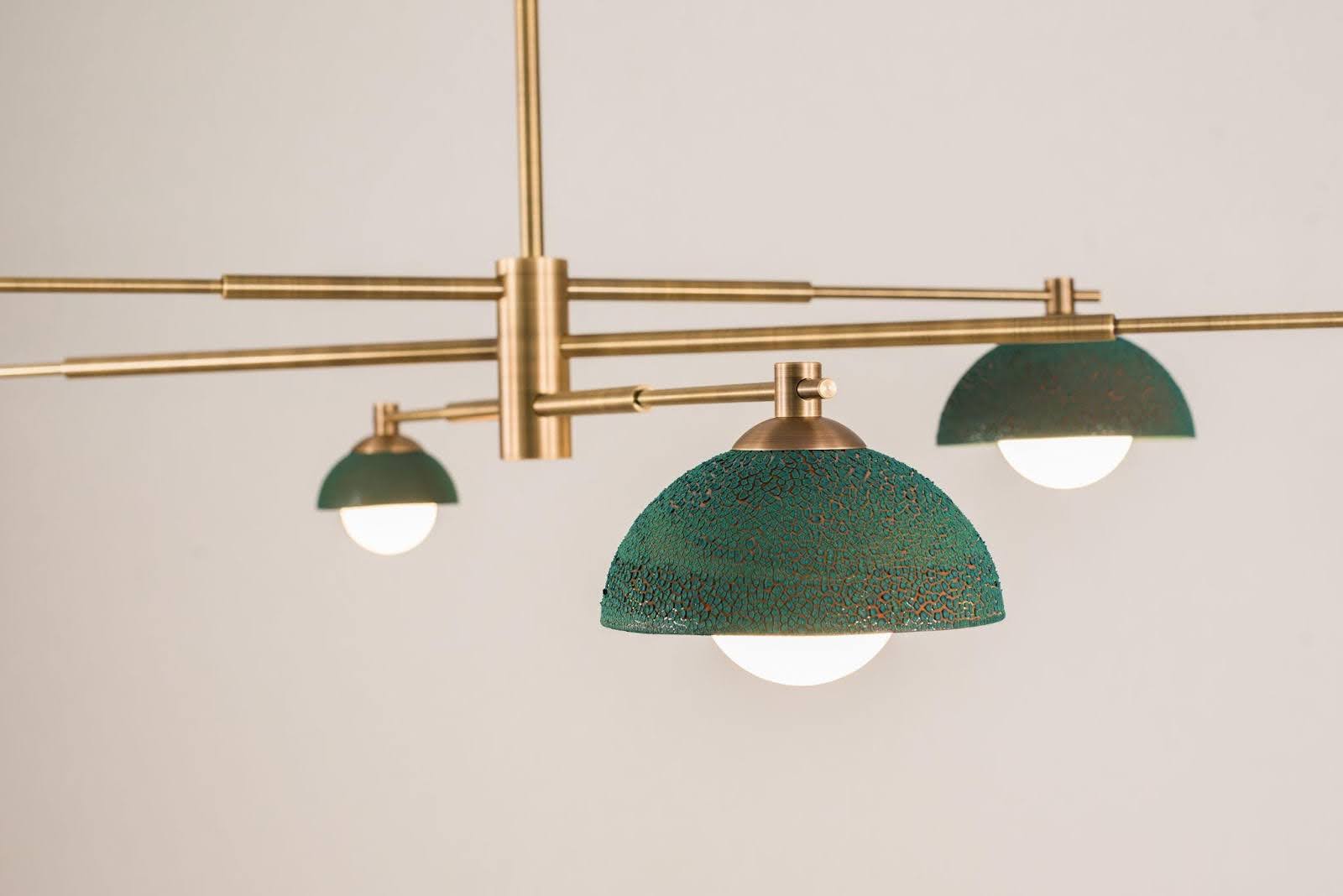
Like blossoms branching from a stem, the Dixon Chandelier arranges brass arms with ceramic reflectors in staggered sizes.
AJ: What was the last book you read and how did it inspire you?
JN: I listen to a lot of audiobooks while I’m fabricating. I prefer biographies when I’m not working, but otherwise I’ll listen to just about anything. My latest listen was “Watership Down” by Richard Adams. It’s a classic I’ve never read, and was genuinely a great story. The last book I listened to that inspired me, however, was “Everything She Touched: The Life of Ruth Asawa” by Marilyn Chase. You so often hear about the isolated artist or the crazy artist or whatever, but Ruth was incredibly creative and prolific while also having a family and leading a relatively “normal” life.
AJ: Can you tell us about a specific moment in your career that made you feel accomplished?
JN: Honestly, moving into our building. We started in a detached two-car garage, then moved into a slightly larger detached two-car garage. Then we were able to commit to a mortgage and moved into a 6,000-square-foot space about two years ago. Once we had that space, we finally felt like a “real” business.
Like what you see? Get it first with a subscription to aspire design and home magazine.