

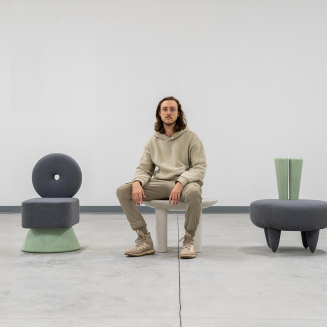

Andrew Joseph: What inspired you to become a designer?
John Vieweg: I have been making things for as long as I can remember. There is something very natural to me about translating abstract ideas into functional form. My designs are an extension of my experiences living in cities across America. They are abstractions and materials of the built environment, the spaces of post industry and the natural world as well. Whether it’s objects inspired by the curving forms of throwie graffiti, banal items like sandbags reinterpreted as seating, or spline sculptures made using digital manufacturing techniques, all of them involve making sense of all of the things that I have experienced.

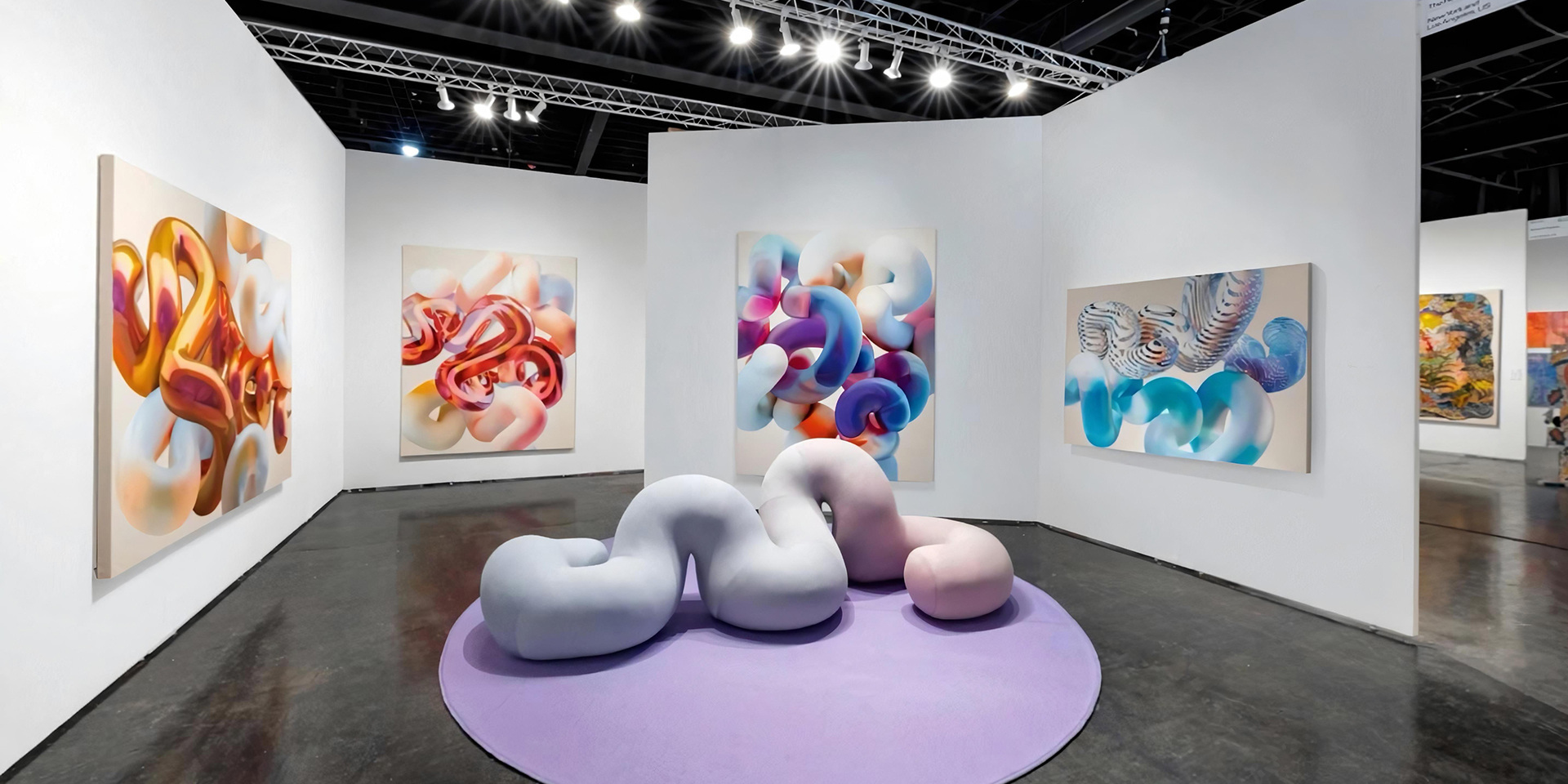
A 12-foot-long robotically knitted sculpture made for NADA Miami during Art Basel.
AJ: Best advice you’d give your teenage self?
JV: Just keep going! Have fun at this point in life while you have the freedom and time. Work on the things that you want to work on, don’t take things quite so seriously and explore! Oh, and move to Brooklyn much earlier.
AJ: Can you describe your design philosophy in three words?
JV: Subverting the expected.
AJ: How do you stay creative and inspired?
JV: I stay inspired by choosing to work on what I am currently interested in! If I lose a spark for something it’s best to put it aside and come back to it later. I’ll take a walk in the city, write and return to my computer with new insights. My phone is stuffed full of notes and ideas, 90 percent of which will not be realized for several years. Chasing passion is a luxury, and having the choice to work when you want makes all the difference between inspiration and frustration.
AJ: What is the most important skill for a successful designer?
JV: A successful designer has to avoid perfectionism. I see so many talented people get lost in microscopic details. In their heads, these details are huge flaws, but 80 percent of people will not even perceive them. Take chances, fail, try new things and break new ground.

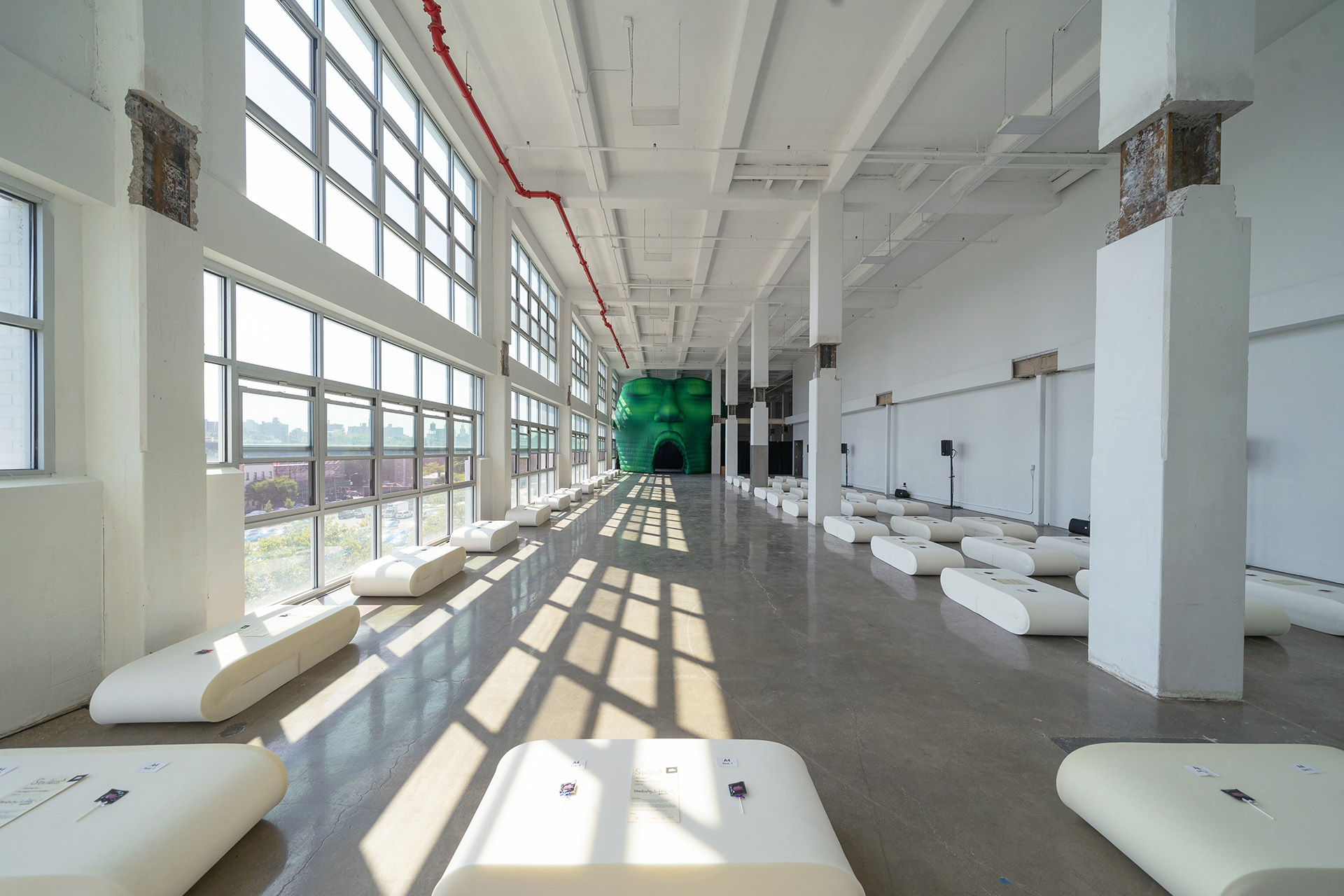
Set design and seating for Bad Binch TongTong’s New York Fashion Week debut. The seating design involves folding a series of upholstery foam sheets into small bales.
AJ: What would your dream project or dream client be right now?
JV: As my practice has grown I have moved from designing furniture to designing interiors. I am excited to keep scaling up the work to explore spaces, environments and even architecture!
A dream project for me would be an architectural installation in a historic public space, something that brings people together and gives them a reason to go outside again. An experience that functions as a social amenity and helps revive our civic spaces which have been languishing for the past several decades.
AJ: What’s a new hobby/skill that you have learned recently?
JV: AI image prompting is a skill that I’ve been developing as I’ve rapidly integrated AI tools into my workflow. It is not hard to produce great images with AI tools, but the challenge is to produce the right image. One that stays on brand, feels like my work and functions as a step forward. Precision is key and it’s a skill that I continue to build!
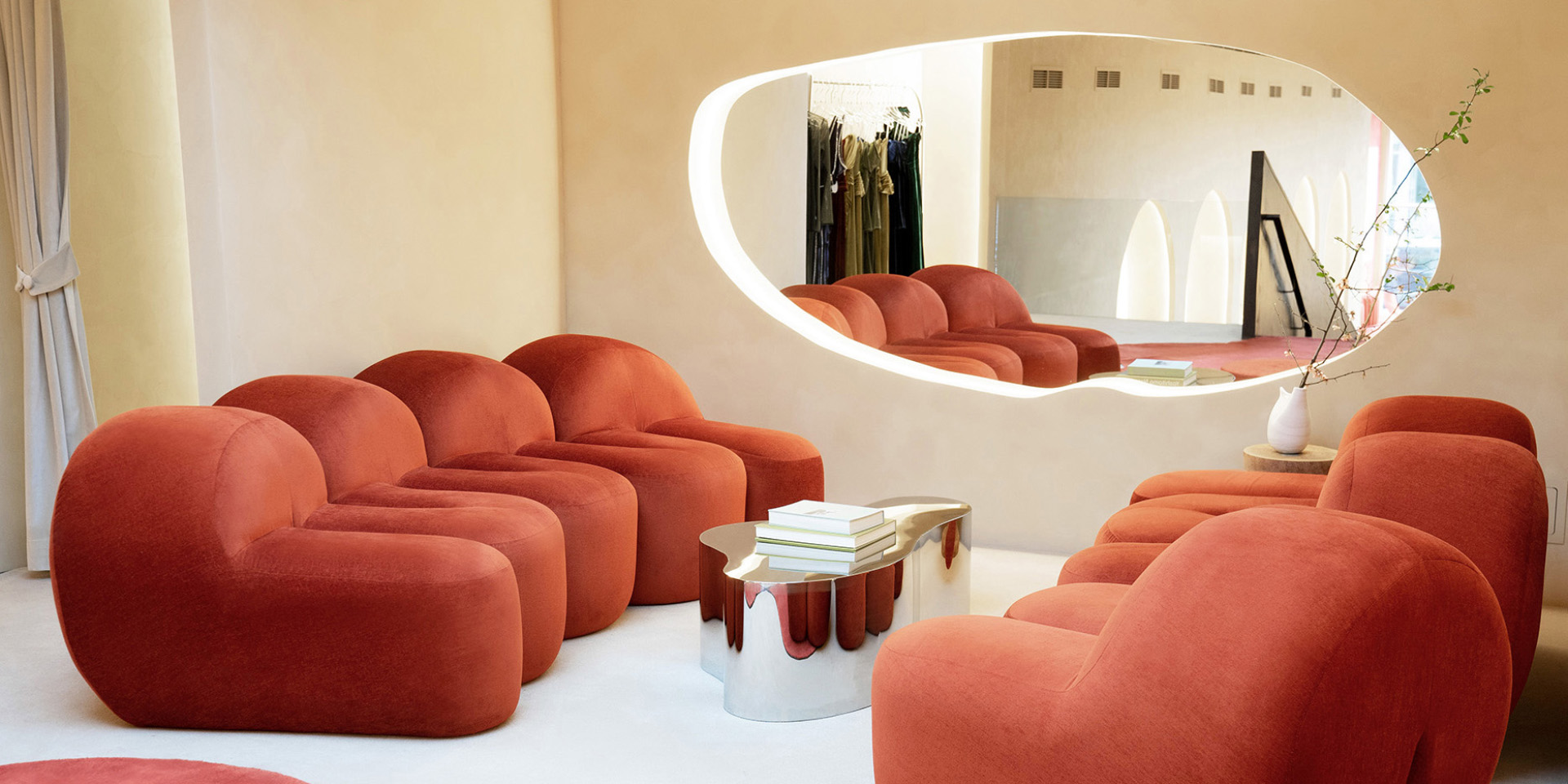
In Miss Circle’s Flagship store, bespoke furnishings merge red carpet elegance with human form-inspired curves, artistically echoing the brand’s unique clothing design ethos.
AJ: Can you tell us about a design trend you are excited about?
JV: While I was dubious of the movement at first, tasteful maximalism is an exciting new territory to explore! The juxtaposition of items that do not immediately belong together is quite satisfying and it’s a technique that I employ in my art staging, renders and AI-generated imagery as well. AI naturally lends itself to maximalism and it’s no coincidence that both the proliferation of AI tools and the movement of maximalism are taking off in such a big way at the same time.
Like what you see? Get it first with a subscription to aspire design and home magazine.