
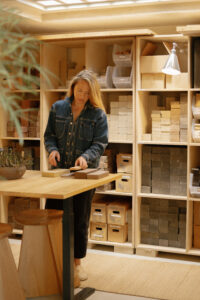
 In naming her landscape design and outdoor furniture brand ORCA, founder Molly Sedlacek looked to her roots for inspiration. OR represents Oregon, where Molly is from. A second-generation female landscape designer, her mother, Lisa Walter-Sedlacek, was a trailblazer in a primarily male-dominated construction industry. The other half reflects California (CA), where ORCA is based and draws on its aesthetic: relaxed, substantial, raw, and local. Growing up on the Oregon coast, Molly spent her childhood playing in a Bay Laurel hedge her parents planted and a bamboo forest her dad grew. These innate acts of living in the outdoors started her journey as an outdoor designer. It was a blueprint for living that her family handed down.
Molly discovered her talent in outdoor design when she was planting, curating, and exploring the use of outdoor space in her own garden in San Francisco. What she wanted, she couldn’t point to in a picture; it only existed in her imagination. It took material sourcing and experimenting to understand what flora, stone, and timber felt right. Quickly after completing this garden, Molly’s community of friends and family began supporting this conceptual approach to landscape design, and ORCA was born. Learn more about how Molly and ORCA sustainably enhance your outdoors in today’s Maker Monday.
Andrew Joseph: What inspired you to become a designer?
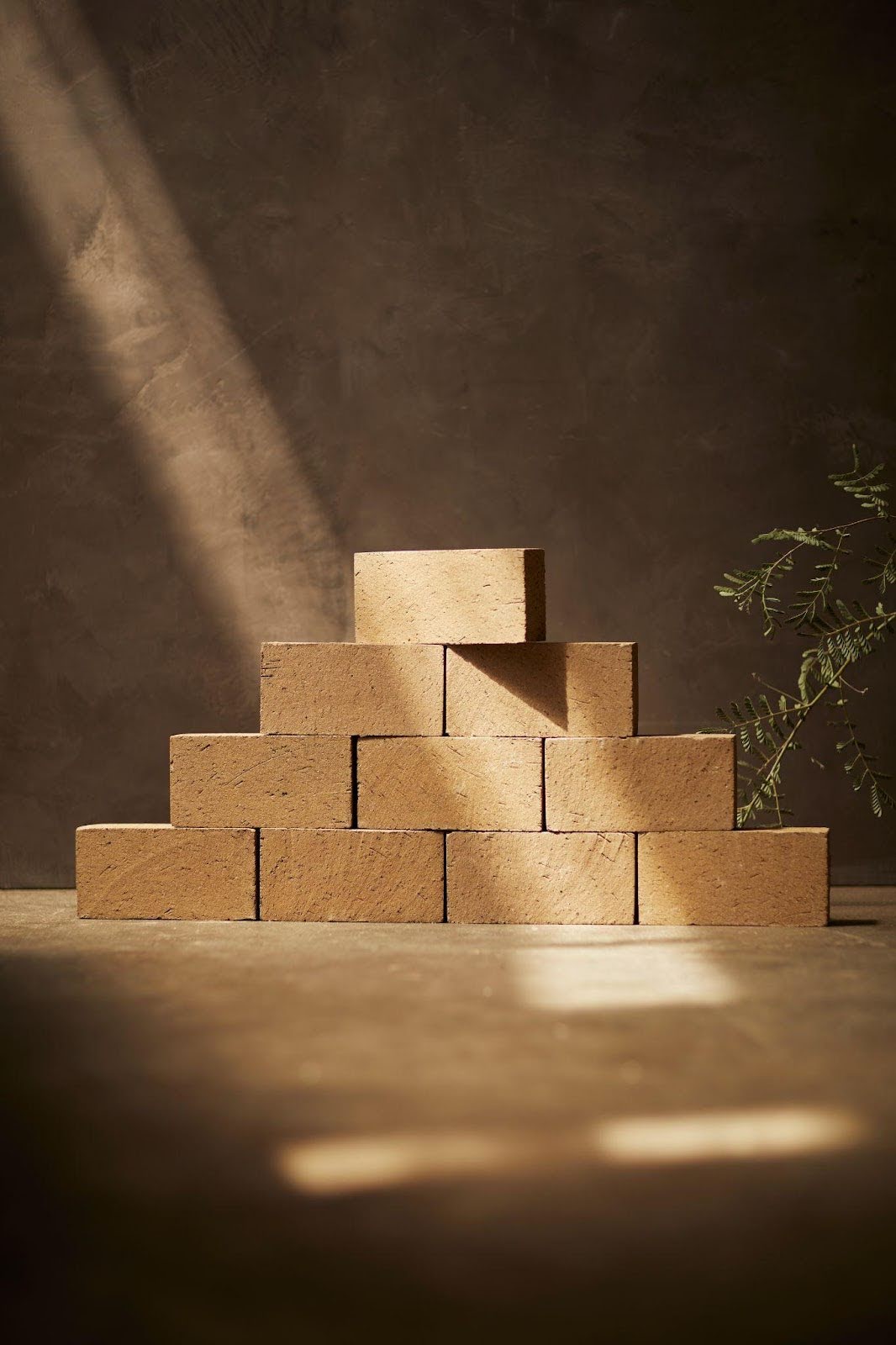
Molly Sedlacek: ORCA started as a landscape design studio but quickly evolved into a product company because the availability of well-designed, long-lasting, locally made materials was hard to find. I wanted products for the gardens I was designing and building that had a story behind them, and also reflective of what could be found in the natural environment. This meant making furniture with old-growth redwood and cedar versus imported teak, and using local high-fired clay brick to create pavers versus cement block.
AJ: Can you describe your design philosophy in three words?
MS: Elemental, honest, curious.
AJ: Can you tell us about a design trend you are excited about?
MS: Imperfection. Nothing in nature is straight or modular. There have been many years of modernism that was crisp, sterile, and didn’t celebrate the knots, knicks, checking, or cracks that natural materials are prone to because they are alive and breathing. When we allow for imperfection to happen, our homes and gardens are reflective of nature, which I do believe improves our quality of living.
AJ: What is your favorite place to find inspiration?
MS: Japan. I am trying to make it an annual trip as I always leave thinking about new approaches to garden composition, material language, and deeper philosophical connections humans have to the garden. I also collect pottery and find my favorite pieces from their use of clay.
AJ: How do you incorporate sustainability into your designs?
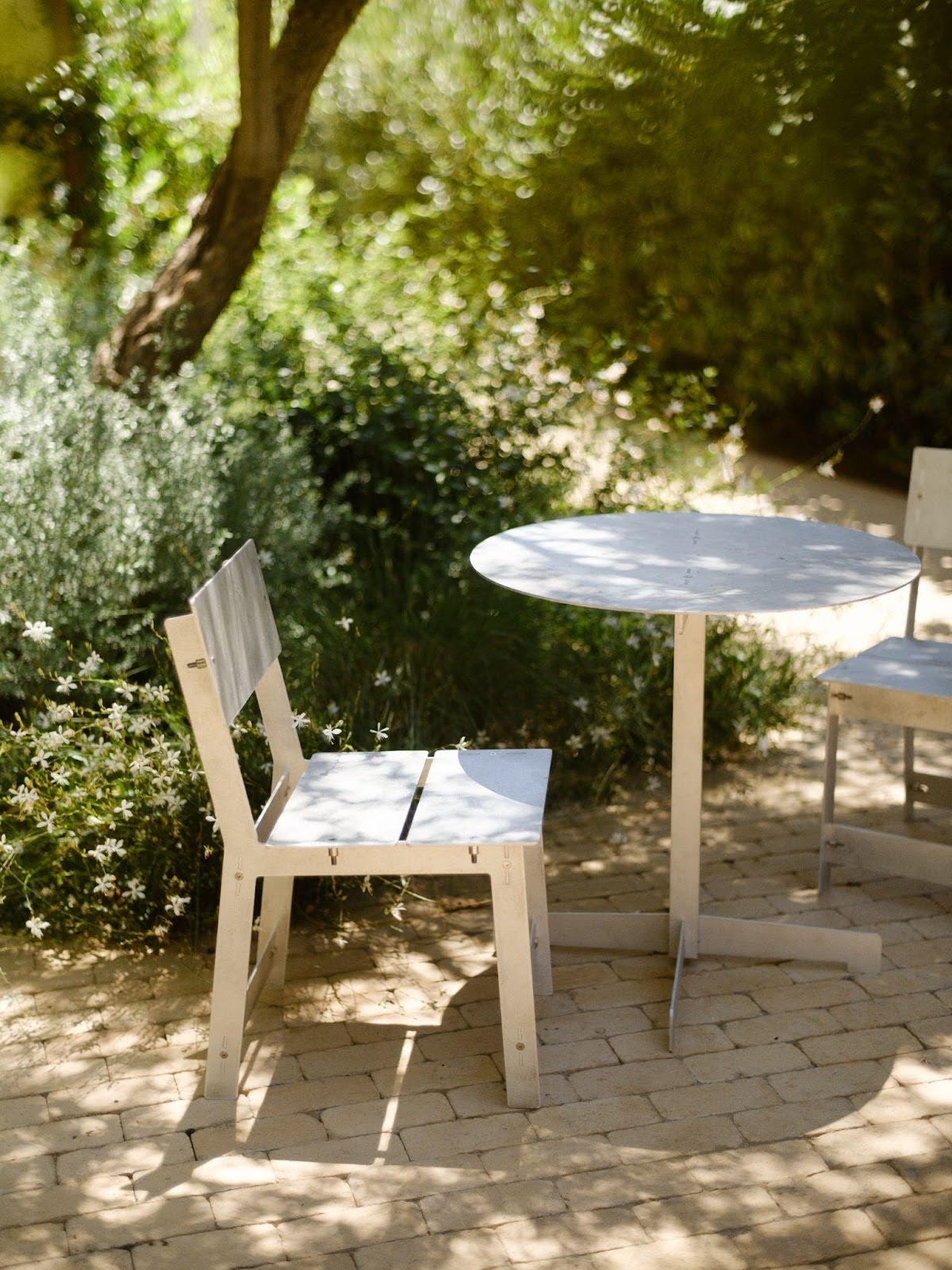
MS: Our mission is to make things with a small radius supply chain — both the human making the product and also the natural resources that are being used. The carbon footprint of our product is a very important aspect of our company’s philosophy. We design using California clay for our pavers and thin tile, and only use domestic wood for all of our furniture. Our steel is cut and welded in LA, along with our outdoor lighting and hardware. By putting energy into our neighboring factories, we build community and preserve local craft.
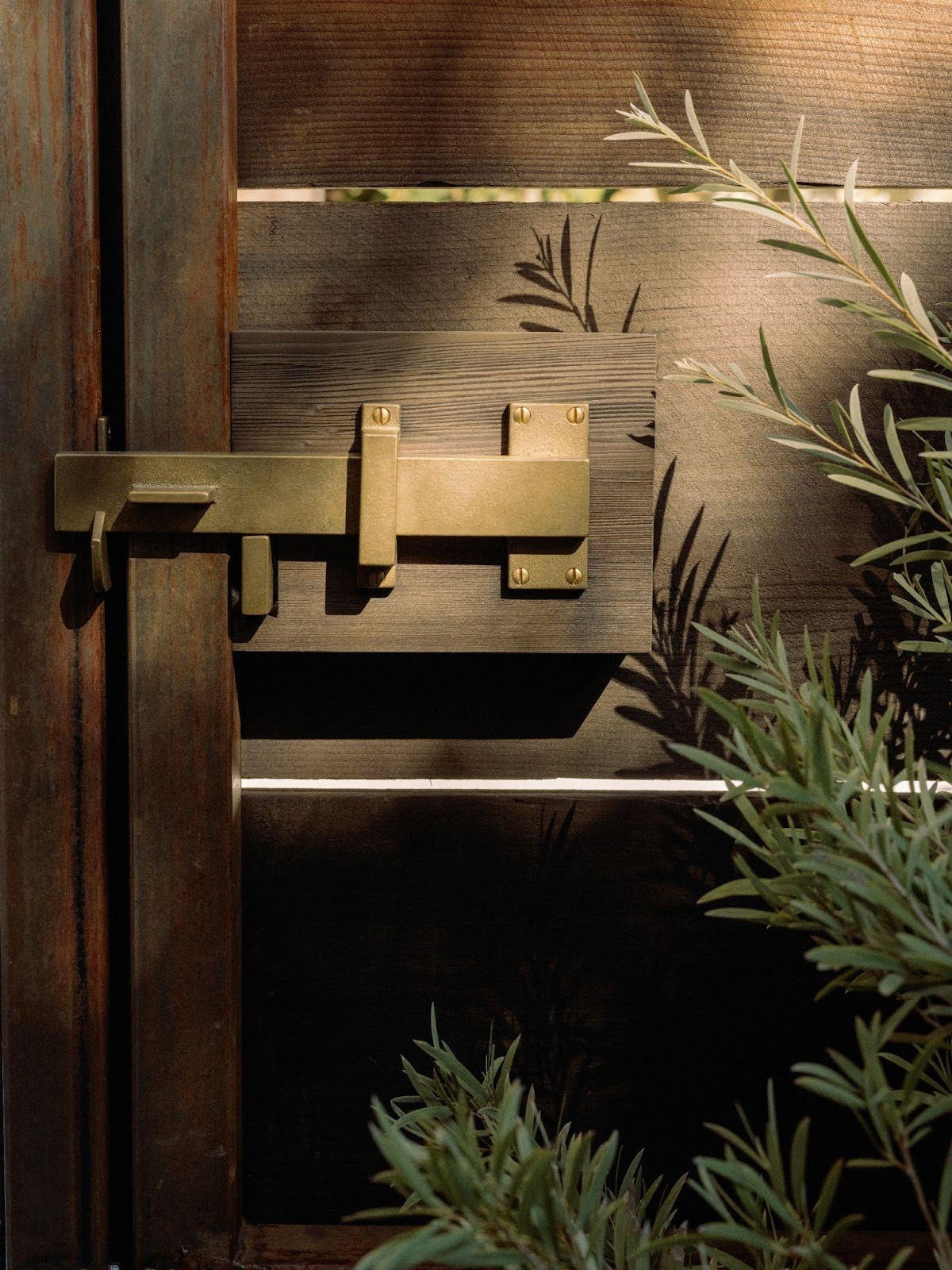
A meditation on beauty and utility, the Gate Latch Passage Set translates minimal form in solid raw brass, elevating the most subtle details of an outdoor space.
AJ: How do you balance functionality and aesthetics in your designs?
MS: They are in harmony, never at odds or one over the other. I felt the landscape industry was approaching this incorrectly, which is why we launched the product studio. Using plastic decking isn’t a solution for function; instead, we should be educating and showing homeowners how to use local woods that are meant for all-weather conditions. Outdoor paving also comes to mind, where materials are uniform for easier installation, but the look of these installed is not aesthetically pleasing. Our goal is to put both function and aesthetics together, in designs that are true to our core mission: re/connect humans to earth.
AJ: What is your favorite design element to incorporate into your projects?
MS: Clay, wood, and stone. We use these materials in everything we do, as they are the materials you find wherever you are in nature, whether it is hiking in the San Bernardino foothills or the Appalachian Mountains. The tiny rocks on the earth’s floor, the tree that provides us shade or a bridge across a river, the rock that holds up the slope, and gives us a place to rest.
It is a palette that is familiar to the soul. Clay, wood, and stone are our human material blueprint.
AJ: What is your favorite type of furniture to design?
MS: Furniture that will outlive us, but then one day return to the earth (and decompose) gracefully.
Like what you see? Get it first with a subscription to aspire design and home magazine.