


Andrew Joseph: What inspired you to become a designer?
Ryan Twardzik: I’ve loved building with LEGOs since I can remember, and was always drawn to things that walked the line between functionality and art object, but I distinctly remember seeing the Philippe Starck L.E.D. Digital Watch at a Fossil store when I was 10 and just being enamored by the design. I spent years trying to track one down for myself and delved into the world of design through Starck’s work, from Alessi to Kartell and beyond. I simply fell in love with the notion that I could translate ideas and forms from my head into three-dimensional, usable pieces of design.


The Drip Collection transforms vibrant Miami hues into bold, collectible furniture, merging sleek industrial metals with the organic flow of paint.
AJ: Can you describe your design philosophy in three words?
RT: Bold, Playful, Tactile. Through my work, I want to convey a sense of joy and really emphasize the importance of physical tactility and interaction, while never losing sight of rigorous, considered design principles. I strive for work that is seriously done and refined to perfection, but that never takes itself too seriously.
AJ: How do you balance functionality and aesthetics in your designs?
RT: I think it’s less of trying to balance them out, and more striving for functionality and aesthetics to act in harmony within a design. I don’t view functionality and aesthetics as two opposing ends of a spectrum trying to find a middle ground, but rather, when they are considered equally in a design approach, they work together in tandem to create a cohesive and successful design. With my work, I create pieces that are entirely usable, functional, and enjoyable that also contain this element of slightly radical or out-there aesthetics and interaction. It’s all about working in tandem.

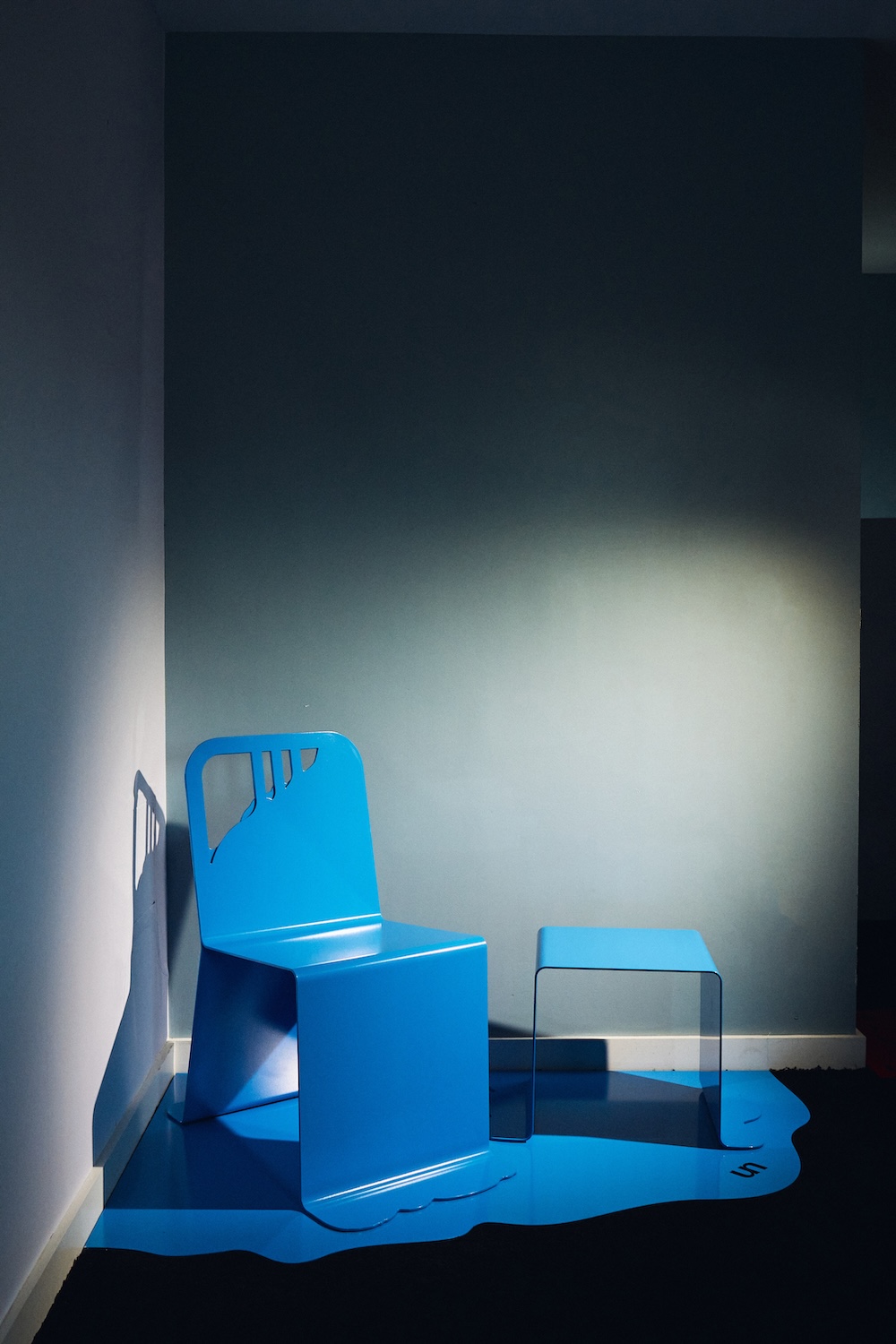
Rooted in the heritage of early American Mahantango Valley-painted furniture, the Drip Collection reimagines paint not just as decoration but as the essence of form.
AJ: What is your favorite type of furniture to design?
RT: It is, without doubt, chairs. Seating is a simple problem to solve, but since it’s so straightforwardly simple, there are near unlimited ways to explore it. Structure, form, material, and interaction are all avenues to explore this process. It’s also the piece of furniture that I feel has the most expression from a design side, but also clear interactive and tactile qualities – there are few pieces of design that are more intimate with our bodies when in use, and that’s why having something done well, considered, and exciting is so important.
AJ: What is your favorite design-related quote?
RT: Lately, Robert Venturi’s “Less is a bore” quote has been on my mind. There is certainly something to be said about refining a design down to its simplest form… but that should be in service to the usable end result, not simply minimalism for the sake of minimalism. I’m not exploring Beaux-Arts-levels of decoration within my work, but there is a sense of beauty to a design that is allowed to express itself, rather than just whittling down to the bare minimum.

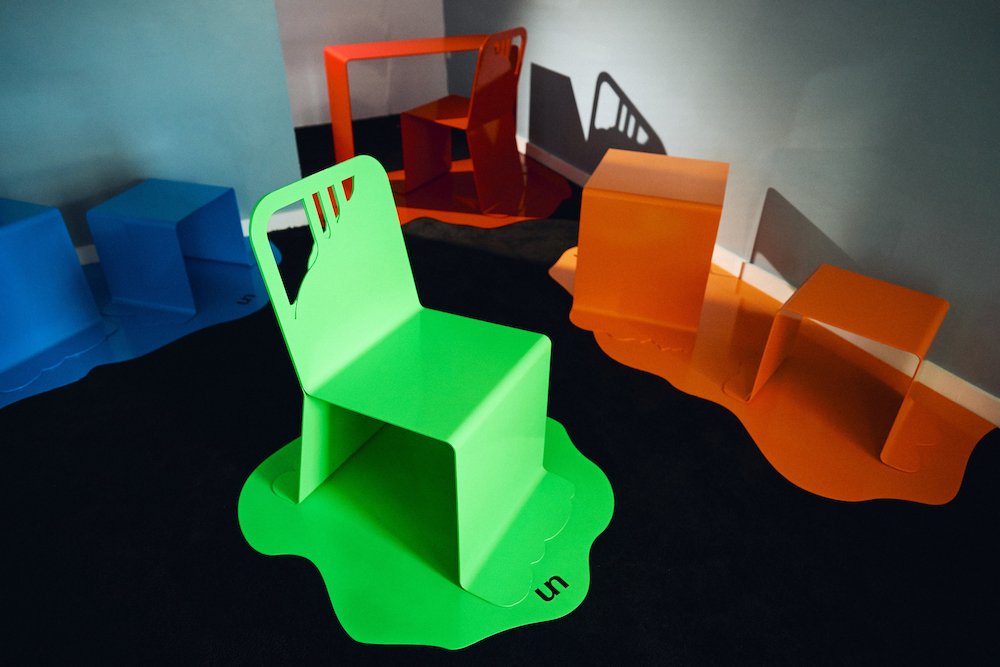
Inspired by the spontaneous spirit of post-war Abstract Expressionism, the collection embodies improvisation in design, allowing the unpredictable nature of paint to shape its unique, sculptural pieces.
AJ: What’s your favorite cocktail?
RT: I’d be lying if I didn’t say a Negroni. Both for the drink itself, but also the culture that exists around it, it’s very built out and fun to explore. It’s delicious, with a fun mix of complex flavors, a gorgeous red color, and it’s delightful whether it’s one I mix at home or a giant Sbagliato from Bar Basso during Milan Design Week. It’s a cocktail to which I can tie many memories, from times with my brothers, cousins and friends, travels to Italy, or attending Carpano Christmas that one time in a fabulous Hollywood Tiki Bar.
Like what you see? Get it first with a subscription to aspire design and home magazine.