




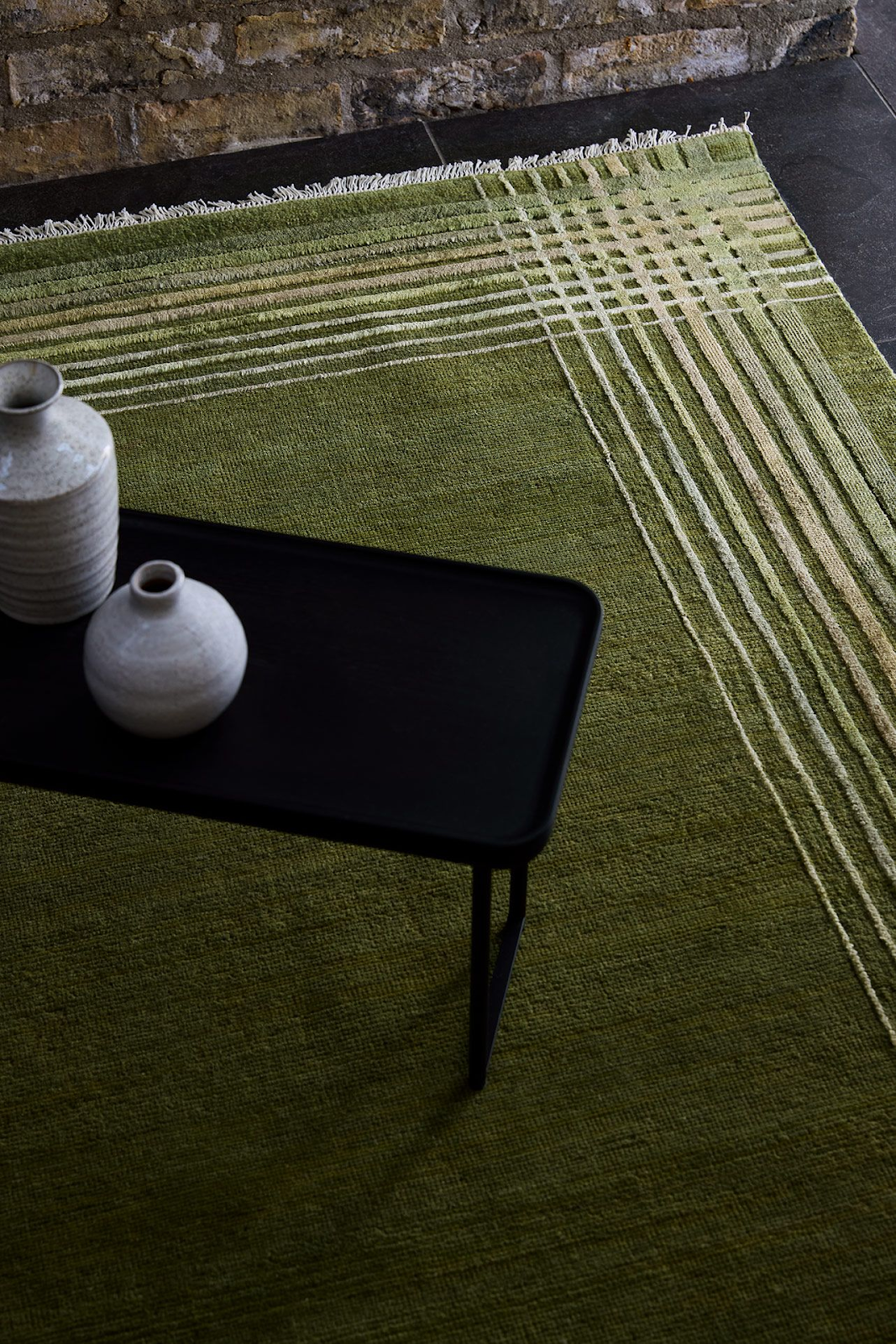
Sorin pairs a wide, versatile field with a richly detailed border, echoing the textures of reed mats, handwoven baskets and interlaced leather.
Andrew Joseph: What design trends do you think will be popular in the coming years?
Shea Soucie: I believe wellness will become an even more essential pillar of home design. We’re seeing a movement toward integrating health-focused elements – infrared saunas, steam rooms, access to clean water, lighting that supports circadian rhythms and dedicated spaces for herb gardens. Equally important will be how we protect ourselves from the impact of technology… creating digital boundaries and spaces that allow us to unplug will be just as valuable as the latest gadget. The home will increasingly become a sanctuary for restoration and balance.
AJ: How do you stay creative and inspired?
SS: Curiosity is the key. I stay inspired by always asking questions, always seeking new perspectives. Curiosity leads you down paths you never expected, and that’s where the most interesting ideas live.
AJ: What was the last book you read and how did it inspire you?
SS: The Coming Wave by Mustafa Suleyman. I’m deeply intrigued by how technology will shape our industry – both the opportunities and the disruptions it may bring over the next 3-5 years. This book has challenged me to think differently and stay open to innovation. It reinforced the idea that rather than resisting change, we should explore how to leverage it meaningfully.

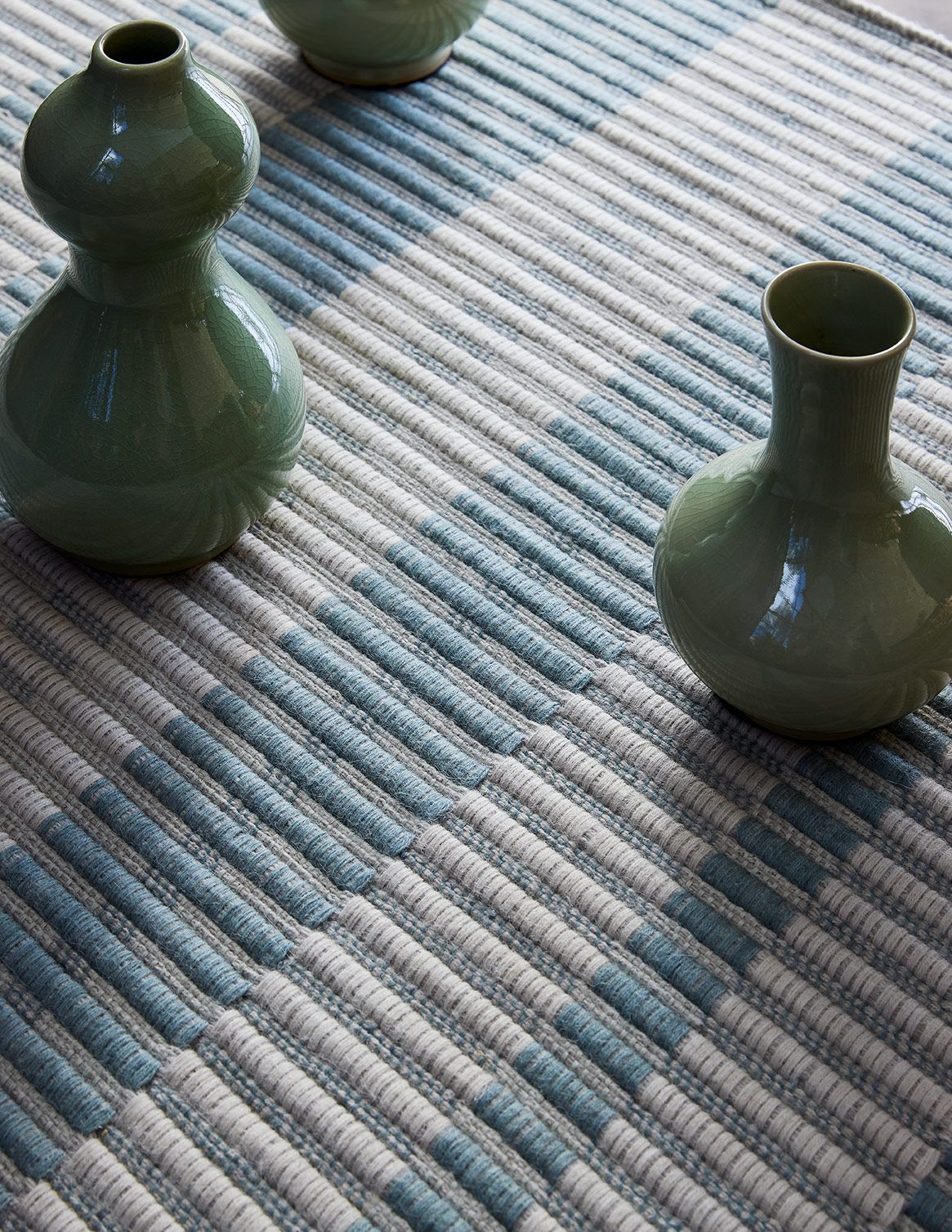
With alternating stripes that feel like a conversation, Luma blends Bauhaus inspiration with the artistry of Indian weavers.
AJ: How do you approach designing for different types of clients?
SS: Our approach has always been deeply client-centric. Every client brings their own story, and our job is to listen closely… to truly understand their dreams and translate them into spaces and products that feel personal and authentic. When we do that well, the result is something unique and meaningful.
AJ: How do you balance functionality and aesthetics in your designs?
SS: It always starts with understanding the client’s life. For example, our SHIIR Rugs line includes luxurious, handcrafted pieces made from materials like silk, leather and wool. Silk rugs, while incredibly beautiful (like having art underfoot), are less forgiving when it comes to wear and maintenance. So if a client with young kids and dogs loves the idea of silk, we might place it in a primary bedroom, and choose a more durable wool for the high-traffic areas. That balance of beauty and practicality comes from asking the right questions early on: How do you live? What matters most to you? From there, we tailor the design so that it feels intentional, livable and deeply personal.
AJ: What is your favorite design element to incorporate into your projects?
SS: Handcrafted pieces. Whether it’s a sculpture, painting, furniture, or one of our SHIIR rugs, artisan-made objects bring soul to a space. They carry history and human touch – qualities that can’t be replicated. There’s something incredibly moving about knowing that a rug was hand-embroidered in the Himalayas using techniques passed down through generations. Incorporating that level of craft connects us to a larger world and makes a home feel layered, meaningful, and alive.
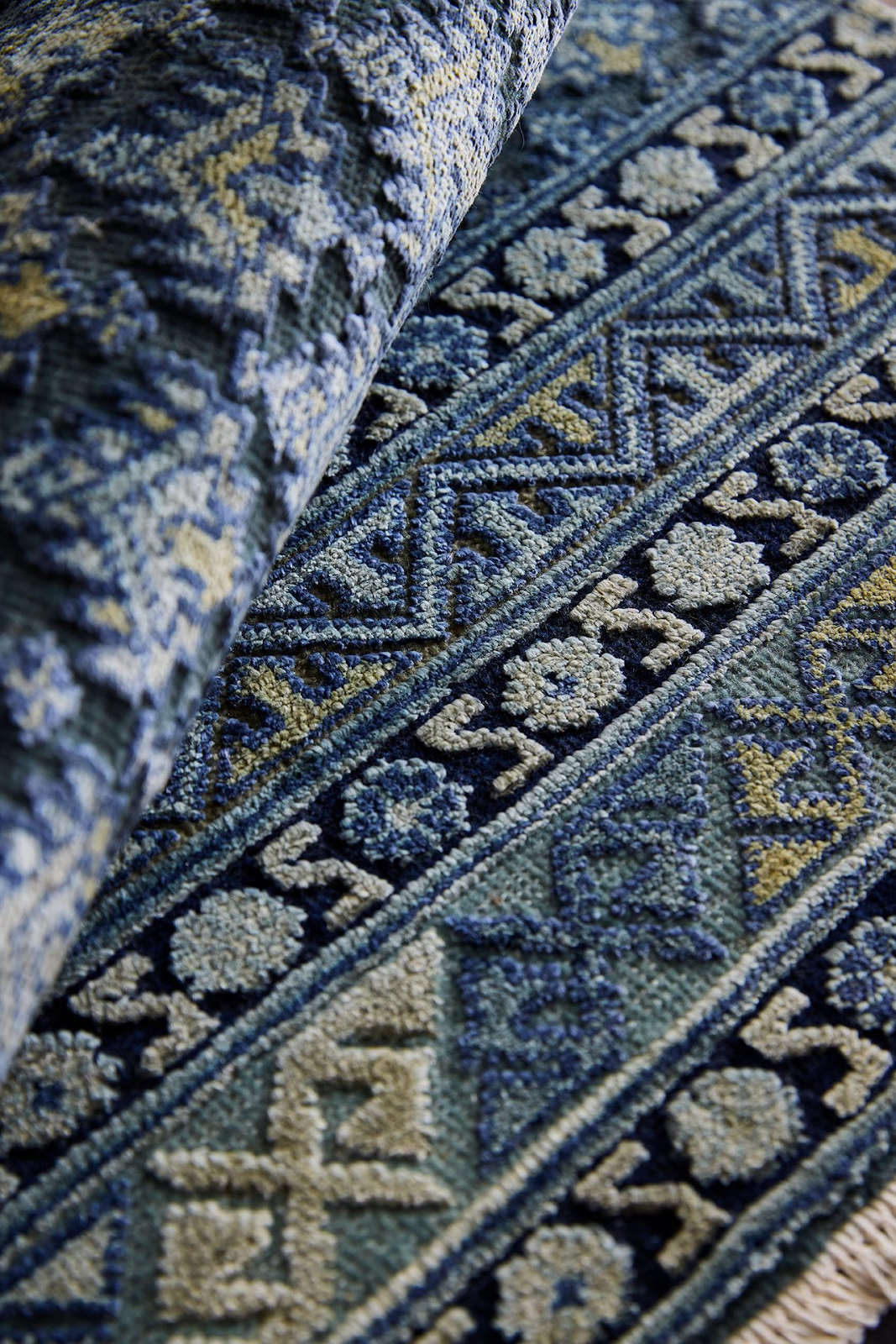
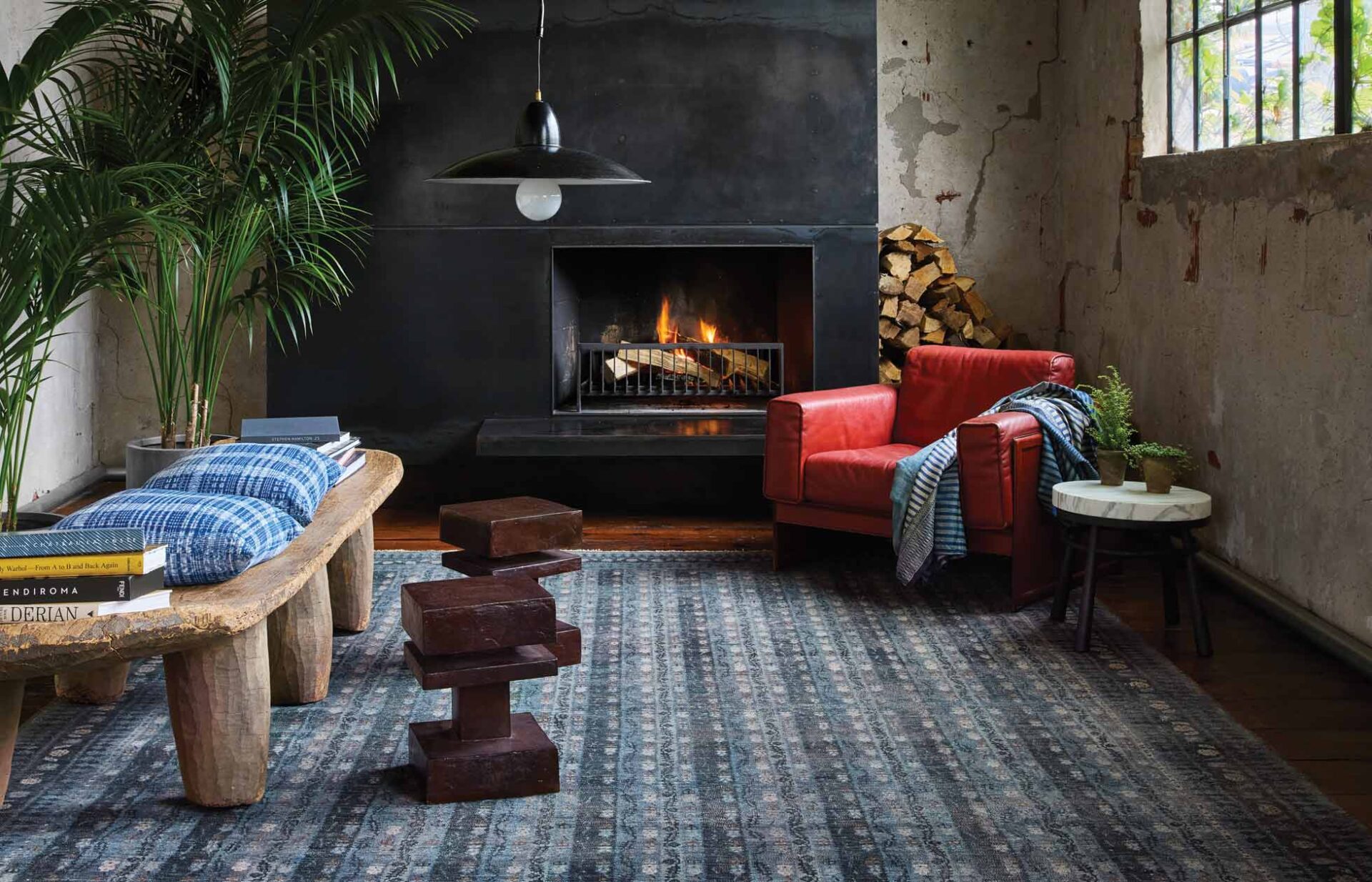
Inspired by antique Baluch rugs of South Asia, Esha reimagines their bold geometrics and deep hues in a durable design made for modern living.
AJ: How do you stay up to date on the latest technology?
SS: Technology moves so fast that it’s impossible for any one person to keep up. That’s why we’ve created a technology initiative within our studio. We encourage our team to consistently bring forward new tools, materials, and ideas – things that can improve our process or enhance our designs. It’s a collective effort, and that’s what makes it powerful.
AJ: How do you approach designing for a specific location or cultural influence?
SS: Research is everything. We begin every project with an in-depth study of the location and culture to establish context. The most successful designs are the ones that feel truly connected – to the environment, to the history and to the people who will inhabit them. Authenticity starts with understanding.
AJ: What is your favorite design-related quote?
SS: Louis Kahn’s quote: “You say to a brick, ‘What do you want, brick?’” It’s a beautiful reminder of the importance of material integrity and design sensitivity.
AJ: Best advice you’d give your teenage self?
SS: Stop focusing only on yourself, start noticing the world around you. We’re all part of something bigger, and I wish I understood that connection earlier.
Like what you see? Get it first with a subscription to aspire design and home magazine.