



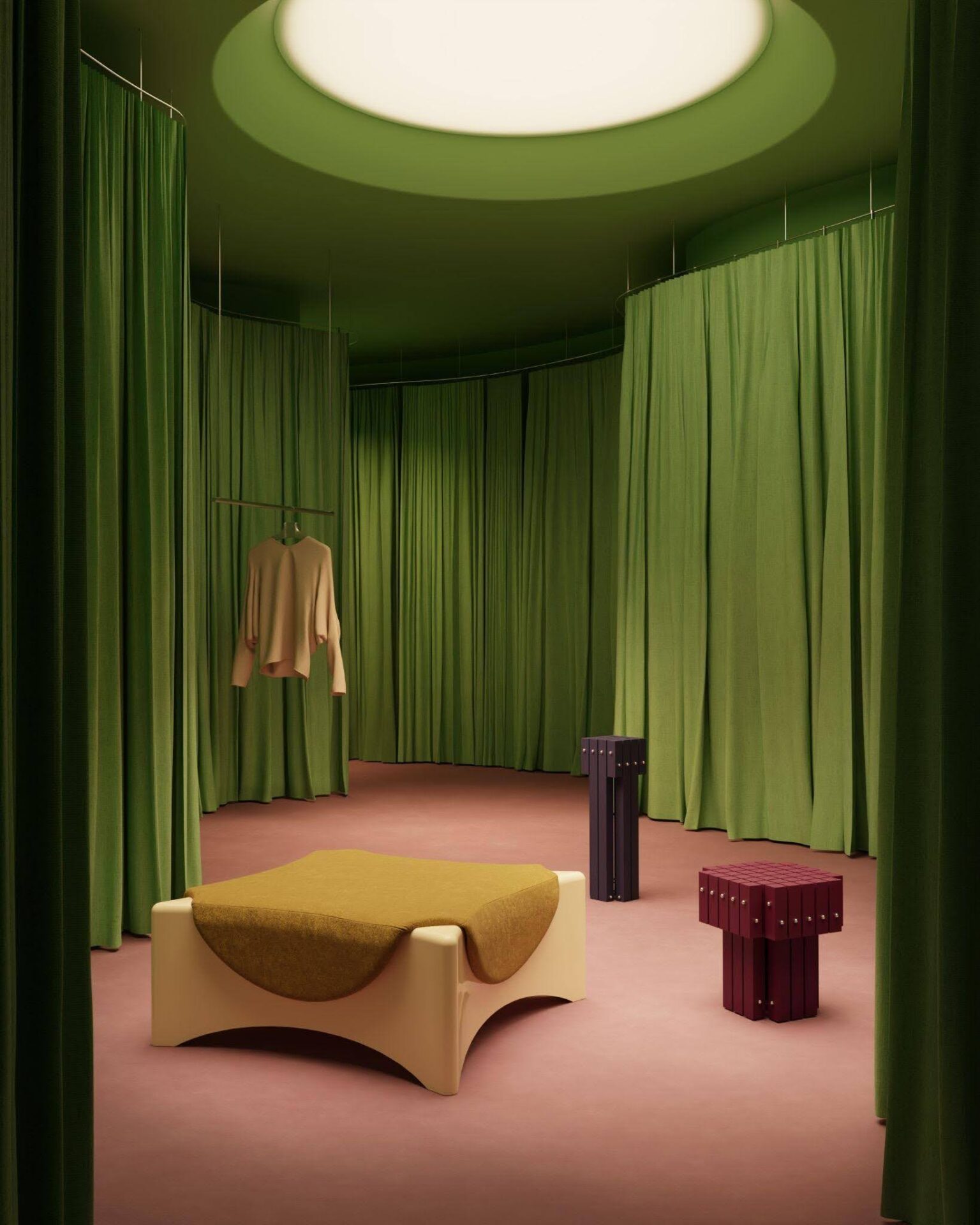
“The Dressing Room” installation brings the Mellow Pouf and Sync Tables together in an immersive setting that extends the collection’s sculptural forms into the surrounding space.
AJ: How do you approach a new design project?
smallmediumlarge: Every project begins with understanding our client’s identity, values, and aspirations. Much of our work involves translating brands into physical spaces and objects, so we like to analyze what makes them unique and how we can express their identity through design. We often anchor a project around a strong narrative or conceptual element and use it as a framework for every design decision. From there, we focus on refining and simplifying forms as much as possible, reducing them to their most essential expression while maintaining a strong impact.
Our goal is to create work that feels authentic to the client while still being unmistakably ours, since that balance is ultimately why clients come to us. We approach each project through our own lens and aesthetic, creating spaces and objects that are expressive, highly impactful and that communicate a story on their own.
Andrew Joseph: Can you describe your design philosophy in a few words?
sml: Expressive, intentional, fun, unexpected, timeless.
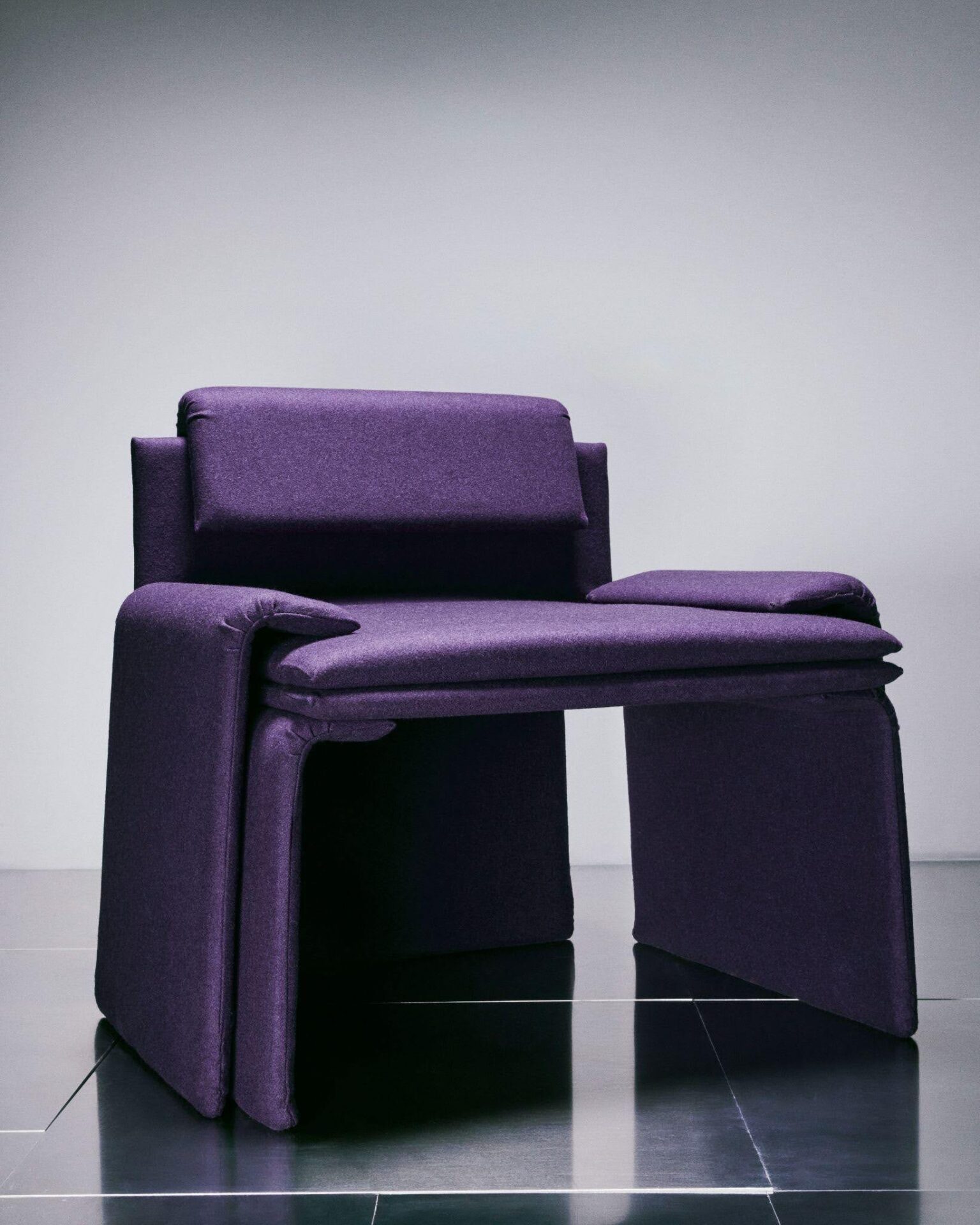
The Céline Chair builds its sculptural profile through layered upholstery, compressed geometries, and components that appear to clamp the entire composition together.
AJ: How do you keep up with the latest design trends?
sml: We draw inspiration from many sources: art, architecture, fashion, material research and everyday life, but we make sure NOT to let trends dictate our decisions. Instead, we focus on proportion, materiality, craftsmanship, and the emotional resonance of a project, qualities that tend to outlast changing tastes.
Our practice is guided by the pursuit of longevity, and we’re more interested in creating work that can endure beyond a particular moment or aesthetic movement. Whether we’re designing a piece of furniture, an installation, or an interior, our goal is to create pieces and spaces with a timeless quality, work that feels as relevant in twenty years as it does today. Ideally, you wouldn’t be able to identify the year a project was designed simply by looking at it.
AJ: How do you balance functionality and aesthetics in your designs?
sml: We don’t see functionality and aesthetics as opposing forces, because they inform one another. Functionality often becomes a creative opportunity, because it brings up constraints within the context, and that’s when new ideas can emerge.
Every project begins with a clear purpose, whether it’s a piece of furniture, an installation, or an interior. We first identify what elements are needed to support the experience, then explore how those elements can contribute to a stronger visual and narrative impact.
We often think about how objects and scenographic elements can shape a space rather than simply occupy it. We start by establishing the narrative and then consider what components are necessary to tell that story. From there, we push the formal and aesthetic qualities of those elements to reinforce the concept and create a more immersive experience.

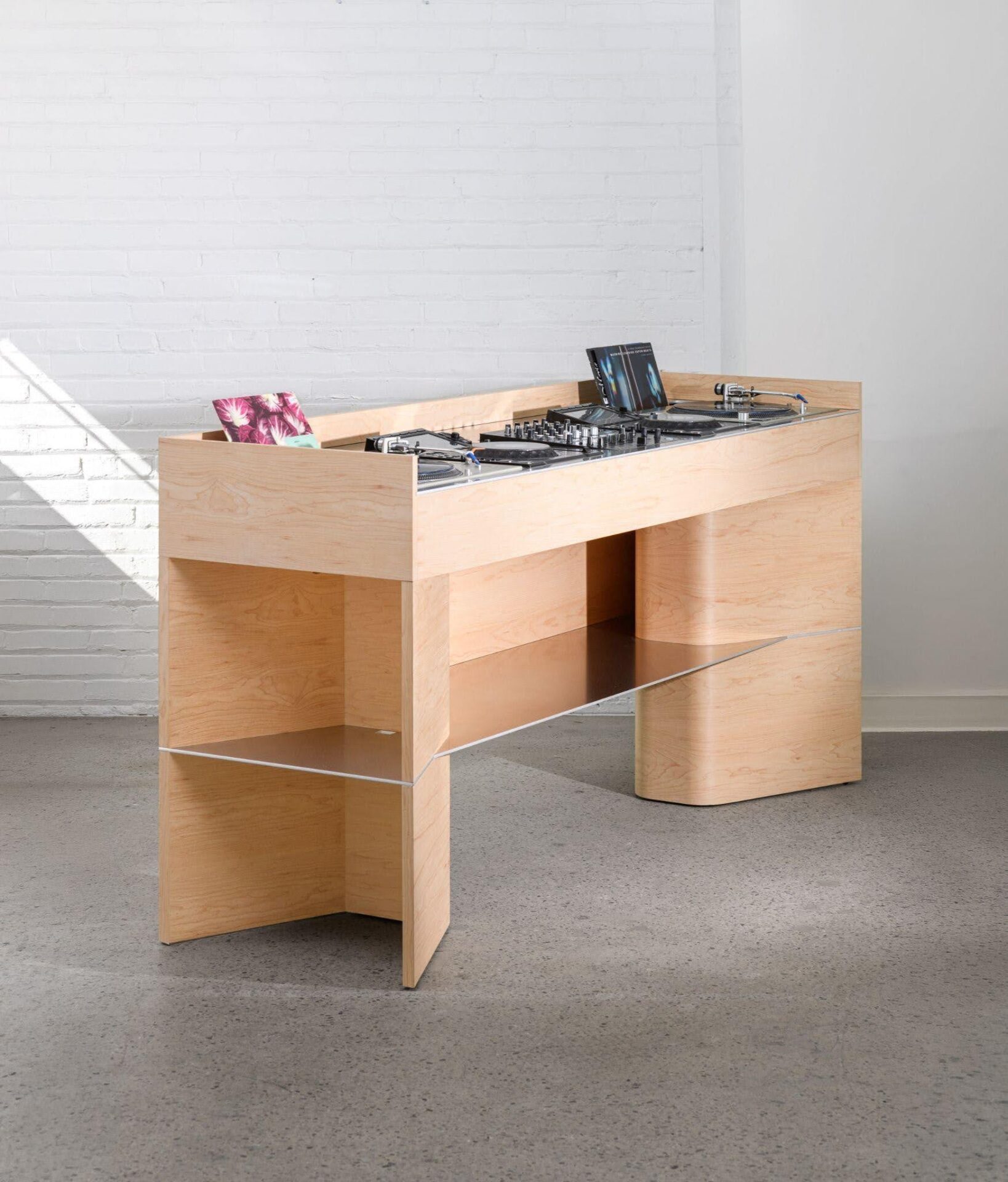
With its clean joinery, integrated organization, and unexpected curves, the booth turns the act of mixing into part of the room’s design.
AJ: What is your favorite thing about being a designer?
sml: What we love most about being designers is the combination of collaboration and creation. Design can be perceived as an individual pursuit, but it is deeply collective. Every project brings together clients, craftspeople, manufacturers and creatives that allow ideas to evolve through dialogue and shared expertise. We find a lot of meaning in being part of a larger creative community and contributing in our own way.
We also love witnessing the transformation of an idea into something tangible, from the first sketch and cardboard model to prototype reviews, factory visits, and the final result. Seeing a concept gradually take physical form never loses its excitement.
Ultimately, we really value that we have the opportunity to create objects and spaces that can live beyond us, pieces that become part of people’s lives, endure through time, and perhaps even get passed down through generations. The idea that our work can leave a lasting physical mark on the world, however small, is both a privilege and a responsibility.
Like what you see? Get it first with a subscription to aspire design and home magazine.