


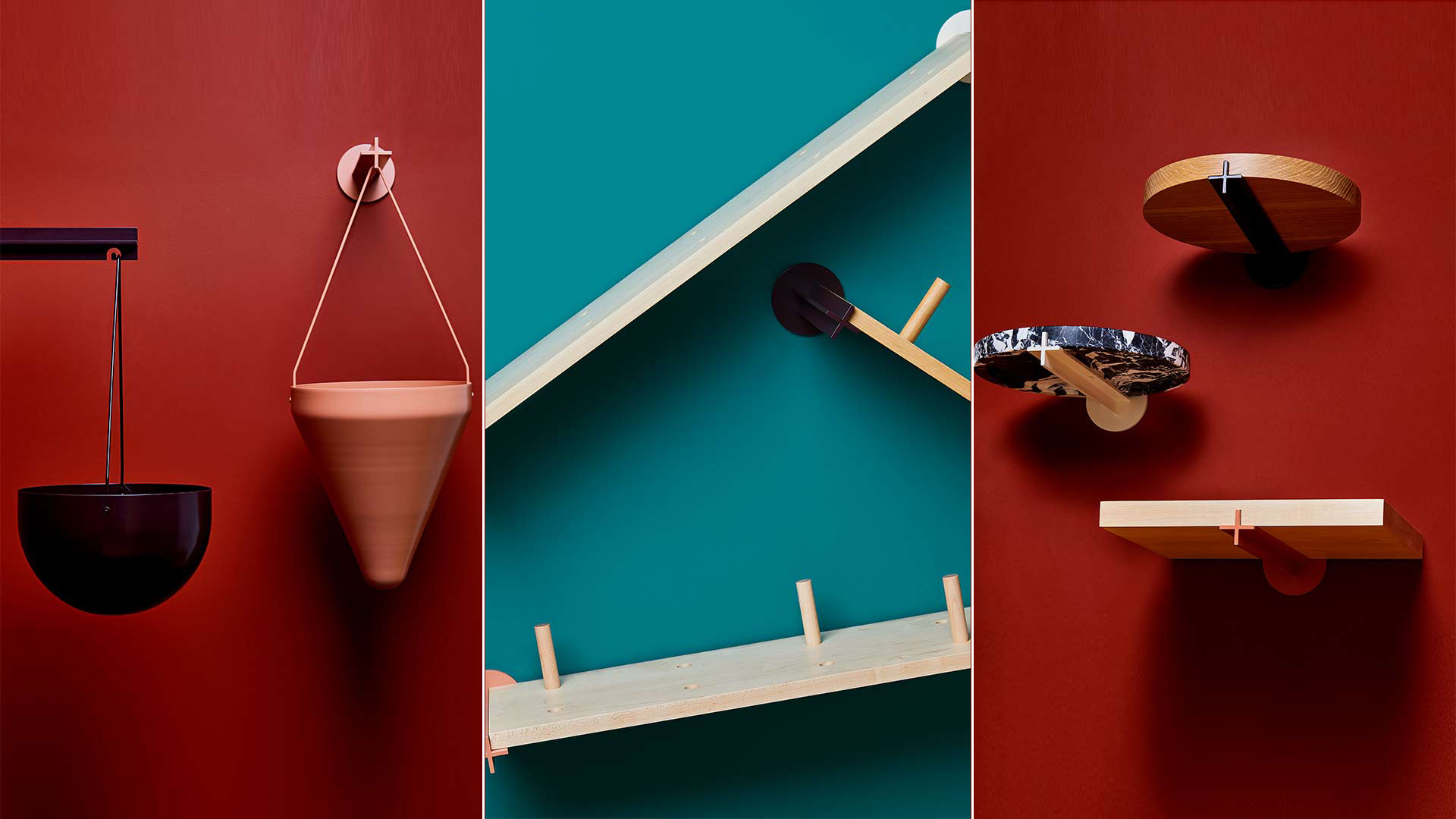



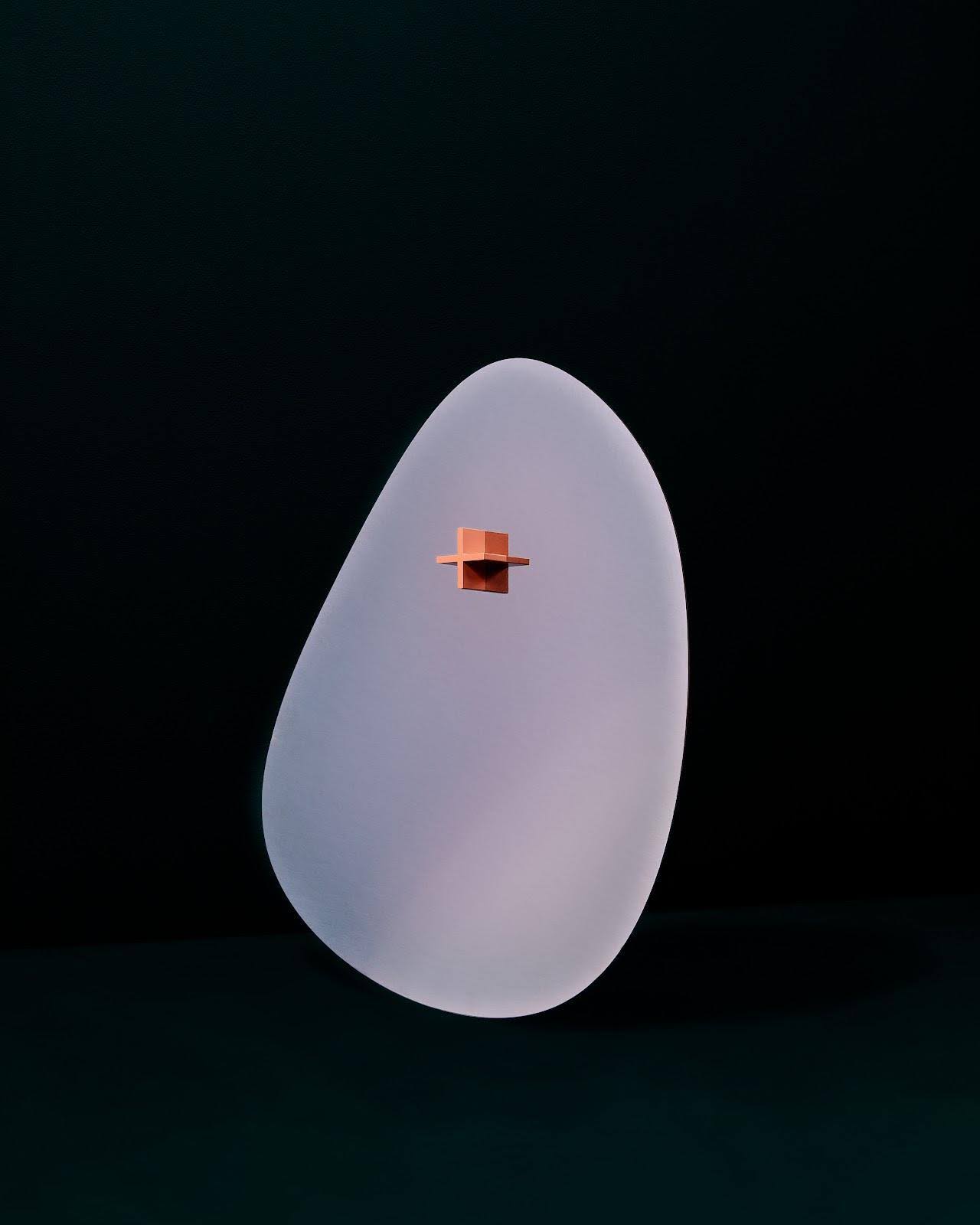
Plus Mirrors, crafted from highly polished stainless steel and inspired by ancient mirrors, feature a contemporary design with precision-polished clarity, frameless form, and plus-shaped brackets that make them appear to float from the wall.
Andrew Joseph: Can you describe your design philosophy in three words?
Steven Gertner: Composed, elemental, earnest.
AJ: Can you tell us about a design trend you are excited about?
SG: I love the renewed attention to stainless steel and aluminum as beautiful materials in their own right. They are no longer being used just to signal that something is supposed to be vaguely industrial-looking. Newer uses are so much richer, and even sensuous, especially with highly polished surfaces that create their own depth. It’s very exciting to see. And I think their use is also being driven by the larger and really important need to steer away from plastics. That is certainly one of the motivations behind the material choices in the Plus Collection — everything is solid aluminum, stainless steel, wood, and marble. The mirrors in the collection are actually highly polished pieces of stainless steel, a modern version of ancient metal mirrors that are polished to become so incredibly clear and sharp.
AJ: How do you stay organized while working on multiple projects?
SG: I don’t really, I’m very focused on a single track–it’s a strength and a weakness. I like to stay in the mode of one project, inhabit it fully for a while, before moving on. I’ve been consistently working on the Plus Collection for a while, producing variations on the theme of the plus-shape extrusion. I’ll continue to develop further iterations of the Plus Collection in the future, in the background, but I’m mostly going to switch gears to begin working intensively on something else, quite different, soon.

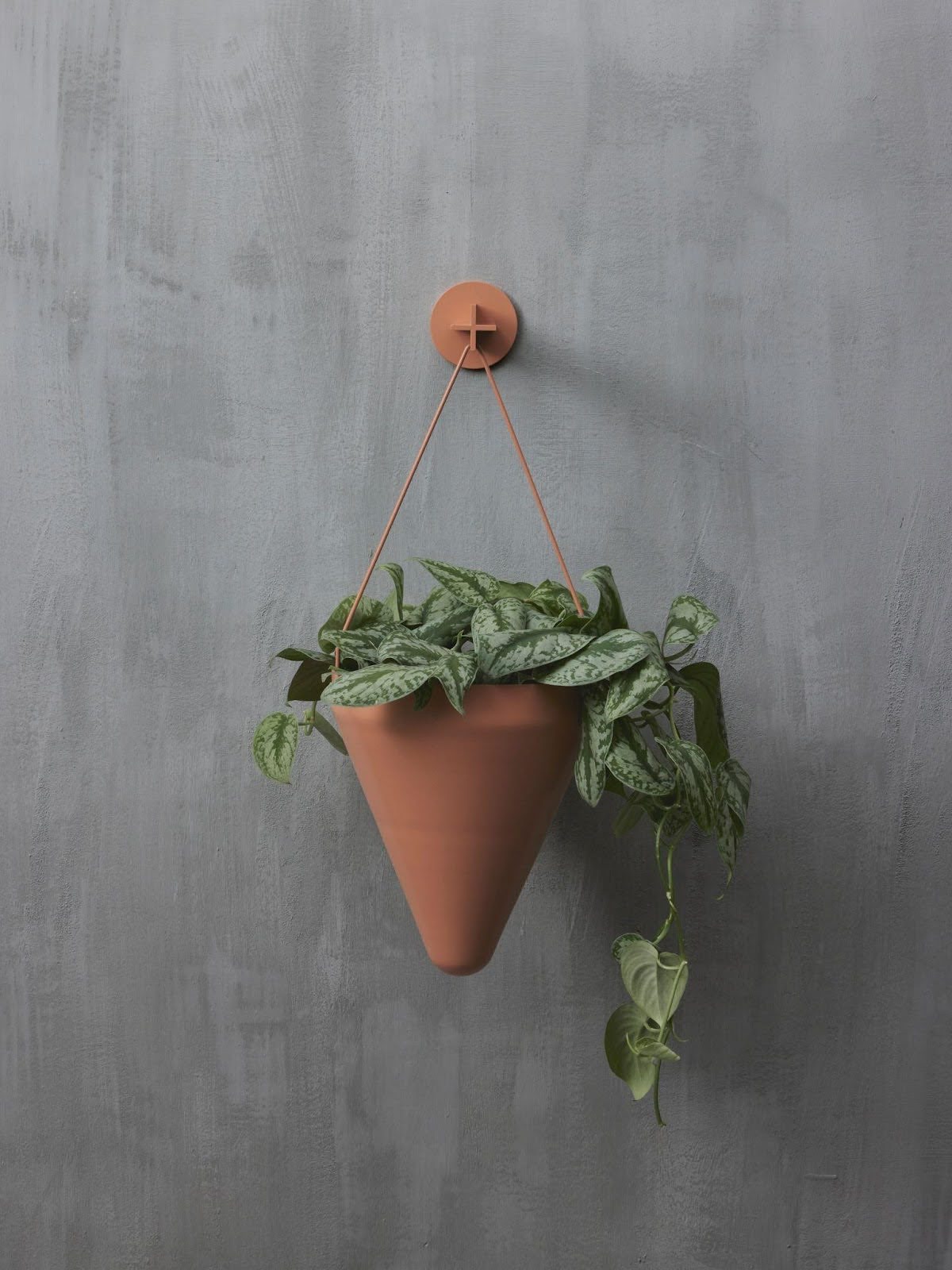
Plus Planters provide a home for indoor hanging plants. They are contemporary and refined, but also relaxed and easy.
AJ: How do you balance functionality and aesthetics in your designs?
SG: I like to think that functionality and aesthetics are pretty happily married in my work. Or, at least, they keep their little spats private. I don’t think it’s ever possible to fully separate the two, in any case, but I’m interested in how aesthetics and functionality work together. I like working with elemental forms as a way to get at the fundamental idea of what an object is, how it works and how it operates in the world. When you look at things that are supposed to be purely functional, there is usually more to the story. That is one of the things I love about the photographs of Bernd and Hilla Becher is the really surprising ways they are able to show that the most rational structures – like blast furnaces and cooling towers – may actually be totally fantastic, strange, and, actually, irrational. Like, what were those engineers thinking?! They were clearly working with a pretty well-developed aesthetic system too.
AJ: What is your favorite type of furniture to design?
SG: I have always had a soft spot for storage, wall-mounted pieces in particular. My grandparents actually made molded oak shelving brackets and other wood furniture pieces in the 1960s, first in their Brooklyn basement and later in larger workshops throughout the city. Goux is a continuation of that work in some ways (and was also started in a Brooklyn basement!) although I never consciously planned to follow in their footsteps.
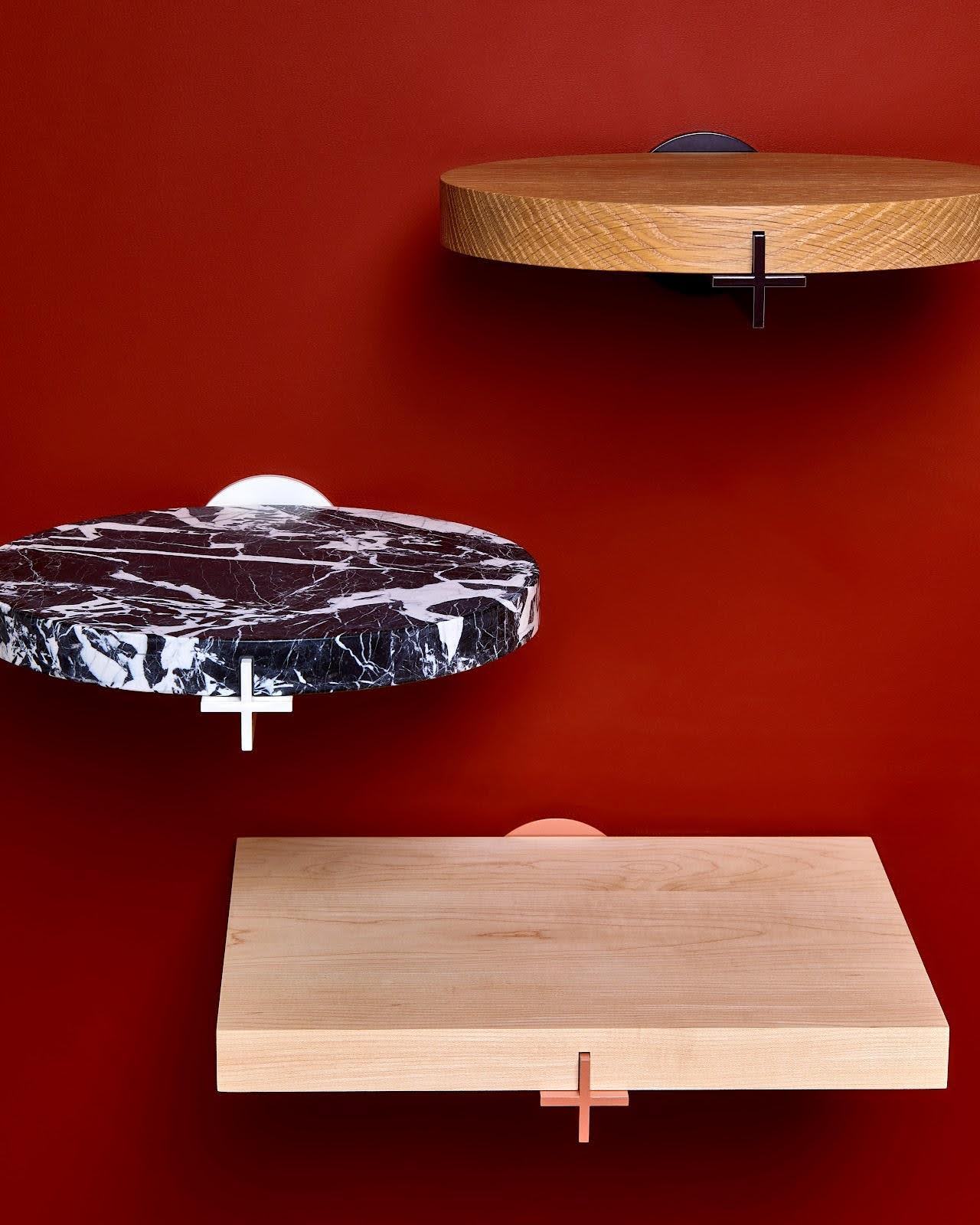
Plus Nightstands are designed for bedside essentials. They are solidly constructed, but visually lightweight and modest in footprint.
AJ: Can you describe a project where you had to work with a specific theme or motif?
SG: Goux Studio’s first collection, the Plus Collection, is all based on the same plus-shape extrusion! I really enjoy the process of carefully researching a concept or theme, and working through it intensively to create a series of objects. It’s a slower, more deliberate, and iterative approach. And a kind of obsession too.
AJ: What’s your favorite cocktail?
SG: I love all Negronis, almost without exception. One of my favorites is the Kingston Negroni, made with Smith & Cross rum — it has a super-refined, well-rounded funk that is, well, intoxicating!
Like what you see? Get it first with a subscription to aspire design and home magazine.