




Photography by John Skalicky
Andrew Joseph: Can you describe your creative philosophy in three words?
Taliny Chhung: Chaotic, uninhibited, instinctive.
AJ: What is the most challenging piece you’ve worked on and how did you overcome it?
TC: There wasn’t a specific piece that was challenging, but a challenge I faced was getting back into the studio after having my third child. I was so out of shape and tired. I knew I just had to be patient with myself and that the work was still inside of me – somewhere. Looking back at the pieces I made soon after his birth, I could see their lack of vibrancy, like wilted flowers. I started small and worked my way back up to larger pieces as my strength increased and my body recovered from creating my son.
AJ: Can you describe a piece that you’re particularly proud of?
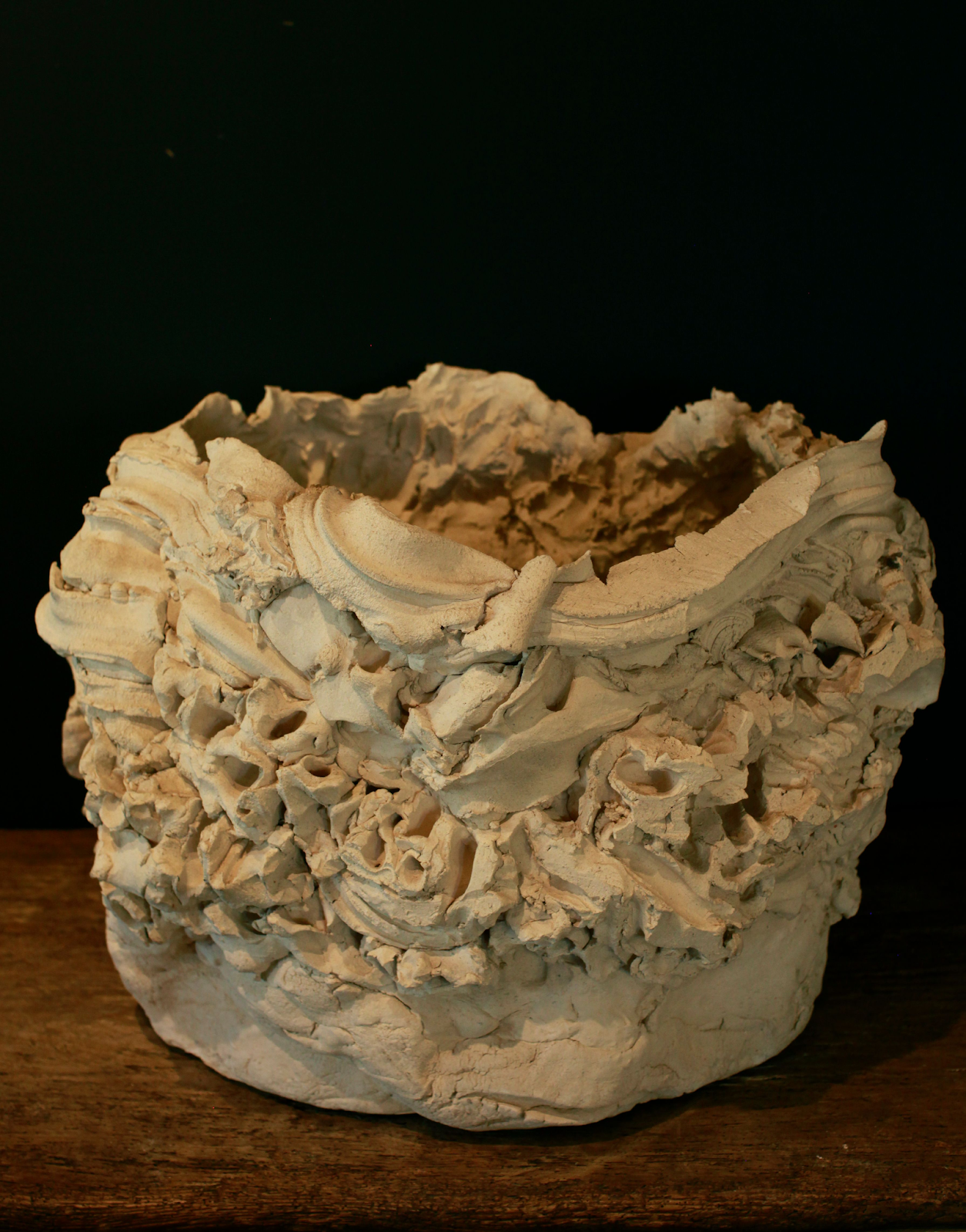
TC: I just completed two large pieces for a commission going to Portugal. My son turned two and I hadn’t made anything so large since his birth. The work is very physical – I throw around bags of clay, work with large chunks at a time… lots of pulling, pressing, tearing and cutting. Fortunately, it’s easy for me to get lost in the process – it’s where my soul comes out to play. And they are stunning… I would just stare at them and think, did my hands really do that?

Photography by Denise Milford
AJ: How do you stay creative and inspired?
TC: I’m lucky I have a husband who is big on art and music. He’s always finding new experiences for us — exposing me to new worlds. He wanted to see a Nigerian artist named Seun Kuti. I’d never heard of him. The concert was at a small venue in Highland Park. I was blown away. His wife dances on stage as he performs — it was electrifying. I was sweating! The experience opened up something in me. I still get inspired by that evening — seeing people express themselves in that way… so freely… with abandon.
AJ: Can you tell us about a specific moment in your career that made you feel accomplished?
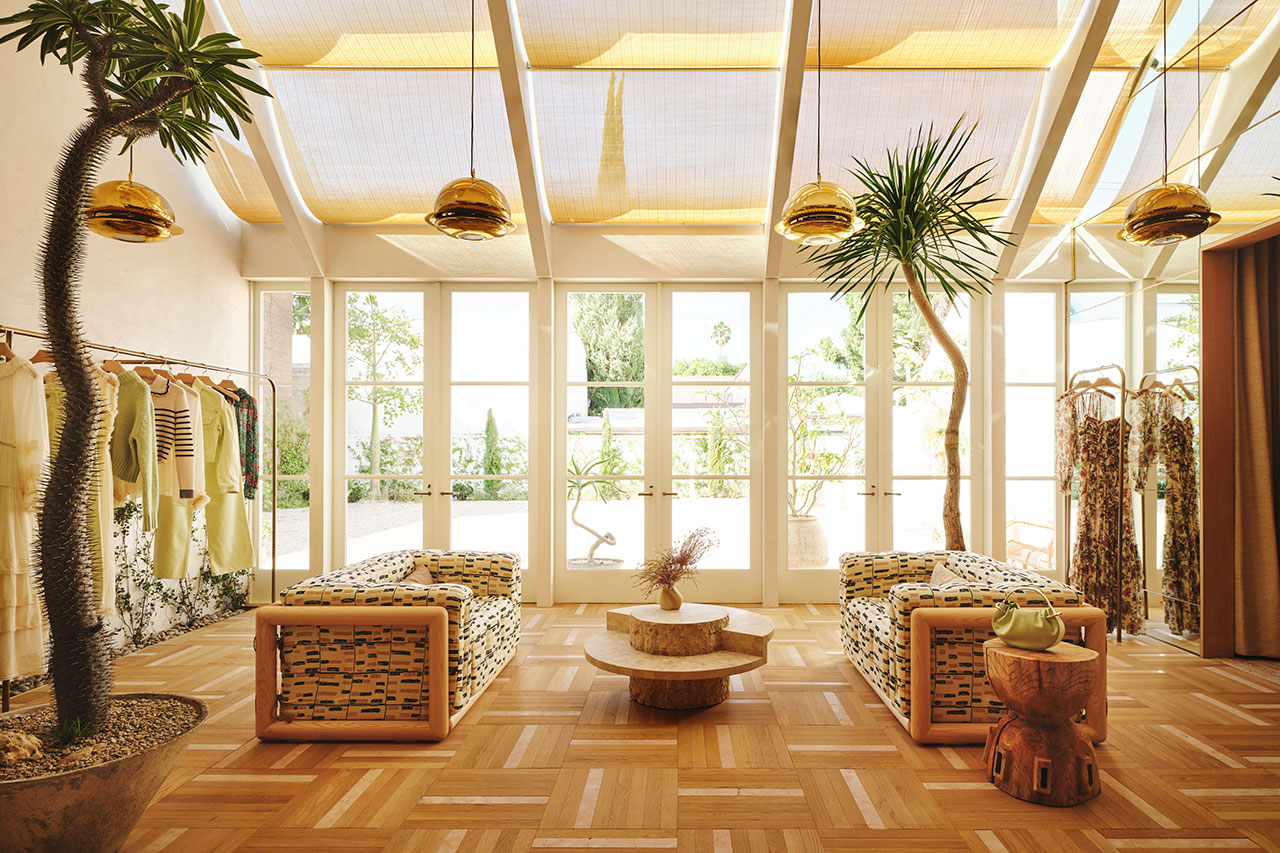
TC: Kelly Wearstler placed an early piece of mine in the Ulla Johnson store in Los Angeles. A friend surprised me by taking me to the store where I saw my work in the wild for the first time. It was in such a beautifully curated environment. They’d planted an incredibly tall tree in it and placed it in front of a rack of just… luscious dresses that played with the color of the planter. I saw it and just felt like I’d landed.
AJ: What is your favorite aspect of your job?
TC: It’s my time to be completely free. Nothing else exists but me and the clay. I love how physical the work is. I tried to have a home studio, but there were too many distractions.

Photography by Robert Legg
AJ: How do you balance functionality and aesthetics in your pieces?
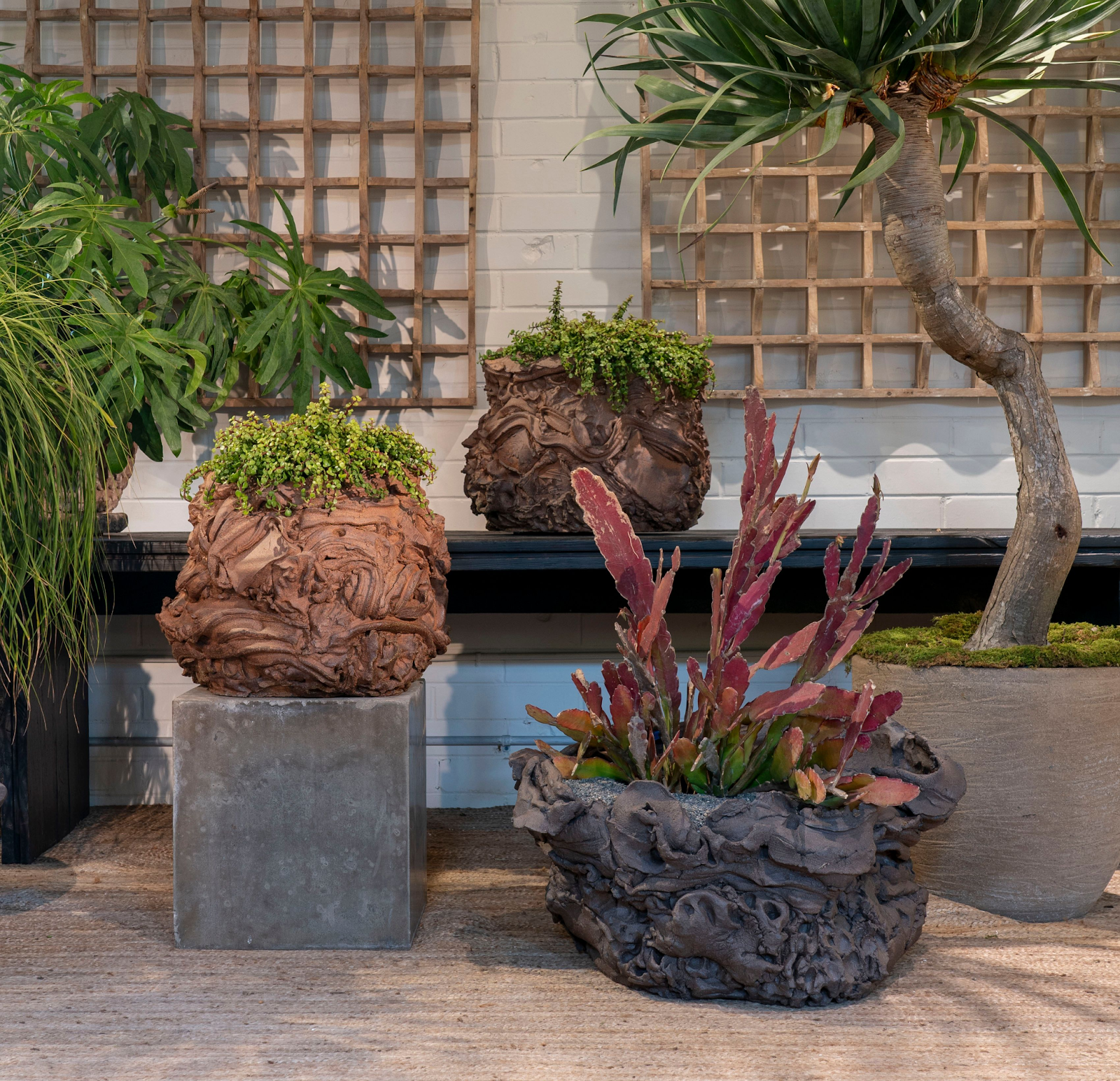
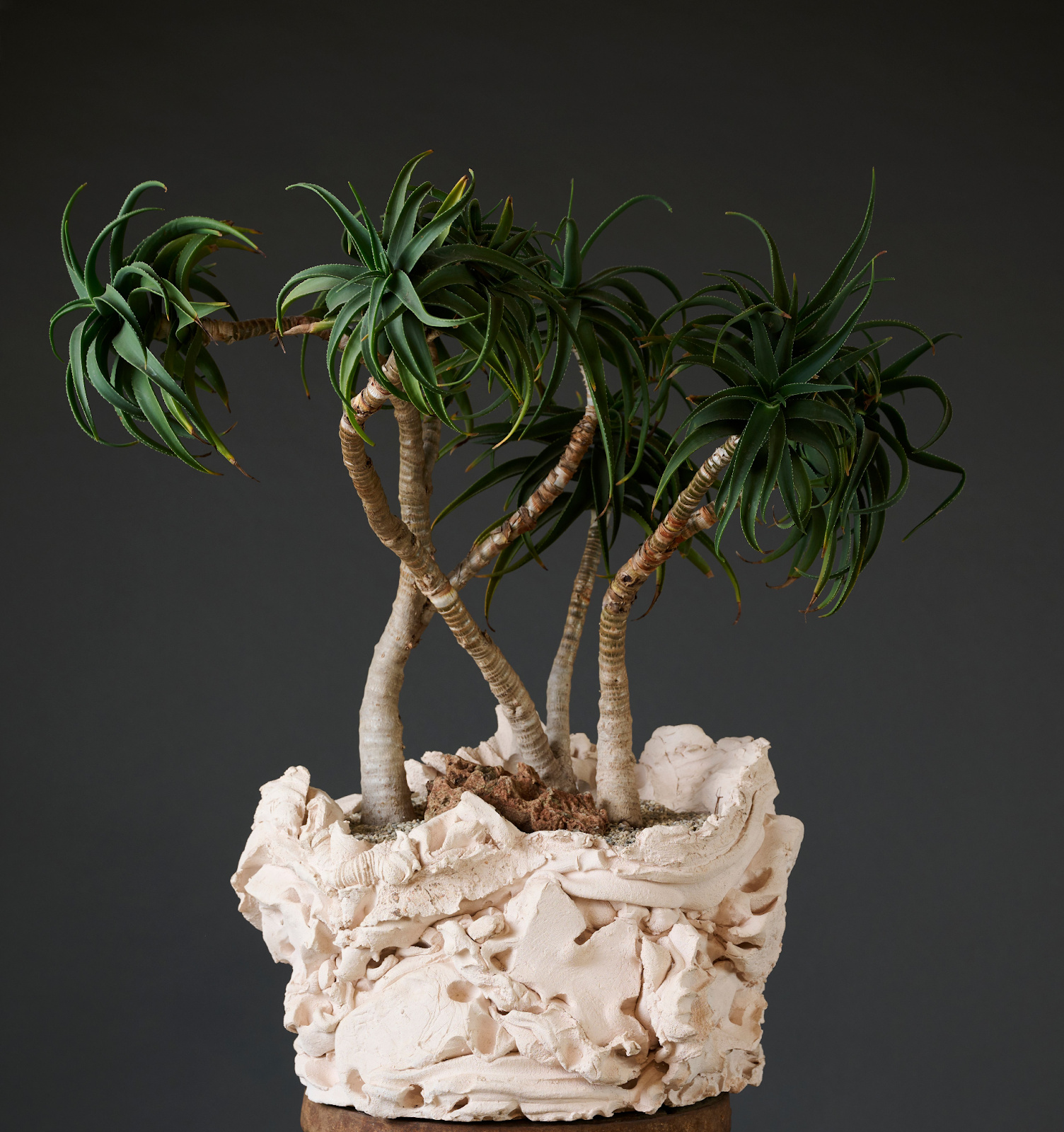
TC: Most of the pieces I make are functional. I started out making what I called “flowers,” which were just objects, really. Then I began making planters and the pieces became “functional.”
AJ: What is your favorite tool to use?
TC: A Brookstone steak knife. They have this large wooden handle, perfect for gripping. Aside from that, I do not have many tools.
AJ: Best advice you’d give your teenage self?
TC: It doesn’t matter what other people think. I drill this into my children as well. When I first started learning about ceramics, there were so many critics. “Your wheel is going too fast.”; “You’re using too much clay.”; “It can’t be thicker than one inch.” ; “You’re not supposed to do it that way.”
They would see these chunky, bizarre forms that looked nothing like anything they had made. I found it interesting that my methods were so… provocative. If I cared about what they thought, I wouldn’t be here, now.
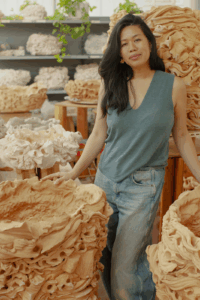
Headshot photography by Denise Milford.
Like what you see? Get it first with a subscription to aspire design and home magazine.