



Once a work of art goes out into the world, it comes alive in ways its creator may not have intended. Every set of eyes sees it differently. It can be the same with interiors. A room registers differently with every individual who passes through it. Some of this comes down to taste – “Mission furniture is so dreary,” “Ceilings should always be white.” But there’s usually a deeper response at play, one that isn’t always easy to articulate. Why does one person feel relaxed in a space, yet another uneasy? Why does a home make sense to me and not to you?
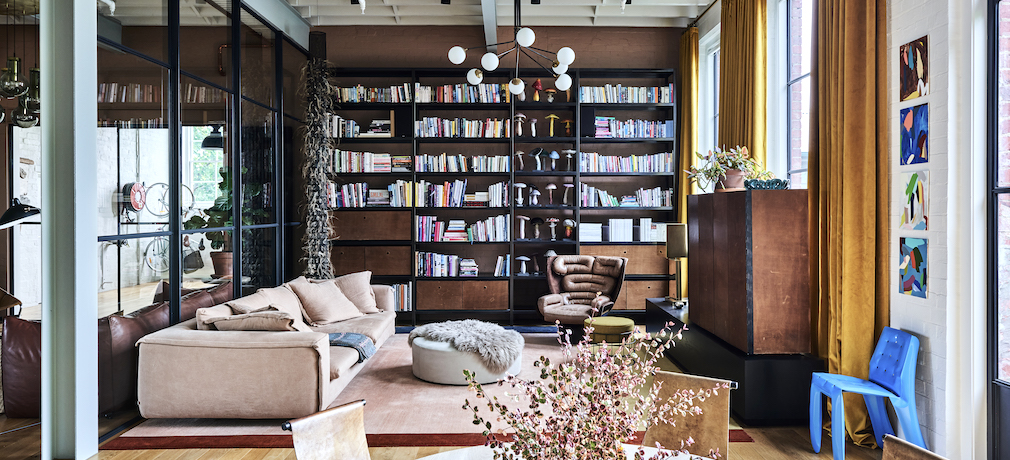
The warehouse home of Melbourne-based interior designer Mardi Ola makes a lot of sense, at least to anyone who appreciates the attributes of the industrial look: brick, exposed pipes, I-beams. The pieces she’s chosen to live with — Warren Platner lounge chairs, a Serge Mouille floor lamp, brass-and-chrome sideboards by Paul Evans — make sense too. For the most part, loft-like spaces are blank canvases that can accommodate any kind of furnishings, but modern and contemporary pieces seem to work best. They even make an ancient factory seem as if it were designed yesterday with home life in mind. Luckily, Ola has long valued such pieces, even in her last home, a Gothic Victorian mansion, so outfitting her current digs was a matter of “what goes where” rather than shopping.


“As most of my furniture and lighting is vintage and are things I’ve had for some time, I was able to plan out each space with the knowledge of what I already had and then enjoy bringing all the pieces of the puzzle together once we moved it all in,” explains Ola. “I don’t believe we should simply discard and start again. There is far too much waste in the world for that kind of attitude to still exist, and there is so much value and beauty to be found in items that have a history of their own. I like that they develop a patina of use – it’s humbling and is part of the fabric that makes up our lives and how we live them.”
While embracing what she had, Ola did design a few site-specific additions, including large, tall steel-and-leather bookshelves for the family room, and in the kitchen, an expansive island with dedicated seating and steel sideboards topped with colorful concrete tiles. And while she maintained the industrial authenticity of the home, she mediated the existing spaces with an eye to light, flow and livability. She reduced the number of bedrooms from five to three, making each one more spacious; repositioned the kitchen to a more central location; and installed steel-framed glass divisions to better define interior spaces without sacrificing the penetration of natural light.
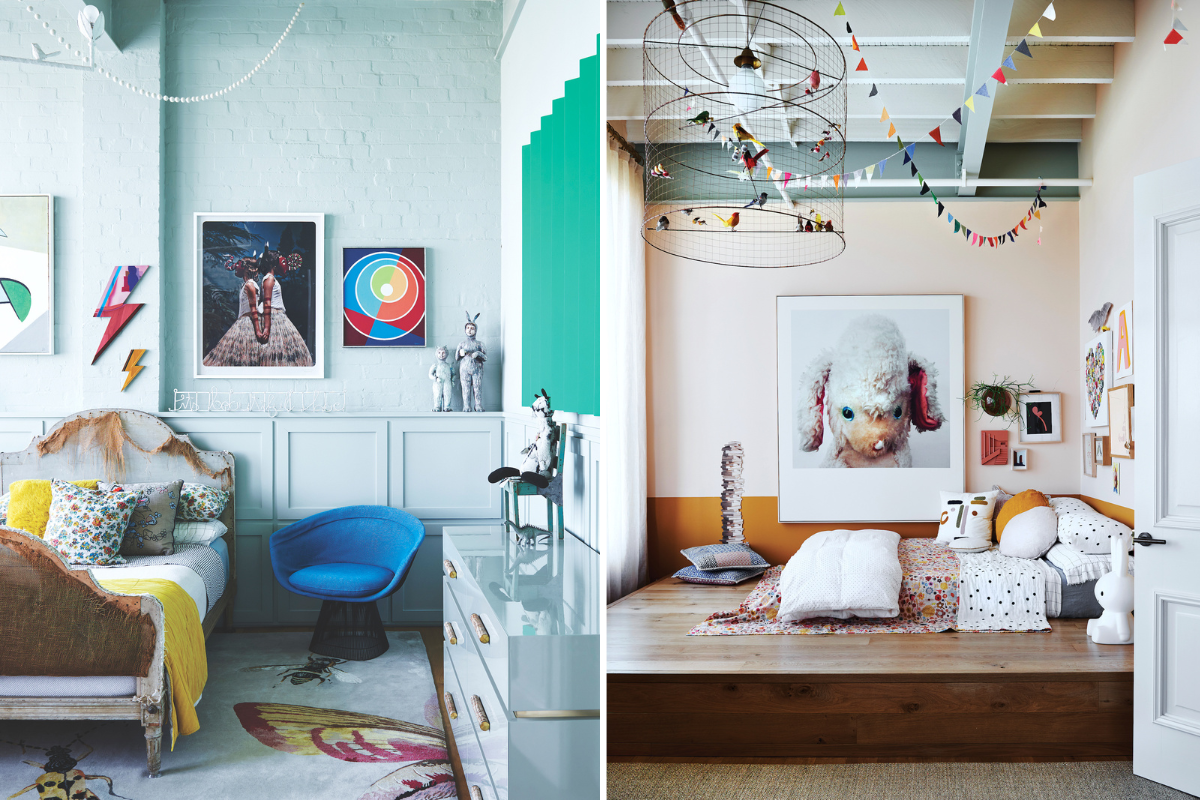
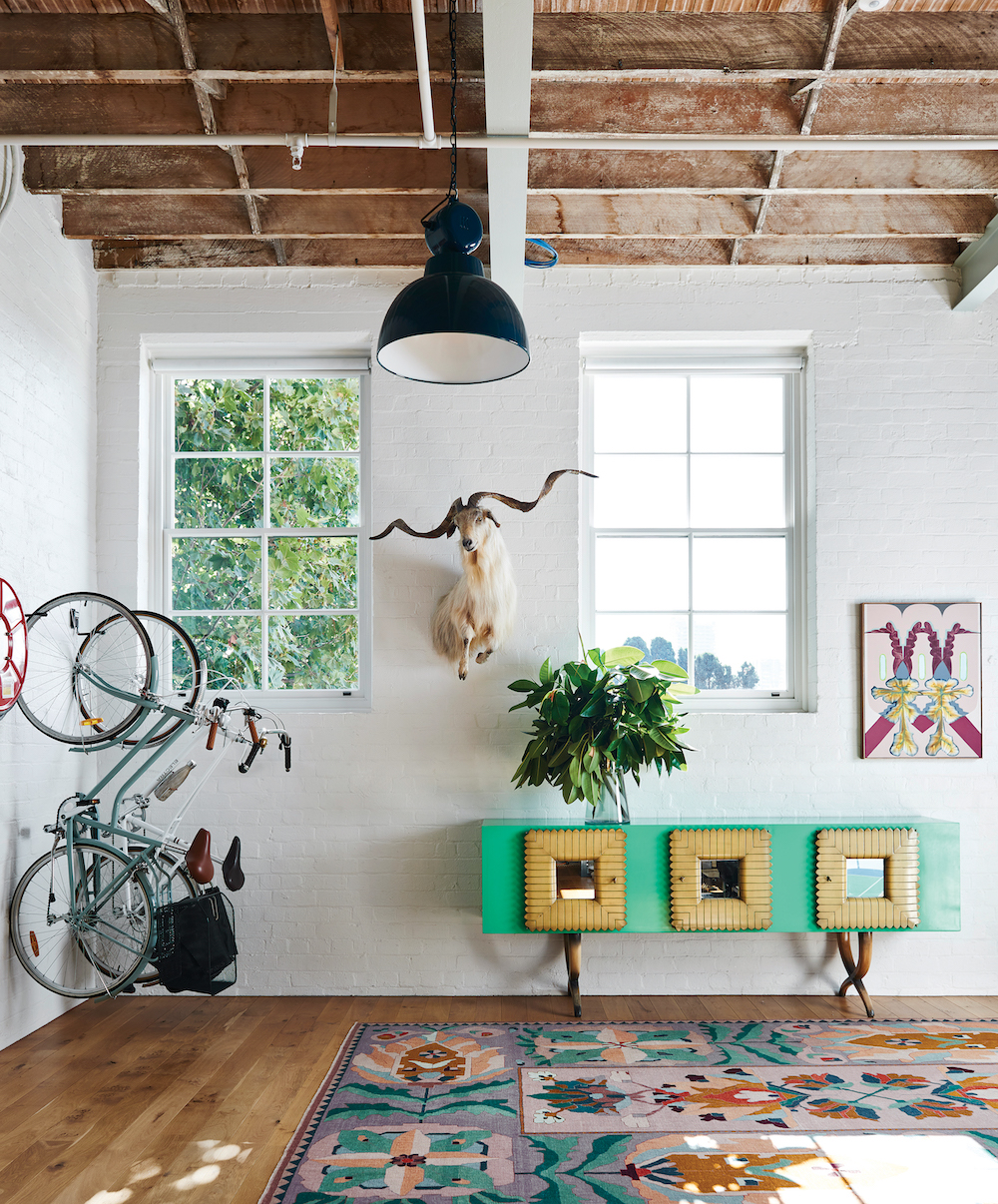
For all its industrial bona fides, Ola’s home is punctuated with highly personal touches. In the large entry foyer, a taxidermic Australian Cashmere goat leaps between two windows above a 1950s Italian sideboard. There’s a Mathieu Challières bird pendant hanging in daughter Ava’s bedroom, and on the wall – enlarged to Andreas Gursky proportions – a photograph of a child’s plush toy.
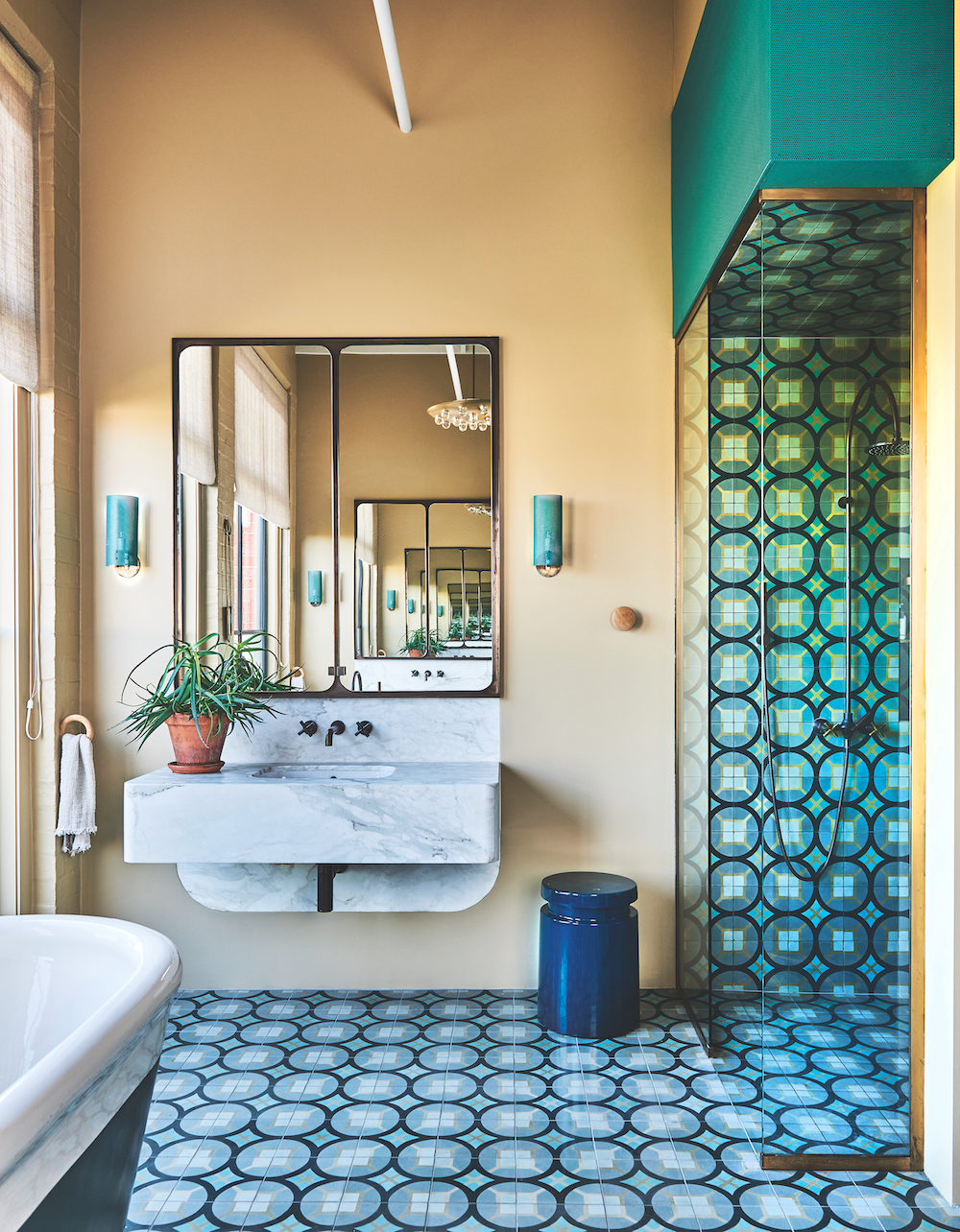

Throughout the home, shades of green play a key role in mediating the pervasive linearity of beams, columns and mullions. Trailing plants surround a doorway in the conservatory-like space adjacent to the dining area. The kitchen is awash in aquamarine tile, and a sleek custom credenza in the living room sports a soothing green finish. Balancing what the architecture of the space calls for and employing an adept yet individual approach, Ola has created a home that possesses a rich sense of style and an all-enveloping feeling of comfort and ease. Utterly sensible.
Photography by Lisa Cohen.
For more like this industrial design by Mardi Ola, be sure to check out this Chicago loft.
Like what you see? Get it first with a subscription to aspire design and home magazine.