


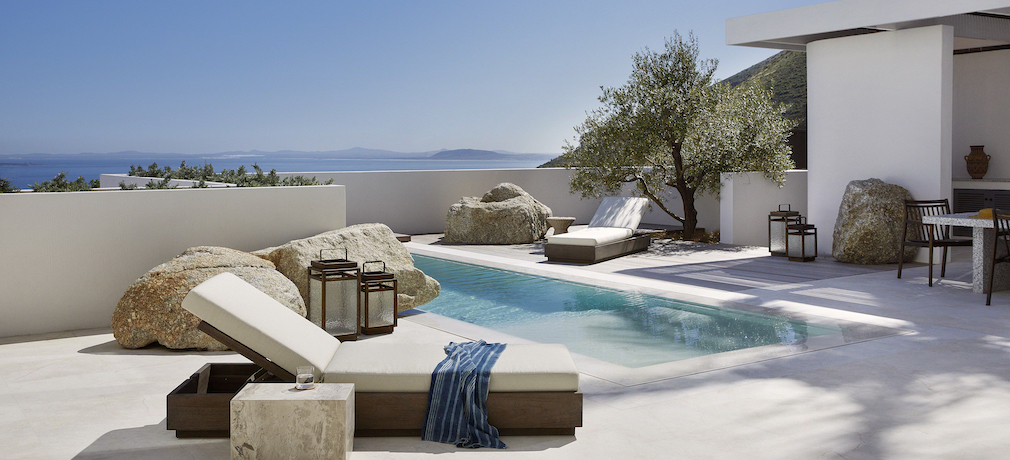
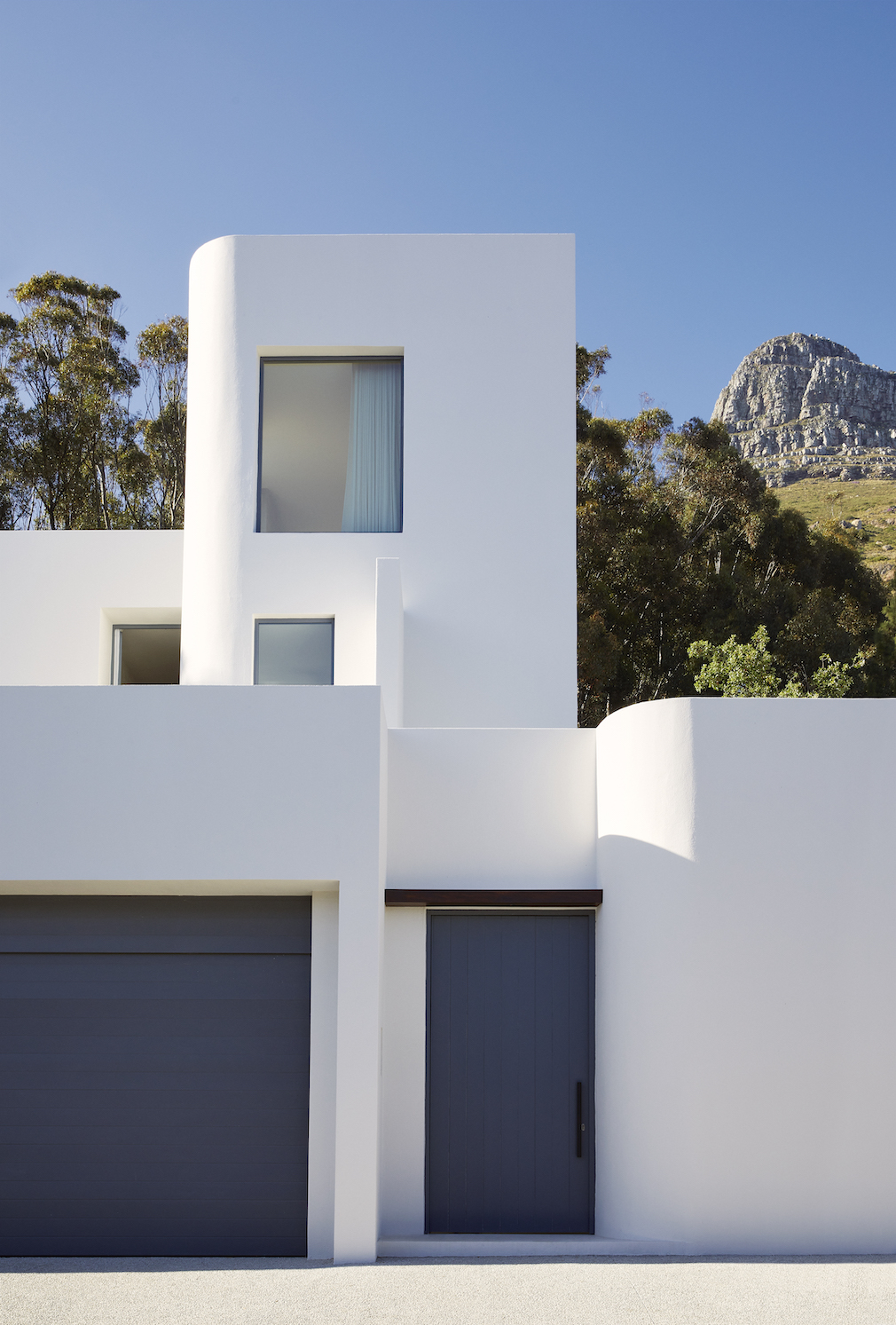

“A home should not only be a refuge but also an extension of the landscape – a place where the eye moves effortlessly between architecture and nature,” states interior architect Marlon Leggat, surveying the sculpted contours of his latest transformation. Set against the craggy slopes of Cape Town’s mountains, a house once weighed down by Hellenic ornament has been reborn as a study in restraint, its new silhouette defined by a stark purity of whitewashed walls punctuated by deep-set windows and an arcing, curved façade.
“The client wanted a feeling rather than a look,” Leggat explains. “Something unhurried and timeless.” The transformation of the home, guided by a single image – that of a seaside escape, blurred at the edges, more atmosphere than architecture – distills the essence of Mediterranean minimalism without sacrificing warmth.
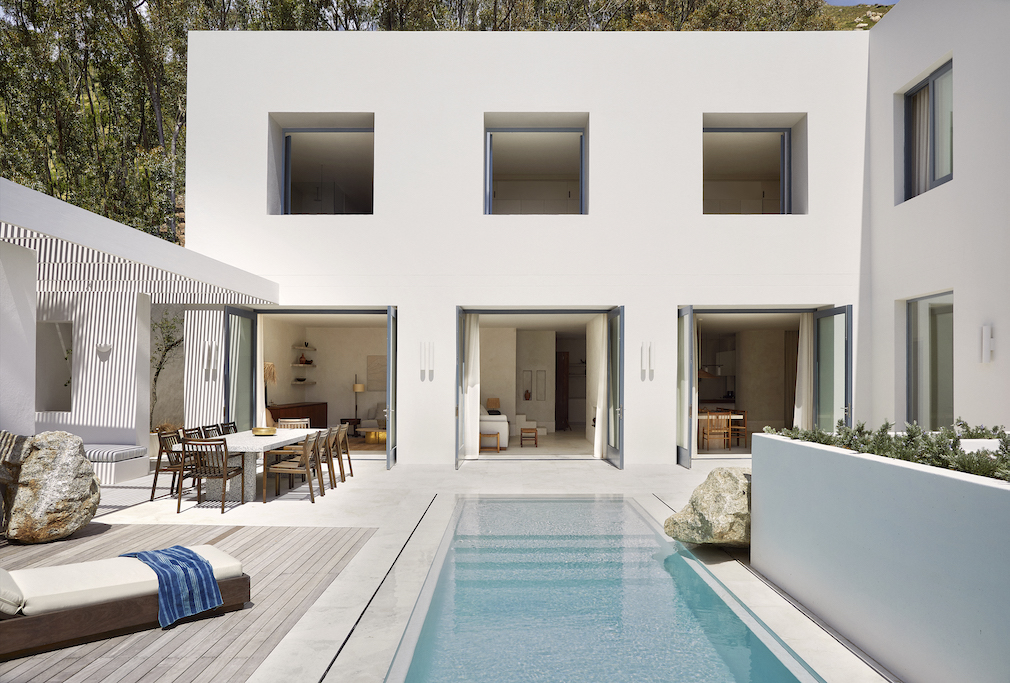

In its previous iteration, the house was fragmented, its levels disjointed, the outdoor areas an afterthought. “The biggest challenge was reestablishing a sense of flow,” describes Leggat. By leveling the outdoor space to meet the interiors, he created a seamless transition – a vast terrace that feels as much a living space as the rooms it spills from. Oversize, floor-to-ceiling French doors now stretch open, dissolving the boundary between inside and out. “Cape Town has this incredible dialogue between land, sea and sky,” he muses. “I wanted that same effortless movement to exist within the house.”
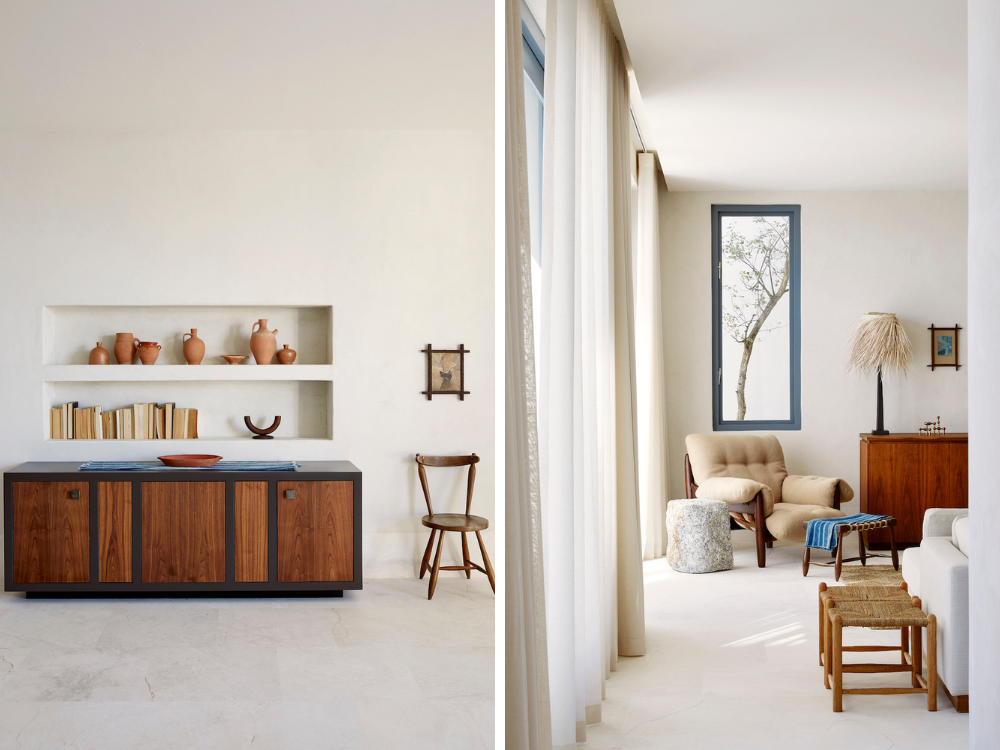

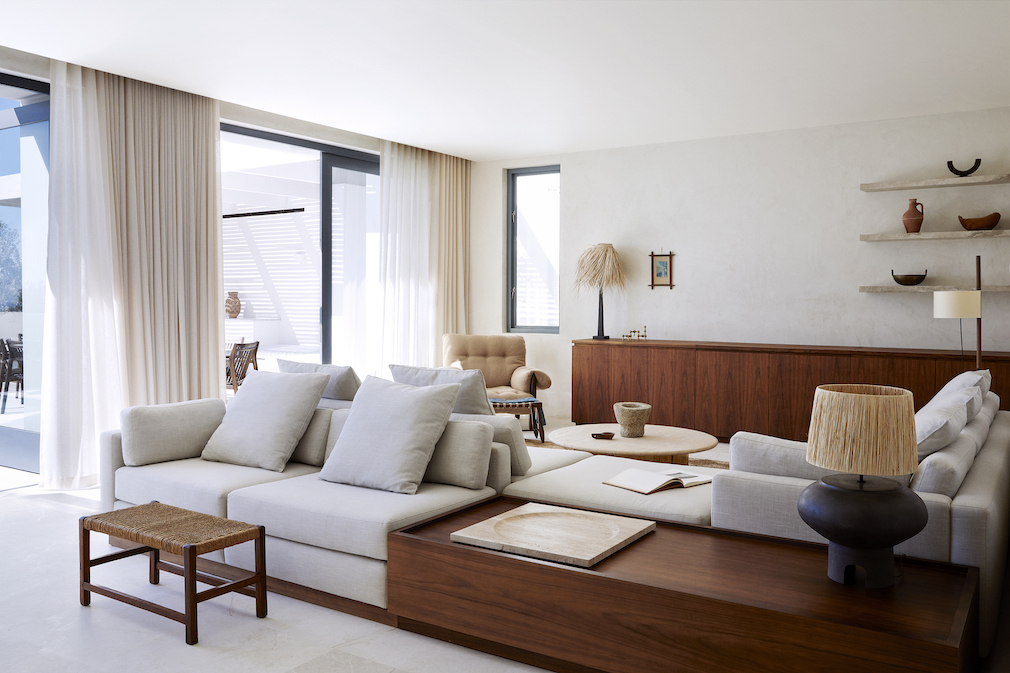

Inside, the materials speak in hushed, tactile tones: honed Spanish marble, raw granite – a nod to the exposed shale of the mountain – woven rattan and sun-warmed jute. There is an undeniable rhythm to the palette, a grounding in rich terracotta and deep walnut, punctuated by maritime blues. “The idea was to keep it natural, local where possible,” adds Leggat. “To let the materials tell their own story.”
One of the home’s most striking features is the large, rounded fireplace wall that anchors the living space. The curve, which began as a necessity to soften the blunt geometry of a lift shaft, became a leitmotif, echoed in furniture choices, arched thresholds and the sinuous movement between rooms. “Curves create a kind of softness, an ease of transition,” Leggat notes. “It makes spaces feel intuitive, as if they’ve grown that way over time.”
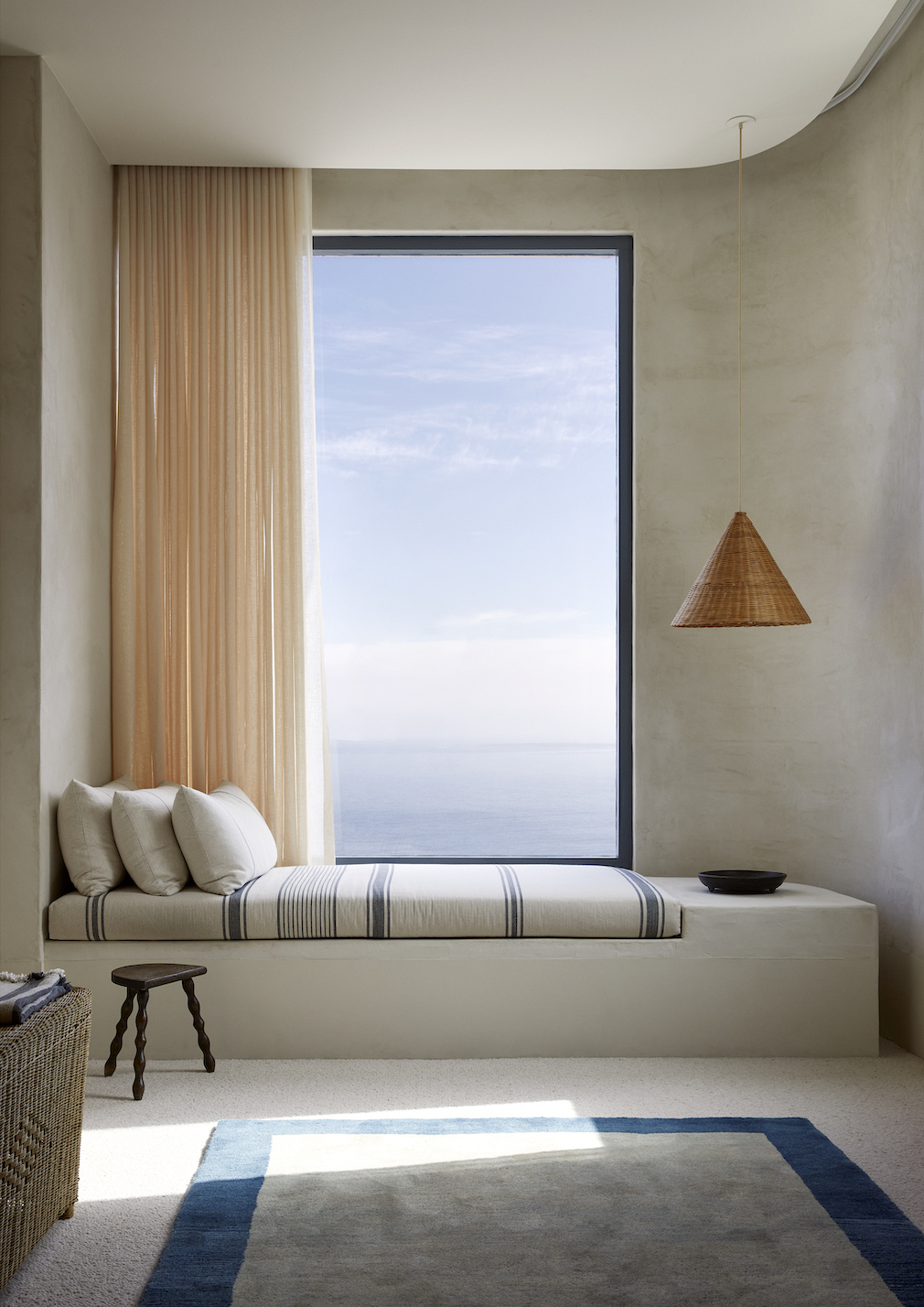

With a large extended family in mind, Leggat designed for both conviviality and retreat. The five-bedroom home includes a gym, office, playroom and guest studio, yet never feels cavernous. Privacy is layered in textiles: full-length, soft drapery spills from nearly every window, filtering light and lending intimacy to even the grandest of spaces.
The home’s Mediterranean heart beats strongest in its references to Cycladic architecture. Dry-packed stone walls, dark wood lintels and handwoven Greek fabrics are a subtle homage yet never veer into the overly referential. In the garden, terraced planting beds of local stone echo the structured wildness of island landscapes.
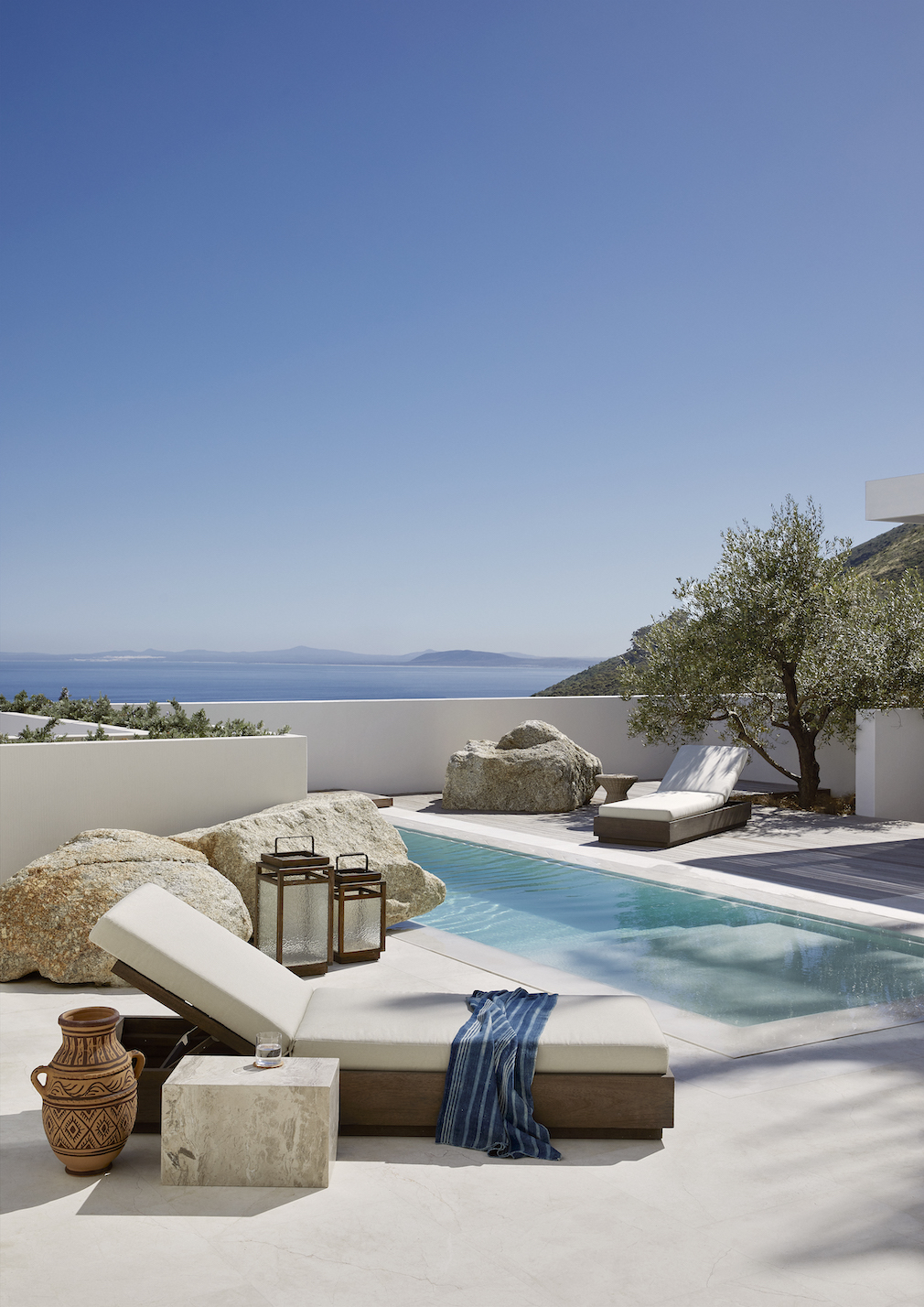
Despite its coastal influences, this is no slavish reproduction of a Greek retreat. Instead, it is an interpretation – a poetic response to place and purpose. “A home should feel inevitable,” Leggat reflects. “Like it has always belonged to its surroundings.” Standing on the terrace with the ocean stretching out and the mountains rising behind, it’s difficult to imagine the house any other way. The transformation, much like the Aegean itself, is timeless.
Photography by Elsa Young.
Like what you see? Get it first with a subscription to aspire design and home magazine.