


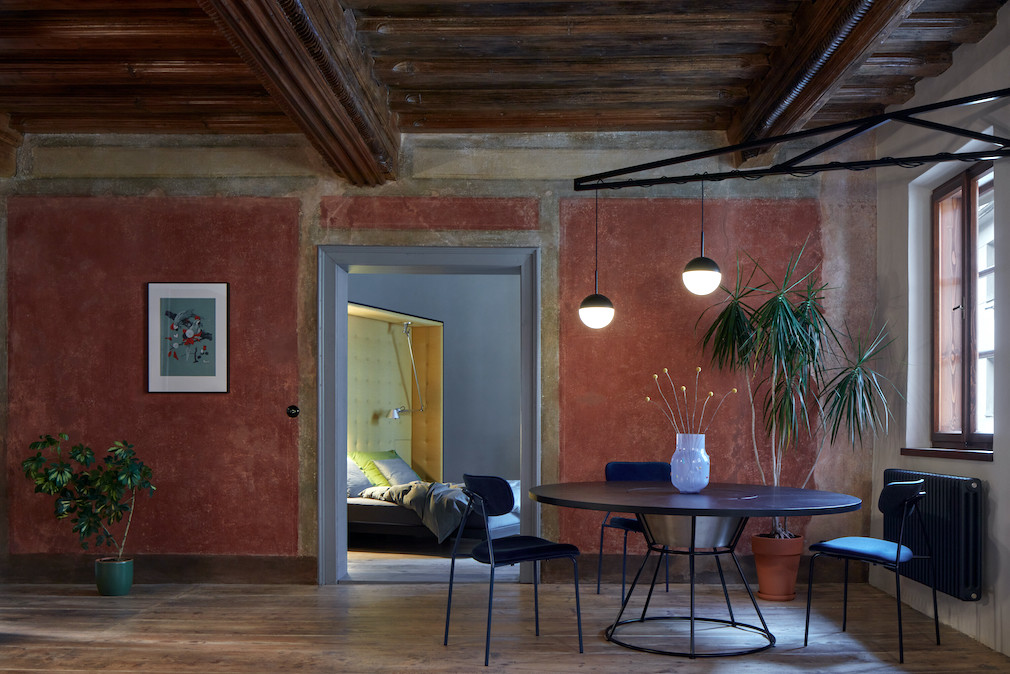

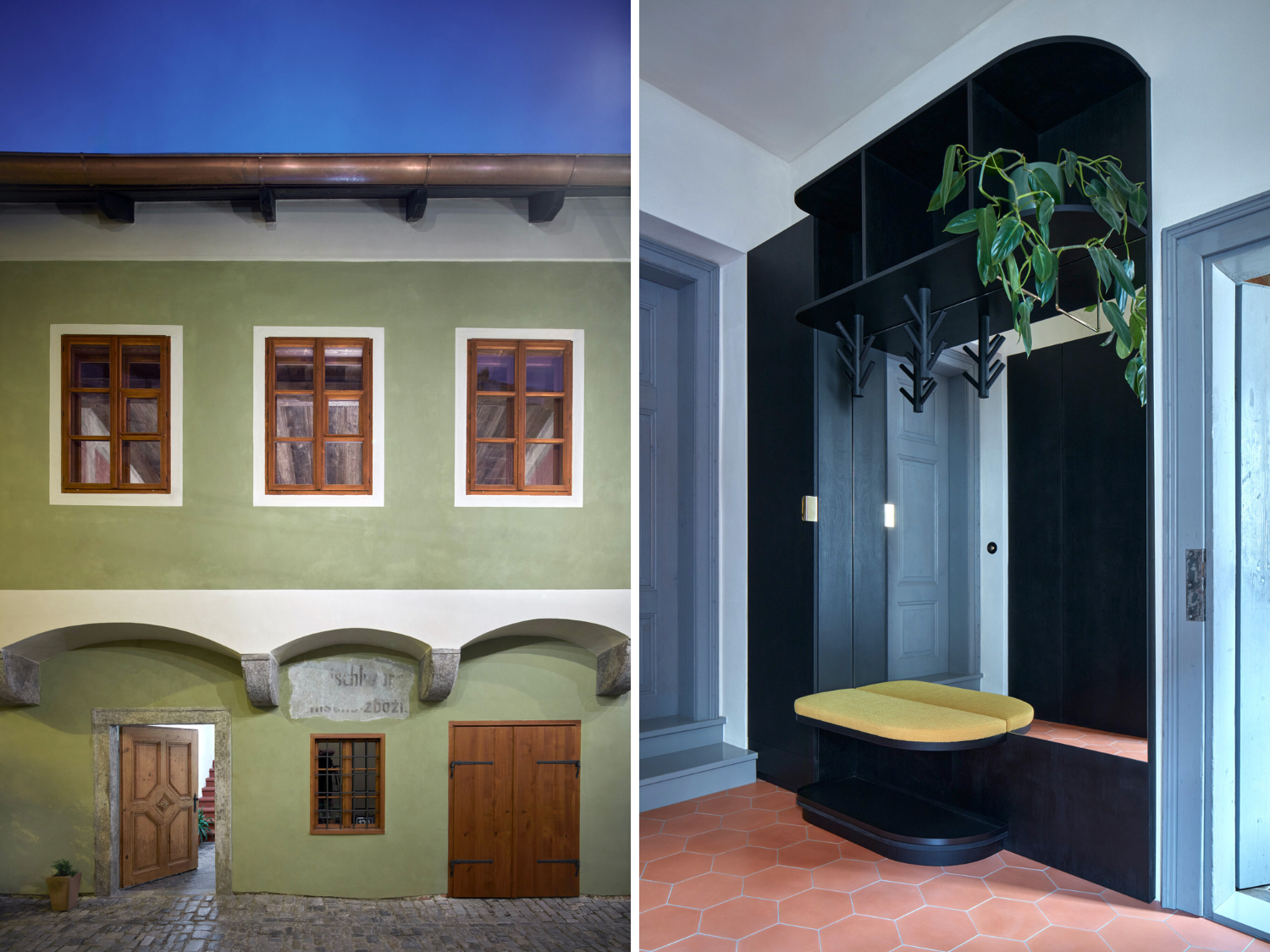
Masná 130, a 500+-year-old house in UNESCO listed Český Krumlov, stands as a testament to the preservation of historical heritage. Acquired in a dilapidated state, its restoration journey unfolded, revealing layers of neglect that paradoxically safeguarded original features. The homeowners’ philosophy centered on retaining historical charm while infusing contemporary elements. “We did not want to create a historical ‘museum’ interior, nor a design showroom,” the owners explain, but instead, “we wanted to organically connect the historical and contemporary layers.”
The structure evolved into a haven for slow travelers, housing a quaint cafe that fosters community gatherings and local festivities. The architects from ORA echoed this sentiment in the 2nd-floor apartment design, unveiling hidden historical treasures like the Renaissance ceiling and the original deep crimson wall paint. Through a delicate balance of dark hues and light tones, each room whispers tales of the past, carefully intertwining heritage with modern comforts.
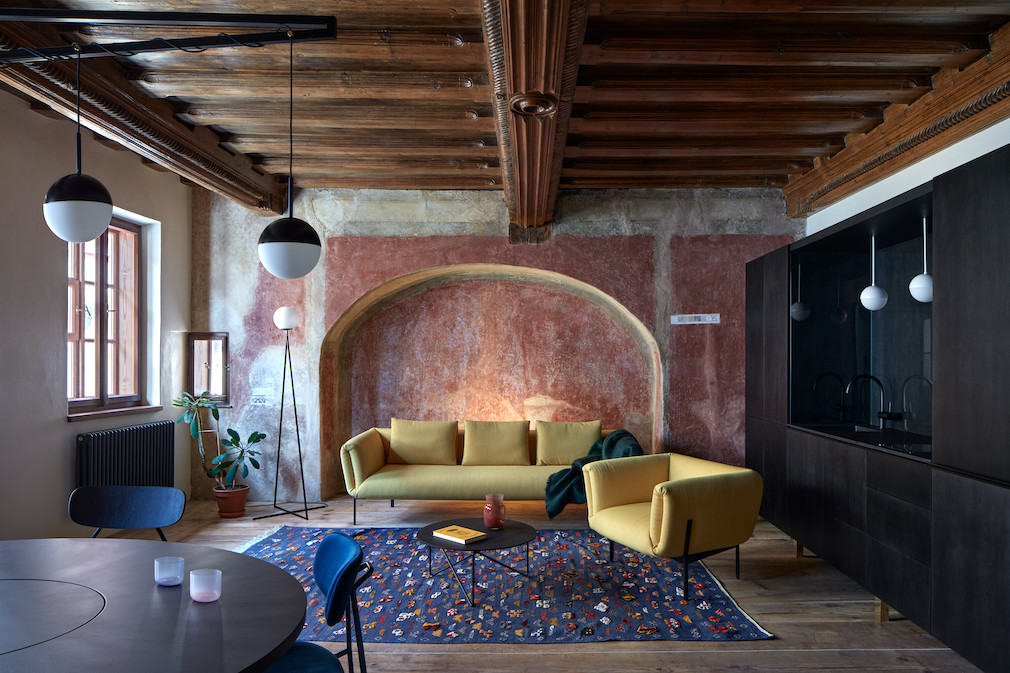

From the Architects | From the start, we were intrigued by the investors’ approach and enchanted by the atmosphere of the house. We personally know the feeling of falling in love with an old house and settling in it. This process includes struggles and revelations, as well as attuning to the whims of the place. Old houses are often moody. The assignment was to redesign the first floor of the house for housing and only occasional rental. The design therefore mirrors the lifestyle of the owners.
The goal was to preserve and reveal the historical origins of the house. The apartment is dominated by the main living space, a salon with a carved wooden Renaissance ceiling. The room was divided by a partition at some point in the past. This dividing wall was demolished to free the original space in its entirety. The original wall paint was uncovered and it revealed a deep crimson colour. The determining factor here is the darkness of the surfaces. The wood beam ceiling and the walls feature dark, saturated tones. A dark space embraces people, and it creates an atmosphere of closeness when compared with a light one.
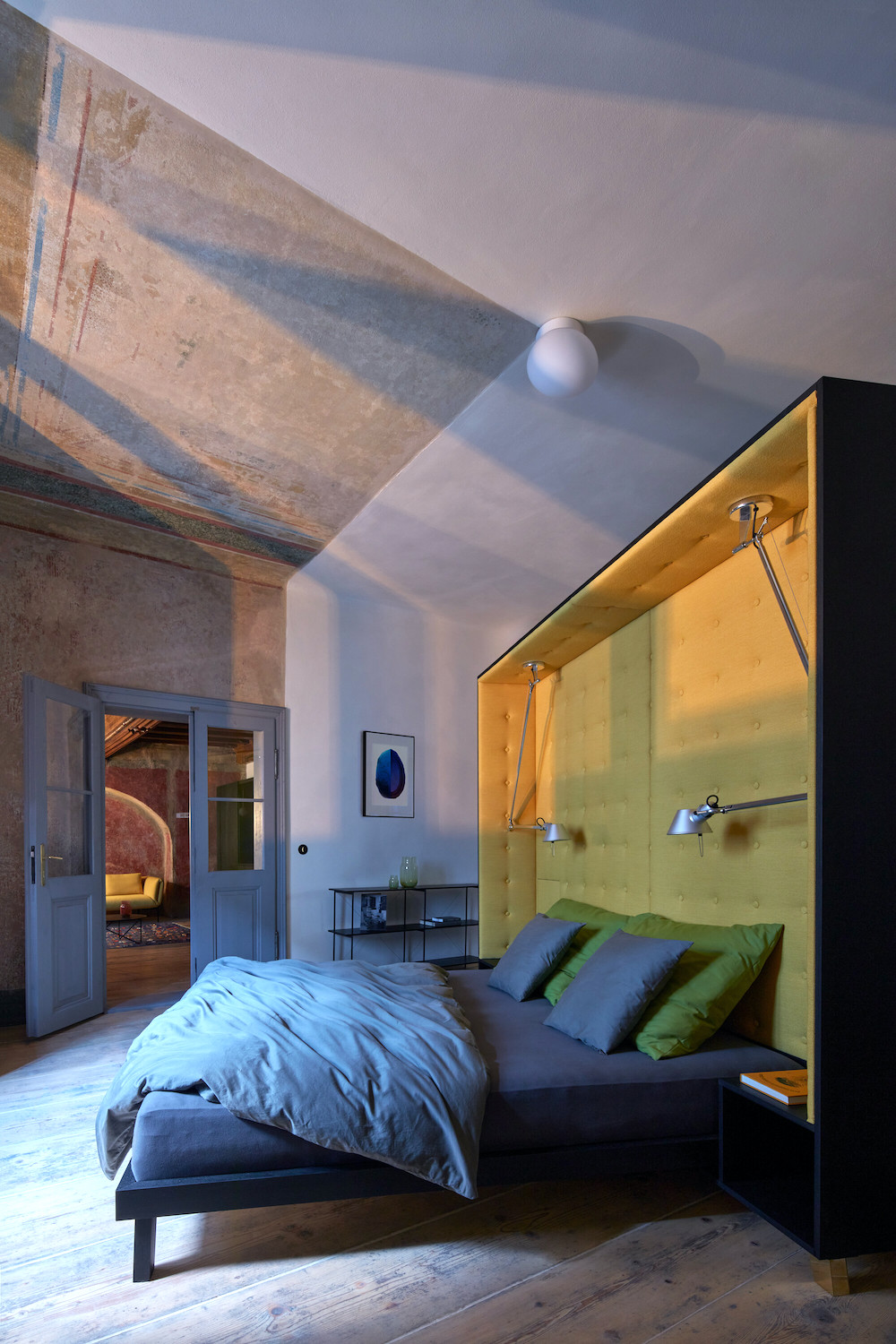

The second space is the bedroom, where only a fragment of the original complicated painting on the ceiling is revealed. The rest of the space is made calmer by using a cream color for the walls.
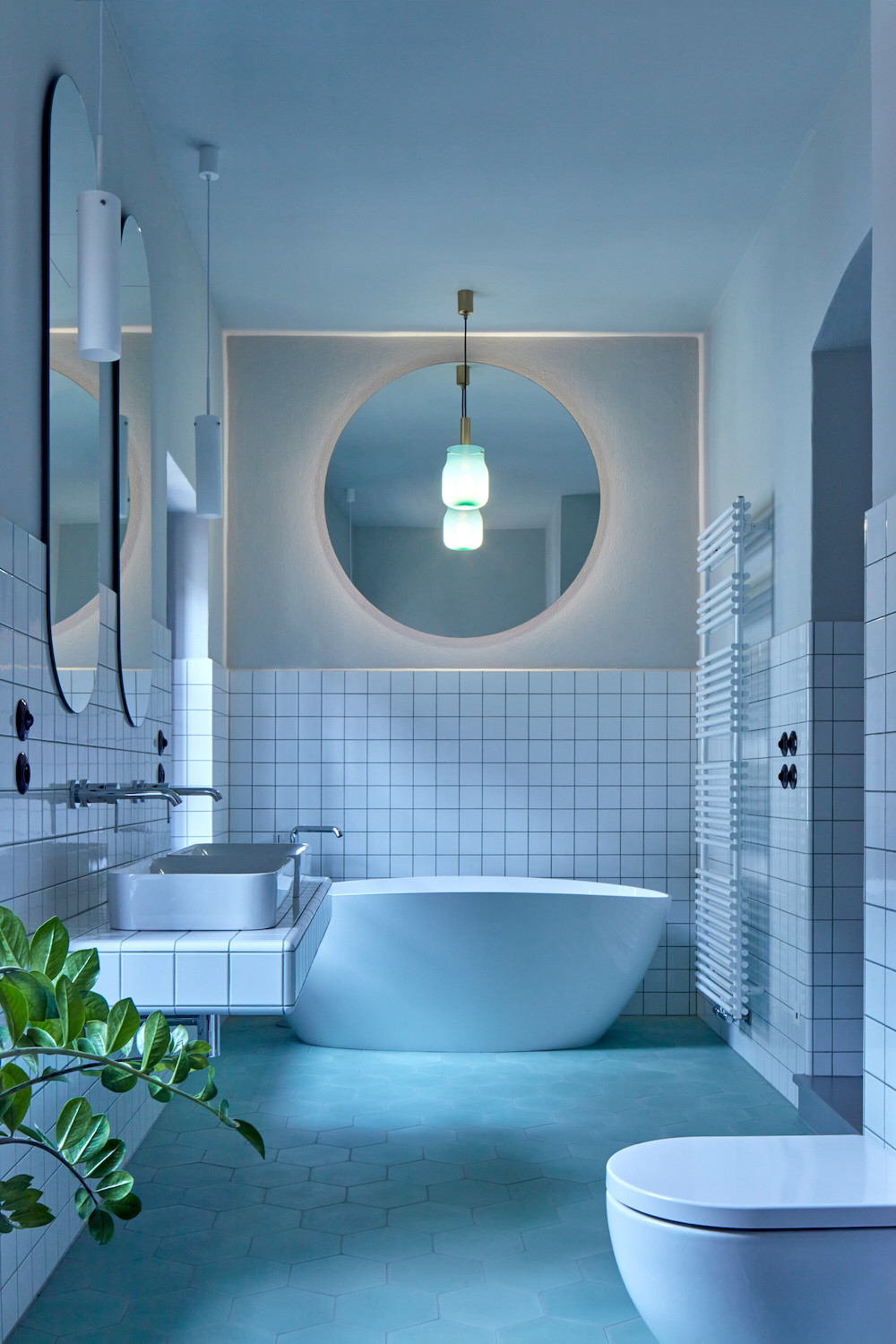
The third, but no less important room, is the bathroom. It is the lightest space in the house and because of this, cool color tones were chosen. The atmosphere of the salon is solemn, whereas the atmosphere of the bathroom is uplifting.

The interior design is approached as a collage of motifs. The furniture is inserted into the historical space in the form of separate objects that create distance from the historical elements. The kitchen is like a cabinet that hides everything you need. The bed, connected to the wardrobe, stands in the middle of the room and is turned towards the light and the original ceiling painting. The sleeper is directed to explore the details of the surface. The bed is not only a place for sleeping but also for reading. This is made possible by lamps installed specifically for this purpose.
Most of the furniture is custom-made from dark stained birch plywood, the brass legs mirror the surroundings, blend in with it, and also support the spatial separation of objects. The lamp above the table is mounted on a bracket so that the historical ceiling is left untouched, a table has integrated bowls ready for a feast, and brass shelves display books.
Photography by BoysPlayNice.
Like what you see? Get it first with a subscription to aspire design and home magazine.