

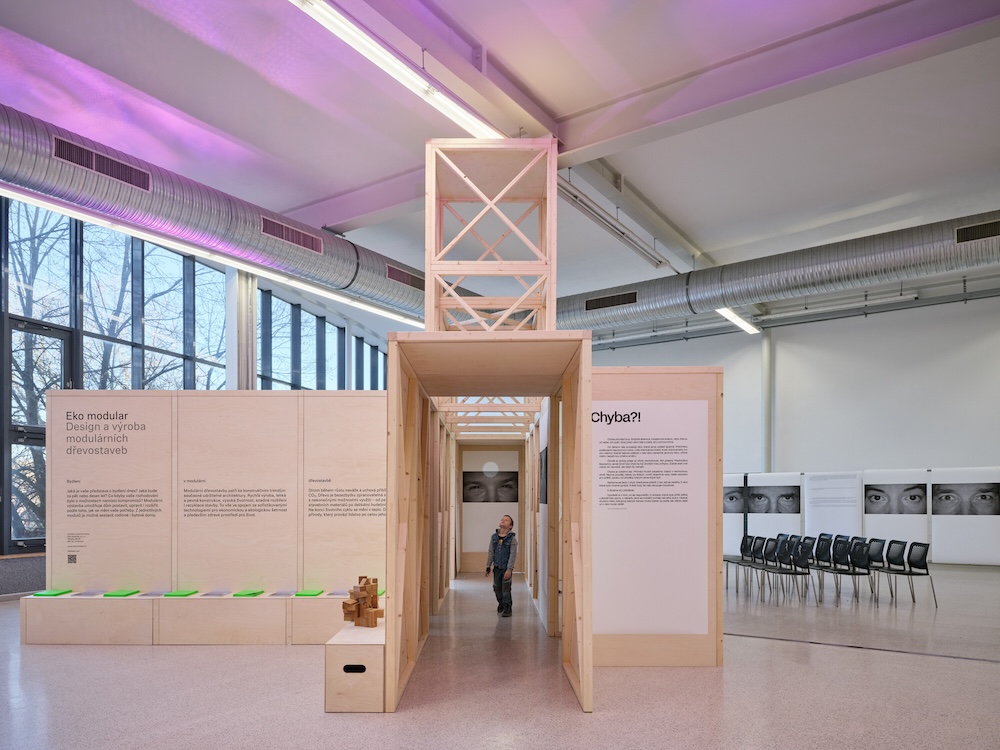

Architecture is usually presented through its finished form, with little room for the doubts, wrong turns and unexpected discoveries that shape its making. At Meat Design Ostrava 2026, the Pavilion of Mistakes and the exhibition Chyba?! (Mistake?!) opened these experiences to public discussion. The pavilion, designed by Mjölk architekti and built by Eko modular, formed part of Archilounge, conceived and programmed by Linka News.
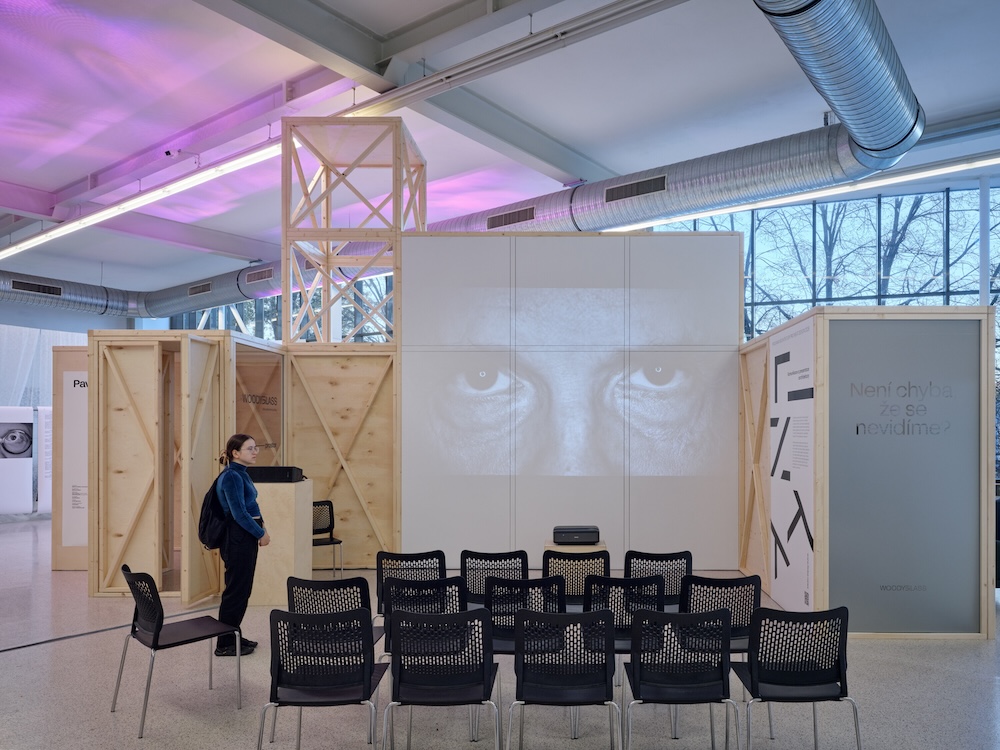
The exhibition brought together personal accounts from architects across generations, reflecting on mistakes, their consequences and what can be learned from them. Close-up photographs of the architects’ eyes by Martin Tůma of BoysPlayNice gave these stories a human presence, inviting visitors to meet their gaze and share their own experiences. Together, the pavilion and exhibition approached mistakes not simply as failures to overcome, but as opportunities for reflection, questioning and shared learning.
From the Architects | A completed building gives permanence to decisions made under uncertain conditions. Along the way, intentions encounter materials, budgets, other people and the limits of what can be anticipated. Some decisions prove wrong. Others acquire meaning only later. Yet the finished image of architecture leaves little space for the knowledge gained along the way — or for the people who live with the consequences of those decisions.
The Pavilion of Mistakes and the exhibition Chyba?! (Mistake?!) opened that space to public view. Together, they explored how an experience usually associated with embarrassment or failure might become something that can be examined, discussed and passed on.
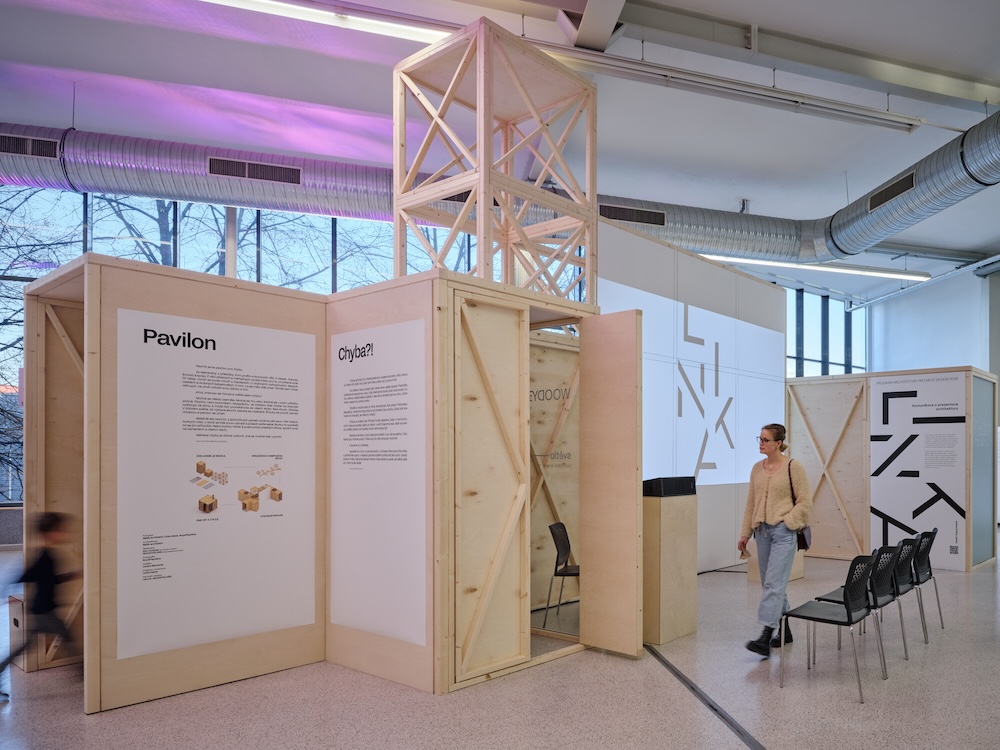
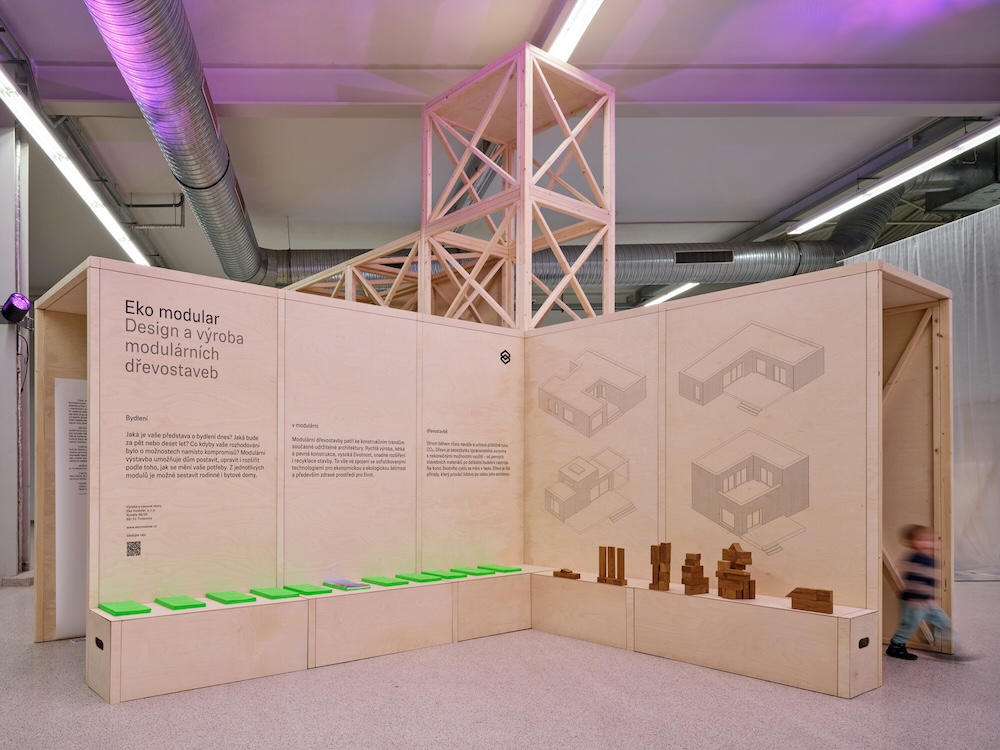
Designed by Mjölk architekti and built by Eko modular, the pavilion used a modular system of prefabricated panels made from plywood and KVH structural timber, assembled with metal connections. Repeated rectangular elements formed an irregular, branching composition with differently oriented arms, sightlines and alcoves. A regular construction system generated a varied spatial arrangement, accommodating the exhibition, talks and informal encounters.
“From precise, measurable things, a place emerges for what cannot be precisely measured,” writes Jan Vondrák of Mjölk architekti.
The relationship between construction and subject was central to the project. Making a building requires accuracy, coordination and decisions; learning requires room to question those decisions. The pavilion brought these conditions together, providing a setting in which professional authority could coexist with the admission of doubt.
“The pavilion is not a monument to failure. It is a place where a mistake can step out of the shadows for a moment and be examined from every side. Without shame. Up close. In good light,” says Vondrák.
Alongside project photographs and personal accounts, these portraits returned architecture to the people making it. The texts moved between humor, discomfort and reflection: a first impression that undermines trust, a construction error that demands repair, an experiment that reveals an unforeseen possibility, work that takes too much from life.
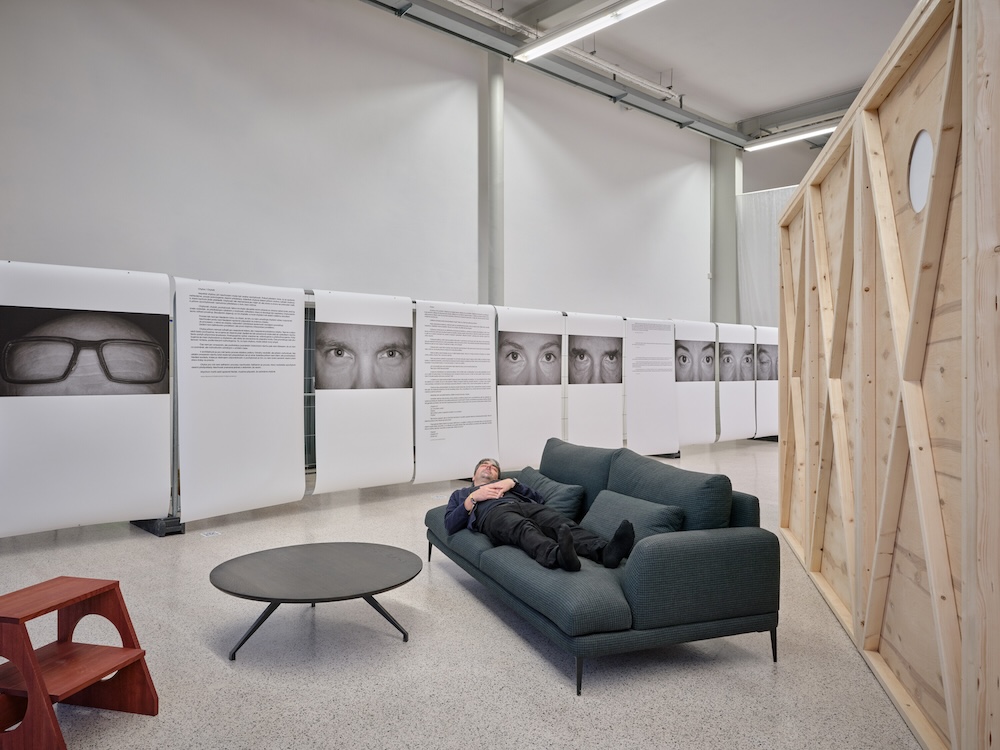
Visitors were invited to add their own accounts. A private memory could become shared knowledge, offering someone else a point of recognition or a warning.
“Calling something a mistake assumes there was a right way to begin with,” writes Alexandra Georgescu of KOGAA. The contributions approached this assumption from different positions. Some described mistakes as part of discovery; others emphasized their costs and the responsibility to put them right. Together, they explored the difficult boundary between accepting imperfection and excusing failure.
Photography by BoysPlayNice.
Like what you see? Get it first with a subscription to aspire design and home magazine.