


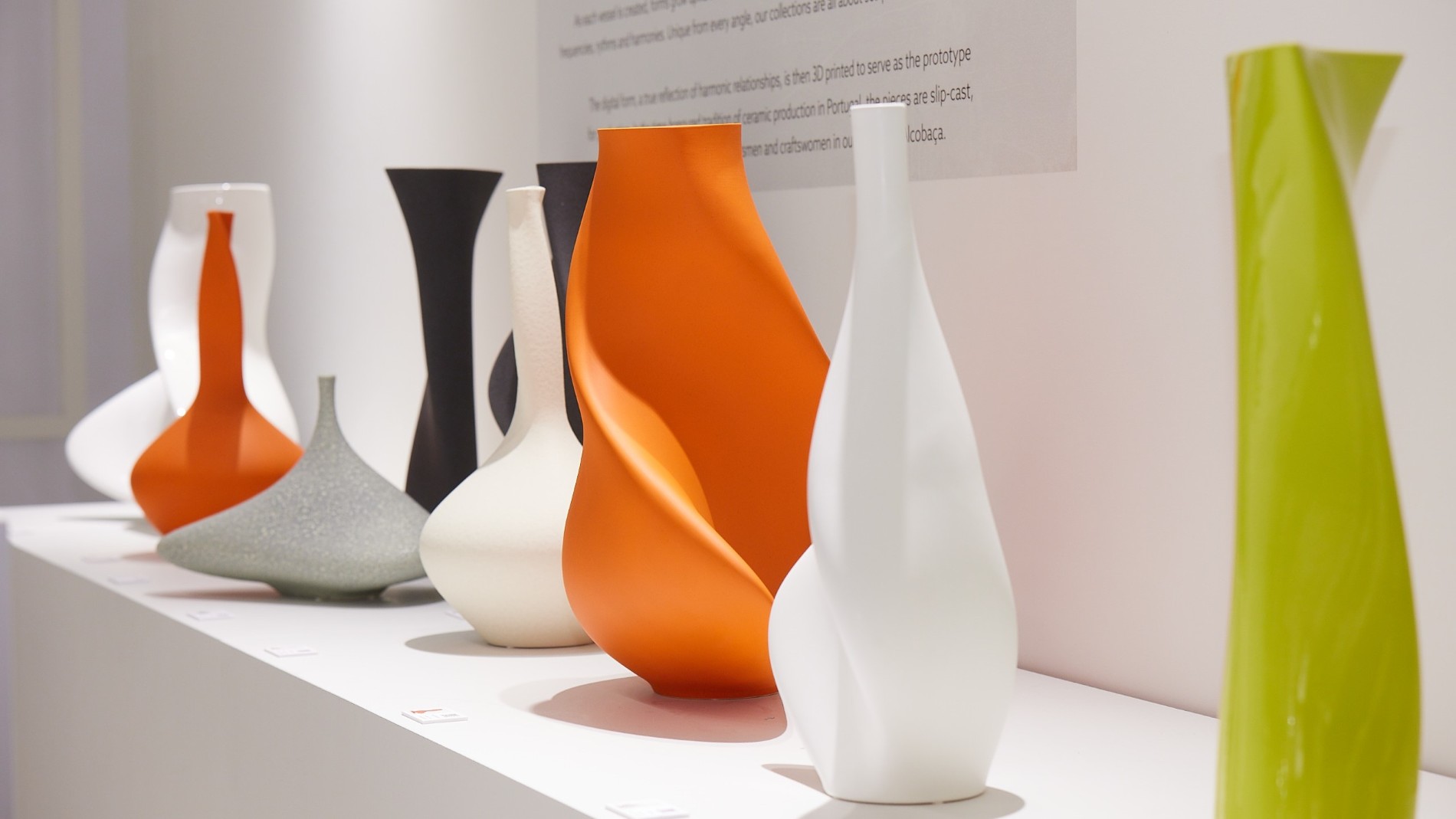

You could say it started with a song. But more accurately, it began with Mark Lloyd, a British-born, award-winning automobile designer, who says, “I wanted to find a way to translate the beauty of sound into my domain. So I learned to write algorithms into space.” Three years ago, he met the team of artisans behind the Portuguese ceramic producers S. Bernardo in Alcobaça.
Shortly after, along came the Sónia Tavares, the lead singer of the band The Gift, who Lloyd recorded singing in a local monastery. He devised an algorithm that limned sensual shapes out of the music’s soundwaves. These forms were then modeled using 3D printing, from which molds were created. Finally, the artisans poured in liquid clay called slip and cast these forms into sensual, curvaceous ceramics that became the Monastery Collection. The combination of this contemporary technology with an ancient ceramic technique led to Claraval Sound-Made Ceramics, a new brand.

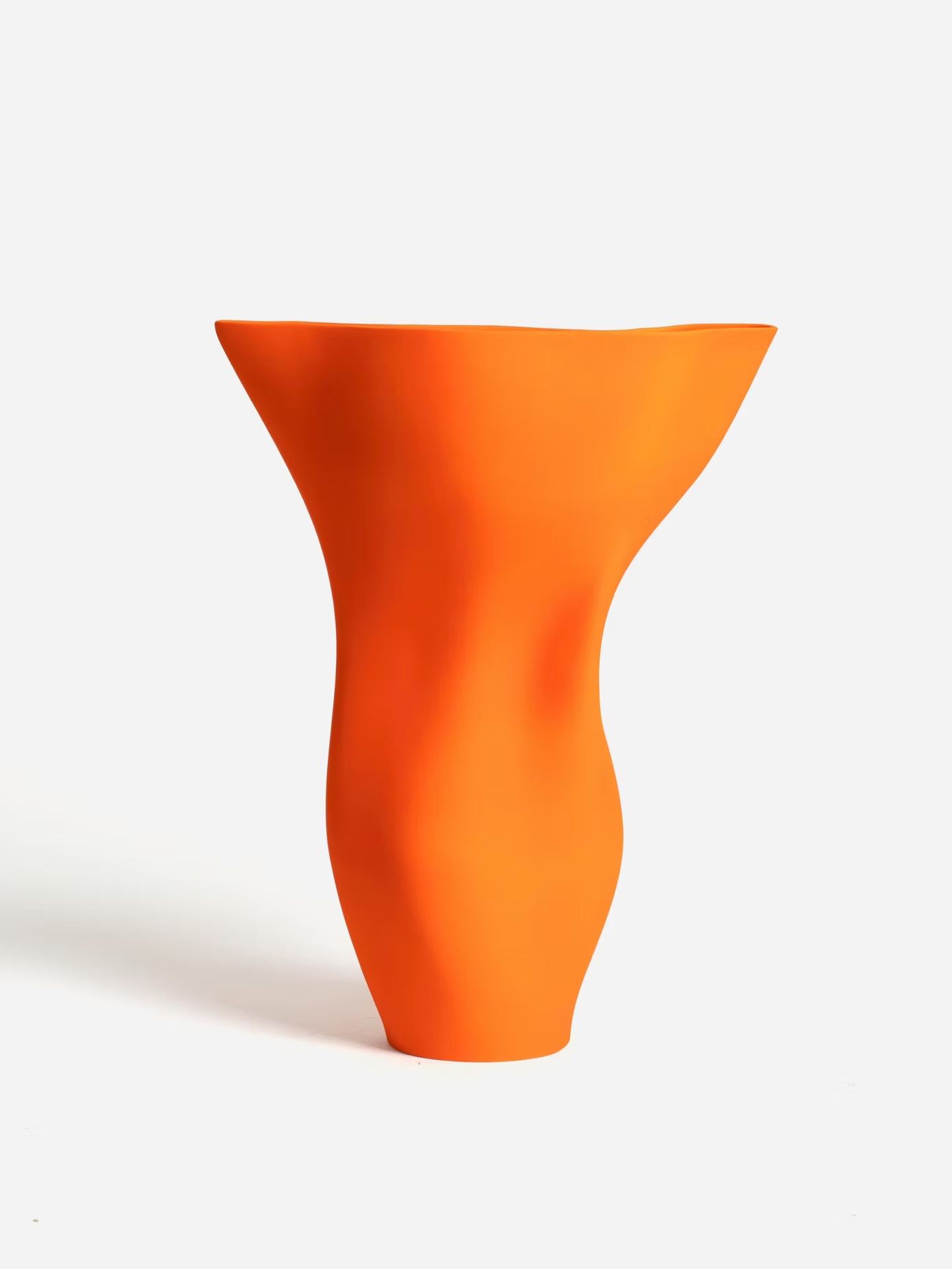
Since then, the TikTok and YouTube sensation Mia Benítez has collaborated with Claraval on the Mia Collection, also derived from music. But most recently, Lloyd has been recording the resonances and reverberations of nature. At this year’s Ambiente, the enormous German consumer goods fair in Frankfurt, Lloyd introduced São Paio (a visual representation of the sound made by waves violently crashing against the granite coastline of this area near Porto) and Peniche (named for a seaside town in the province of Estremadura known for its dramatic saltwater-eroded limestone cliffs).
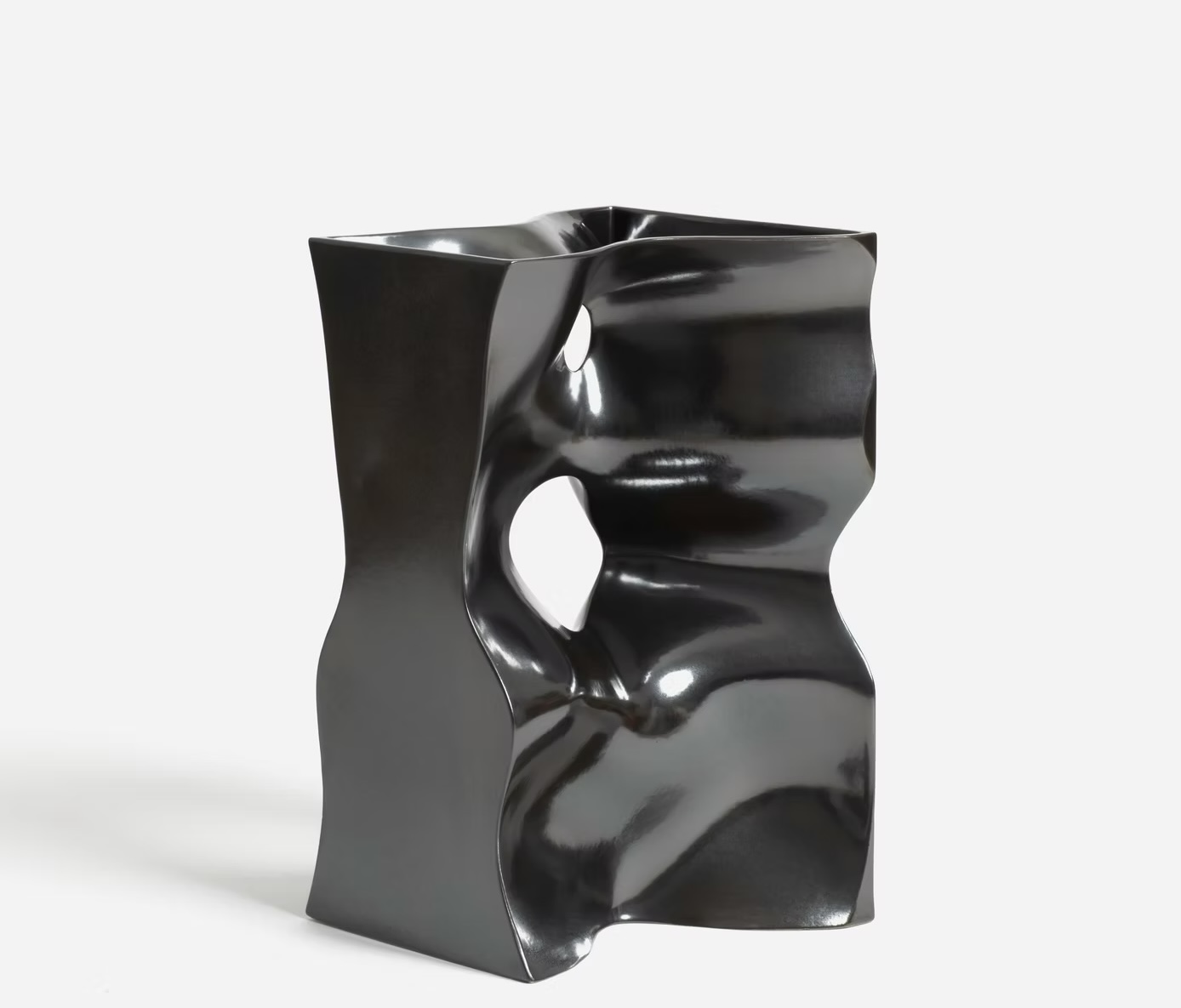
Creating ceramics from sound waves, explains Lloyd, means the resulting forms “have complete geometrical freedom, while also being technically challenging.” At times, the sound waves might cross over one another, making the modeling of the form complex and difficult to execute. The artisans also apply unpredictable, reactive glazes that create patterns, or they sport matte or polished finishes – sometimes both in a single piece.
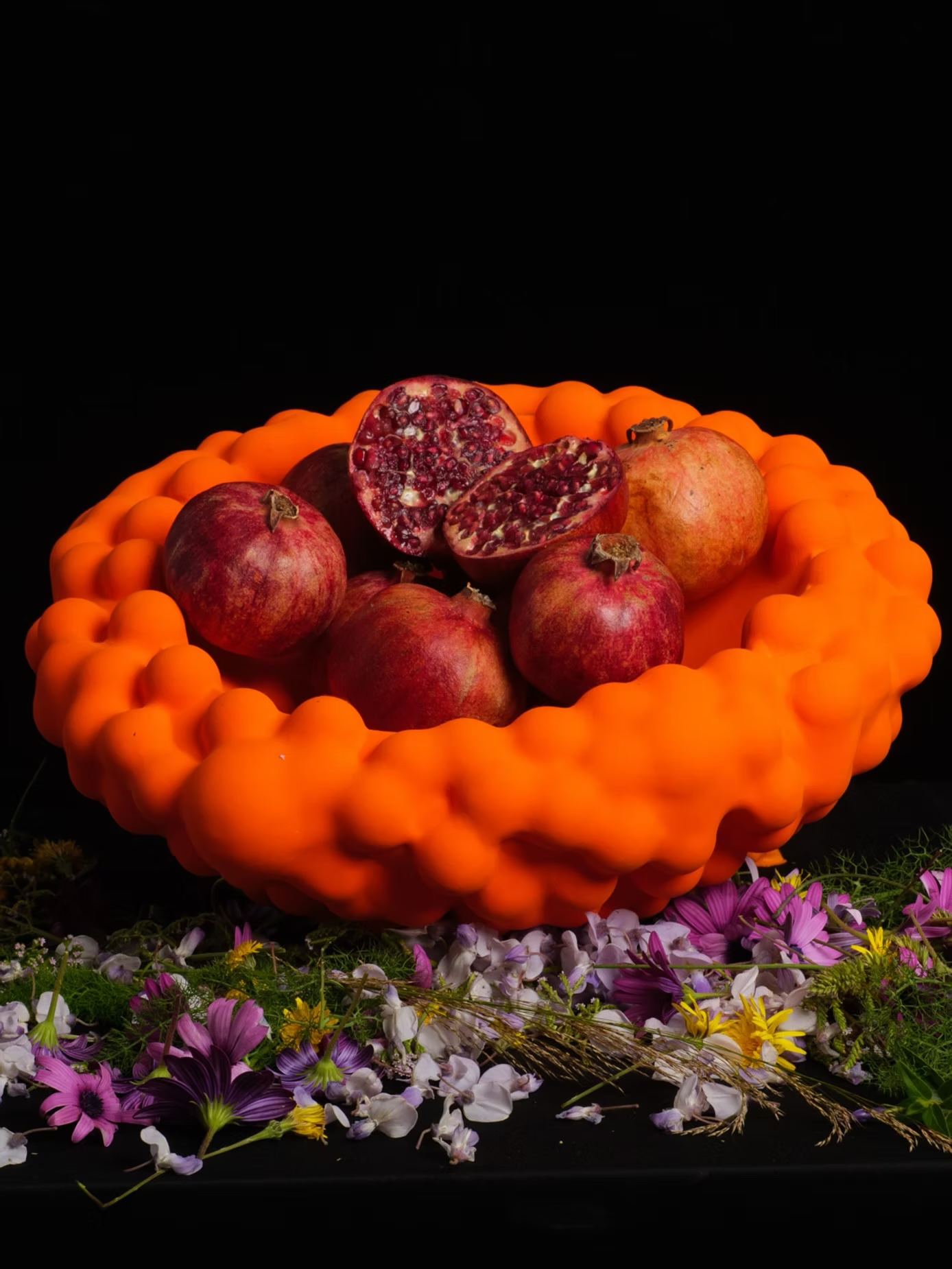
There is also no limit to source material. Some can be geographically specific, such as the Foz Collection, which arises from the sonic turbulence that takes place at the point where the Douro River meets the sea. The Forbidden Fruits Collection explores the magnetic attraction and repulsion of force fields.
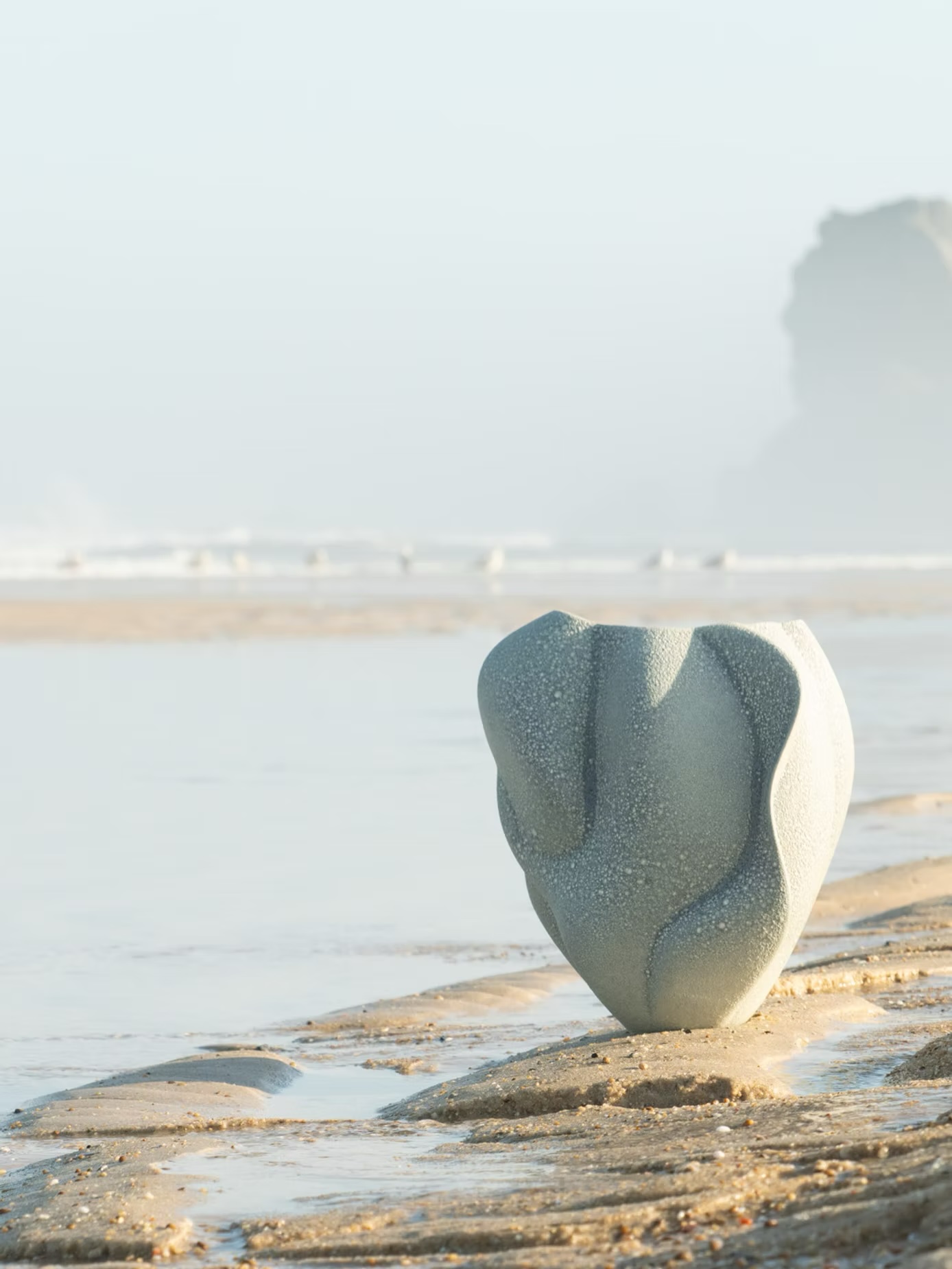
Thus, what Claraval Sound-Made Ceramics represents are visual and physical embodiments of multiple electric and natural phenomena, and the abstract, ethereal qualities of music – sound literally translated into form.
Like what you see? Get it first with a subscription to aspire design and home magazine.