


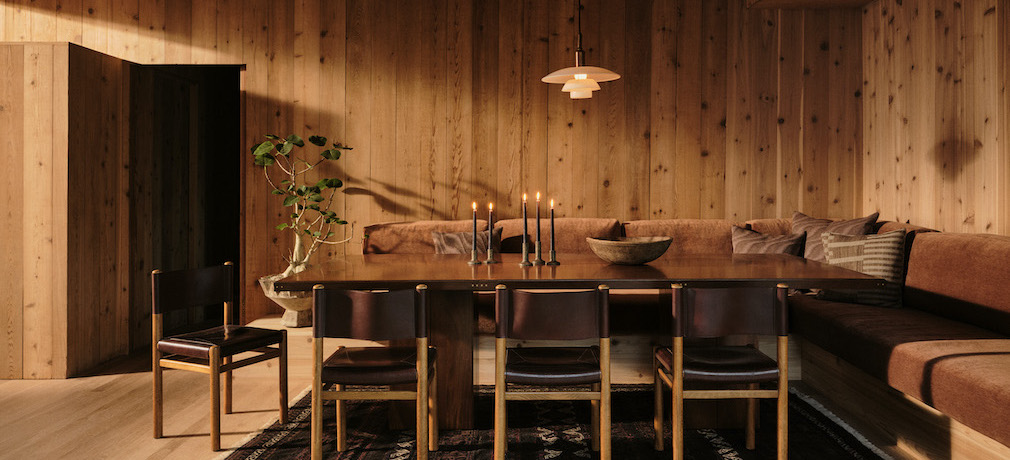

“Point Dume is a very special area,” states designer Vanessa Alexander. “It’s centered around a private beach and surf break. And Sea Ranch Way was inspired by Sea Ranch in Northern California.” The 1960s development called Sea Ranch today is a largely landmarked “contextual community,” where such famed architects as Charles Moore (the so-called father of postmodernism), William Turnbull Jr. and Richard Whitaker built homes that respected the beauty of the land.
Like Sea Ranch, the timber-framed homes on this Point Dume cul-de-sac, part of greater Malibu, were originally built in this iconic style in the 1970s. Yet only a few remain. Alexander and her husband, Steve – who also develop hand-built homes through their complementary business, Alexander Built – fell in love with one: a low-slung, 3700-square-foot house clad in cedar. “We live in the area,” she explains, “so it was immediately obvious to me what needed to be done.”
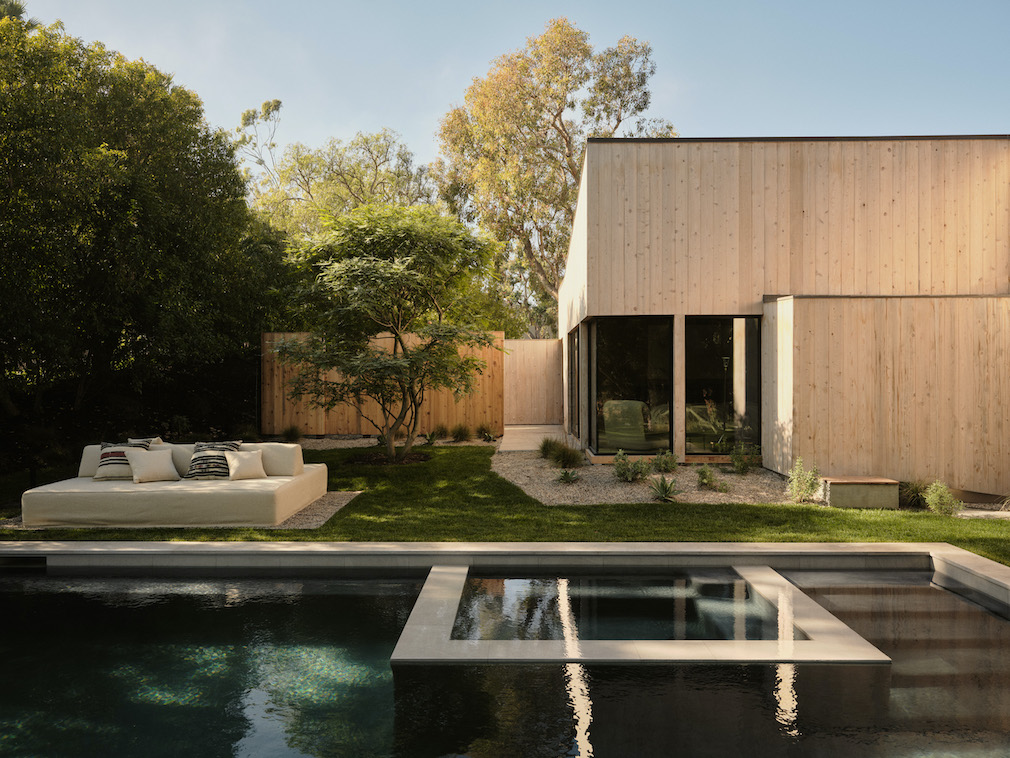
The house was designed around 1979 by Ron Goldman, and as Alexander observes, “It had never been modernized and had sort of lost its heart along the way.” For one thing, the natural exterior cedar cladding had been painted pink. A skylight running along the spine of the house was also in need of repair. The kitchen was divided into separate galley, dining and storage areas. Finally, the structure needed to be updated to be more energy efficient and compliant with contemporary codes.
Other developers might have come in and saved nothing but the shell or, worse, just taken a wrecking ball to the whole thing. But, states Alexander, “We always treat the homes we renovate as if we were going to live in them ourselves. We don’t approach them from a value-engineering perspective; we sweat the details.”
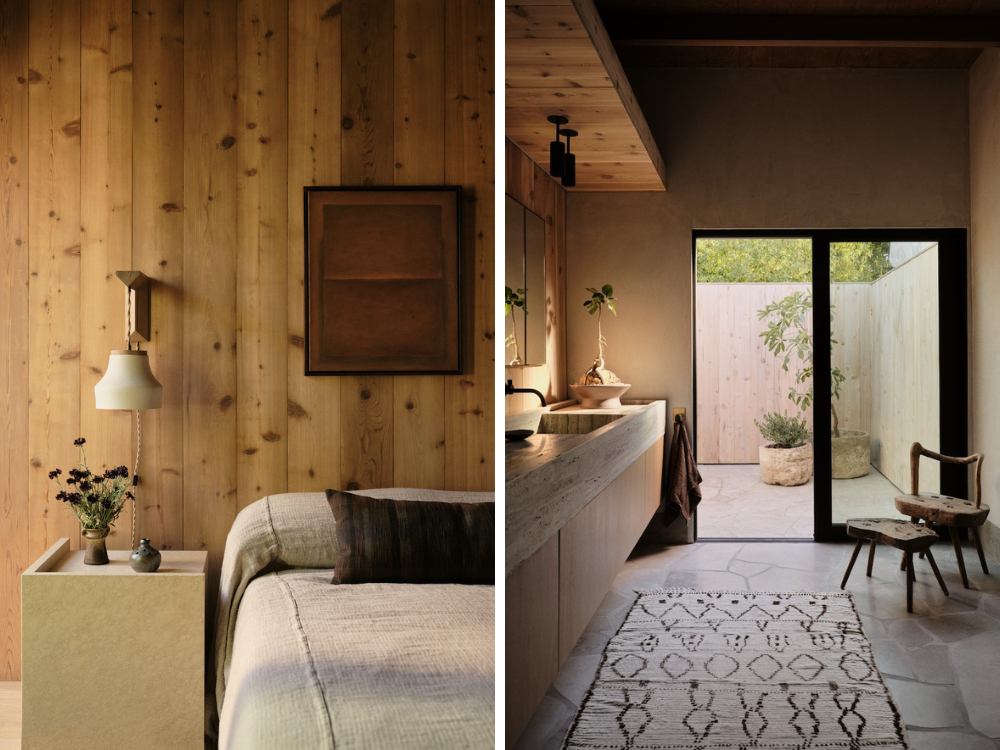

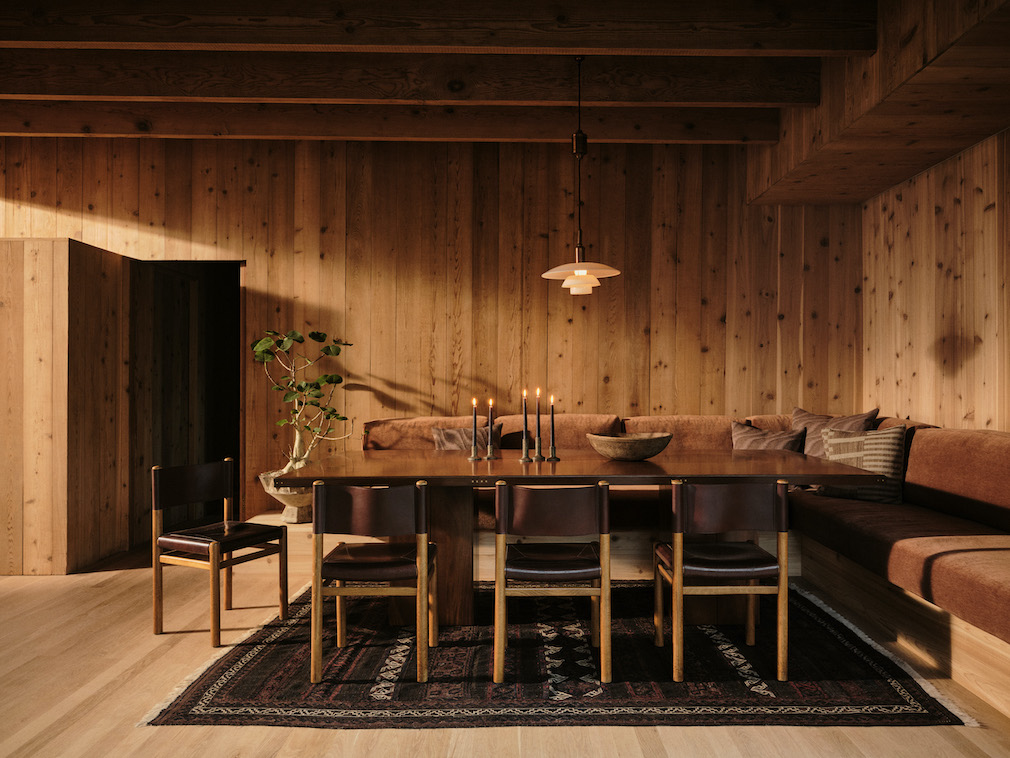
So, although it was a to-the-studs endeavor, “we didn’t want it to feel overly new. We tried to use as much of the original cedar as possible,” especially on interior walls. When they couldn’t – as with the pink-drenched exterior – the Alexanders replaced it “in a way that felt in keeping with the spirit of the neighborhood,” she describes. This applied inside as well. The oak floors are new, but “they’re done in a thinner plank style that felt more period friendly.”
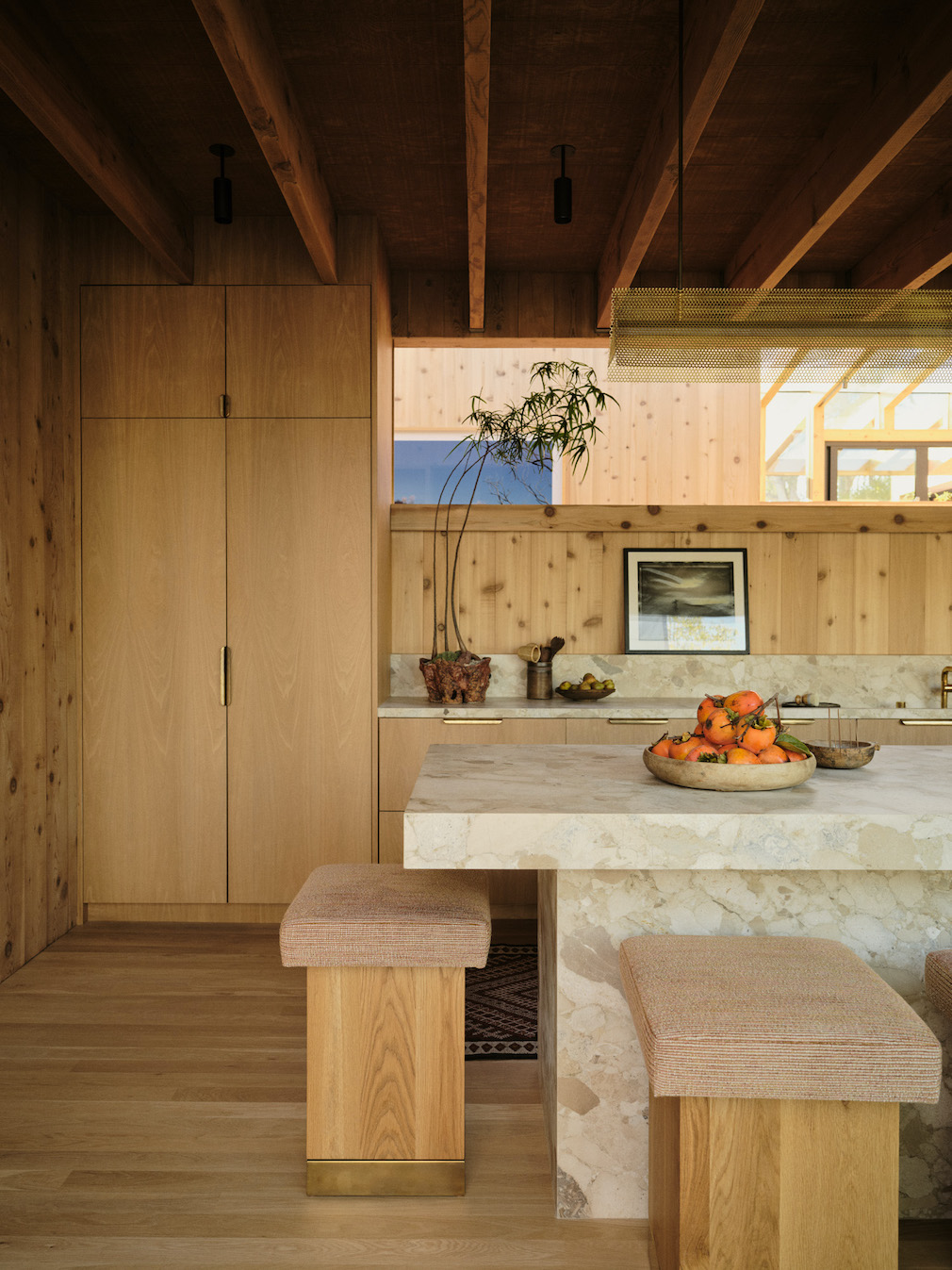

Alexander opened up the kitchen to make the interiors feel more expansive and modern. But, she notes, even though it’s now outfitted with Gaggenau appliances, new stone surfaces and fixtures, it doesn’t feel out of place. That is largely because the designer worked with craftsmen she regularly uses to make the residence “feel very much like a hand-built home.” Millwork, built-ins and furniture were made by “small artisanal cabinetmakers.”
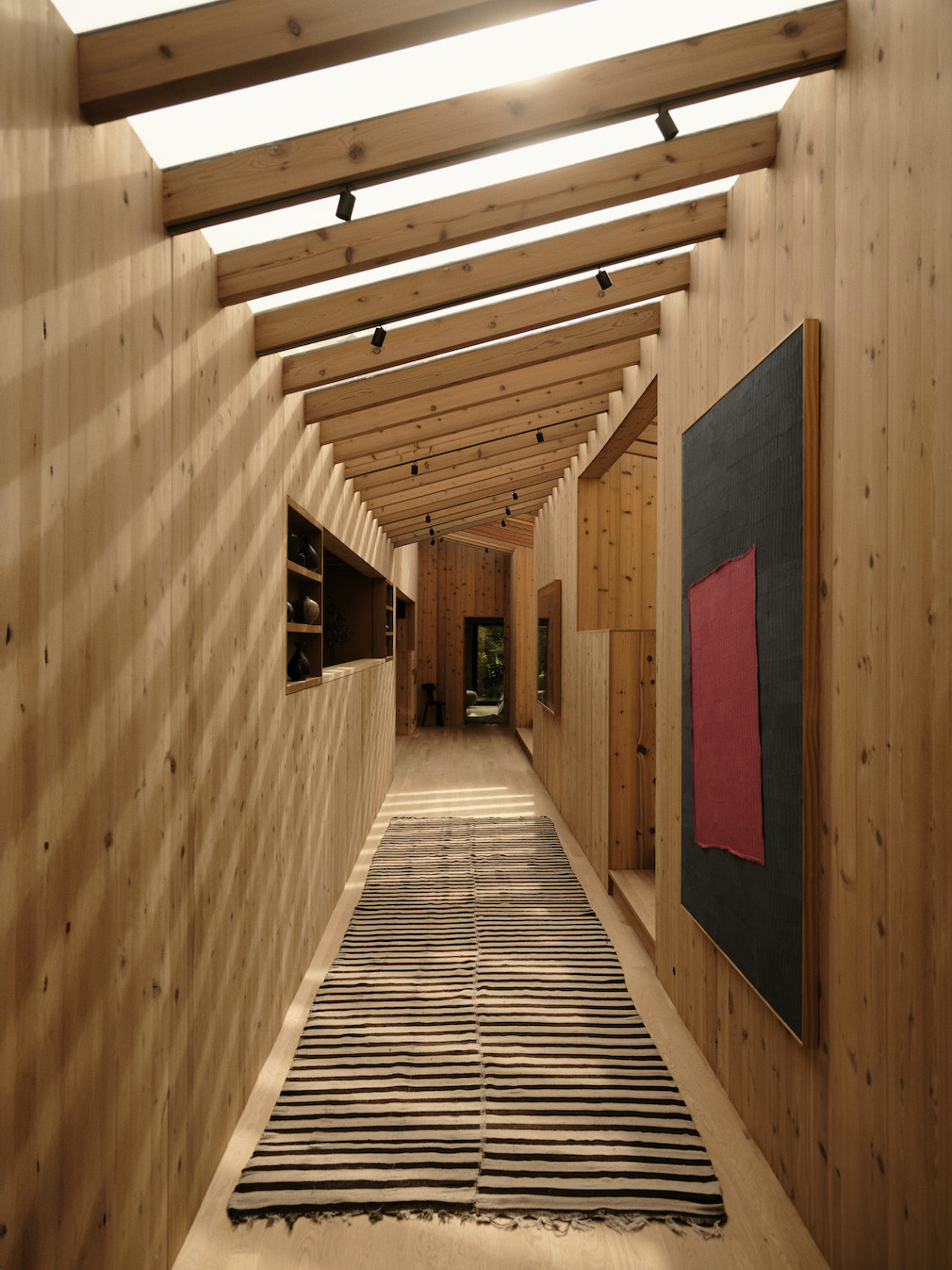
The original skylight was steel-framed glass. The new interpretation, however, is sans steel and supported instead by wooden beams. The redolence of wood is everywhere, something that also cleaves stylistically to the era of the 1970s, as well as its 1960s inspiration.
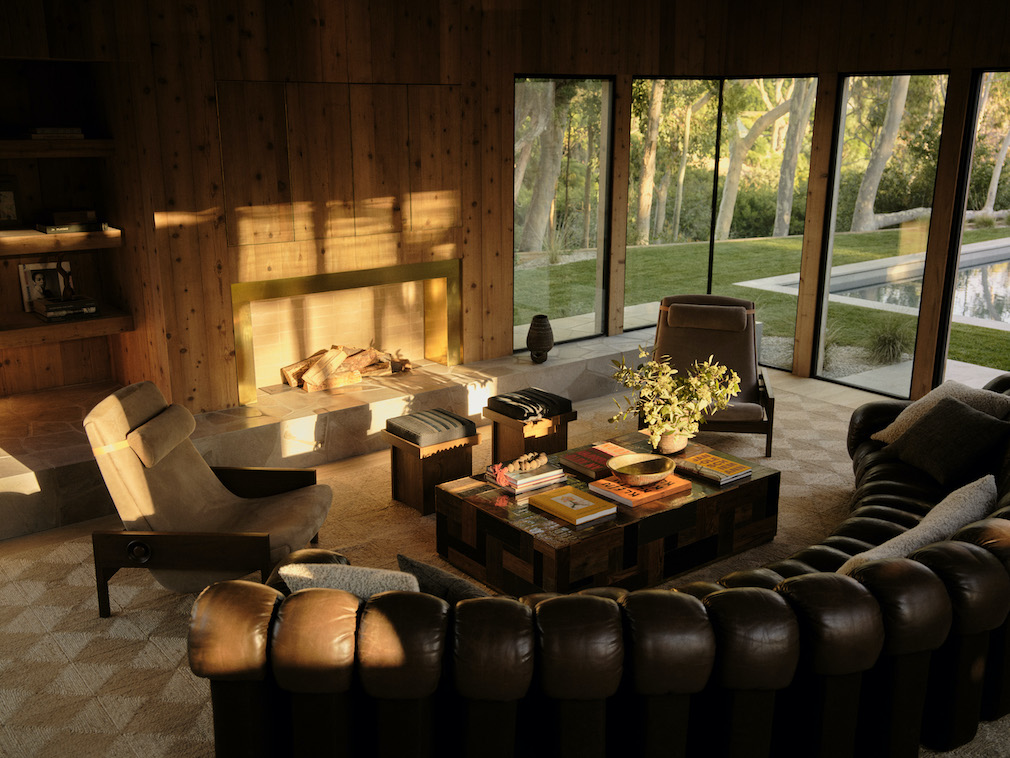
A mixture of vintage furniture and light fixtures with custom-designed pieces, and a palette Alexander considers earthier and “not overtly beachy,” also contribute to the midcentury vibe. The pool is a completely new feature. Though it is a contemporary addition and certainly not the kidney-shaped version that would most likely have been characteristic, she notes, “We did something that’s quiet and doesn’t call attention to itself.”
This is all very on trend for our moment in design, of course, where handcrafted wood environments, built-ins and earthiness are ubiquitous. Yet it eschews clichés every step of the way. Alexander concludes, “It does a good job of taking you back in time, but in a way that still feels modern with all your creature comforts.”
Photography by Rich Stapleton.
Styling by Lisa Rowe.
Like what you see? Get it first with a subscription to aspire design and home magazine.