
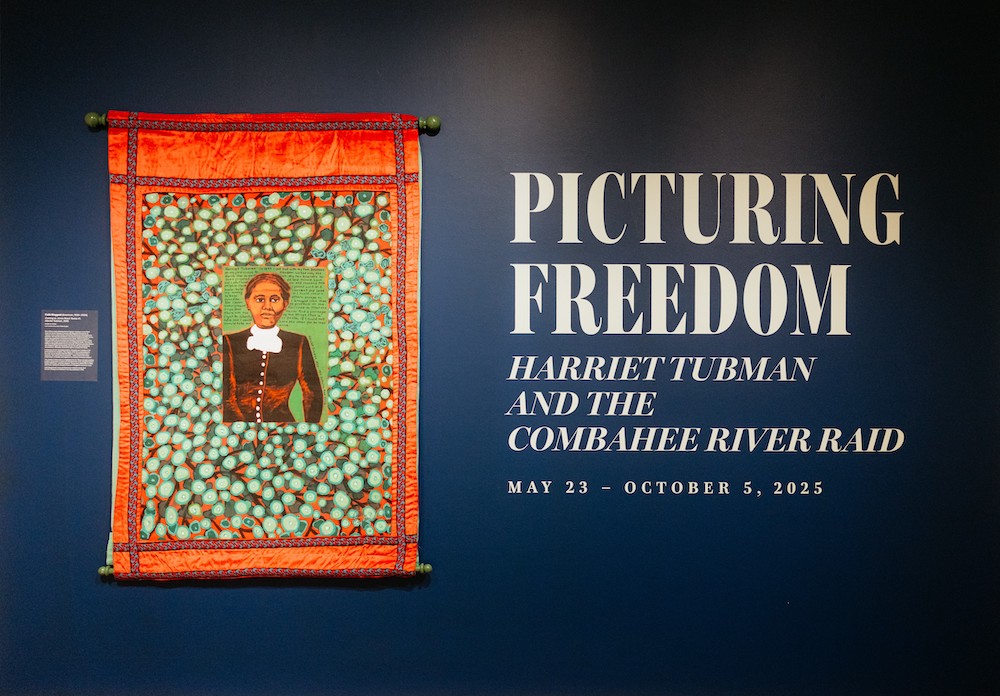
On view now through October 5, the Gibbes Museum of Art, a beacon for the arts in the American South since its establishment in 1858, presents Picturing Freedom: Harriet Tubman and the Combahee River Raid. The visionary multimedia exhibition is inspired by the Pulitzer Prize-winning book Combee: Harriet Tubman, the Combahee River Raid, and Black Freedom during the Civil War (Oxford University Press) by Dr. Edda L. Fields-Black. The monograph details a previously untold chapter in our country’s history, detailing the fateful moonlit night in June of 1863, when Tubman led the largest slave rebellion in U.S. history. Dr. Fields-Black is descended from one of the participants of the freedom raid.
The museum exhibition brings to life the heroic raid, when 756 enslaved people liberated themselves in six hours — more than ten times the number of people Tubman rescued during her ten years of work on the Underground Railroad. The raid was carried out by one of the earliest all-Black regiments of the Union army.
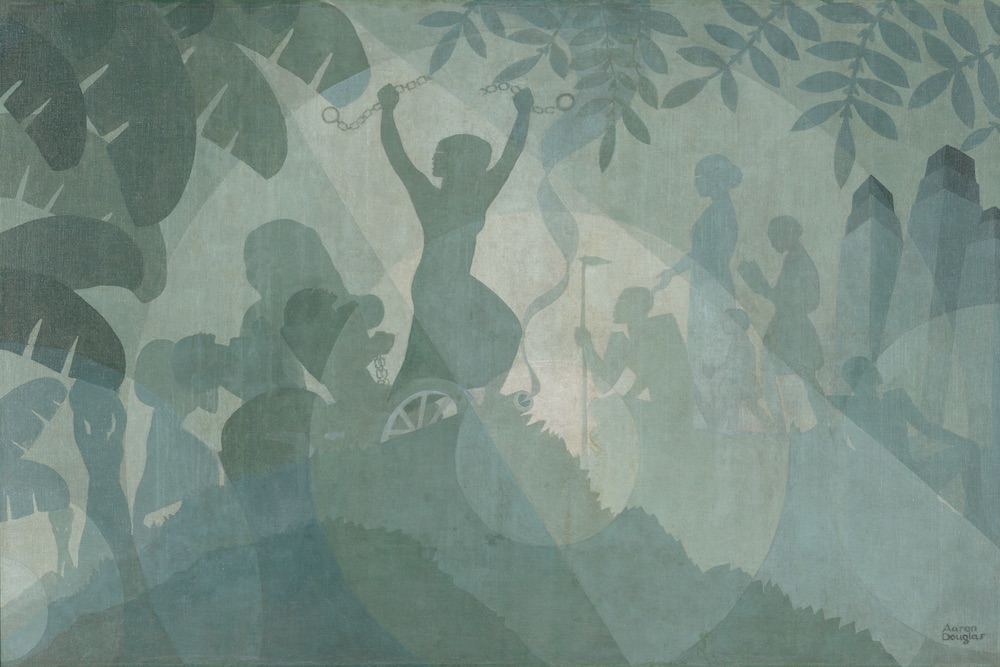
“Harriet Tubman”, 1931 by Aaron Douglas. © 2025 Heirs of Aaron Douglas / Licensed by VAGA at Artists Rights Society (ARS), NY)
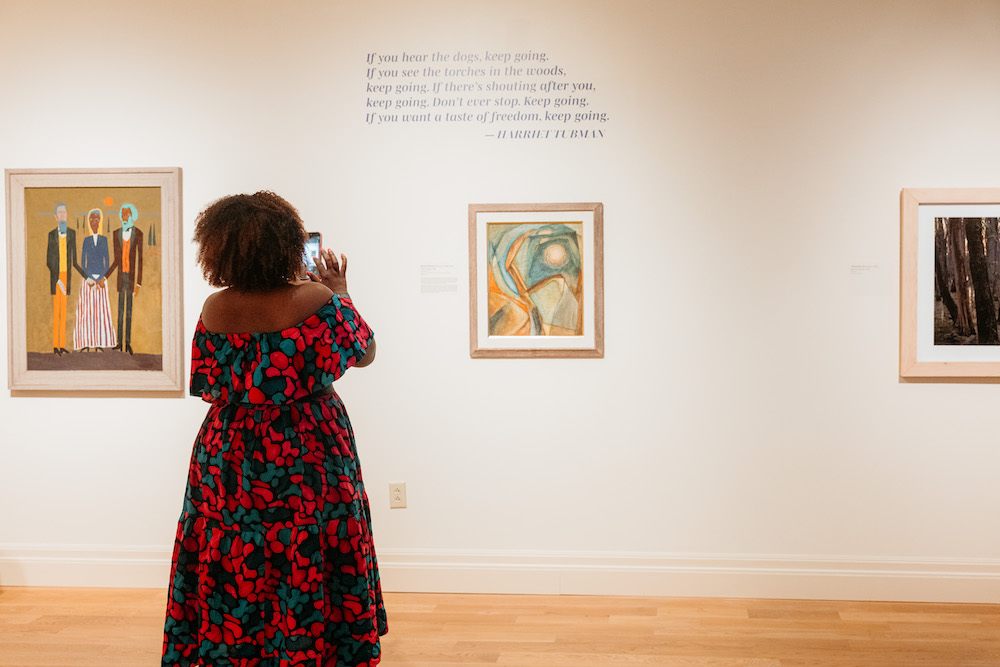
The Gibbes Museum has invited Dr. Vanessa Thaxton-Ward as the guest curator for the Picturing Freedom exhibition. The Director of Hampton University Museum, Thaxton-Ward hand-picked artworks from institutions and private collections across the United States. Never before has a grouping of works of this size and scope, honoring Harriet Tubman throughout more than 100 years of American artmaking, been presented this way. She has selected artworks by major artists (including Jacob Lawrence, Faith Ringgold and William H. Johnson), and by emerging contemporary artists (including Stephen Towns, Terry Plater, and Kevin Pullen). The paintings, sculptures and mixed media works are featured alongside photographs of the region by J Henry Fair, video and audio installations, historic images, and material objects.
“The photographs by J Henry Fair shine a light on how dangerous it was for the enslaved laborers to flee during the raid, through deadly tidal rice swamps with snakes and alligators,” says Angela Mack, the President and CEO of the Gibbes Museum of Art. “While Fair’s work usually focuses on the environment, this exhibition marks a new turn for his photography ‒ linking together his images of nature with the ordeals of enslaved people, and the untold history of Harriet Tubman’s military service. His striking images of this serpentine landscape immerse viewers in the perils enslaved people faced in this treacherous terrain.”
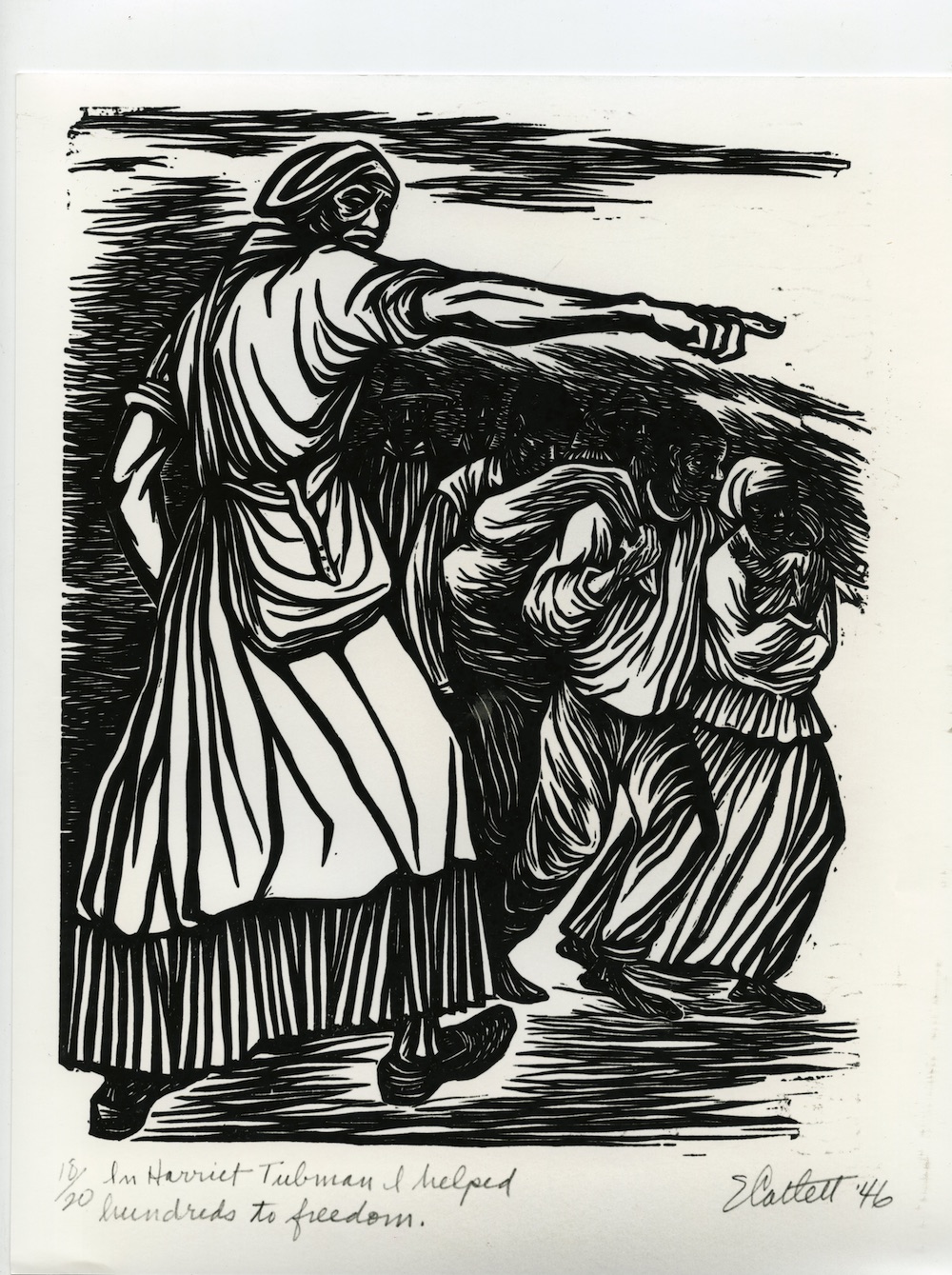
“In Harriet Tubman I Helped Hundreds to Freedom” 1946, Elizabeth Catlett. © 2025 Mora-Catlett Family / Licensed by VAGA at Artists Rights Society (ARS), NY.
“It was exciting to see how many artists through the years have created works that portray Harriet Tubman, in so many different mediums,” said Thaxton-Ward. As part of her curatorial process, she explored why artists continue to turn to images of Harriet Tubman and the Combahee River region to express ideas of freedom and legacy. “I want this exhibition to show that Tubman was a whole person – she was more than the conductor of the Underground Railroad. She was a wife, she was a mother, she was a daughter. Through this exhibition, we see how Tubman was also a human being who had feelings, who had a family,” adds Dr. Thaxton-Ward. “We also wanted to show how hard life was for enslaved laborers in the rice fields, especially the children. Many of these families were brought to the region because of their prior knowledge of the rice culture in West Africa.”
Thanks to the extensive research and book by Dr. Fields-Black, these enslaved laborers are finally given names and stories, to permanently inscribe them into the historical record.
Like what you see? Get it first with a subscription to aspire design and home magazine.