

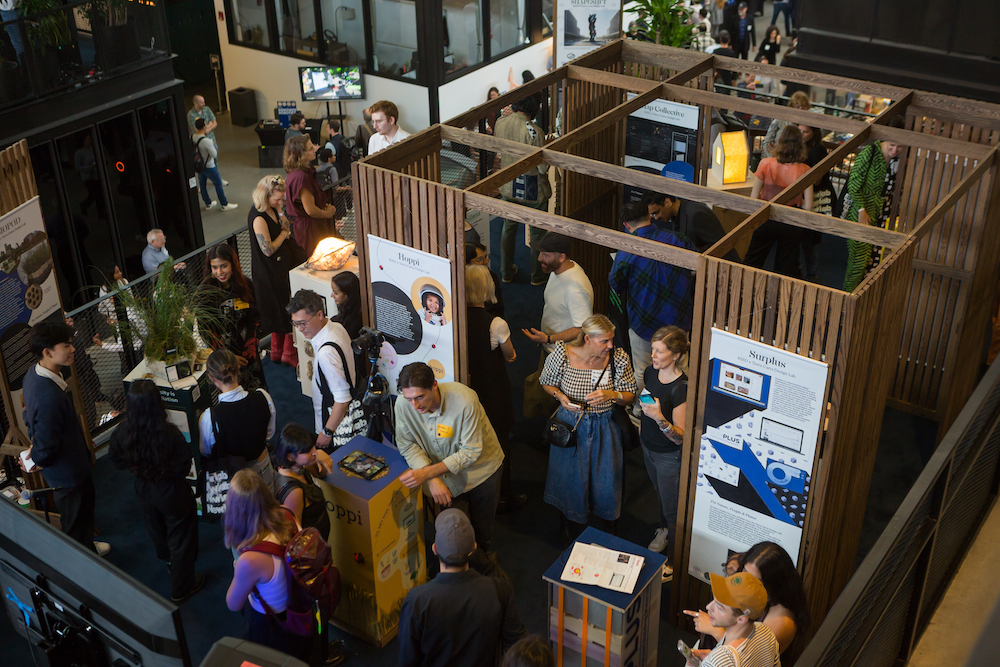

Last week, Rhode Island School of Design (RISD) celebrated two of the institution’s major sustainability initiatives – the Regeneration Studio with Hyundai Motor Group and participation in the Sustainable Market Initiative’s Terra Carta Design Lab – via events during Climate Week NYC 2024. The events amplified RISD’s unique voice in the climate conversation, leading the way from both an educational and an entrepreneurial standpoint and demonstrating art and design’s incredible potential to make positive change in the sustainable design space.
“RISD students, alumni, faculty and staff are uniquely equipped to answer the call for climate innovation, especially when collaborating with our outstanding industry partners,” said RISD Vice Provost of Strategic Partnerships Sarah Cunningham. “As artists and designers, we work with materials in unconventional ways, while exploring the systems through which materials move. Our sustainability partnerships with scientists, engineers and humanists provide rare insights into material innovation.”
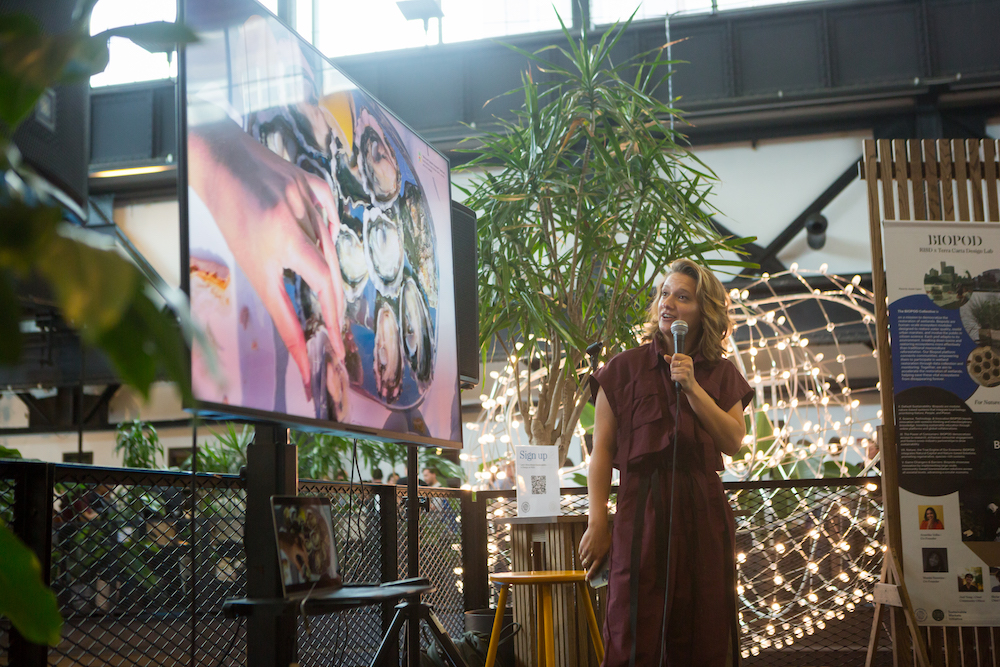
On September 25, RISD presented Haptic Futures: Sustainable Materials in Design Innovation at The Fifth Avenue Hotel. Cunningham led a conversation with Executive Vice President, Head of Hyundai and Genesis Global Design SangYup Lee, Slow Factory founder Celine Semaan and two RISD alums – designer and Terra Carta Design Lab project advisor Charlotte McCurdy and former founding director of the Cartier Innovation Lab Andrew Haarsager. The conversation underscored the importance of audacious material innovation in support of a more sustainable and just world. Panelists considered how to educate future designers to develop new materialities that support climate justice and launch new types of businesses that transform manufacturing itself.
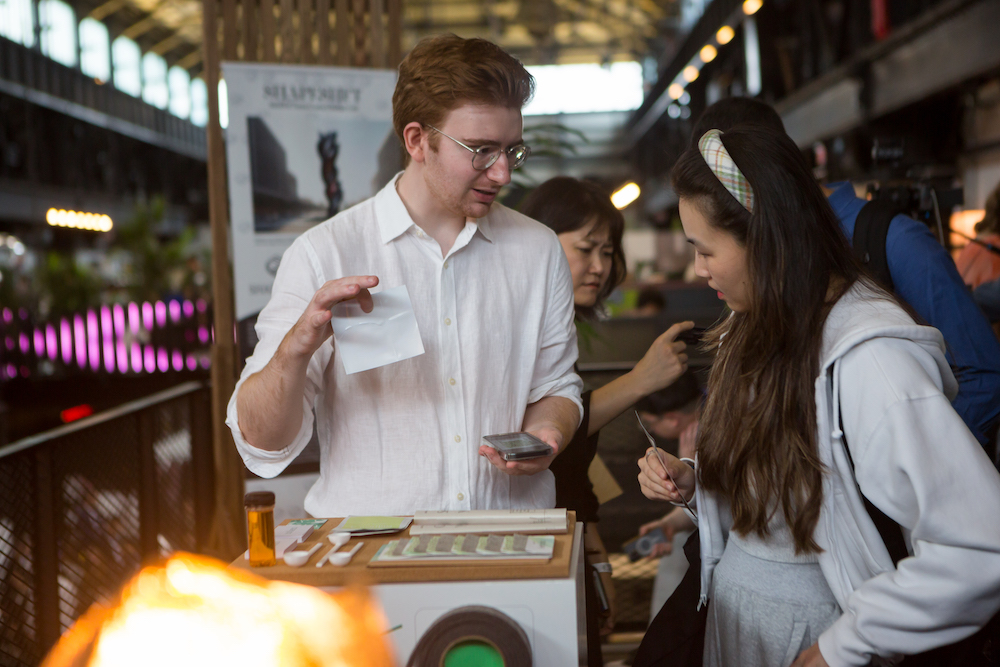
At the event, Cunningham and Lee noted last week’s launch of the Regeneration Studio, the latest in Hyundai Motor Group’s ongoing research collaboration with RISD that uses biomimicry to design utterly new approaches to future structure in the automotive industry. Lee observed, “Design plays an important role in the progress of humanity. Sustainability is not an option; we must ask ourselves ‘What can we do for the next generation?’ In our collaboration with RISD, we have designers, engineers and product planners study at the [Edna W. Lawrence] Nature Lab, examining how we can learn from every aspect of nature, and we are beginning to apply this deep learning to the manufacturing process.”
McCurdy added, “There is so much potential for art and design to help shape public imagination and public demand for change in the climate space. But everyone asks ‘What can we do?’ We should be asking ‘What could we do?’ Can implies a set menu, but could opens the possibilities for artists and designers to forage for entirely new ideas and alternatives.”
Photography by Matthew Watson.
Like what you see? Get it first with a subscription to aspire design and home magazine.