


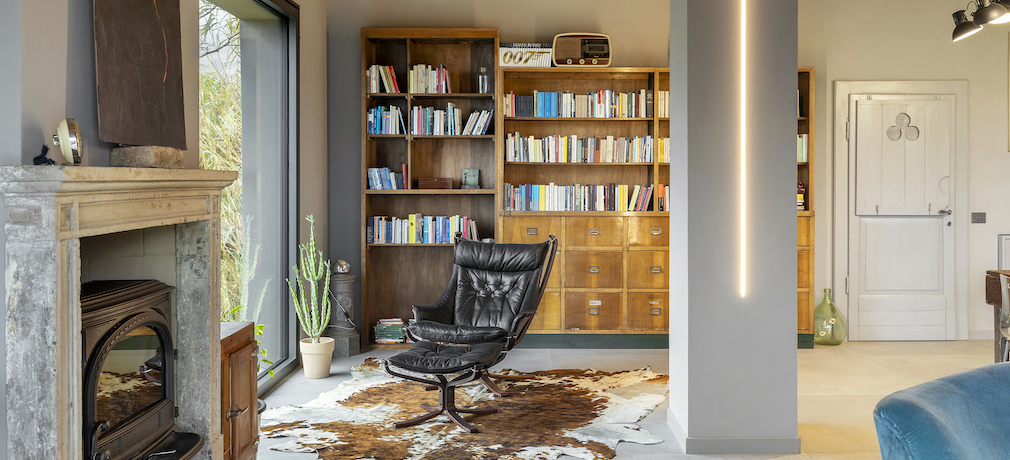
In the captivating hills of Oltrepò Pavese, between Pavia, Piacenza and Alessandria, there is an ancient farmhouse dating back to the early 1900s, immersed in an idyllic green setting that offers tranquility and harmony with nature. Looking to complete a respectful renovation of the property, the owners, a Milanese entrepreneurial couple, turned to architecture firm Lascia La Scia. The result is a warm and inviting home that embraces the charm of rediscovered objects and materials.


The owners’ passion for antique objects and furniture as well as old places that have a story to tell became the focus of the project, starting with the exterior. The renovation has enhanced the historic heritage of the farm, respecting the original materials that emerged during the work. The original stones, found under the layers of plaster in the exterior walls of the manor house, have been restored and displayed internally, while a thermal coat on the facade preserves the technical characteristics.
Outside it is possible to read the “ancient” structure thanks to the preservation of the brick cornice reminiscent of the cells of the Certosa di Pavia typical of that area. The slabs and roof have been reconstructed, allowing the under-roof to be habitable, with exposed wooden beams integrated with new reinforced concrete slabs, creating a harmonious mixture of antique and modern.
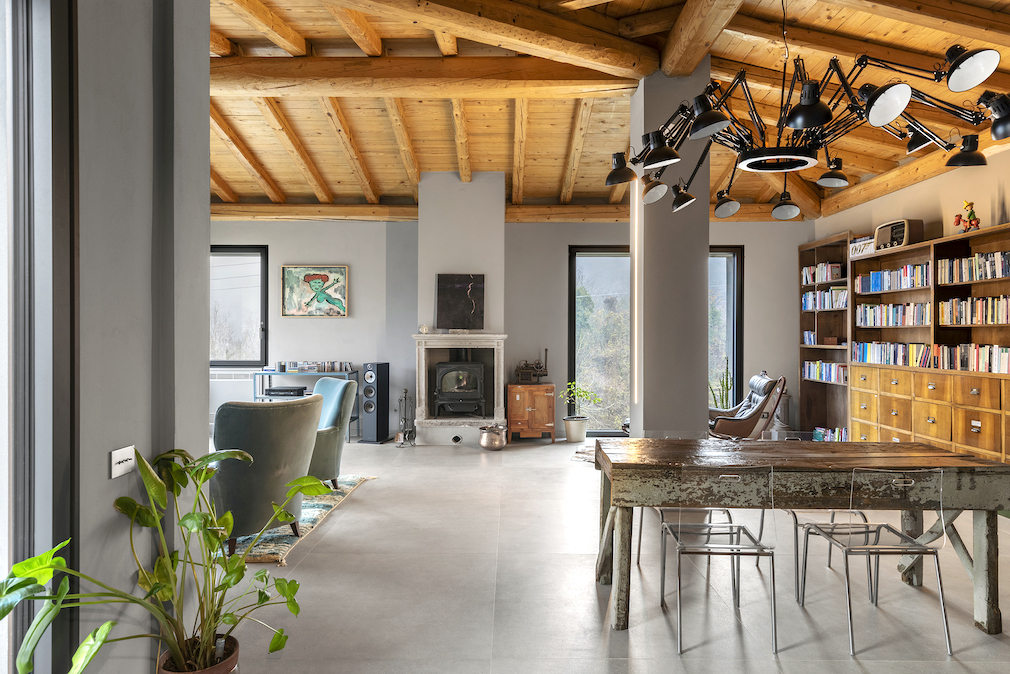

Adjacent to the farmhouse stood an old storage workshop full of forgotten tools, but with great potential. The panoramic view of the hills inspired Lascia La Scia to incorporate it into the living space, adding two large windows, like paintings that change colors with the change of time and seasons, and transforming the workspace into a bright living space that opens onto the surrounding beauty.
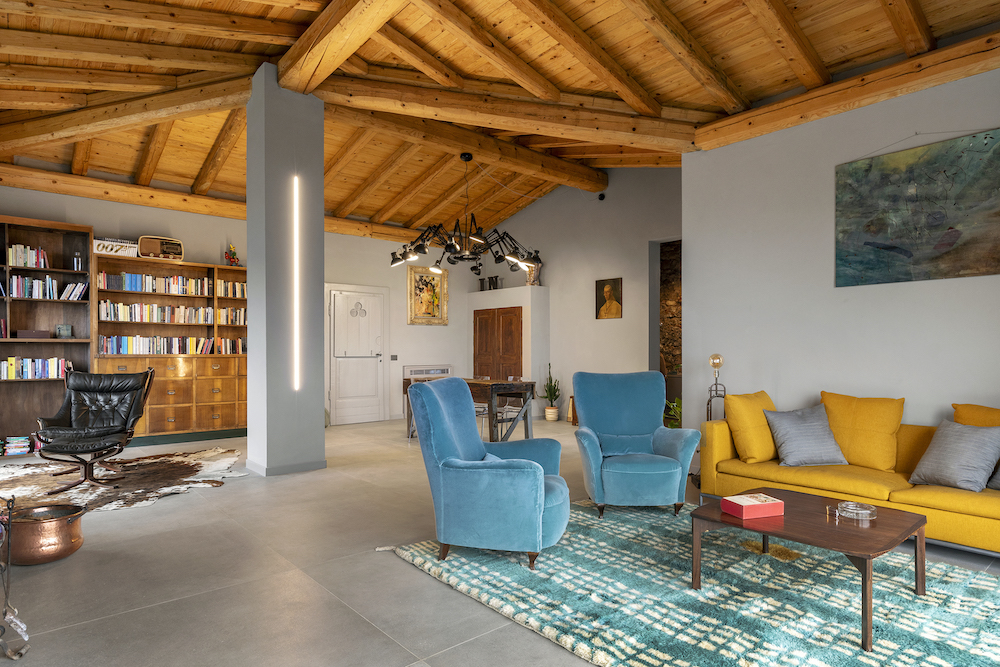

With this variety of authentic materials, the design choice for the interiors was to create a space with neutral tones with occasional pops of color, thus highlighting the natural and authentic warm materials of the place.
At the center of the living space, a pre-existing pillar supports the rebuilt roof, keeping the beams exposed. The living room is now an open space characterized by different areas, one identified by the pre-existing fireplace, a reading area that overlooks the beautiful view towards the hills and the most convivial area of the living room towards the outdoor patio creating a continuity between inside and outside. The open-space effect is also backed by the choice of laying a large format stoneware floor to give continuity.
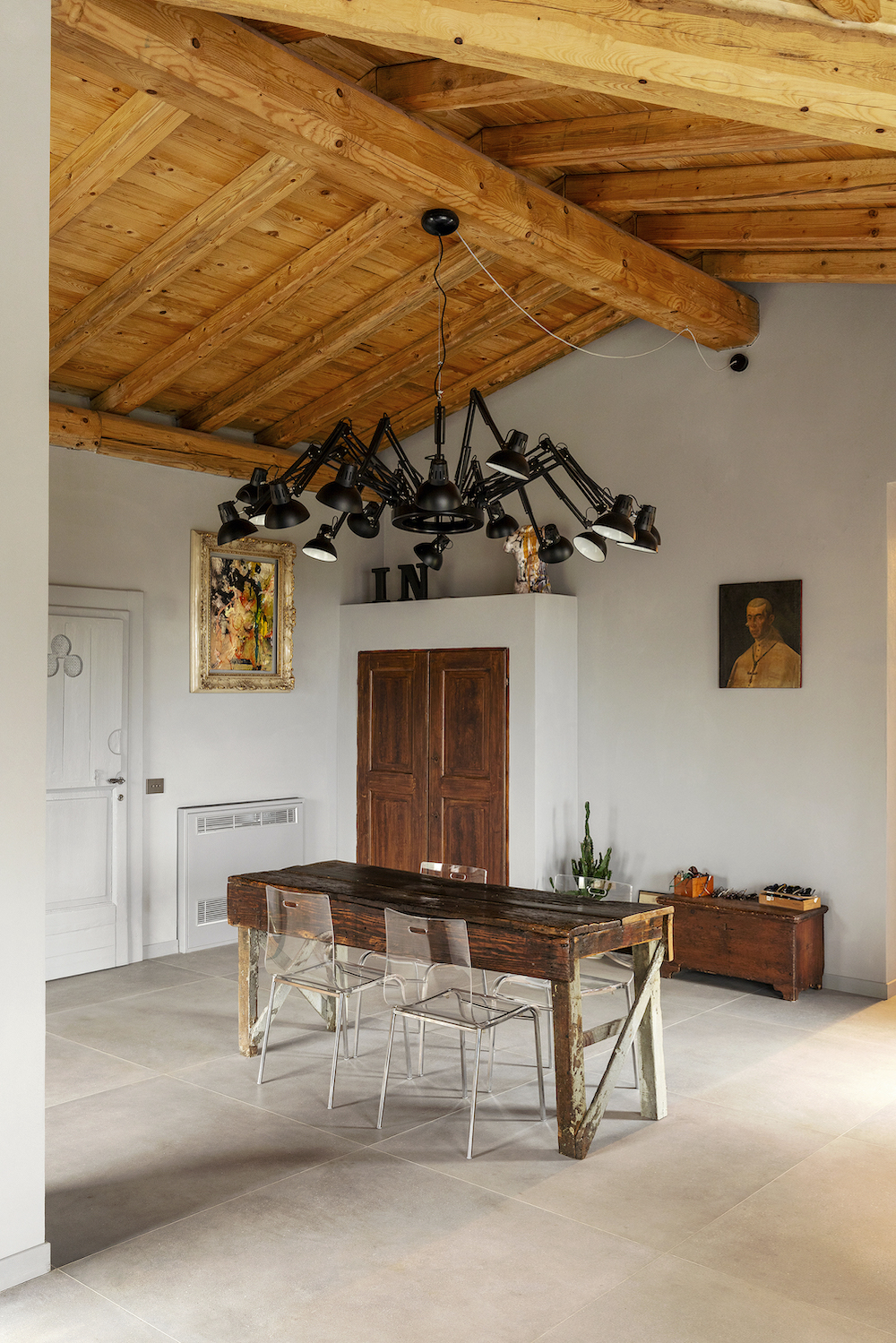

The furnishings, selected with passion by the owners, include pieces from their previous travels and homes. Pieces were recovered and restored, each with a unique history, from the old shelf of a pharmacy turned into a library to the old door of a cloistered convent that now divides the living room from the gym. The lighting design is minimalist, integrating retro elements such as Vimar-Vintage plates. The lamps, often recovered, blend harmoniously with the vintage design of the Dear Ingo chandelier by Ron Gilad for Moooi in the living room.
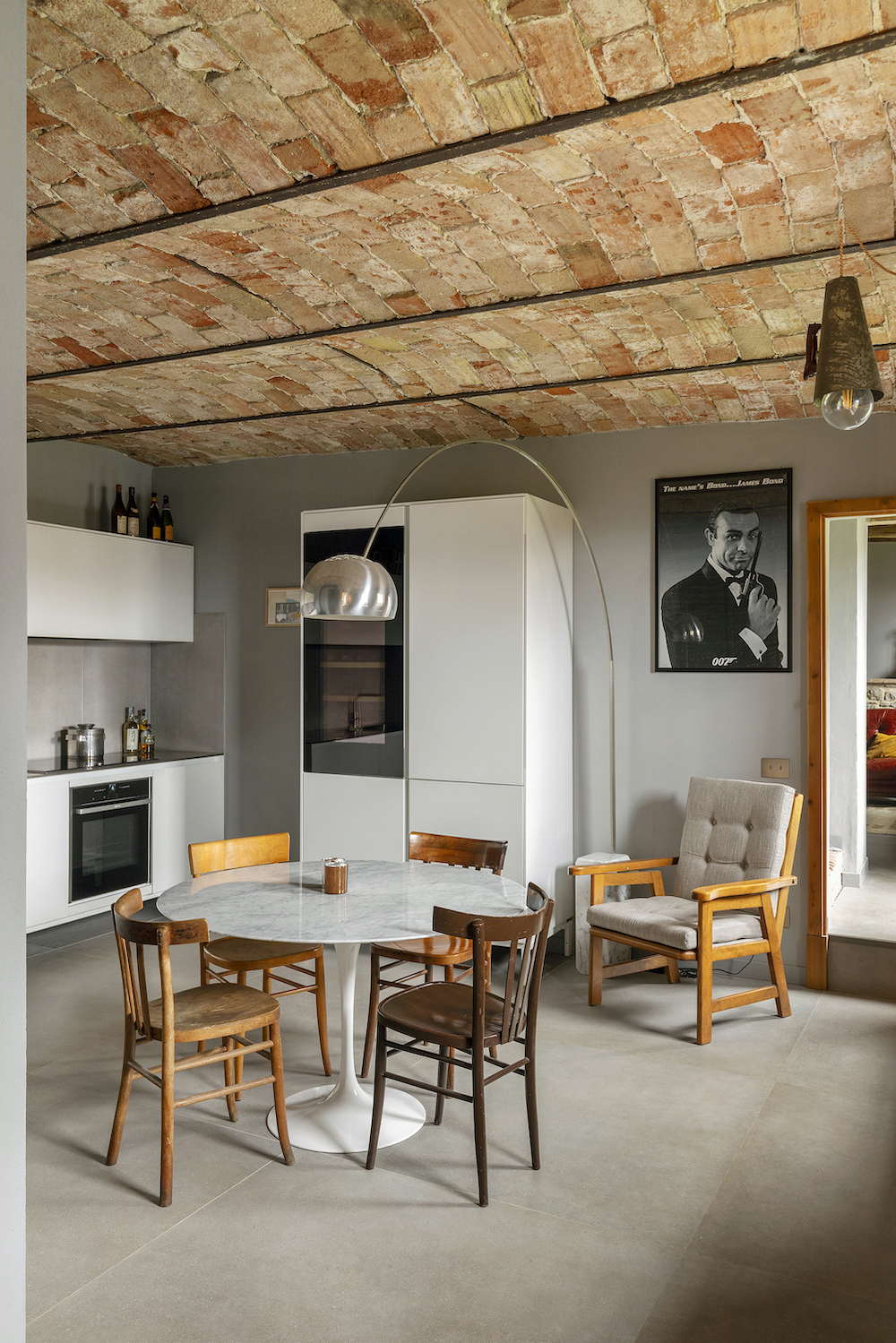
The kitchen is characterized by vaulted ceilings. The choice was to furnish the space with minimal elements and cold materials to counteract the heat and materiality of the ceiling and the recovered wooden door. Inside the kitchen, you will find iconic pieces of design: the Tulip table from the Pedestal collection by Knoll by Eero Saarinen with its white structure and top in matt Carrara marble. It is balanced by the lamp Arco by Achille Castiglioni for Flos with metal structure and pedestal in Carrara marble.
The wooden chairs, recovered from an old tavern, and an old armchair are in contrast to the clean and essential minimal design of the white kitchen with steel inserts and exposed (recovered) feet.
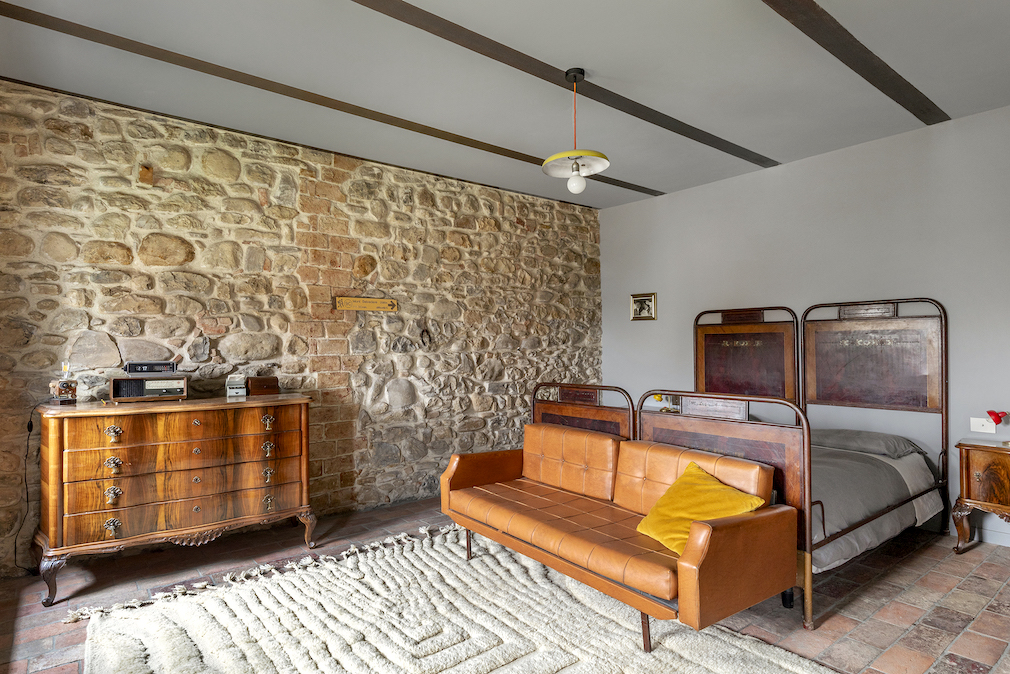
The primary bedroom is totally furnished with pieces recovered and restored from the property. The bed with austere iron design, the bedside tables and the wooden dresser are typical of the peasant culture of the past. Sitting atop terracotta flooring and among exposed-stone walls, the space, much like the rest of the home, is a beautiful tribute to a different era.
Photography by Marta d’Avenia.
Like what you see? Get it first with a subscription to aspire design and home magazine.