
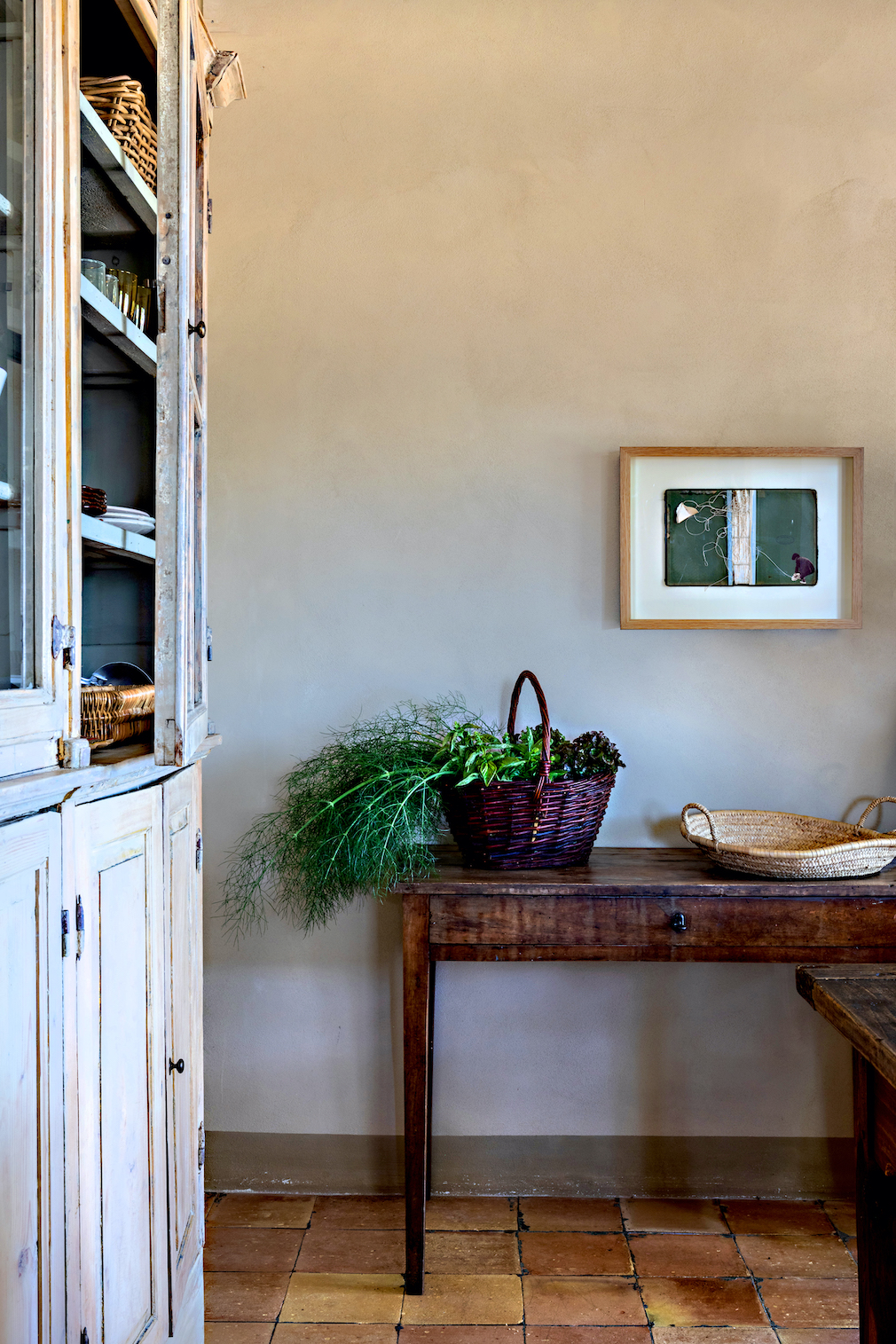
In our collective imagination of the Italian bucolic dream, nothing beats the cypress-lined, rolling hills of Tuscany. The picturesque landscape with olive groves and charming medieval hamlets moving at a leisurely pace is the quintessential dolce vita. It was only natural that Barbara and Mario Catoni, a Florentine couple who own an eponymous advertising and design studio, would find their perfect holiday retreat in Maremma, a territory just south of Chianti and still largely unexplored by mass tourism.
“We decided to move inland in favor of more restful downtime surrounded by authentic landscapes,” explains Mario. “We love the sea, but sadly, in the 1960s economic boom, much of the Tuscan coastline, like many other places in Italy, was badly overbuilt, making it hard to find isolated, charming homes with beautiful panoramas. Here the scenery is breathtaking and the architecture intact; everything is just sublime.”
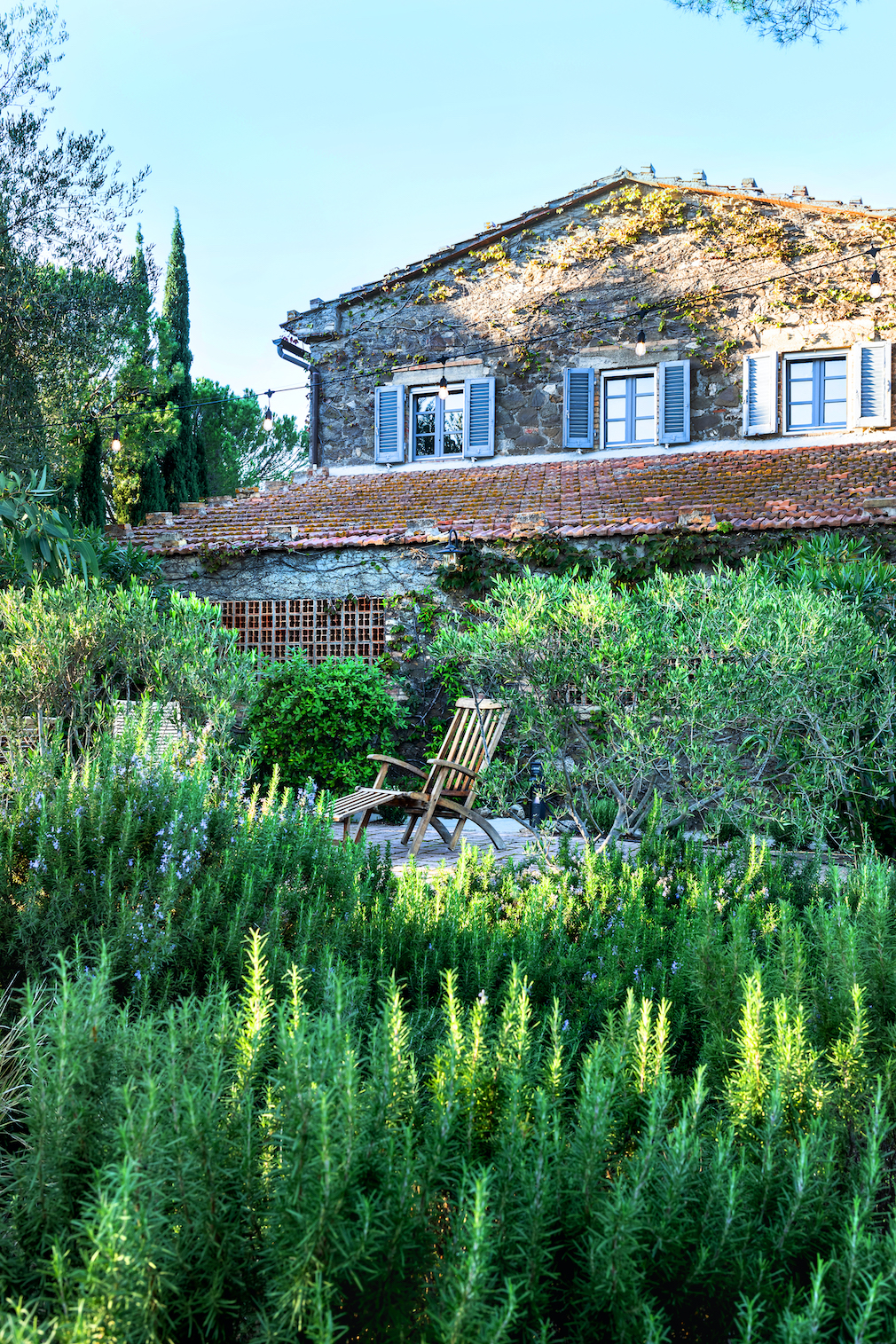
“This property was an old granary and guardian’s residence of a farming estate,” describes Barbara of the 4,300-square-foot, rectangular construction spread over two floors. The cluster of buildings is situated a short distance from Castel Porrona, a castle and hamlet with fortified walls from the 1200s that once belonged to the powerful, noble Tolomei family from Siena. “We saw many restructured properties, but we wanted something raw to leave our own imprint. The German family who previously owned the property had only minimally touched the spaces.”
Mario, the creative head of the design duo, took on the restructuring. Loyalty to the local context was paramount, so they started by exploring the hamlet in search of inspiration. A recurring color for windows was a bluish gray that they liked and used to tint their own window frames, shutters and wooden gate.

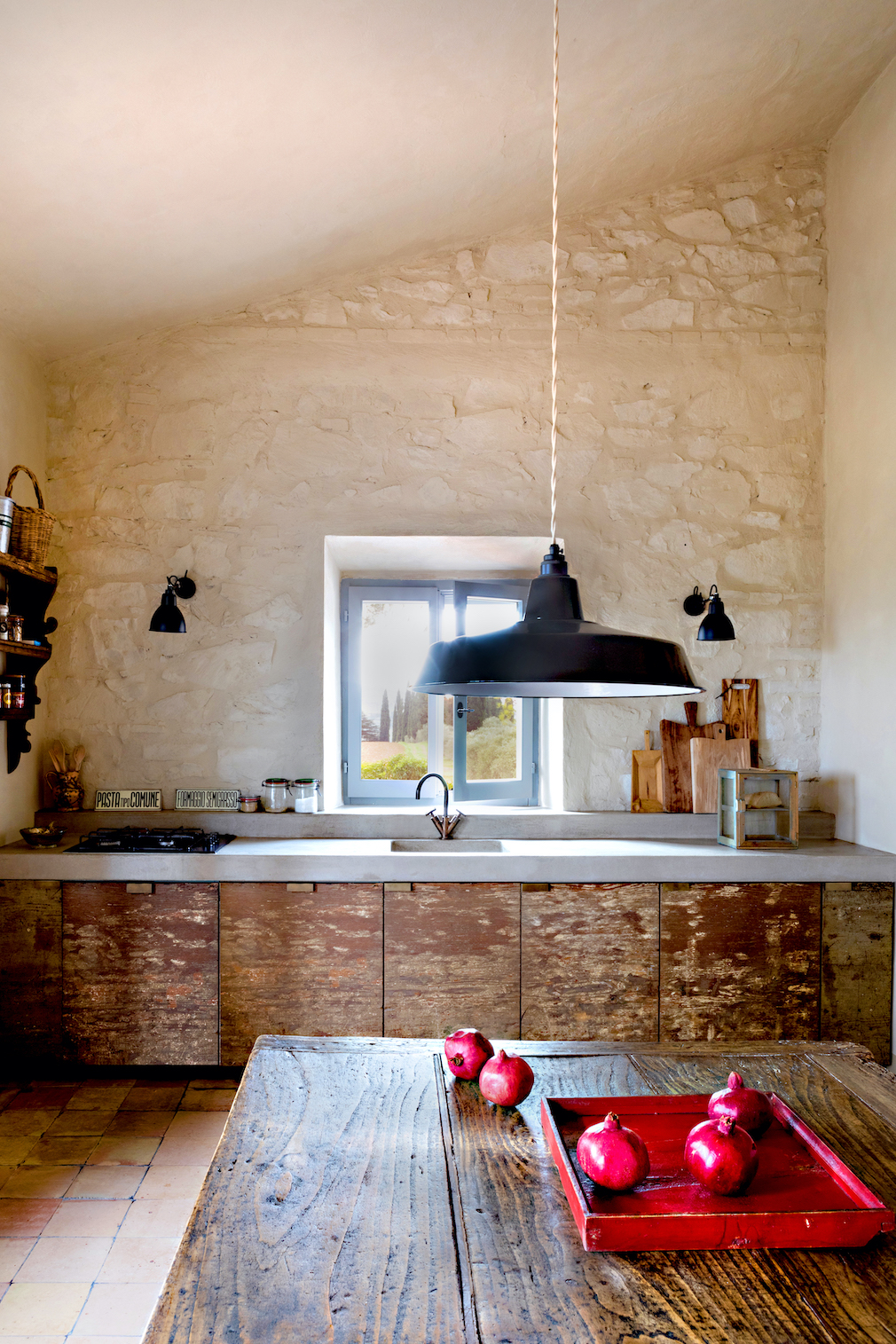
The old granary was built on two levels. Above, farmers processed the grain, which was then moved to the lower part by pushing it through some holes in the floor, then stored where the living room is today. The kitchen and the two bedrooms, instead, were part of the guardian’s house and still conserve the original square terracotta flooring. To keep the continuity, yet mark a distinction, Mario paired rectangular terracotta tiles in the old granary spaces.
A more recent local material found in the hamlet is cement mortar, which they reused in various areas, including the adjacent kitchen and bathroom countertops that form one continuous line separated by a wall. “We didn’t want these spaces to feel excessively modern,” states Mario. “The bottom cabinets are made with repurposed wood from a large old door we sourced from a junk dealer friend. The resulting look is polished but not too distant from the traditional farming background.”
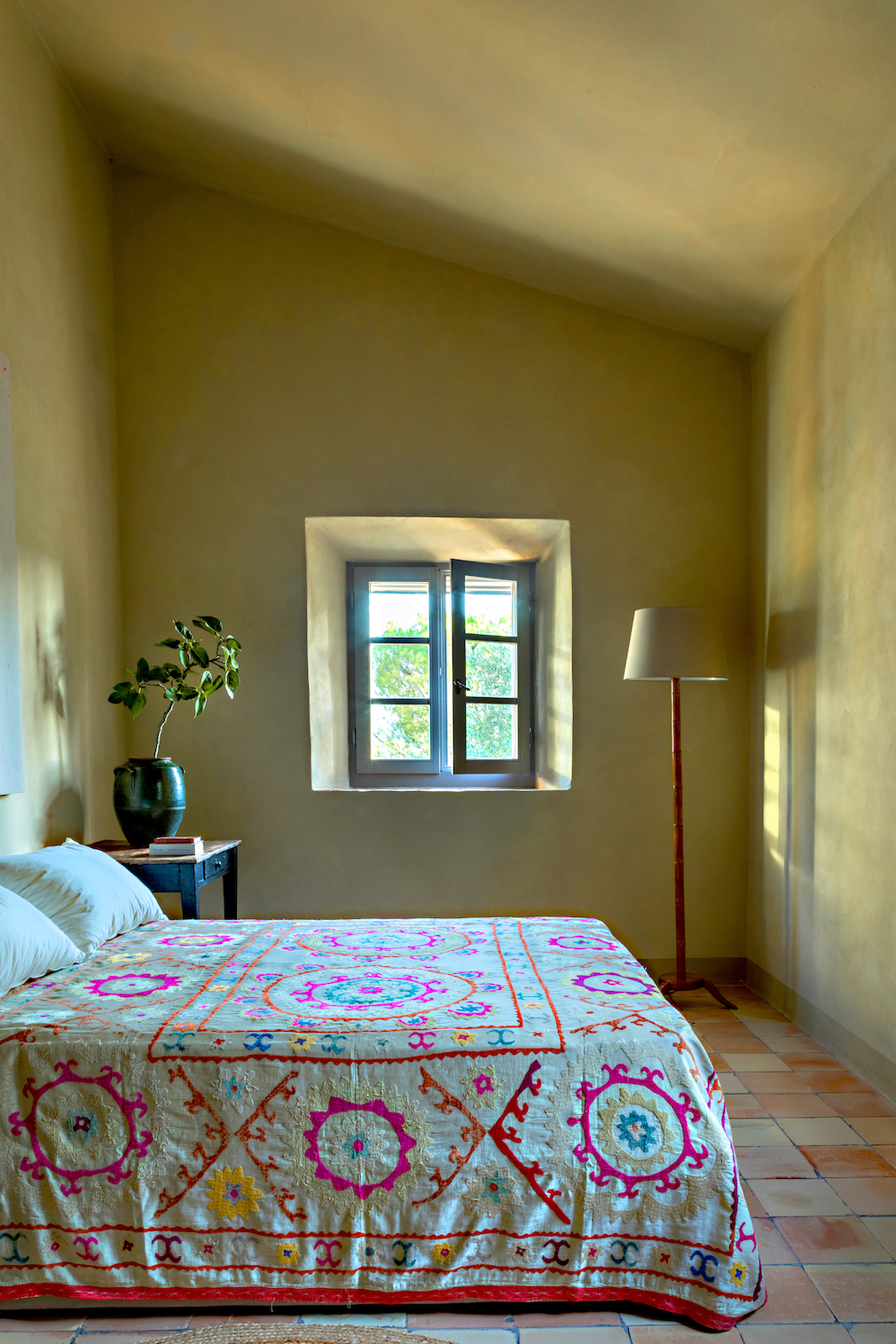
“Design is such an important part of our life and work, as are memories of our travels.” The result is a clever mixture of iconic design pieces that range from Castiglioni lamps to white Le Corbusier, soft-cushioned armchairs, old farmhouse furniture sourced from their second-hand dealer friend and vintage finds from auctions and travels. “It’s important that pieces of furniture have a balanced dialogue . . . but then sometimes you need to throw off that balance in order to achieve an equilibrium!”
On one end of the building, the old shed that used to house farming machines and tools was upgraded with gorgeous glass and iron doors and cement mortar flooring, creating a handy, multifunctional space that the owners now use according to their needs, from cleaning tools after olive-picking in the fall to restoring furniture requiring maintenance. “We love the seasonality of country living, where spaces adapt to the necessities at each specific time,” shares Barbara, who fondly remembers her farmer grandparents, their lives marked by work in the fields and variations in temperature and light.
For Barbara and Mario, the large field in front of their home is a constant reminder of that change, going from a bright red of blooming poppies to yellow when the grain is ready to be harvested. As a hobby, they planted a small vegetable garden to grow lettuce, tomatoes and onions, which aren’t even enough to feed themselves. They buy the rest from local farmers and enjoy reviving the culinary traditions of the territory by making specialties such as spinach and ricotta tortelli. Dining out also offers great variety, with old-school trattorias where nonnas cook up a storm.
No doubt this is their slice of paradise, where the luxury of space, tranquillity and natural beauty abounds. “But there is one problem,” they admit. “The internet connection is terrible! We’d love to spend more time here, working remotely. Hopefully we can fix this soon.” Though maybe they shouldn’t rush it; this shortcoming sounds more like a blessing in disguise.
Photography by Monica Spezia.
Like what you see? Get it first with a subscription to aspire design and home magazine.