

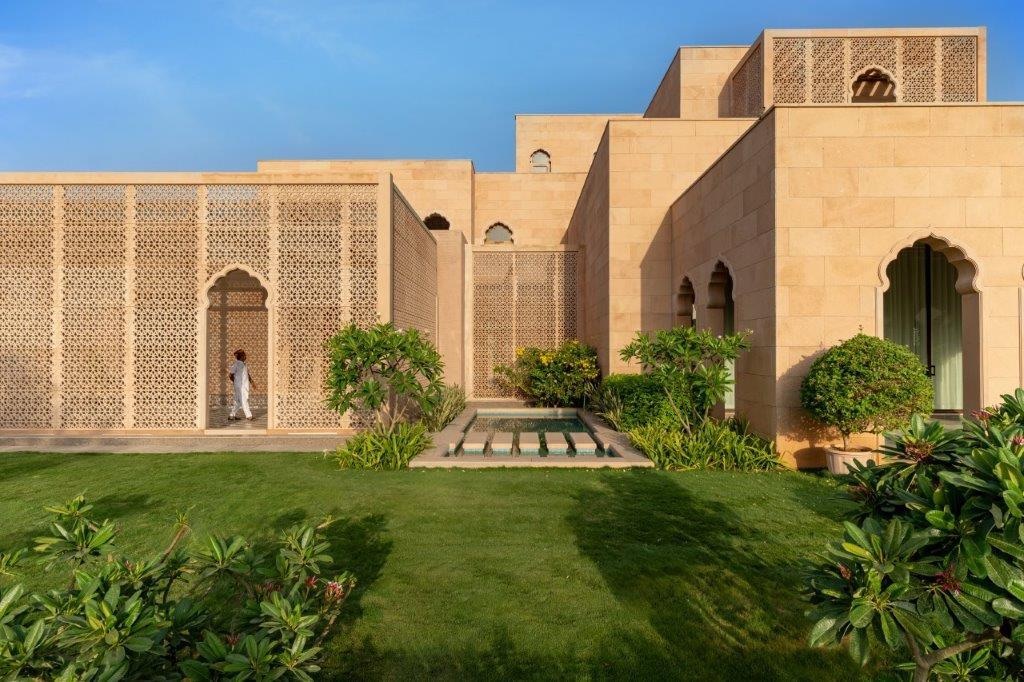

Situated in the arid desert region of Nokha in Rajasthan, India, the Narsighar house designed by Sanjay Puri Architects fully embodies the traditional regional architecture prevalent for centuries in Rajasthan. Centered around a necessary strategy that promotes airflow, thick stone walls form expansive courtyards for passive cooling, while stone ‘jali’ screens mitigate heat gain.
Built to accommodate four generations, the nine-bedroom residence features a number of sweeping living spaces, all of which open onto sheltered outdoor spaces that encourage connection. In fact, over 40% of the home’s area is in the form of open courtyards, circulation spaces, and sheltered outdoor patios. Each volume is articulated individually, with the home being perceived as a composition of varying volumes.
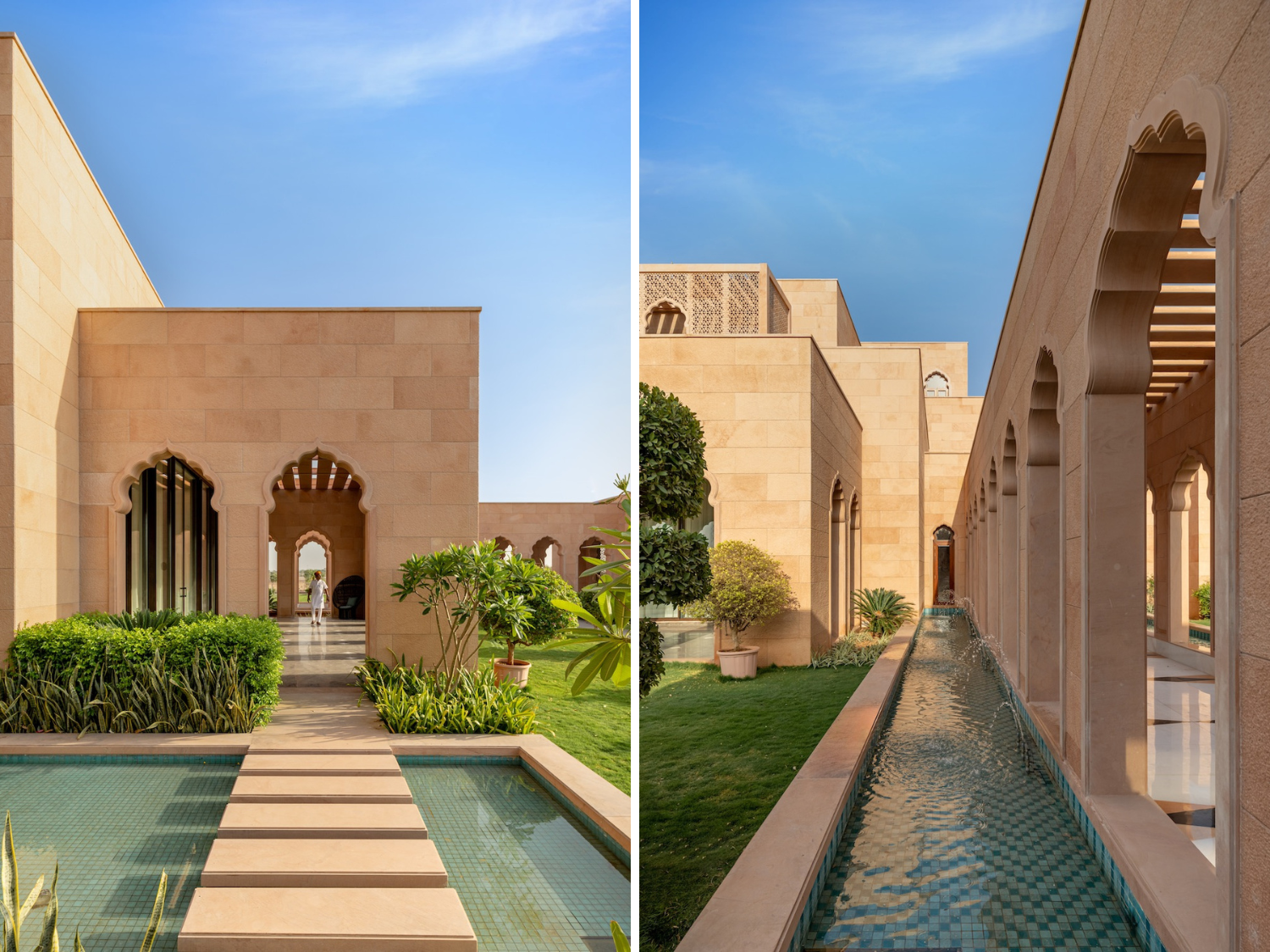

In addition to the traditional planning principles, elements of traditional Rajasthan architecture, including multifoil arched windows, patterned stone screens, stone pergolas, inlay work, and carving work, accentuate the spaces. In India, Rajasthan is home to many craftsmen with specialties in stone carving, marble inlay, carpentry work, mirror work inlay, lime plastering, and more. The entire house was executed and worked upon by these local craftsmen, reviving many traditional techniques.
The marble, stone, wood, lime plaster, and furniture were all procured from Rajasthan.
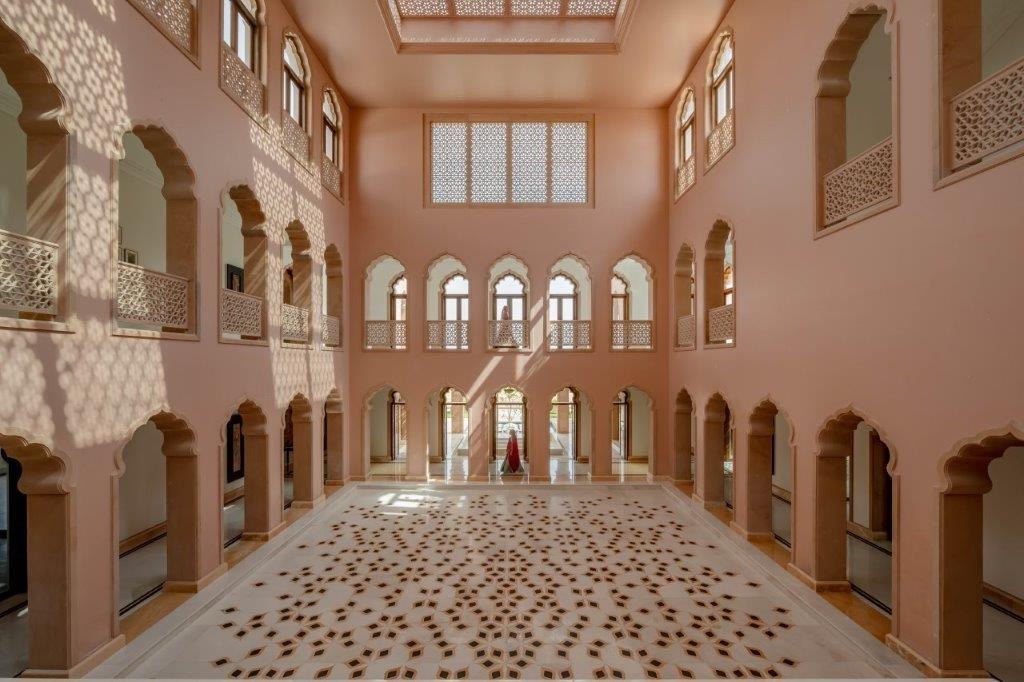
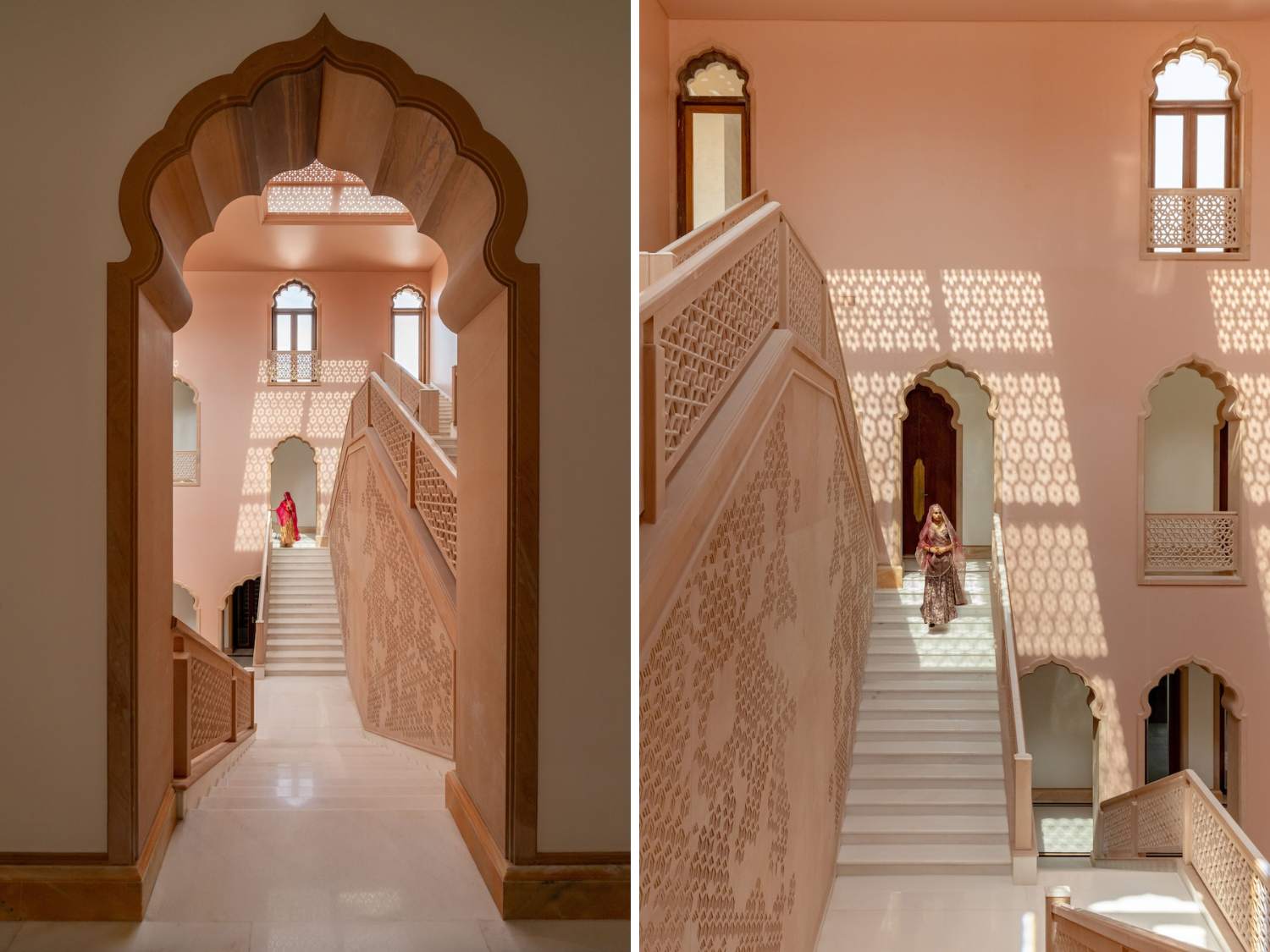
An entry car porch opens into a sunlit courtyard that leads to a sheltered stone arcade, flanked by water troughs and gardens for passive cooling before one enters the house. The skylit entrance lobby within the house, flanked by a living room and an open seating area, leads one into a large central courtyard.
The main courtyard punctuating the house is naturally ventilated through clear two-story windows with the circulation skirting its perimeter. Sectionally, there is a flow of different volumes within.
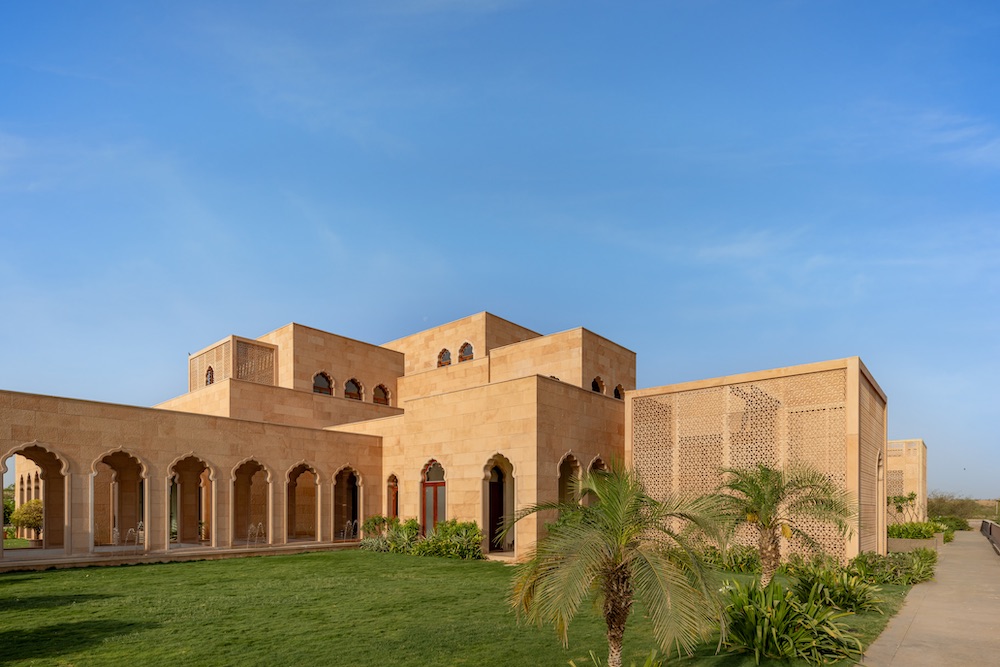

Designed contextual to the climate, location, and heritage of the region, Narsighar revives Indian traditional planning principles and revives traditional crafts, creating an energy-efficient home built to last for centuries, and for future generations.
For more insight into Indian architecture and design, be sure to follow our Designer Travels series here, as Laurie Blumenfeld recaps her recent excursion through India.
Photography by Vinay Panjwani.
Like what you see? Get it first with a subscription to aspire design and home magazine.