


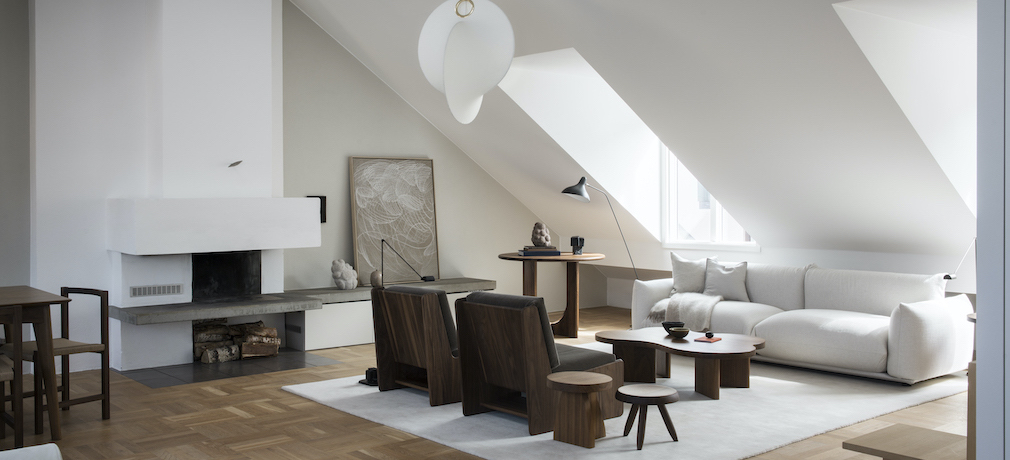
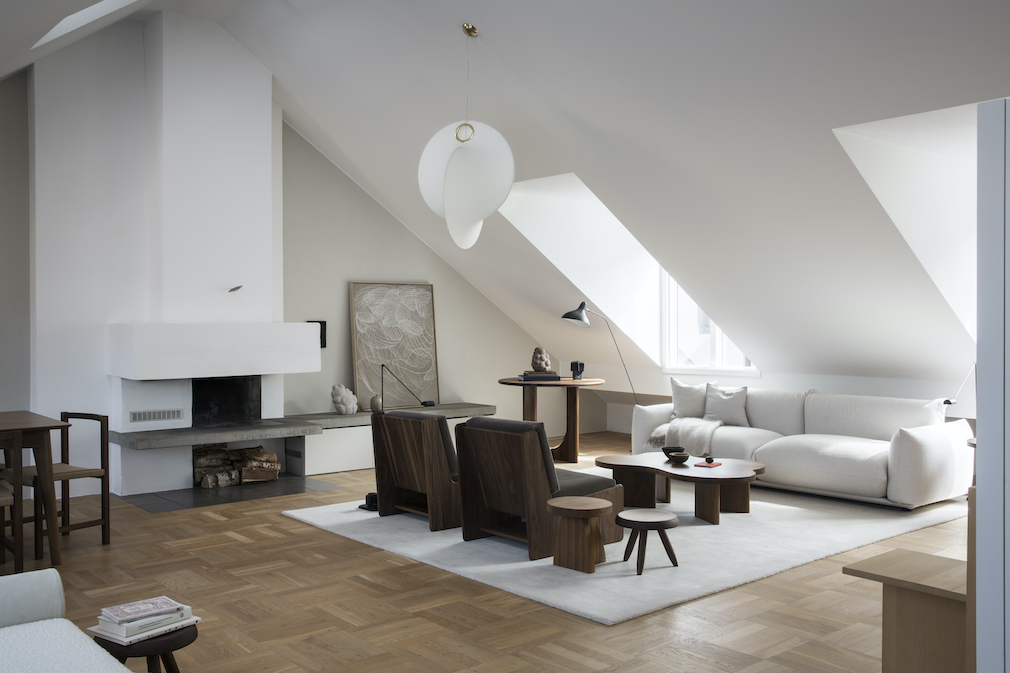

Rooms read in many ways. Some seem populated, fleshed out with things. Others appear more inscribed, cast with the clarity of typeface but infused with the grace of script – testaments to a rationale, yet bearing the touch of a hand. Such is the home of furniture designer Sara Ullvetter, a penthouse in a 19th-century building in the center of Stockholm.
“I try to create a sense of balance in the imperfect,” explains Ullvetter. “There are no strong colors or patterns anywhere, no decoration other than the material’s own character as it appears in the light from the windows. Hidden functions and storage solutions allow beautiful original details, such as the rough-plastered walls and the new checkered oak floor, to stand out all the more clearly. I’ve tried to create a neutral palette where the light can play on the surfaces and the furniture and objects can harmonize with each other without taking too much focus.”
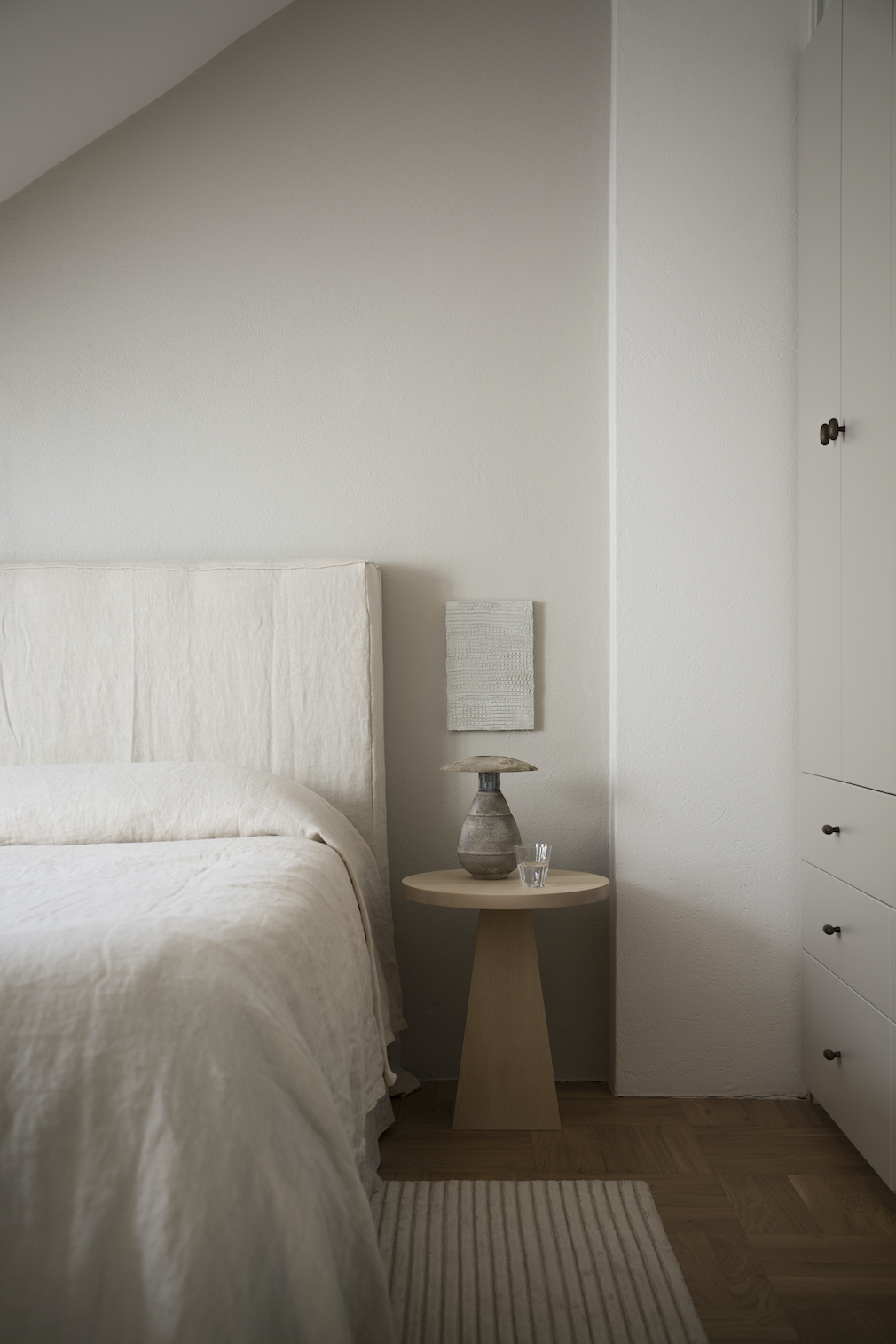
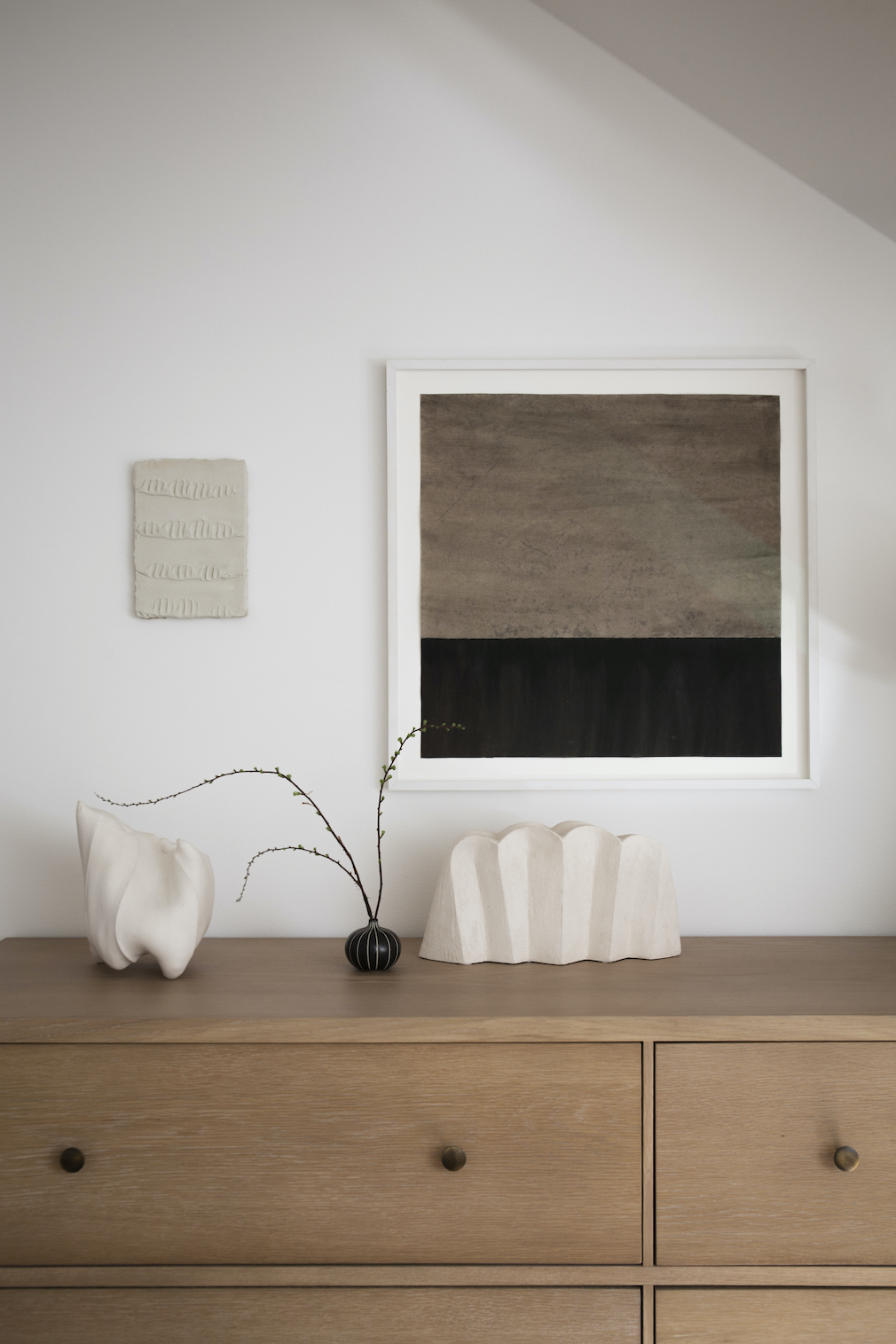
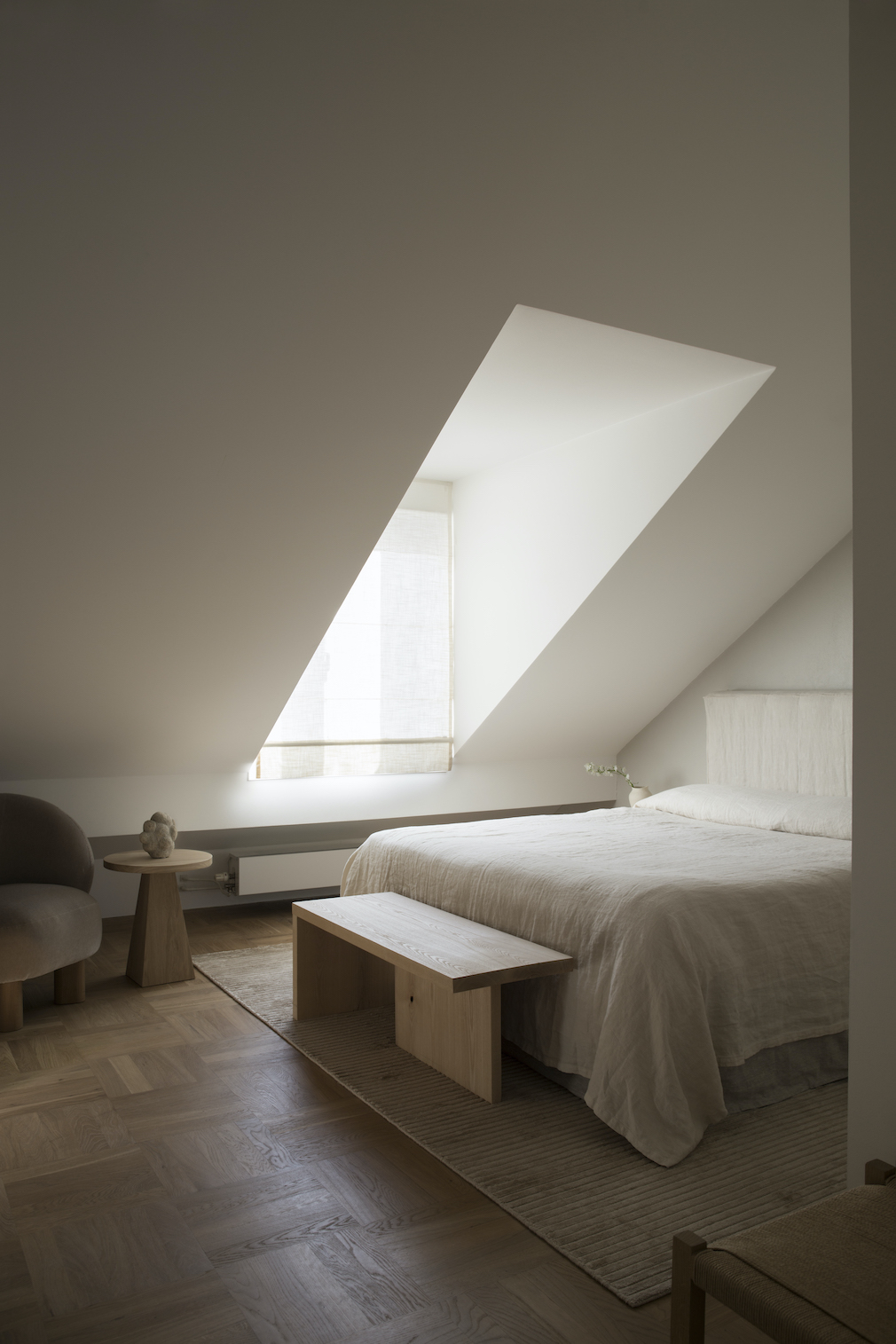
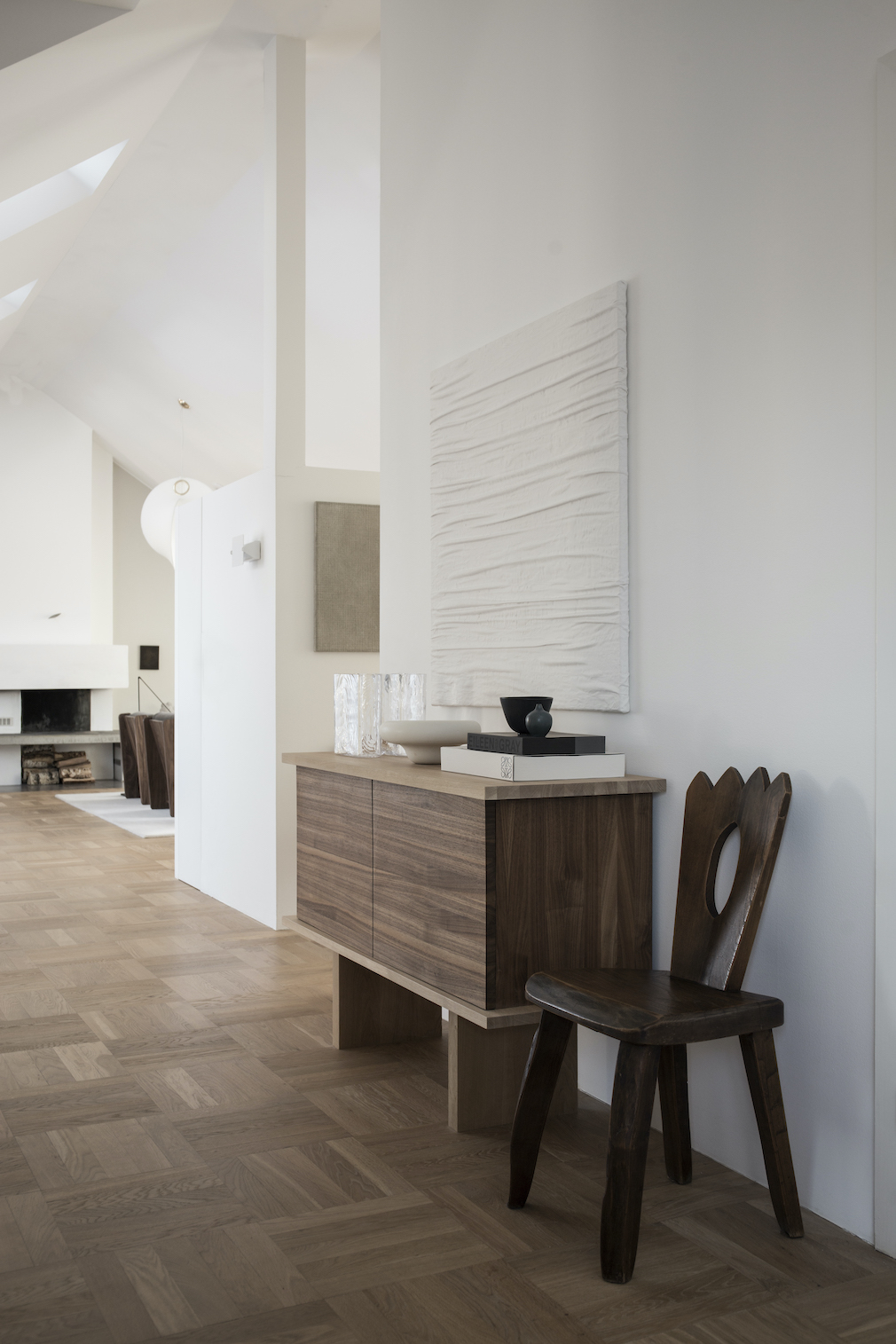
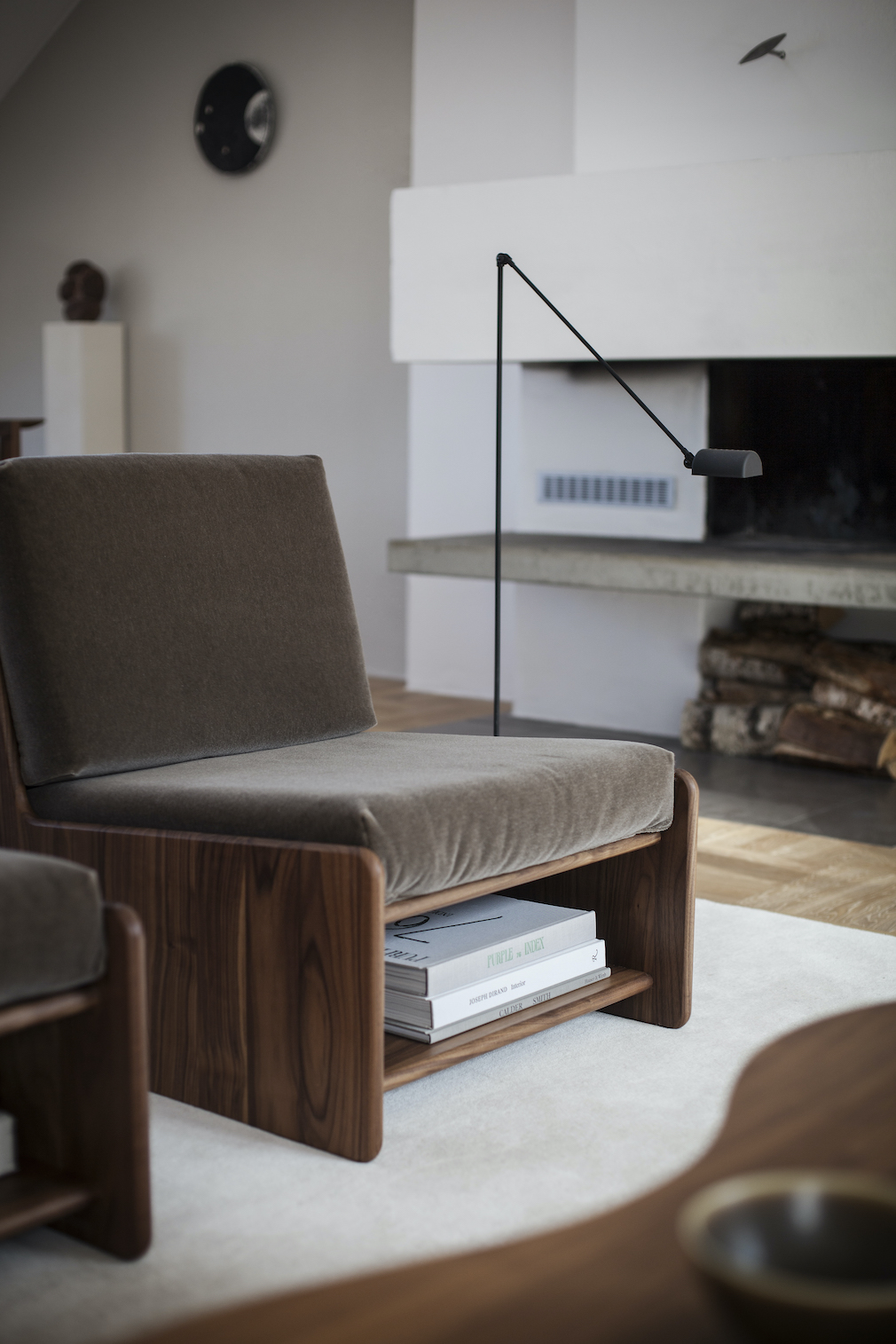
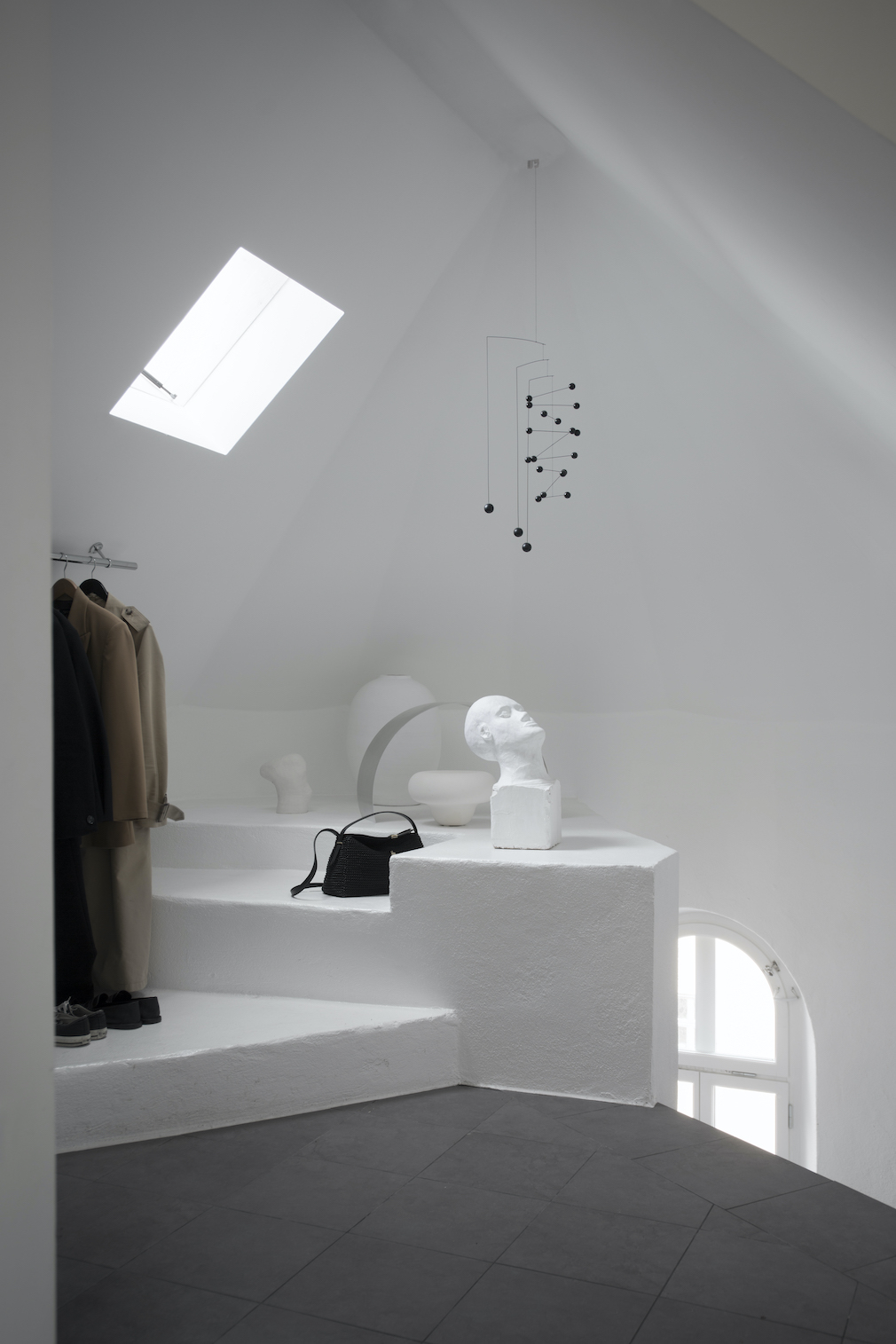
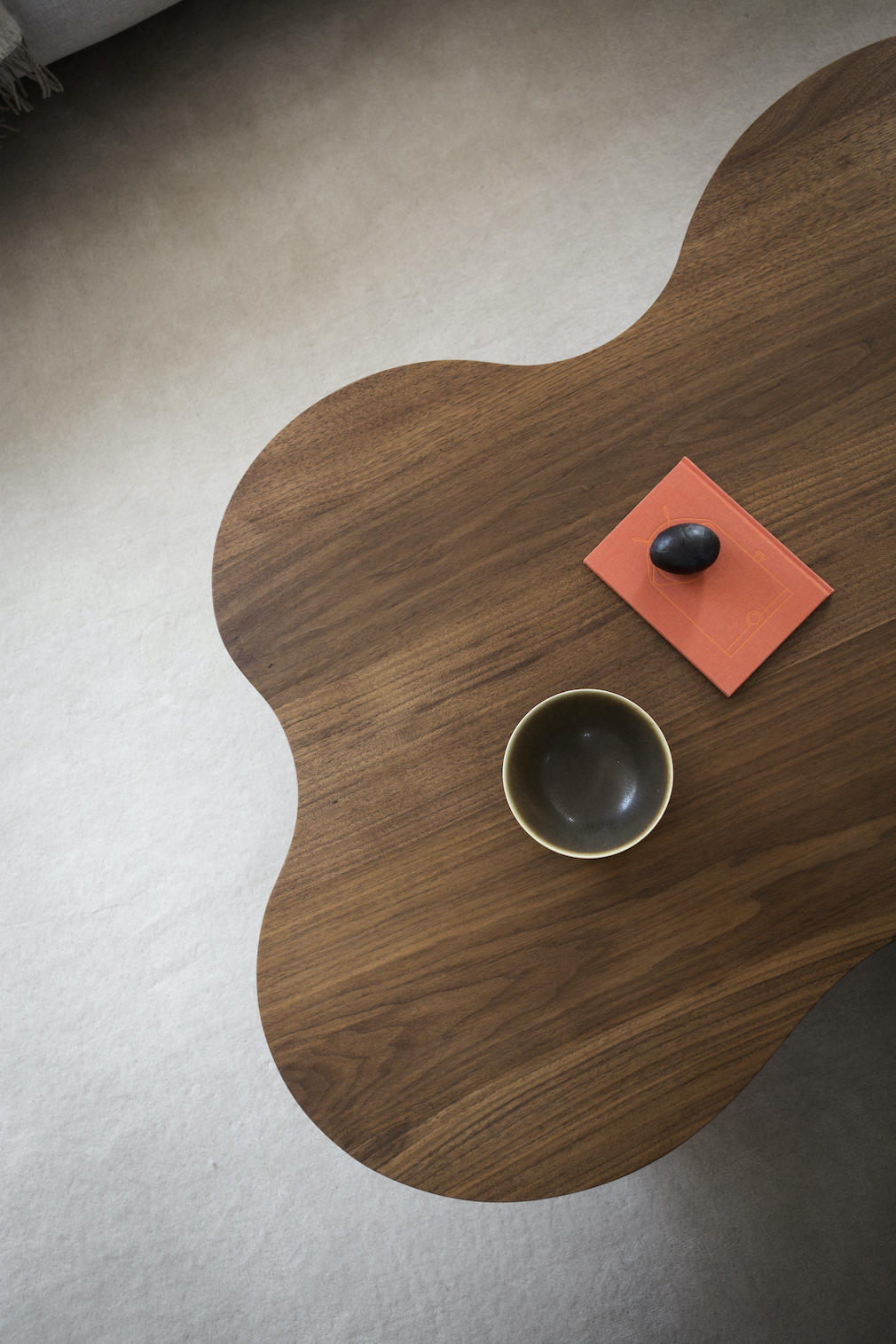
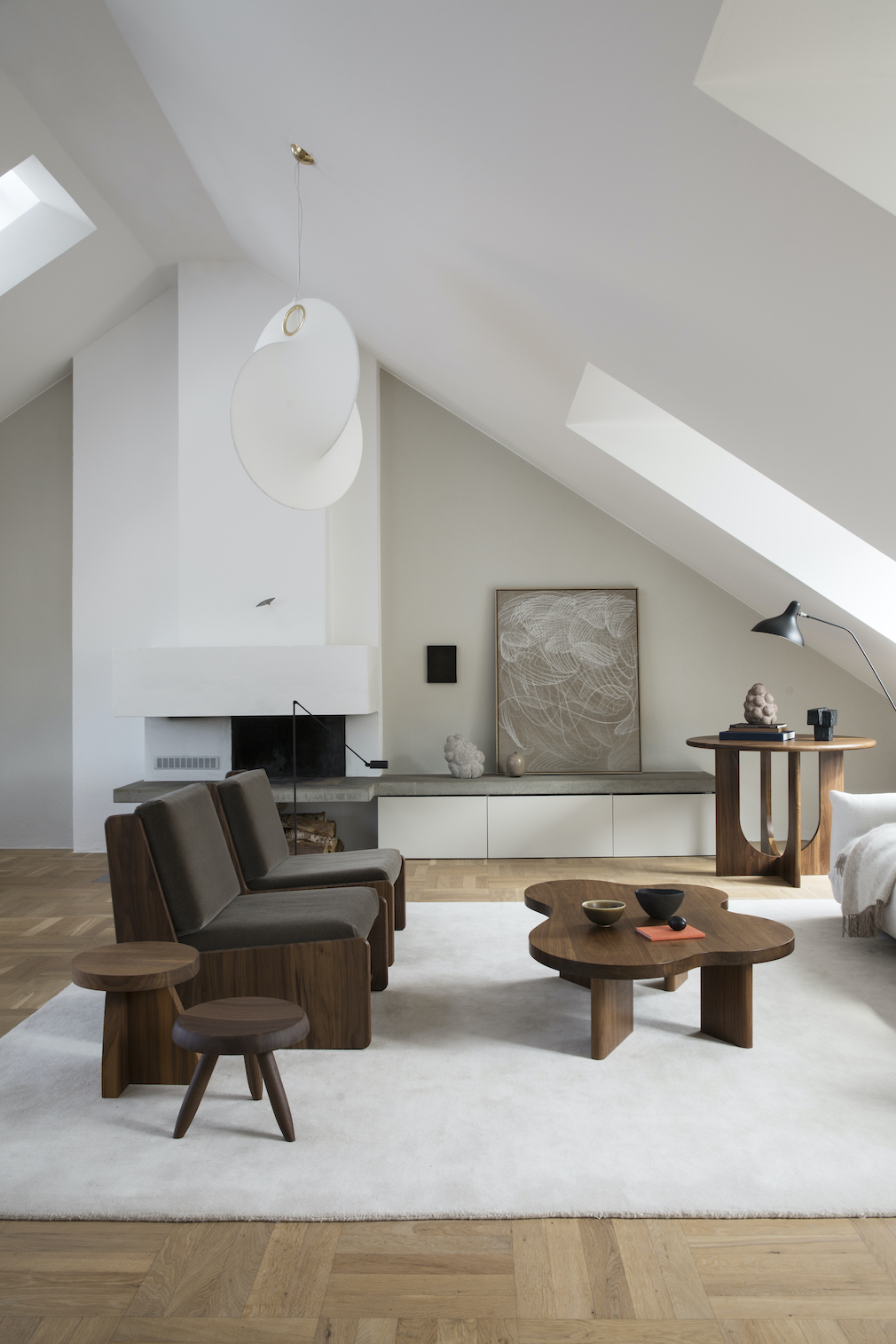
White and wood tones define every room in the unit, creating a serene, seamless cocoon. Even the art, which includes a painting by Danish artist Kirsten Schröder and a sculpture by Swedish artist Fanny Bylund, is keyed to this unifying palette. Not surprisingly, Ullvetter’s own designs — all handcrafted in Sweden — are everywhere in the home, from the simple bench at the foot of a bed to the armless easy chairs in the living room. The latter, which sport a shelf under the seat, came from her desire to fashion a multifunctional piece of furniture that provides storage for books. “I’ve named it Sogno, which means ‘dream’ in Italian, and that’s exactly what you do when you sit down with a good book,” suggests Ullvetter. “The design language of the chair is clear and stripped down, with a focus on the craftsmanship behind it and the seating comfort. It was important, too, that it is beautiful to look at even from behind so that it can be placed in the middle of a room where you move around it.” The rounded edge of the Side by Side Table sprang from her desire to soften the hard architectural geometry of the apartment, which includes sharply pitched ceilings pierced with windows. “I wanted to create a tactile and warm feeling through the irregular shape,” she shares. “Over time, the walnut acquires a beautiful patina as well.”
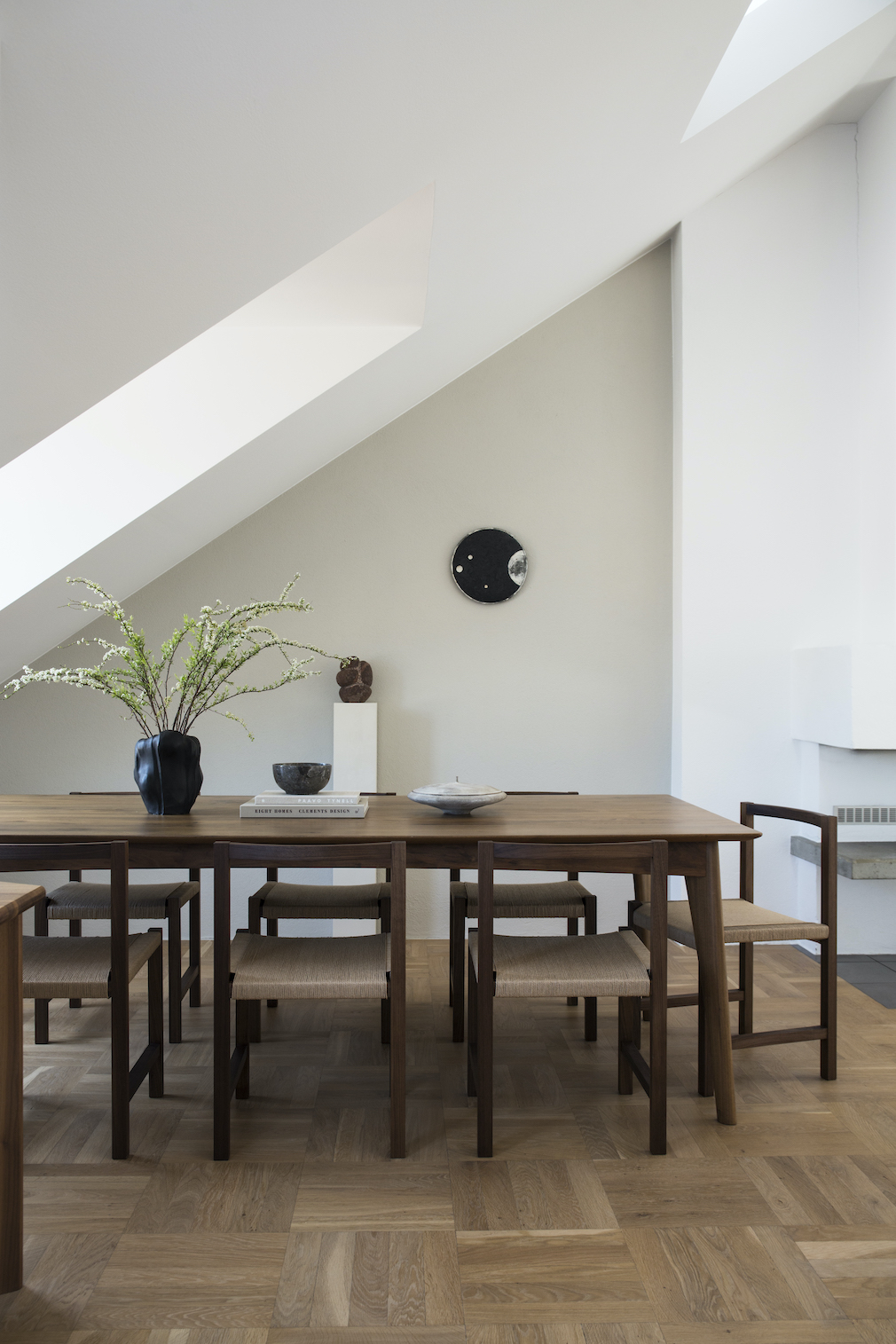

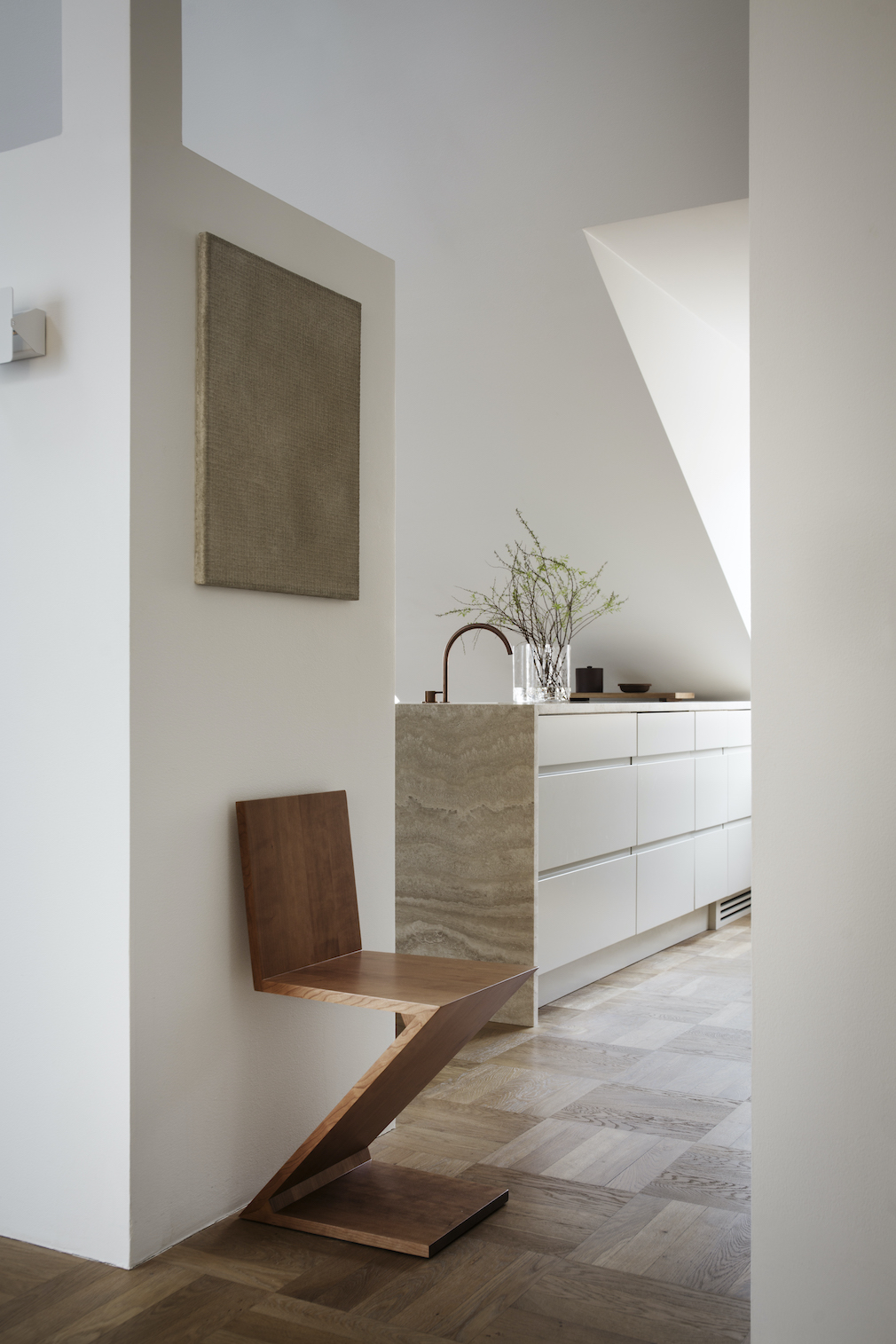
Throughout the home, Ullvetter has incorporated pieces that play well with her own designs, such as a Cassina Zig Zag Chair in cherrywood and a deep-seated Marenco Sofa from Arflex. A vintage King chair with its crown-like detail (by 20th-century Finnish designer Olavi Hänninen) is paired with an almost crate-shaped, Ullvetter-designed sideboard crafted in oak and walnut. And there’s a subtly pleasing sense of proportion in the way the edge of an Ethnicraft teak dining table and the backs of her own solid walnut Dune Chairs line up.
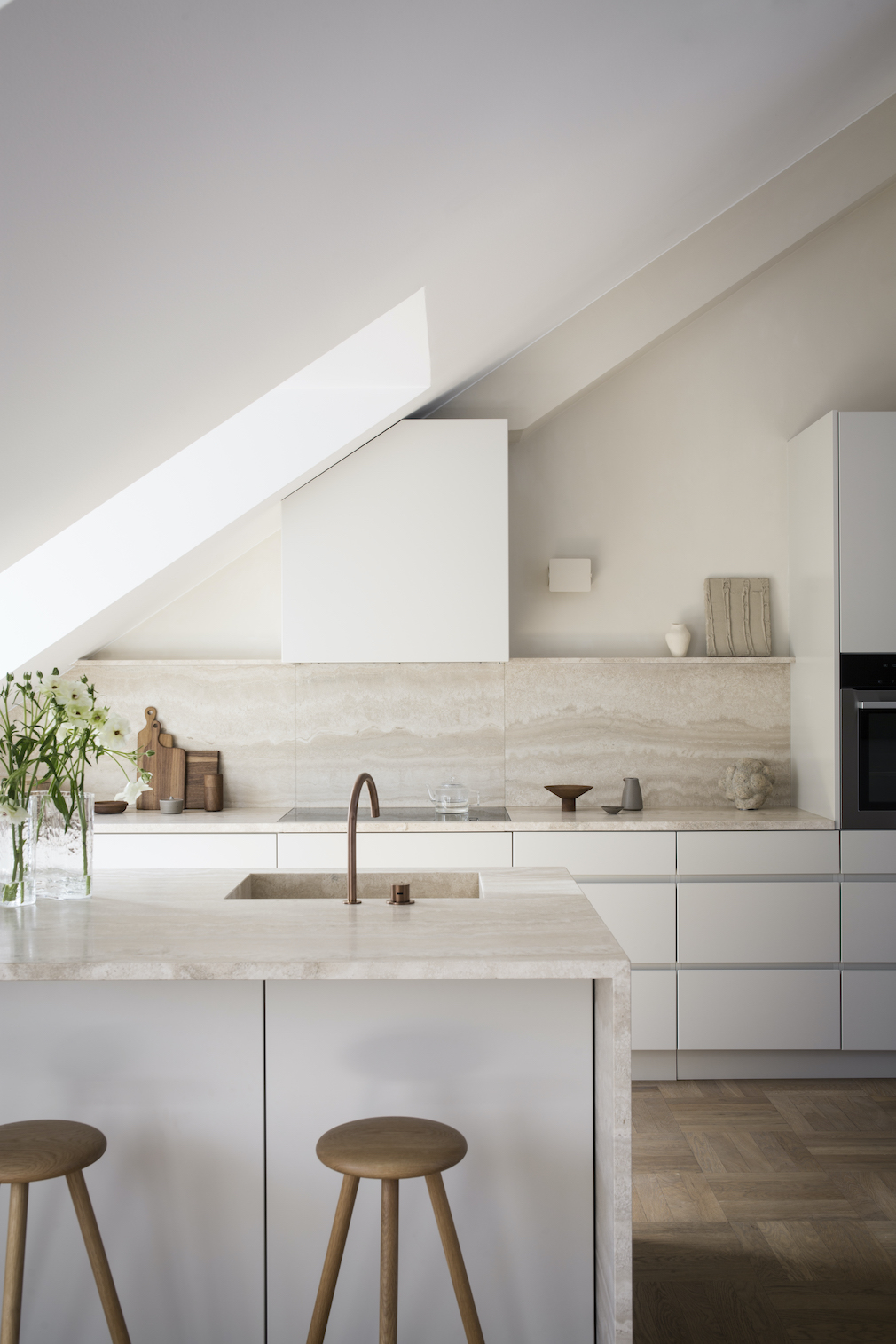
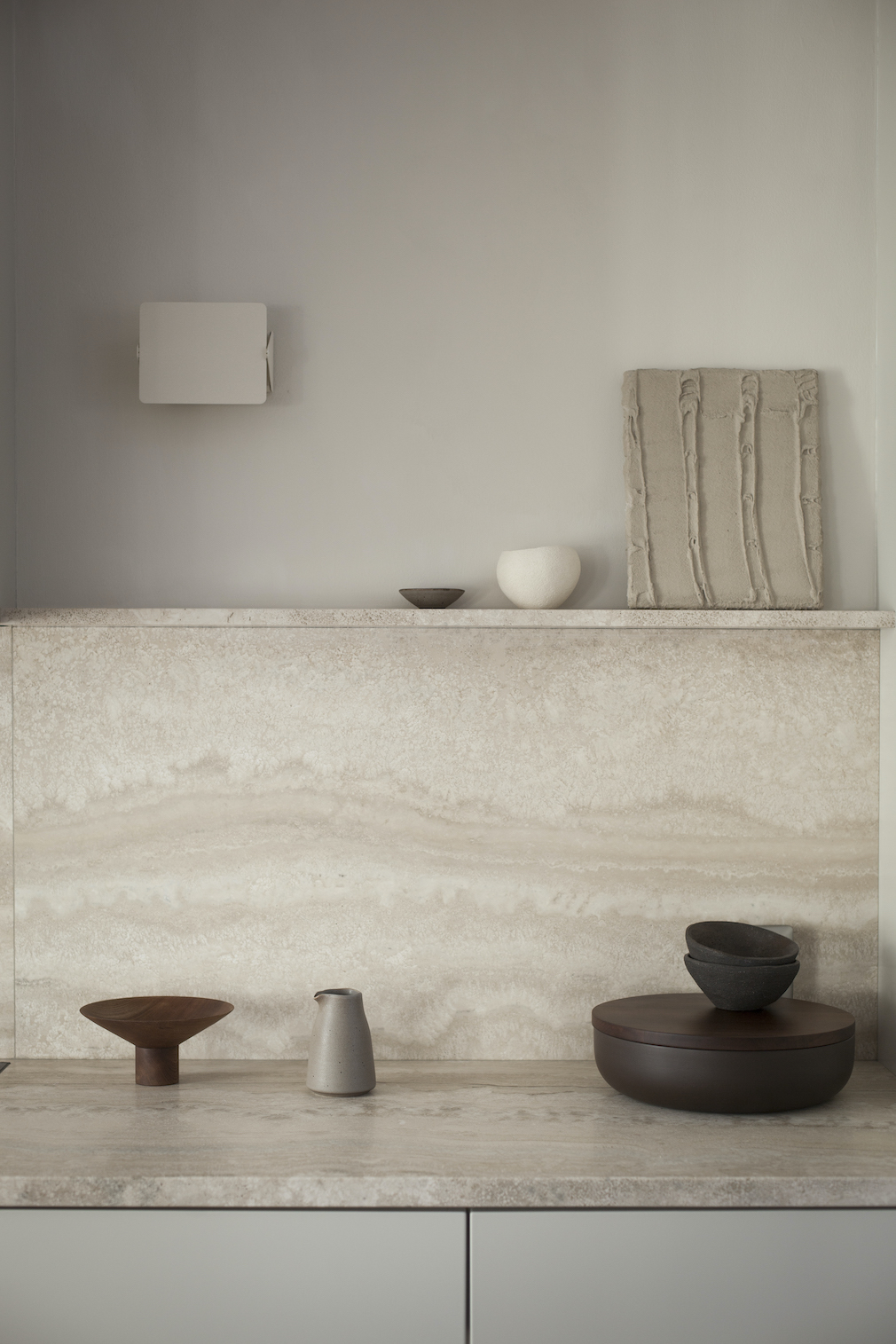
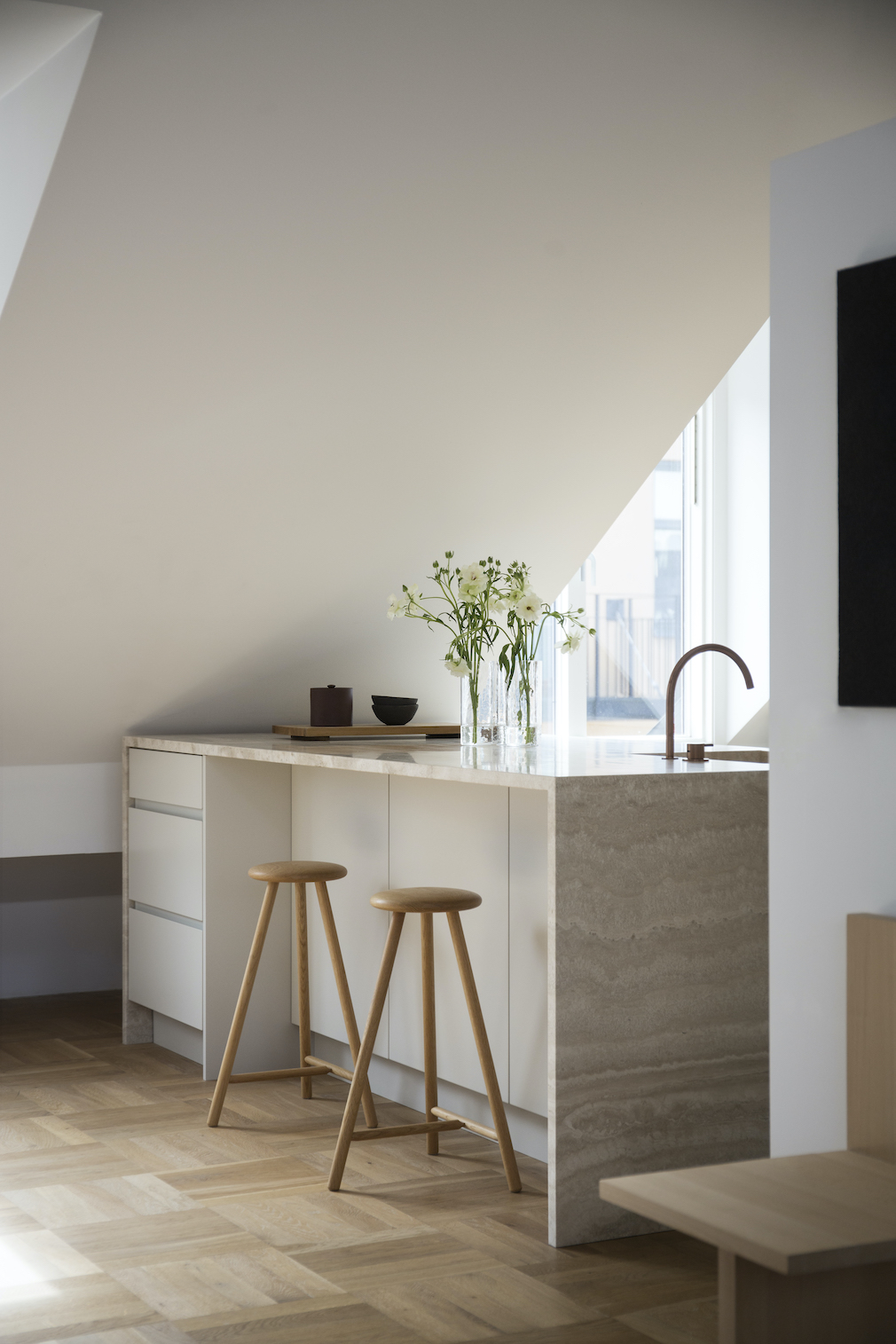
Ullvetter also transformed the previous kitchen into a much lighter space (outfitting it with oak cabinets, three-legged barstools from Nikari and travertine countertops and backsplash), sanded all the floors and replaced existing doors. “For me,” muses Ullvetter, “design is about eliminating excess and focusing on essential forms. It is about rigorous attention to details and carefully selecting the right materials.” Clearly.
Photography by Johan Sellén; Styling by Gill Renlund.
Like what you see? Get it first with a subscription to aspire design and home magazine.