


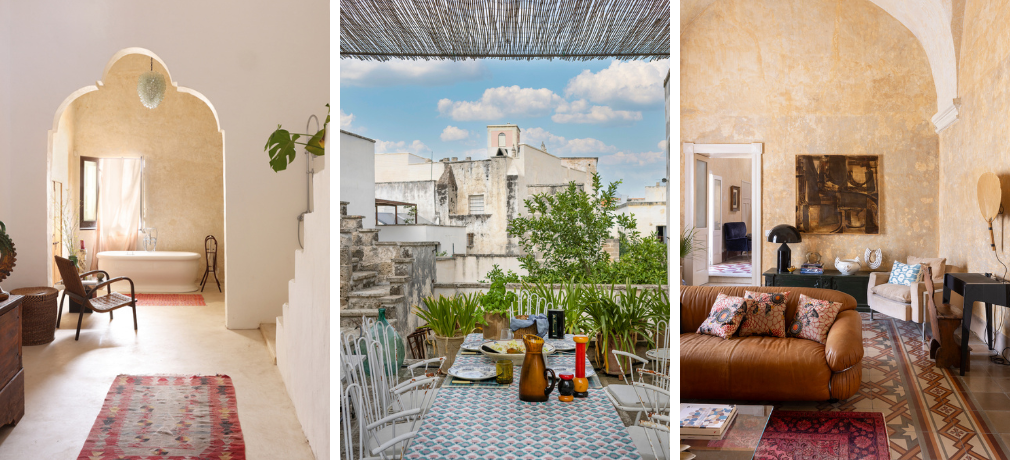
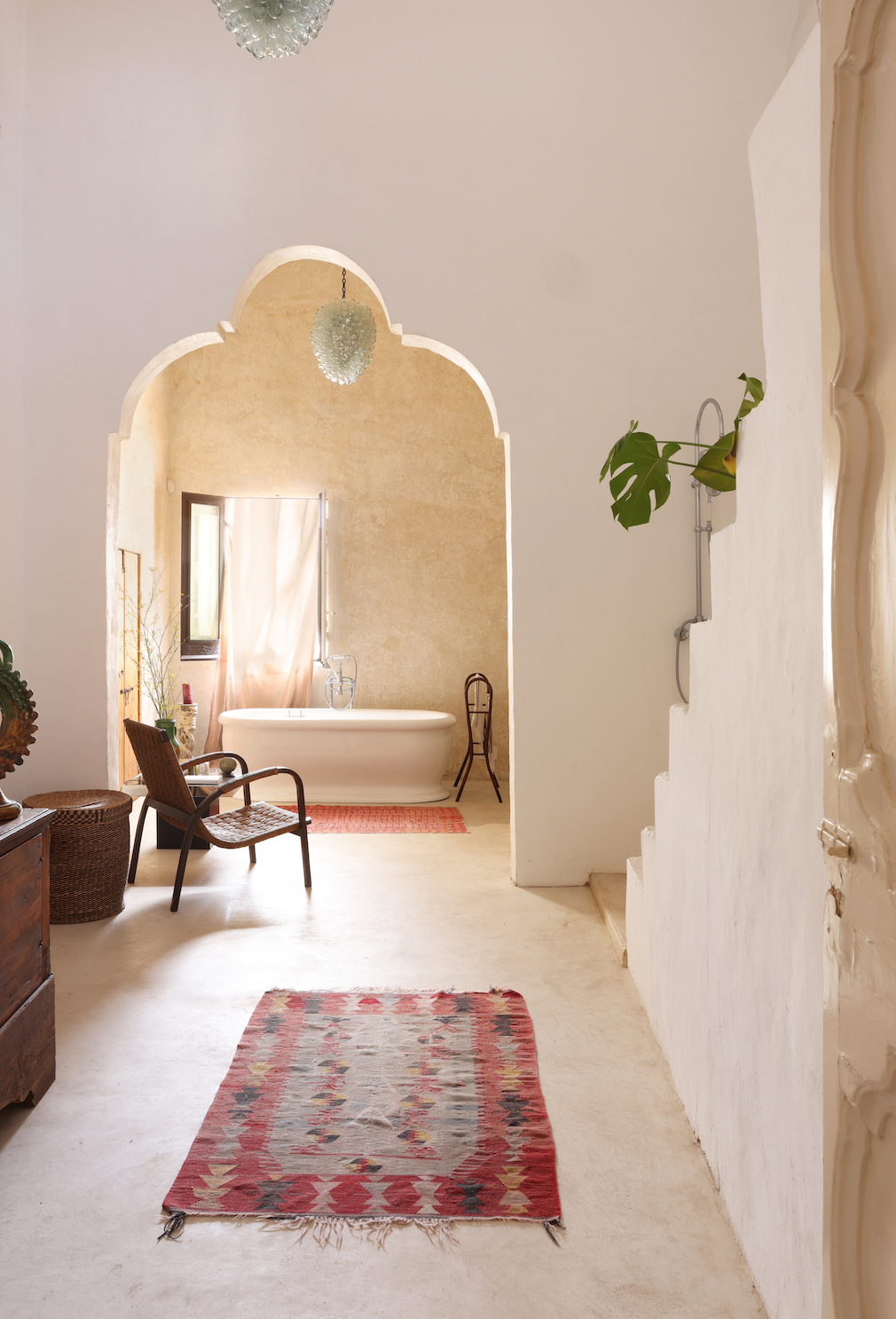

Trust the locals. A vacation excursion and hopeful home-hunting trip to the Salento region of Italy led to a journey of discovery and design when an attentive hotel owner directed an international couple to an off-market property that would become their part-time home. The couple – the husband an American writer who has lived in Europe for three decades, and the wife a German financier who works across Europe – quickly fell in love with the bones of the historic home in the town center of Nardò and set out to make it their own.
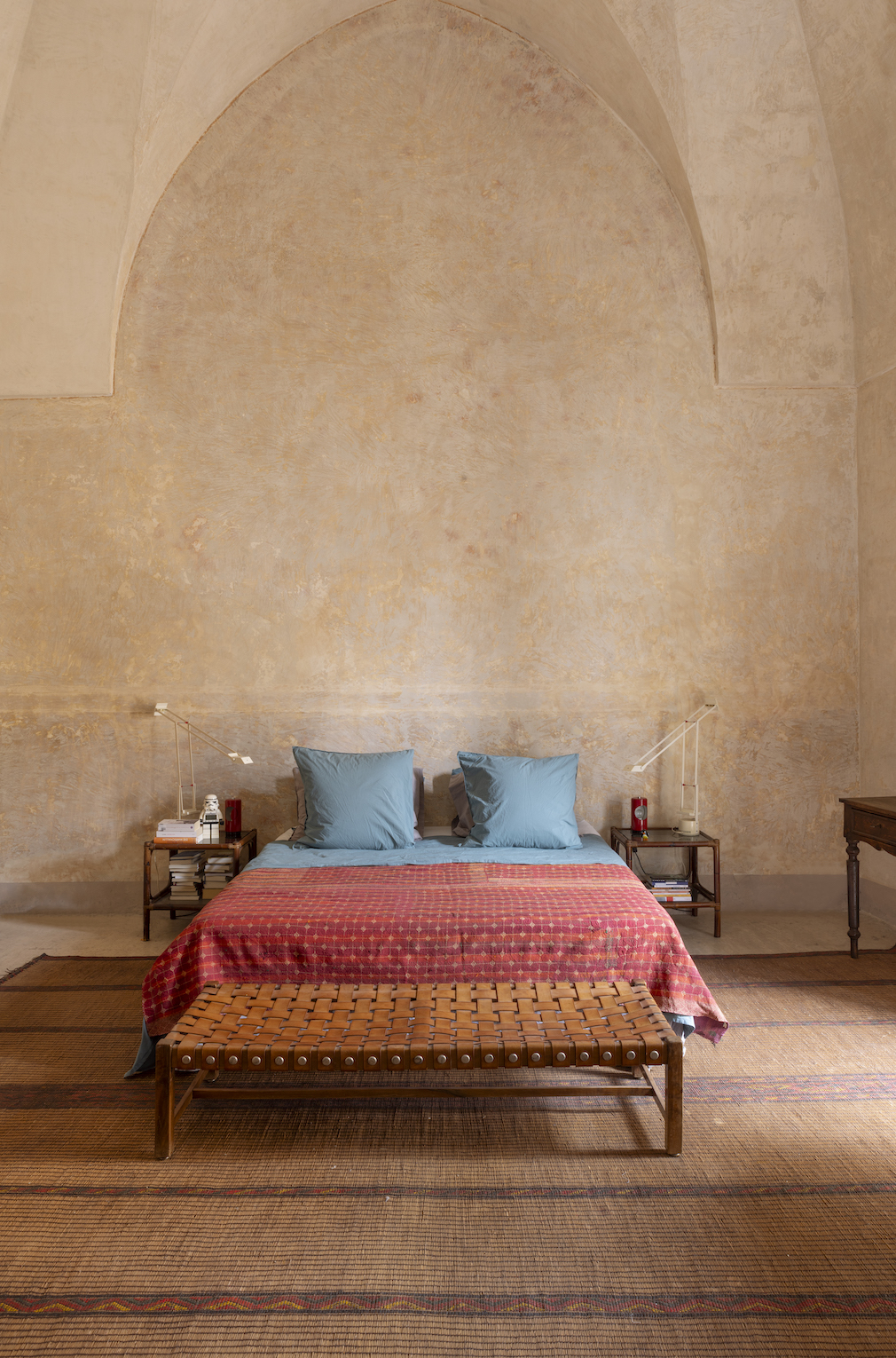

Steeped in history at every turn, parts of the house date all the way back to the 16th century, though it has undergone changes over time, and the current structure is believed to be a combination of different buildings. In 2014, the current owners purchased it from the family that had owned it since 1799. “It took us over one year of monthly visits to convince them that we would respect the history of the place and were worthy owners of this house,” the wife recalls. As the home had sat unoccupied since the 1990s, renovations were in order, and the couple, who divide their time between Paris and Berlin, managed the work from a distance before being able to properly move in, in 2016.
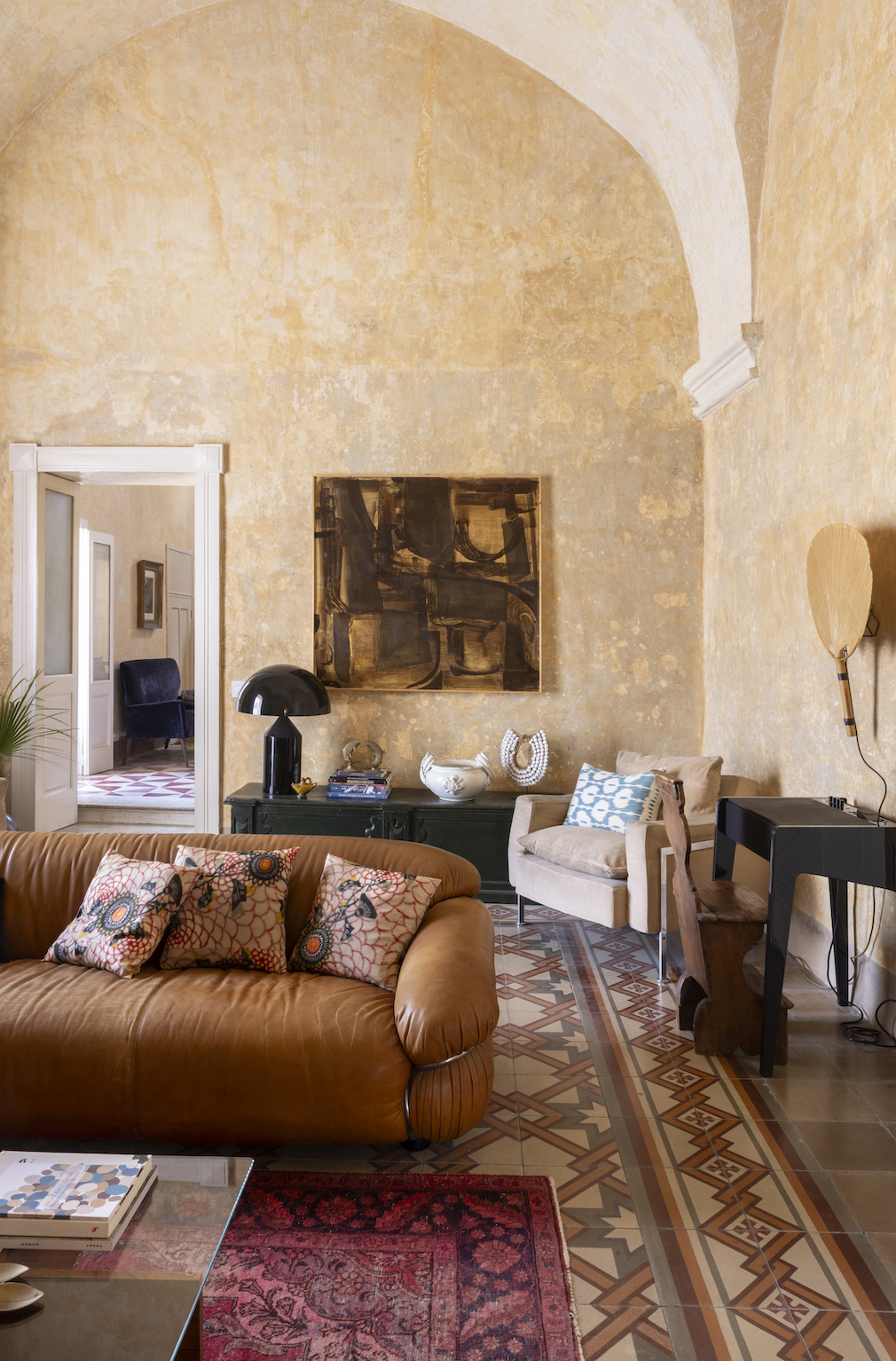

“THERE WAS SOMETHING MAGICAL AND MYSTERIOUS ABOUT THIS HOUSE WHICH ATTRACTED US RIGHT AWAY.”
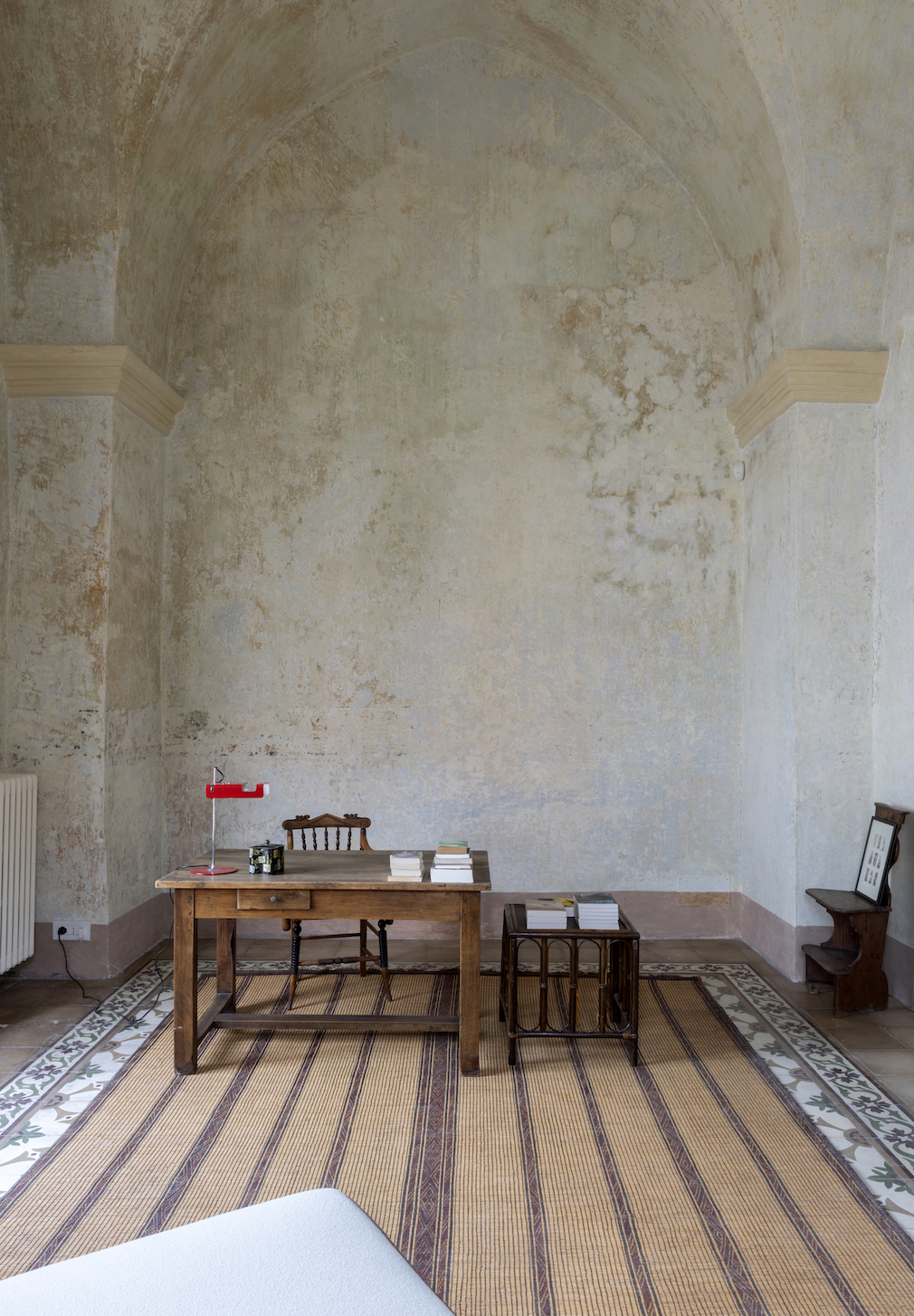

Striking interior architectural details, like the sweeping arches, are like art unto themselves and were part of the initial attraction for the couple. The wife notes that while the arches bestow a sense of importance upon the spaces, the rooms, despite their size, do not feel grand, but instead cozy. “Oftentimes, when old palazzi are renovated, the original layout is destroyed and the rooms are cut or cubicles are inserted in order to accommodate modern facilities, such as en suite bathrooms,” she explains, noting a space like theirs would normally be converted into a three-bedroom, three-bathroom apartment. The couple decided instead on a one-bedroom, two-bathroom plan that skipped the en suite and left more of the original layout intact.
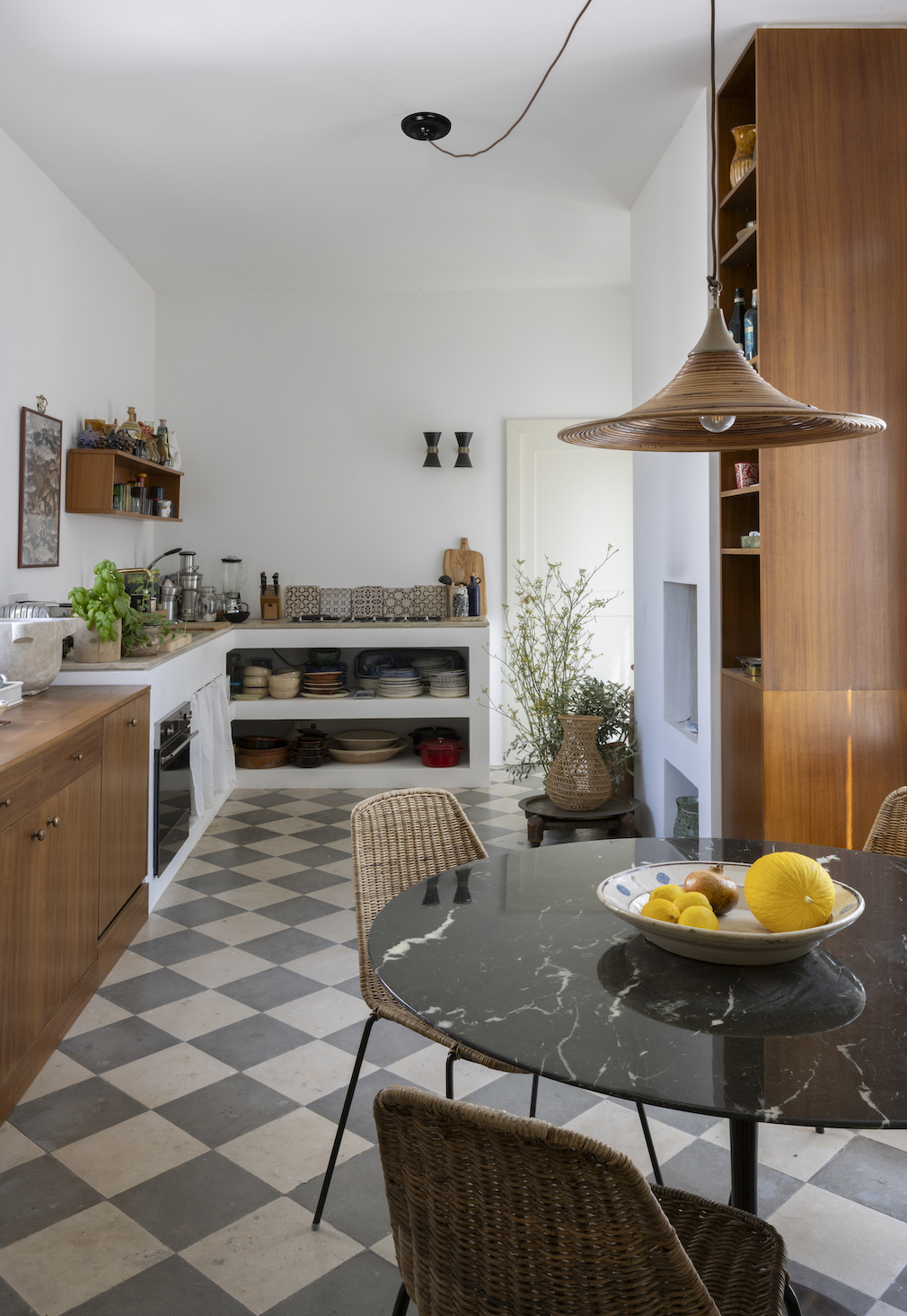

Tackling the interiors was a joy for the financier, who once ran an interior design shop with a friend in this town as a pet project and who credits her penchant for mixing old and new with her upbringing in a household where antiques mingled with modern design. “My parents had a company that edited decorative and homeware articles conceived by architects and designers,” she shares. “I have always bought vintage furniture, even when it was not yet fashionable, and am a compulsive flea market goer – and buyer. So much so that every now and then, I feel the need to embark on a new real estate project to find a home for my acquisitions.”
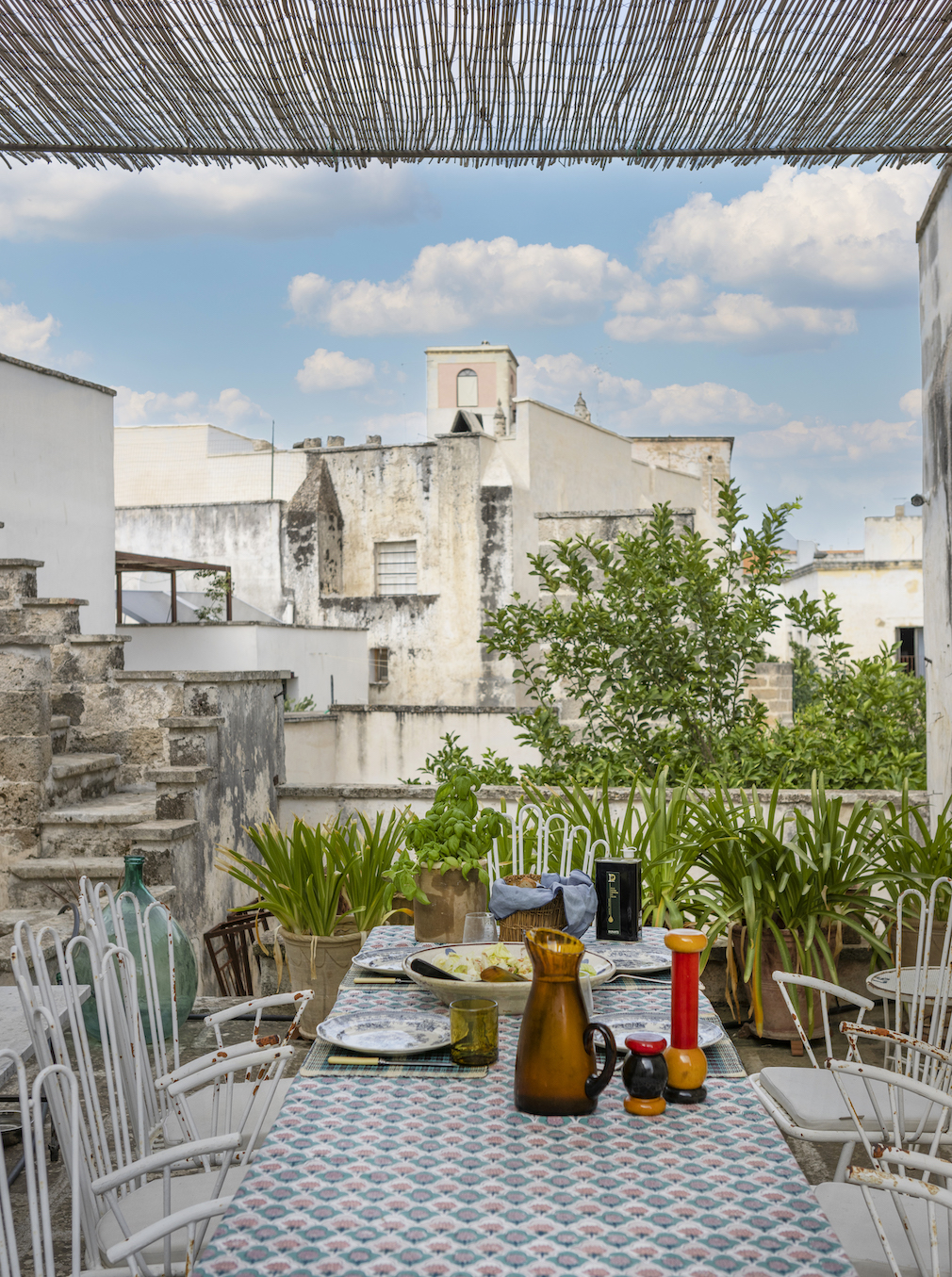

While some of the items found throughout the home come from travels, she also has added local antiques and art, as she prefers when a home has “a connection to the place, rather than living in a nondescript interior that could be found anywhere in the world,” she explains. “The pieces in this home partly have accompanied me through various former homes across Europe. What is fascinating is that they worked in so many different architectonic contexts. I think that is a sign of good design.”
Photography by Alexandra Meurant.
Like what you see? Get it first with a subscription to aspire design and home magazine.