


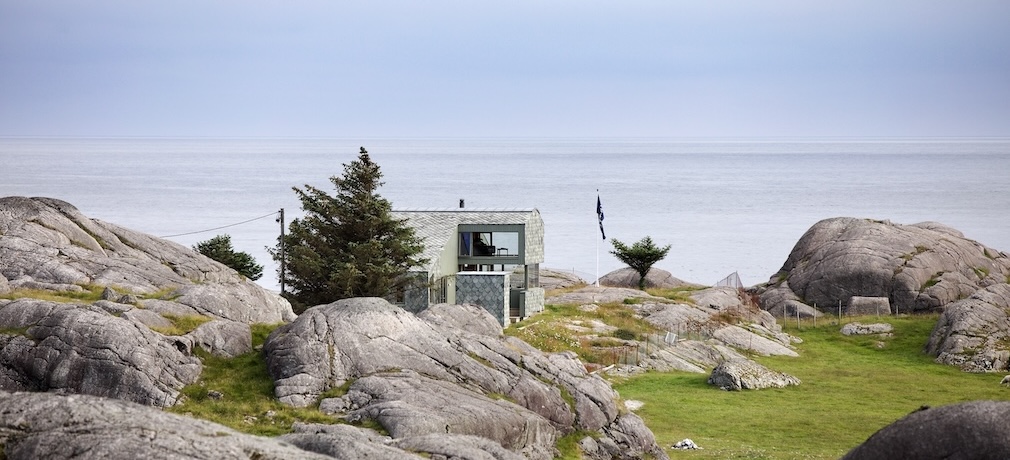
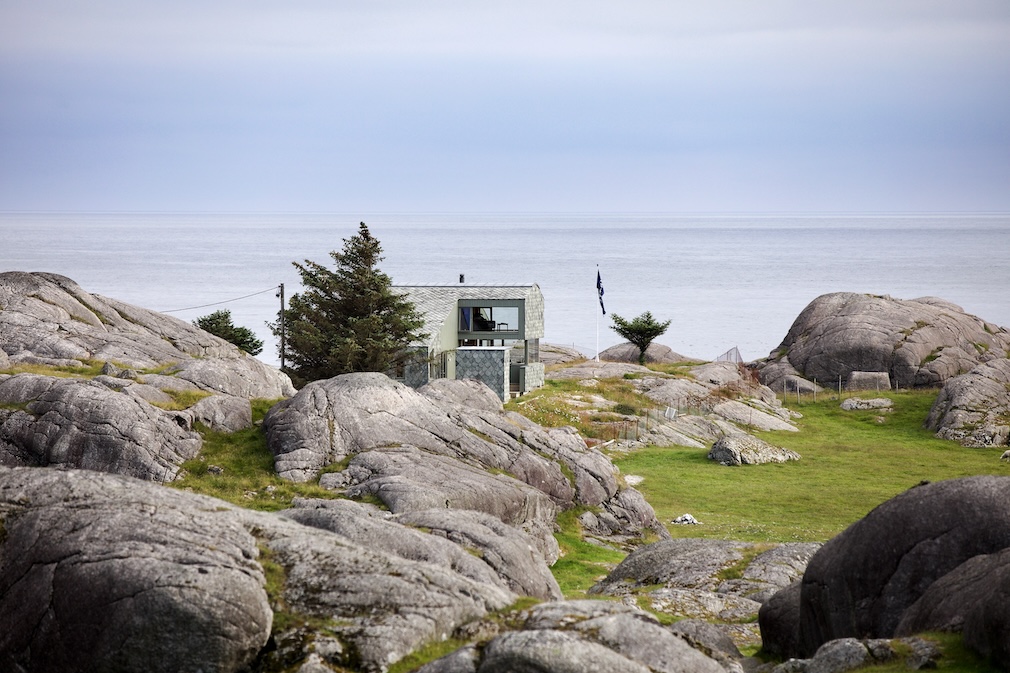

There is a touch of fantasy to the craggy coastline of Southern Norway, where long fingers of anorthosite appear to claw their way out of the sea. But as night falls, one of these rocky outcrops starts to glow, revealing it to be not a hill but a house, well protected from the elements by a scaly skin of slate.
This sleeping dragon is the pet project of Njål Foldnes, a professor of statistics, and his partner, Grethe Mo, an actress and writer/illustrator of children’s books. “There are lots of cabins in Norway, but most look very similar, as they have come straight out of a catalog,” Njål explains. “We wanted something unique.”
The rocky plot had been in the family for over 25 years before it passed to Njål. It included a typical “catalog cottage,” but this couldn’t accommodate their four children. “After three years, we decided to demolish the cottage and build something bigger,” shares Njål. “We were having to pitch a tent outside, just for our oldest boy to have somewhere to sleep!”
The couple turned to architect Rune Grov for some original thinking. “We had already seen some of Rune’s work locally,” recalls Grethe. “We wanted an inspiring design, so gave him complete artistic freedom.”
Constructed in under a year, the project is a testament to the talent of local carpenter and craftsman, Sigbjørn Golf, who handled every aspect of the build. “Sigbjørn is very fond of the area, so knew the weather and local materials well,” enthuses Grethe. “He really gave his heart to this project.”
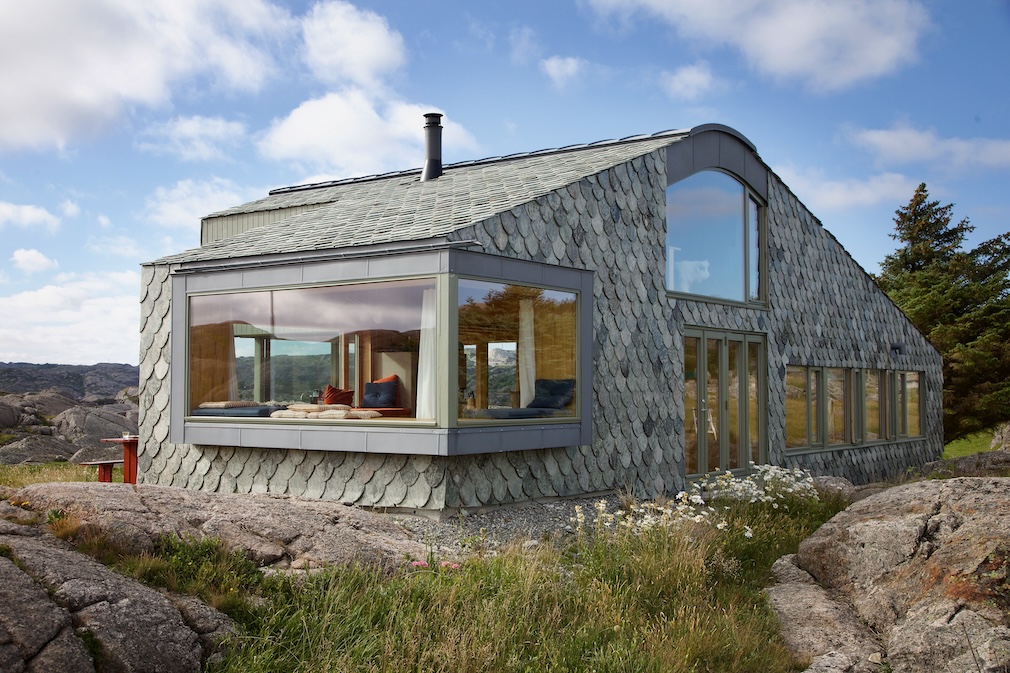
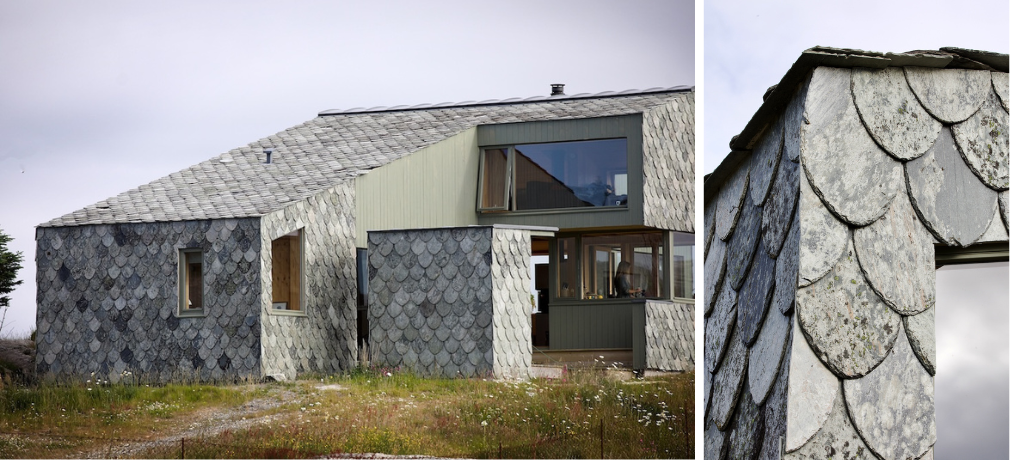
The cladding may be the cabin’s most striking feature, but it was not selected for aesthetics alone. “The slate was Rune’s idea and is an economical solution,” explains Njål. “Almost all old barns in the area employ these roof slates, so they’re very easy to source and replace.” Rune’s innovation was to apply layers of slate to walls as well as the roof, clothing the exterior in reclaimed local stone. “It’s a good feeling that it’s been reused and has been given new life,” reflects Grethe. “It means we feel better about having to demolish the original house!”
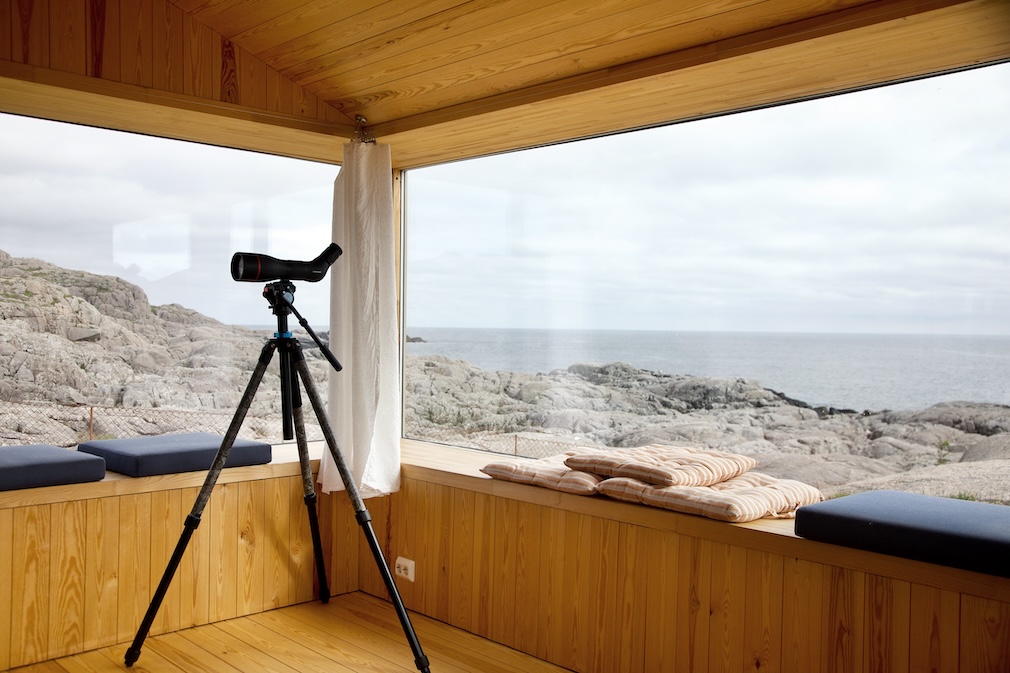
Rune exploited the sloping site by allowing the ground floor to follow the contours, gradually falling away to increase ceiling heights, while still keeping the roofline acceptable to the planners. The elegant open plan starts at the southern end with the panoramic living room before stepping down to a dining room, then projecting out to form a west-facing kitchen wing. A further step takes one to a corridor connecting three bedrooms and a shower room, while a staircase whisks you up to a loft room, whose built-in desk overhangs the living space like a balcony.
This pine-lined eerie has become a favorite spot for Grethe. “For me, that second floor is about being together without feeling we are on top of each other.” She smiles. “I can sit and work and watch the sea.”
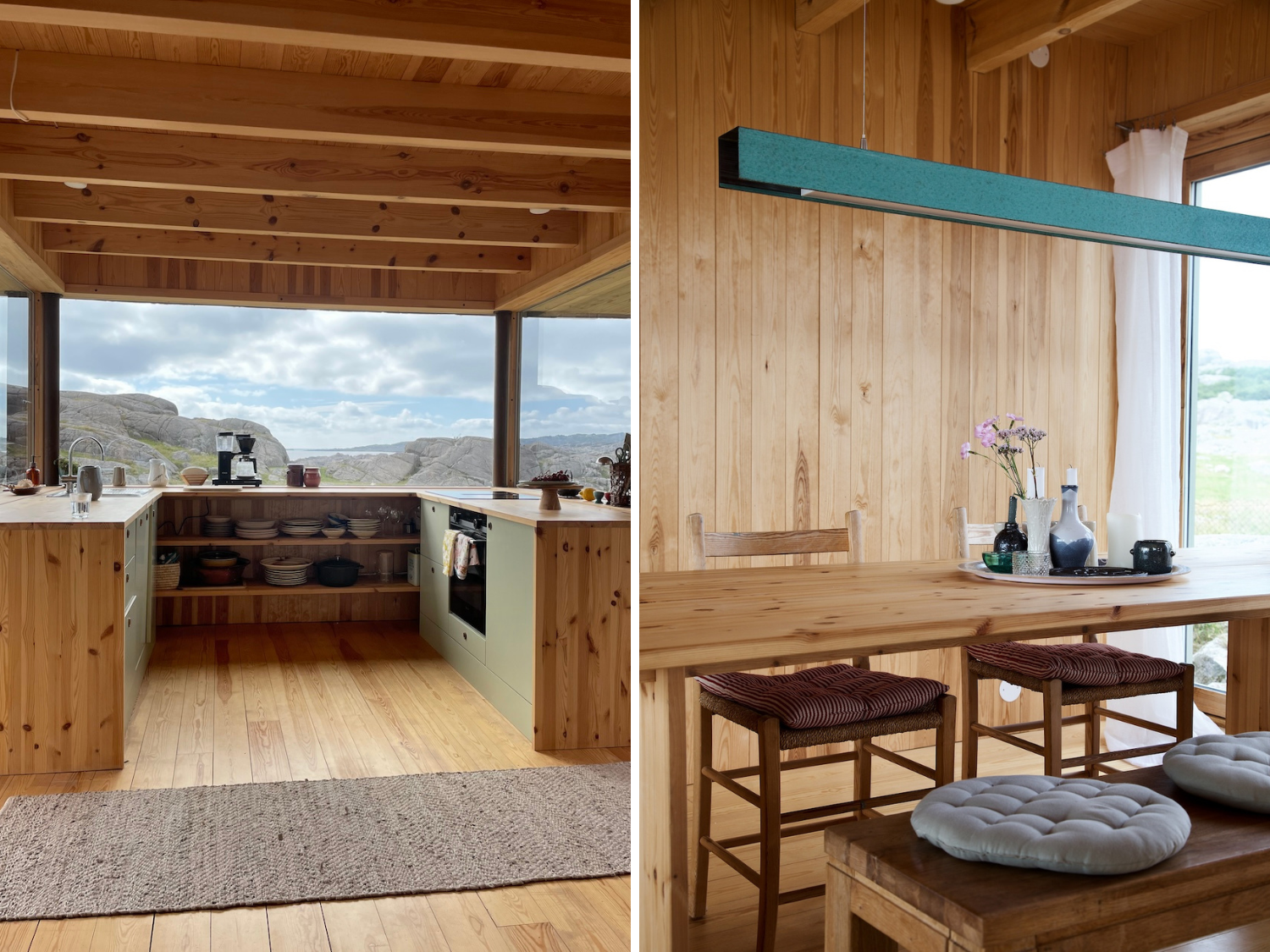

“The ever-changing light is the essence of the place,” agrees Njål. “It’s all about the big windows. Looking out from the living room at the long horizon, we watch the clouds whipped along by the winds and sea eagles riding the gusts.”
This light-filled haven has become the ideal relief from suburban Stavanger, where the couple spend their working week. “The cabin is also a great place to work – which is ironic, as we built it to relax in!” Grethe laughs. “Most of all, it’s the quietness and the peacefulness of the place … It’s so easy to concentrate. You can just sit down and draw.”
Good architecture can inspire great work, and as an exercise in imagination, this cabin is off the scale.
Photography by Lise Bjelland.
Like what you see? Get it first with a subscription to aspire design and home magazine.