
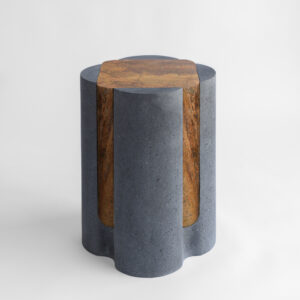
 José Schnaider, Founder and creative director of Sten Studio, joins us this week to discuss the Volcanic Shades collection. Serving as a visual metaphor for volcanoes, this series of stools are made from square-shaped blocks of a variant of lava stone and circles carved out of different kinds of onyx. Through an abstracted geometric language – a ludic set of variations between squares and circles – these stools seek to establish a millenary connection with Earth itself.
Raymond Paul Schneider: When did you first start to develop this new collection?
José Schnaider: The volcanic shades series started in 2022; since the year before, we have been looking to start making seating furniture, and for a start, a stool made a lot of sense because it can function as a side table.

RPS: What was the overall timeline from conception to achieving the final design?
JS: It took us six weeks from the initial idea until we packed the first two stools for an exhibition in New York. Then, we made the series more extensive and experimented with new rocks. We went from 2 designs to 5, all made of lava stone and red travertine. Then, we started exploring the idea of using pineapple onyx and blue calcite for the center parts. Now, we are experimenting with fluorite as the centerpiece and golden calacatta marble for the structure. This series has endless possibilities regarding stones, colors, and textures.
RPS: What was your initial inspiration, and where did the idea(s) come from?
JS: When we decided on the materials we wanted to use in the prototypes, we noticed a common characteristic: the quarries’ locations. They all were from Puebla, Mexico, a state rich in different kinds of stones and marble due to the high volcanic activity in the area.
Thinking about the location, the anatomy of volcanoes, their natural aesthetic, and the shades of their activity, we took all those characteristics. We developed a whole series taking those factors as references. Then, we could recreate craters and volcanic lakes and imagine many abstract possibilities with the idea of a volcano.
RPS: Did you have a specific audience or theme in mind?
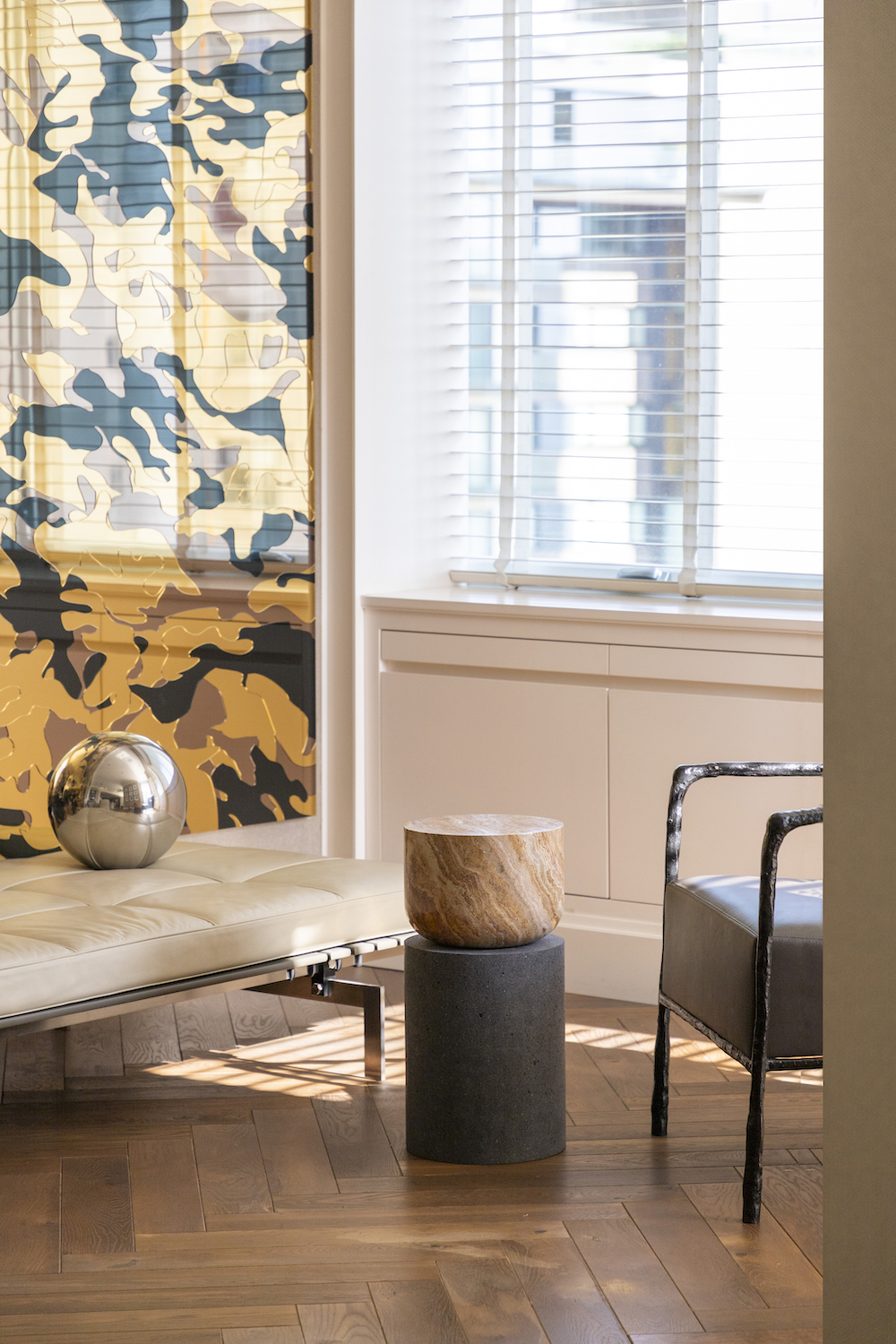
JS: The theme we always have in mind in the studio is statement pieces. We wanted to make very pronounced geometric shapes that also looked very contemporary. The theme was to transmit our knowledge of materials and how we transformed them. The audience is the public who enjoys stylish designs and innovative proposals.
RPS: Please describe the methods, tools, and materials you used to develop and prototype this design.
JS: For this series, we have explored different materials. One of the studio’s aims is to explore and use stones that have yet to be studied much in the design industry, and the mineral world offers a lot of unknown possibilities in this field. Blue calcite, for example, is a stunning rock with a sky-blue color and a unique texture due to its formation.
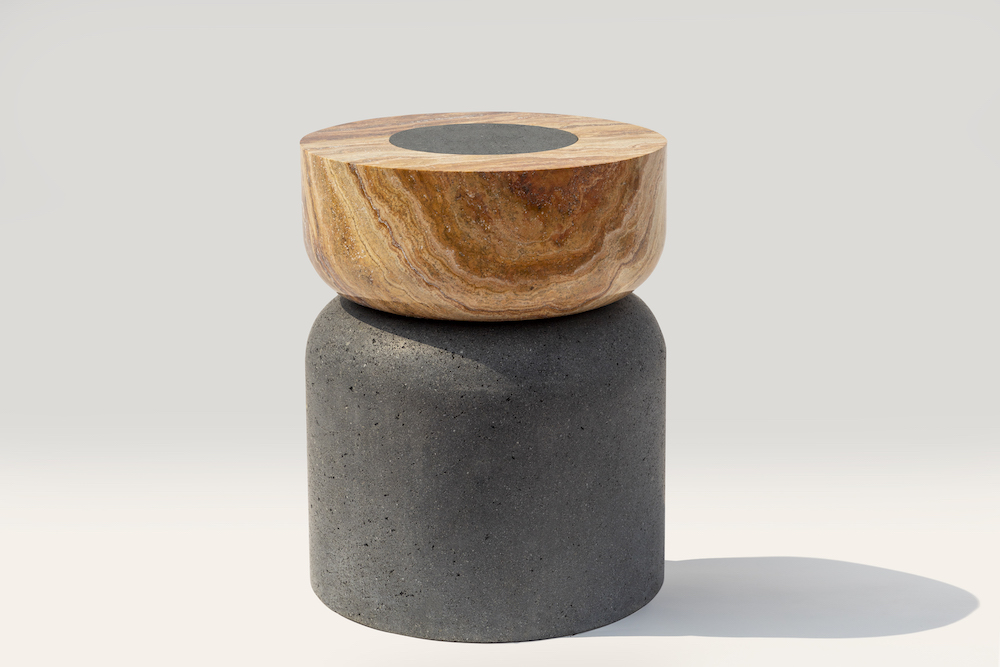
On the other hand, the red travertine has a very intense bright red color that resembles magma; it gives a lot of character and strength to the series. Ultimately the pineapple onyx is very smooth and delicate; its veins provide a sophisticated look.
Lava stone, being the primary material for the collection, is fantastic. Its porous composition and gray color give a lot of personality to all of the stools; it also complements the color stones in a way that can make its natural characteristics stand out. I cannot wait to see the new variations with the golden calacatta marble and how they behave together.
RPS: Did you utilize a new technique or technology to conceptualize this product?
JS: We worked with talented artisans from Chimalhuacan, a little town next to Mexico City with lots of tradition in lapidary. That region is where the Aztecs went to source stone a thousand years ago to build walls and statues. More than technology, we honored the talented people of many generations involved in producing these pieces.
RPS: Please describe any challenges that affected the design and perhaps steered you to an entirely new final design.
JS: When we made the prototypes, we faced the fact that the stools were too heavy, each around 70 kg; considering that, we thought in other possibilities, they could be less severe without affecting the aesthetics of the pieces. We took off some inner rock, and with that, we took around 22 lb (10 kg) of stone making them easier to handle them.

RPS: Describe your overall brand DNA and Ethos
JS: Sten Studio is a Mexico City-based studio transforming stones and other mineral-based materials into conceptual yet functional sculptural objects and furniture.
Though science and technology significantly advanced its uses, familiarity ultimately brought stone into the design industry. Its natural abundance, namely that our entire planet is composed of this solid, nonmetallic matter, made stone humanity’s first choice of medium.
It is one thing to accept the form and beauty of minerals as they are produced in nature. Still, it is another to take that same mineral and subject it to human design, a process inherently foreign to mineral makeup. In that way, we are voyagers into unknown territory and the design world, where the stone has been little explored in contemporary furniture and decorative objects.
Click here to see more of our “Anatomy of a Design” series.
Like what you see? Get it first with a subscription to aspire design and home magazine.