
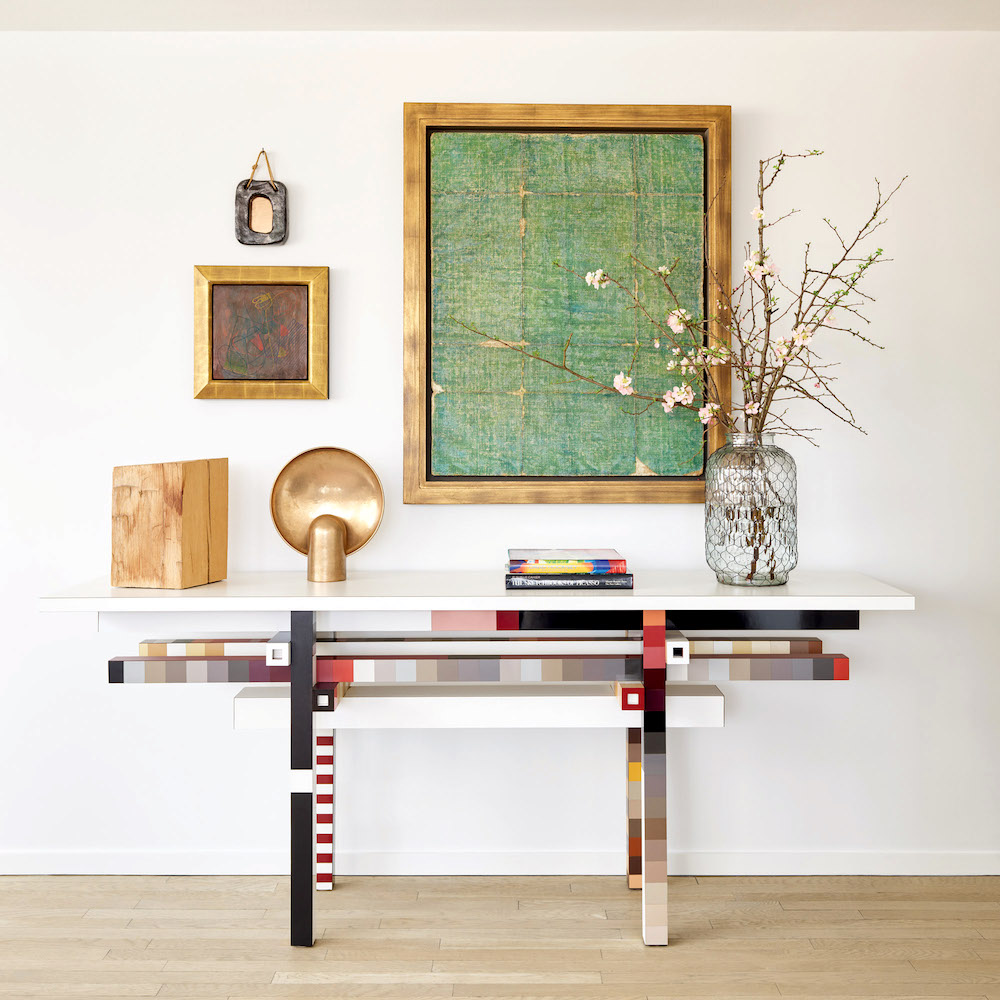
Los Angeles-based interior designer, Stephan Jones, was instantly captivated when he spied the late 1980s multi-colored laminate console table by David Best through a shop window in Montecito. “I had to have it,” he says, noting Best is renowned for his astonishing temples at the Burning Man festival. “This piece needs to be featured.”
After years in storage, Jones made it the centerpiece of the eight-floor high-rise apartment in Chicago’s Uptown neighborhood that he shares with husband, Arthur Redman, a professor at the University of Chicago.
To create a space worthy of the piece, they embarked on an extensive renovation of the home they had shared for nearly two decades, storing away every stich of furniture and spending the summer at their place in West Hollywood.
Over the course of three months, builders at JAR Corp. updated the wiring, refinished the hardwood floors, repainted the walls in a pristine shade of white and installed textural walls in the bedroom and study. The result is a serene, gallery-like setting for a heady mélange of artwork, antiques and midcentury pieces.
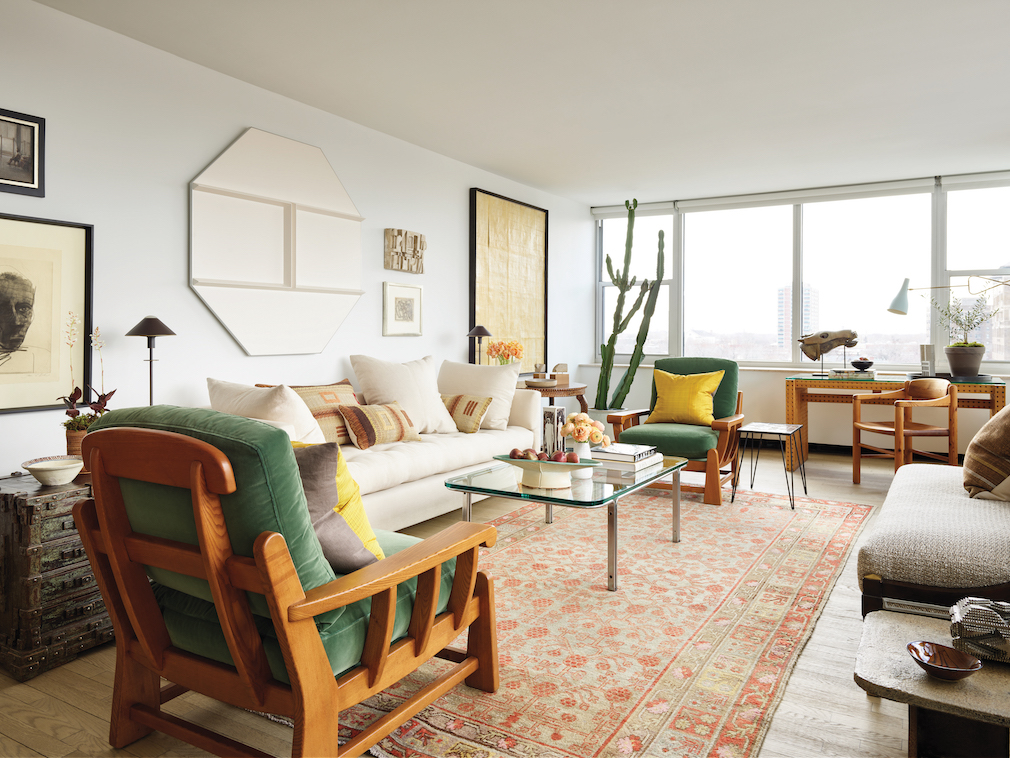
A talented collage artist, Jones likens the artistic technique to interior design. “You’re building these layers,” he says. “This place is modern and classic but also experimental, approachable but not necessarily decorated.”
In the living room, an antique Khotan rug with green and persimmon tones anchors a linen-covered St. Thomas-style sofa and a pair of solid Elm chairs with velvet cushions and pillows covered in a vintage yellow silk that once lined a kimono. Near the window, a glass-topped Italian constructivist desk creates a spot to enjoy the north-facing views of the lake and treelined neighborhood. “These pieces become bits of architecture,” he says.
A medley of artworks that include an octangular relief over the sofa, a large-scale collage by Jones and a smaller piece by Daniel Bodner, further enliven the light-filled space.
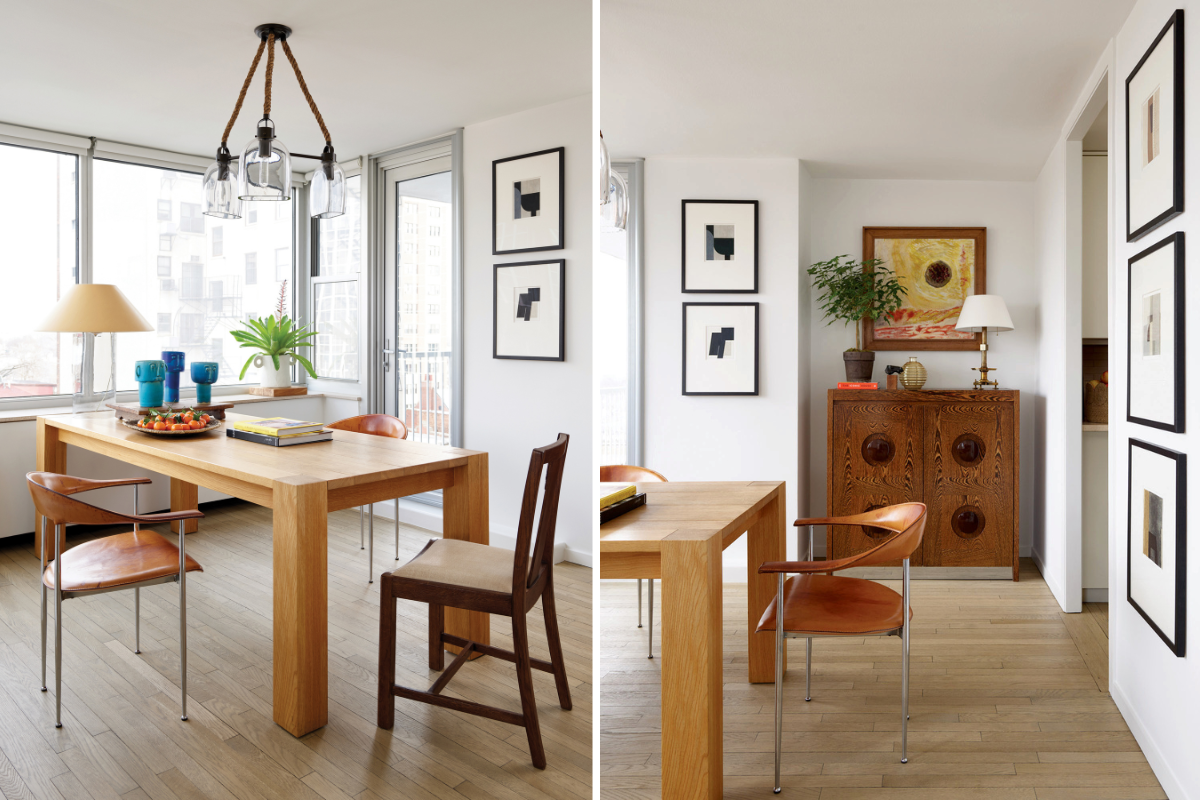
A series of collages by Guy Leclercq likewise elevates the elegant dining room, where a custom chandelier illuminates a white oak dining table the couple had made to celebrate their anniversary. Conveniently located steps from the table, a brutalist 1970s Belgian wenge wood bar cabinet perfectly occupies a niche. “Brutalism is my current obsession,” Jones explains. “There’s a real solidity to this furniture.”
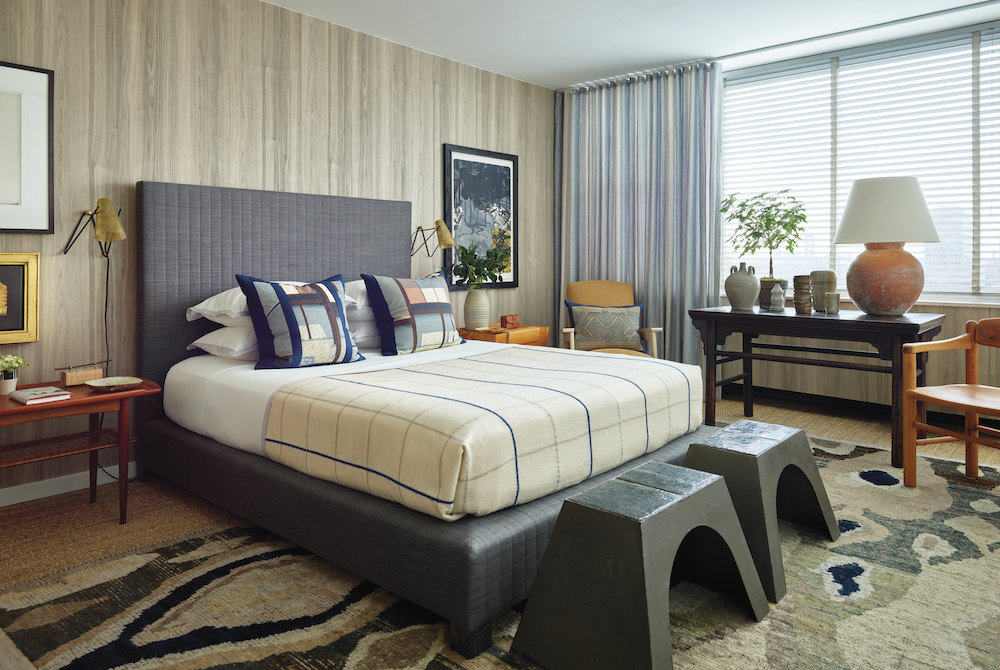
A pair of brutalist steel stools with tile tops, from a shop in Los Angeles, add to the mélange in the primary bedroom, which has a faux bois wallcovering that resembles wood paneling and wall-to-wall seagrass carpeting accented with a large-scale patterned area rug with a painterly motif.
Underneath another one of his collages, he placed a vintage chest of drawers that once belonged to his grandmother, surviving several redecorations. A pair of bright yellow Japanese vases and a colorful factory mold he picked up at an architectural salvage shop further illustrate Jones’ eclectic design sensibilities.
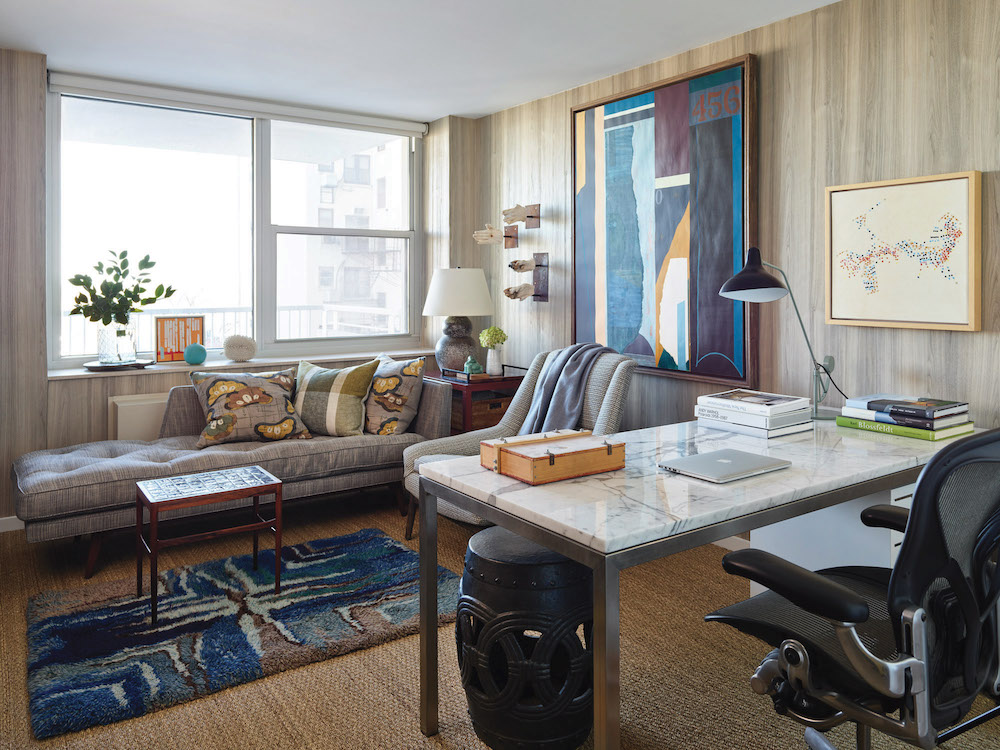
The same wallcovering and seagrass carpeting also defines the den, which is conveniently located on the other side of the home as the primary bedroom. “I get up earlier and go to bed earlier, so it’s kind of perfect,” he says. Complemented by a graphic area rug, a vibrant collage Jones purchased at Roy Boyd Gallery years ago adds a punch of color and pattern.
Another of Jones’ own collages likewise coordinates with the colorful laminate console table he scored in Montecito. Made with layers of burlap that he laminated, painted and scored with a razor, the piece, which Jones once used as a mat under his desk, has an organic texture that juxtaposes the glossy table beneath it. “I like that contrast,” Jones says. “Texture is my starting point.”
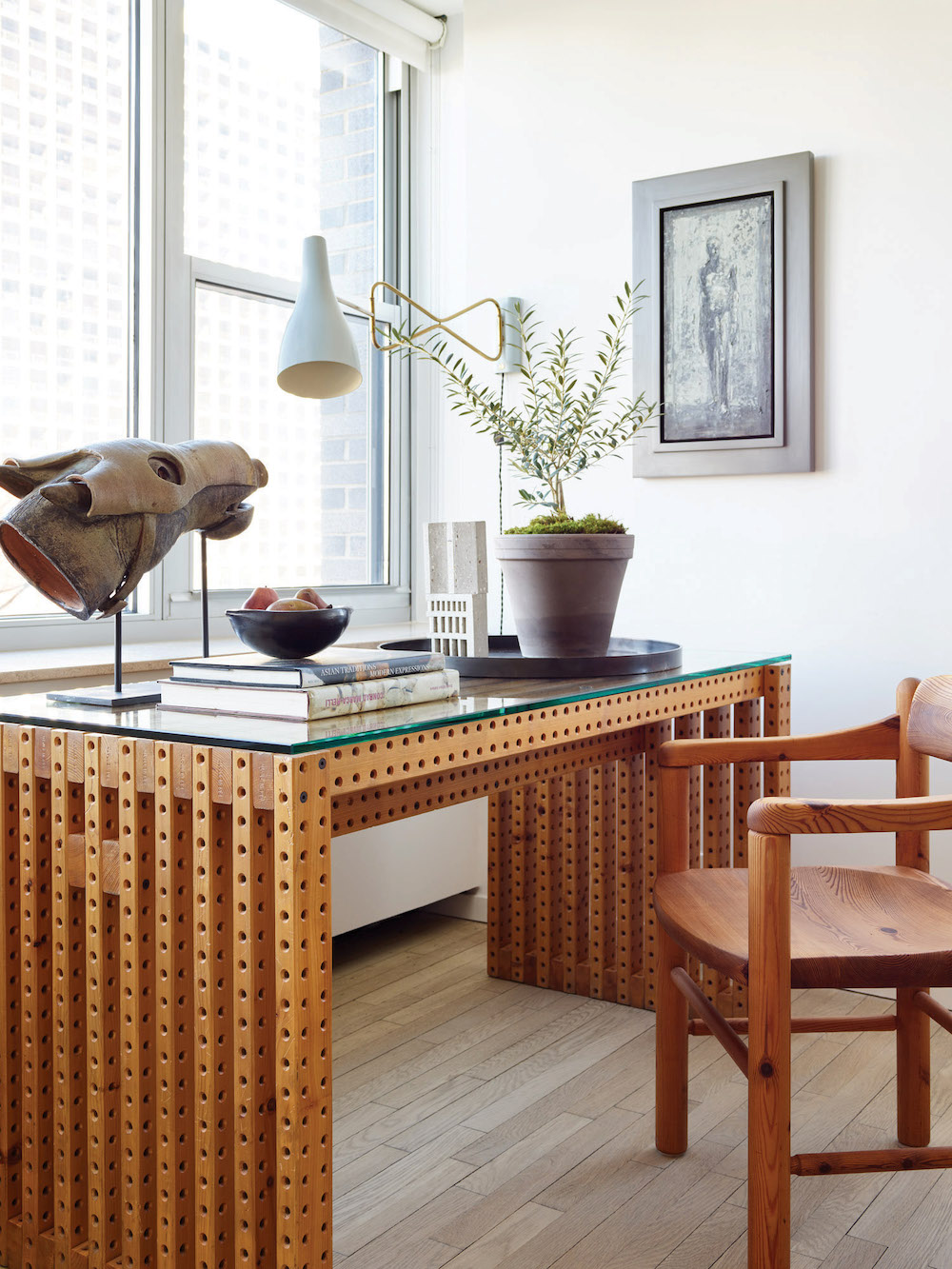
The updated dwelling speaks to Jones, who says he can practically feel his blood pressure lower when he returns to his longtime home after several weeks on the West coast. The couple rarely go three weeks without seeing each other and treasure the ability to enjoy two thriving cities.
And he is eternally grateful for the connection the unit gives him to the Midwest, where he was born and lived for years after attending college on the East coast. “The area is very much a part of who I am,” he says. “Having those roots is important.”
Photography by Nathan Kirkman.
For more from Stephan Jones, be sure to check out his Designer Friday interview with aspire, here.
Like what you see? Get it first with a subscription to aspire design and home magazine.