


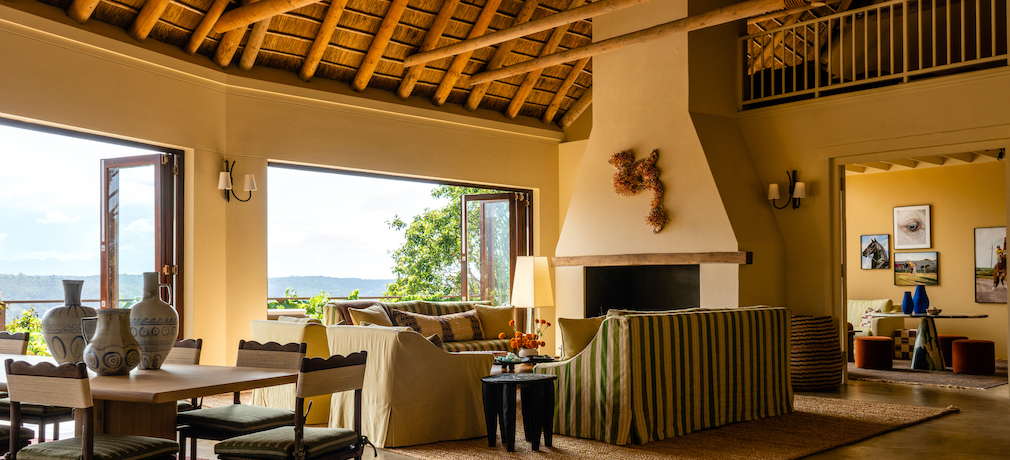
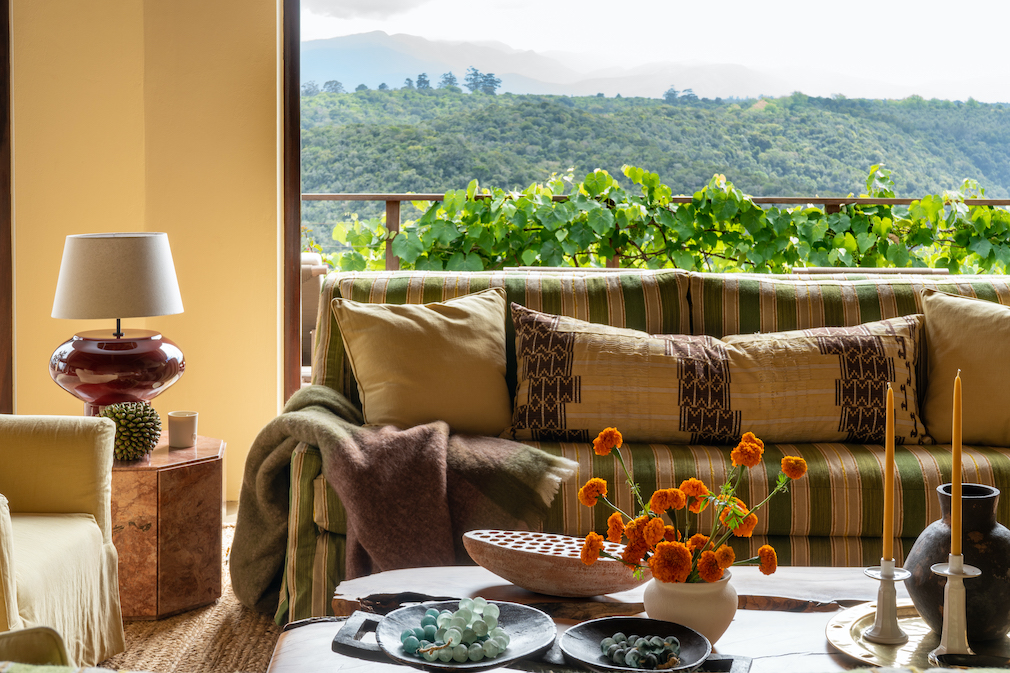

Set against the green slopes of the Tsitsikamma mountain range, Tamodi Estate & Polo Reserve occupies a privileged setting between the Robberg Peninsula and nearby natural reserves. Located halfway between Cape Town and Gqeberha (Port Elizabeth), its position reinforces the feeling of retreat: a destination reached with intention, where the pace slows, and the landscape is meant to be inhabited with calm.
Conceived as a refuge for contemporary nomads, the project embraces a bucolic elegance in which comfort is defined by stillness, generosity of space, and attention to the everyday, accompanied by ocean breezes and the valley’s ever-changing light. Hospitality here is deeply personal, discreet, and attentive without ever being intrusive.
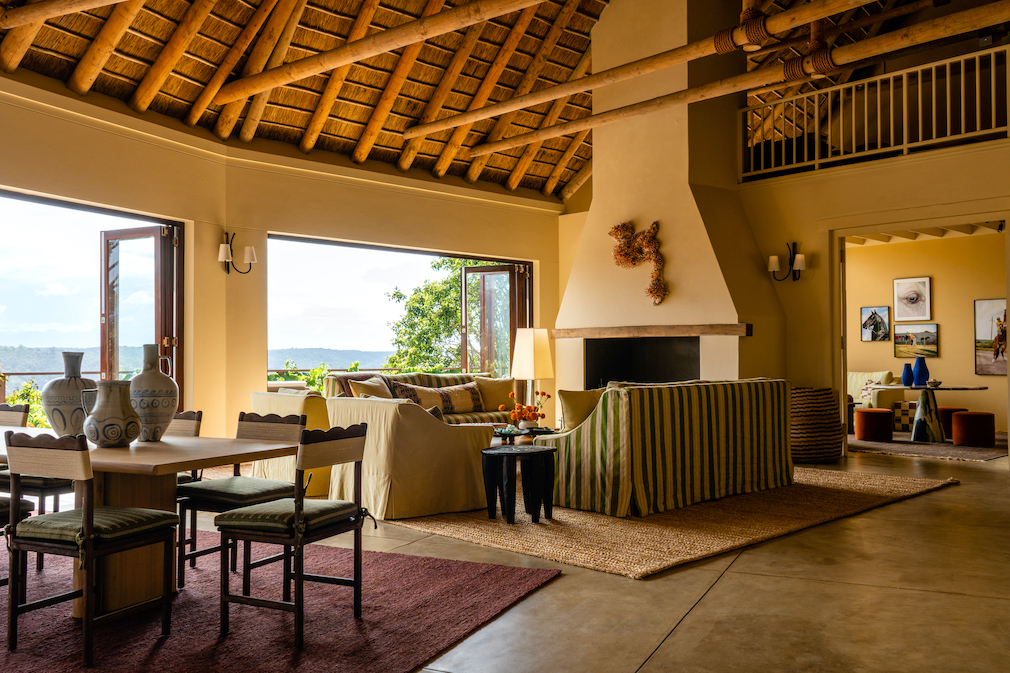
The interior design was handled by Studio Ashby and led by its founder, Sophie Ashby, raised between South Africa and the United Kingdom. Based in London and with a new office in Cape Town, the studio’s practice weaves together material culture, craftsmanship, and a contemporary approach to living.
The hotel is organized around a central building conceived for shared living, echoing the atmosphere of a private club. A library and reading room, serene terraces, and a pool that extends communal life outdoors form a sequence of spaces designed for unhurried connection. Across 811 square meters dedicated to shared interiors, the design strengthens the relationship between indoors and out through generous openings, decks, and transitional spaces that soften the boundary between shelter and landscape. A palette of natural tones and organic textures runs throughout, in dialogue with the architecture and local materials such as stone, wood, and clay, shaping interiors that feel authentic and deeply rooted in their surroundings. Painted walls and joinery, along with new stucco finishes for fireplaces, reinforce a sober, cohesive, and timeless aesthetic.
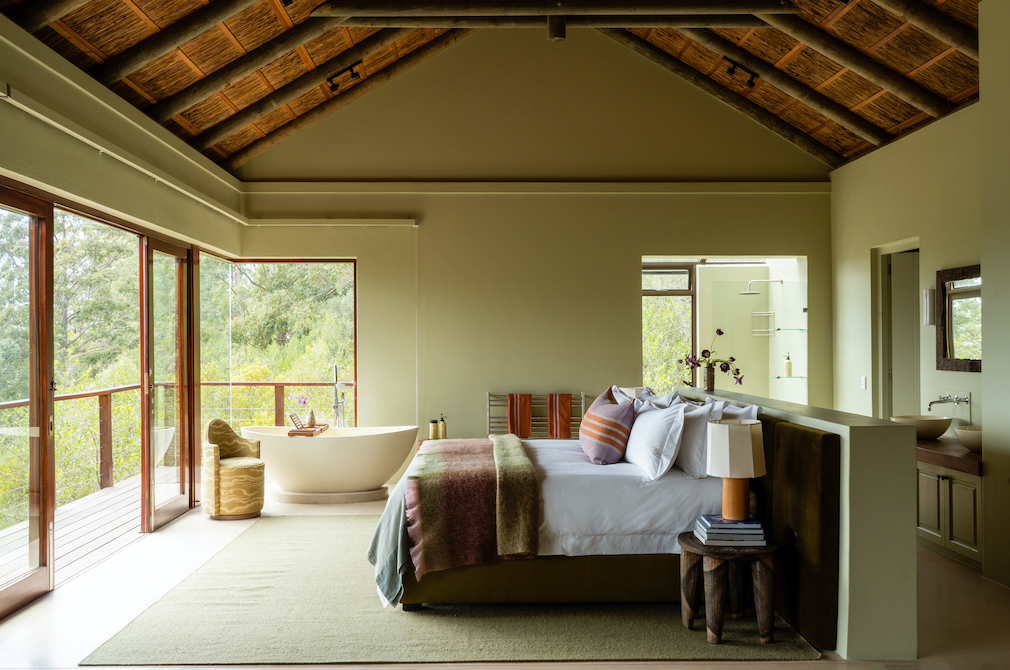

Within the lodges, the original layouts were preserved, allowing the intervention to focus on furniture selection, equipment, and a renewed color palette that refreshes the interiors without altering circulation. Generous proportions already ensured ease of movement; the design effort therefore concentrated on refining performance and elevating comfort through carefully curated layers of textiles, accessories, and finishes. The aim was to establish a distinct identity aligned with the climate and rhythm of the place. The result rests on precise decisions — well-scaled furniture, seating that invites lingering, and discreet storage solutions — so that functionality fades into the background and character emerges through tangible details.
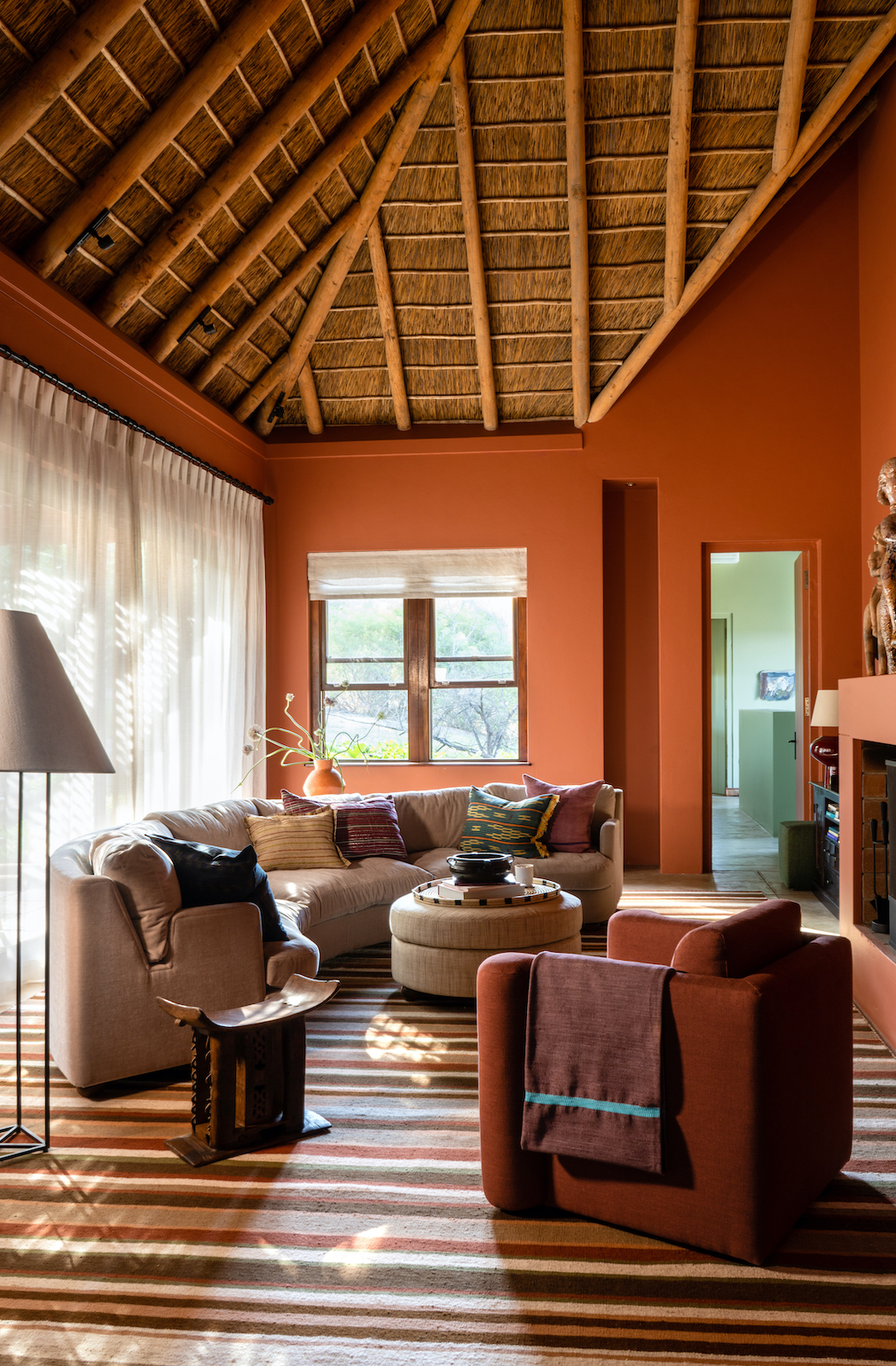

To add depth and warmth, large handwoven rugs crafted in Cape Town were incorporated, produced on looms designed specifically for the project. The color story draws directly from the surrounding landscape: soft lavenders, olive greens, golden yellows, warm terracottas, sky blues, and deep browns. The program is completed with bespoke pieces for guest rooms and shared spaces — chairs and sofas, hand-carved tables, throws, and artisanal ceramics — alongside South African antiques, including furniture made using the riempie technique, where strips of leather are interwoven to create durable surfaces. Across lighting, everyday objects, and accessories, the atmosphere feels closer to that of a lived-in family home than a conventional hotel.
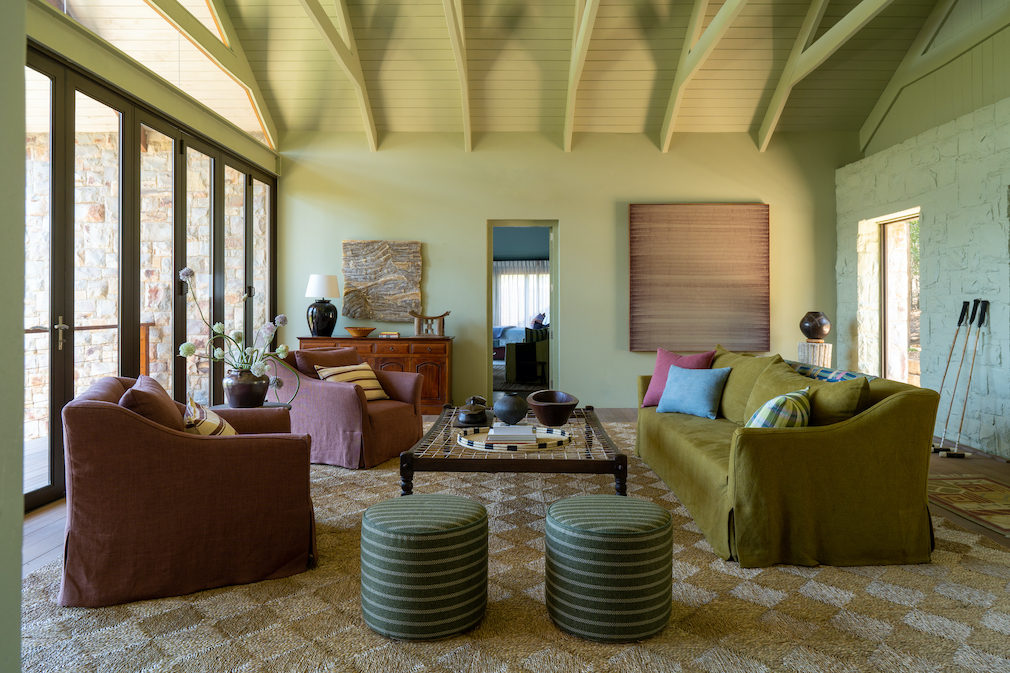
Art curation, developed by Sophie Ashby in collaboration with Heinrich Groenewald and Shona van der Merwe of Reservoir Projects, brings together contemporary works by emerging and established South African artists. These pieces engage with the tactile and chromatic schemes of the interiors, adding vitality and character without disrupting the overall sense of calm. In the same spirit, a previously underused side area was transformed into the library bar: a games table, a library featuring titles on South Africa, fashion, travel, food, and music, and an honesty bar designed to encourage lingering. The gesture introduces an elegant informality — serving oneself, conversing, or starting a game as the afternoon fades, with open views toward the mountains of The Crags.
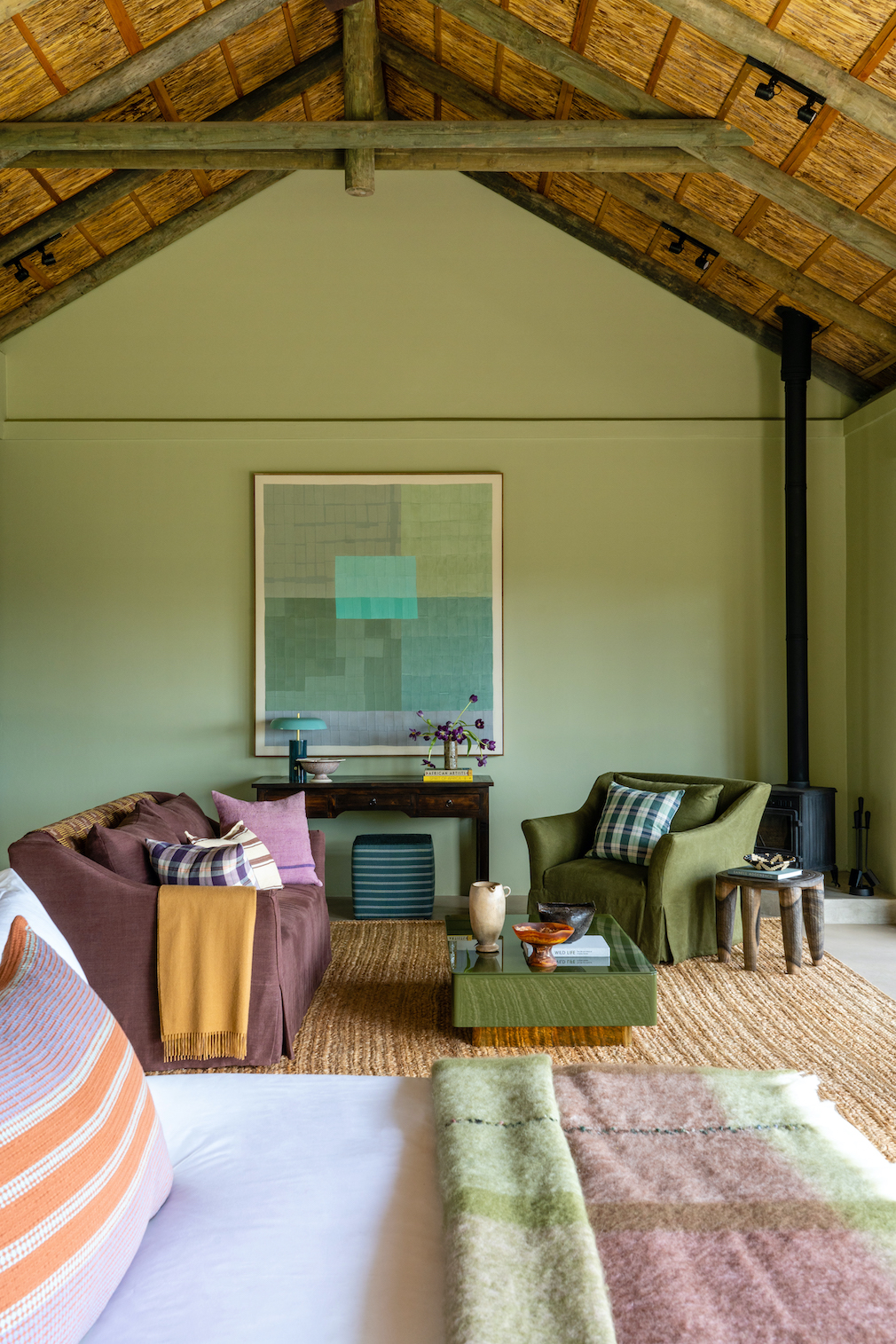

Privacy defines the ten suites, each exceeding 100 square meters and featuring a fireplace, a soaking tub, and open views. An equestrian heritage is subtly referenced throughout, alongside a constant emphasis on indoor–outdoor living. From a sustainability standpoint, durable textiles and hard-wearing rugs were prioritized; nearly 80% of the furnishings are locally sourced, complemented by South African and European vintage pieces. The broader plan includes new amenities and environmental rehabilitation efforts aimed at restoring endemic flora, including fynbos, as part of the project’s ecological commitment.
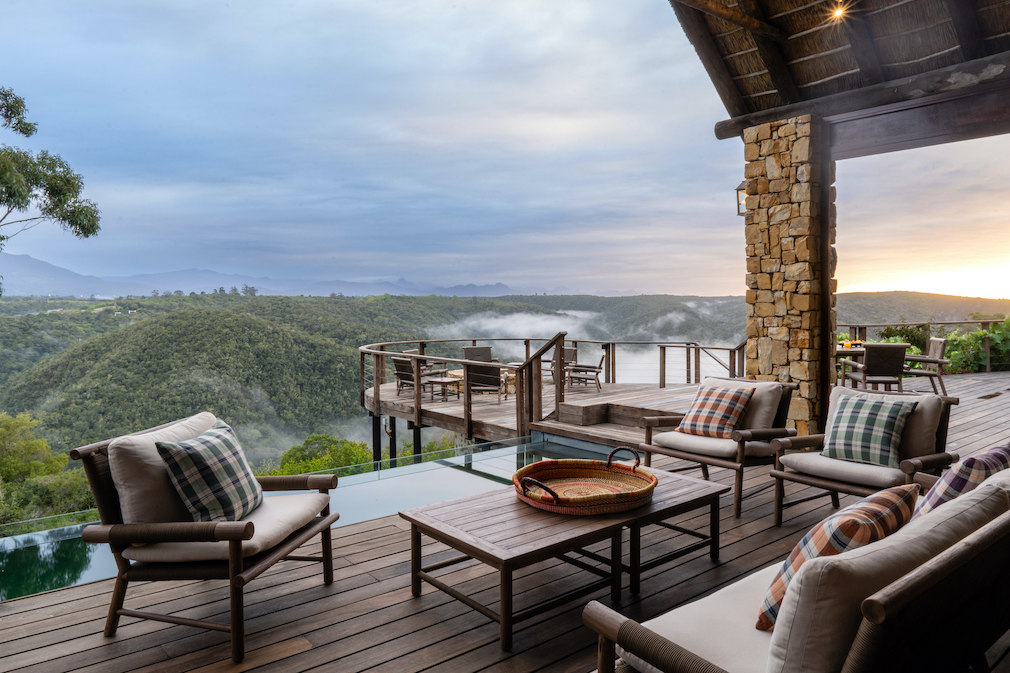
Facing The Crags, Cape light settles gently on stone and wood, while fireplaces in the suites accompany moments of rest. Surrounded by native vegetation and a discreetly expressed equestrian legacy, Tamodi affirms that design is, above all, an act of care — for place, for time, and for the kind of calm that makes a stay truly memorable.
Photography courtesy of Tamodi Estate & Polo Reserve.
Like what you see? Get it first with a subscription to aspire design and home magazine.