
A sow’s ear, if you really look at it, has a beauty all its own. Big, floppy and expressive. It’s a wonder it was ever conscripted for that old saw with the silk purse. At least to anyone who sees a certain charm in the porcine form. And while that old proverb often holds true, like a rule, it was meant to be broken.
Such was the case for a Texas couple when they spotted a less- than-stellar Spanish contemporary home on a great site in West Lake Hills, Texas. Six miles outside of downtown Austin and offering a view of the city skyline across hilly terrain, the property was the right size for a family of four. But its windows weren’t properly scaled to encompass the vista, and any number of details — including heavy-handed wrought-iron light fixtures and cheap ceiling fans in nearly every room — had to go. Turning to Studio Gild, a design firm with offices in Chicago and Los Angeles, the homeowners transformed what others may have seen as a pig in a poke into a place of captivating simplicity.
Outfitted with a lot of dark wood and heavy beams, the house struck a rustic pose, one more ersatz than authentic. To deliver on their clients’ desire for a lighter, more California-inspired look, the design team took hammer and crowbar to the place while maintaining much of the original layout. “The coarse, synthetic stucco walls were replaced with drywall and Portola’s Roman Clay organic gypsum plaster,” describes Kristen Ekeland, Principal, Studio Gild. “To infuse a feeling of calm and unity throughout, the palette was limited to natural oak flooring and millwork and soft white paint colors, such as Farrow & Ball’s Shaded White. To add warmth and age, burnished brass and oil-rubbed bronze became the metal of choice for all hardware and decorative lighting.”
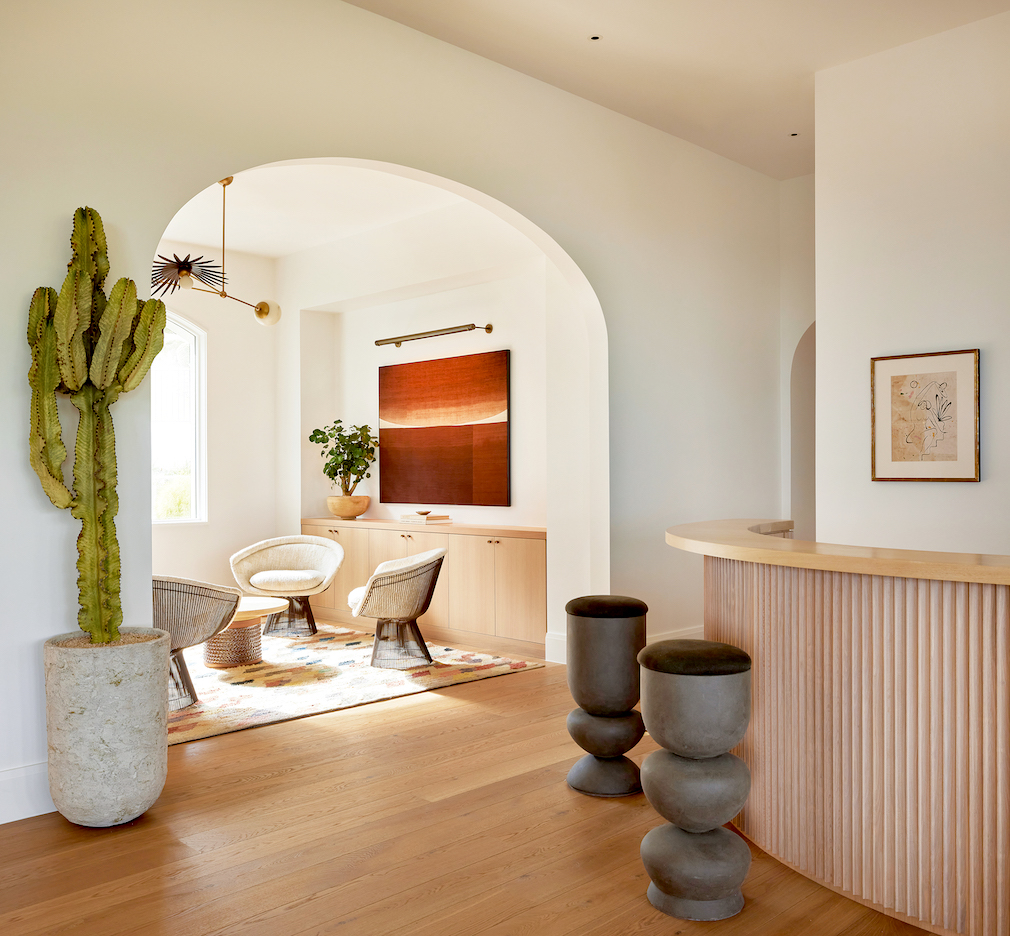
While Ekeland’s clients appreciated the general flow of the home’s central spaces and high ceilings, they still felt the need to wrestle certain areas into shape. With no proper foyer to speak of, the designers commandeered some of the exterior entryway and created an entry hall suffused with natural light. An orphan space on the ground floor, outlined by a curved ceiling supported by nondescript columns, was utterly reimagined. “Our challenge was to bring purpose to the space,” explains Ekeland. “After numerous iterations, the winning plan required removing the clunky ceiling, enclosing the columns in drywall and installing shelves and a console. Now an actual room, the space was named the Library and has become home to our client’s vintage Warren Platner lounge chairs, coffee table books and pottery collection.”
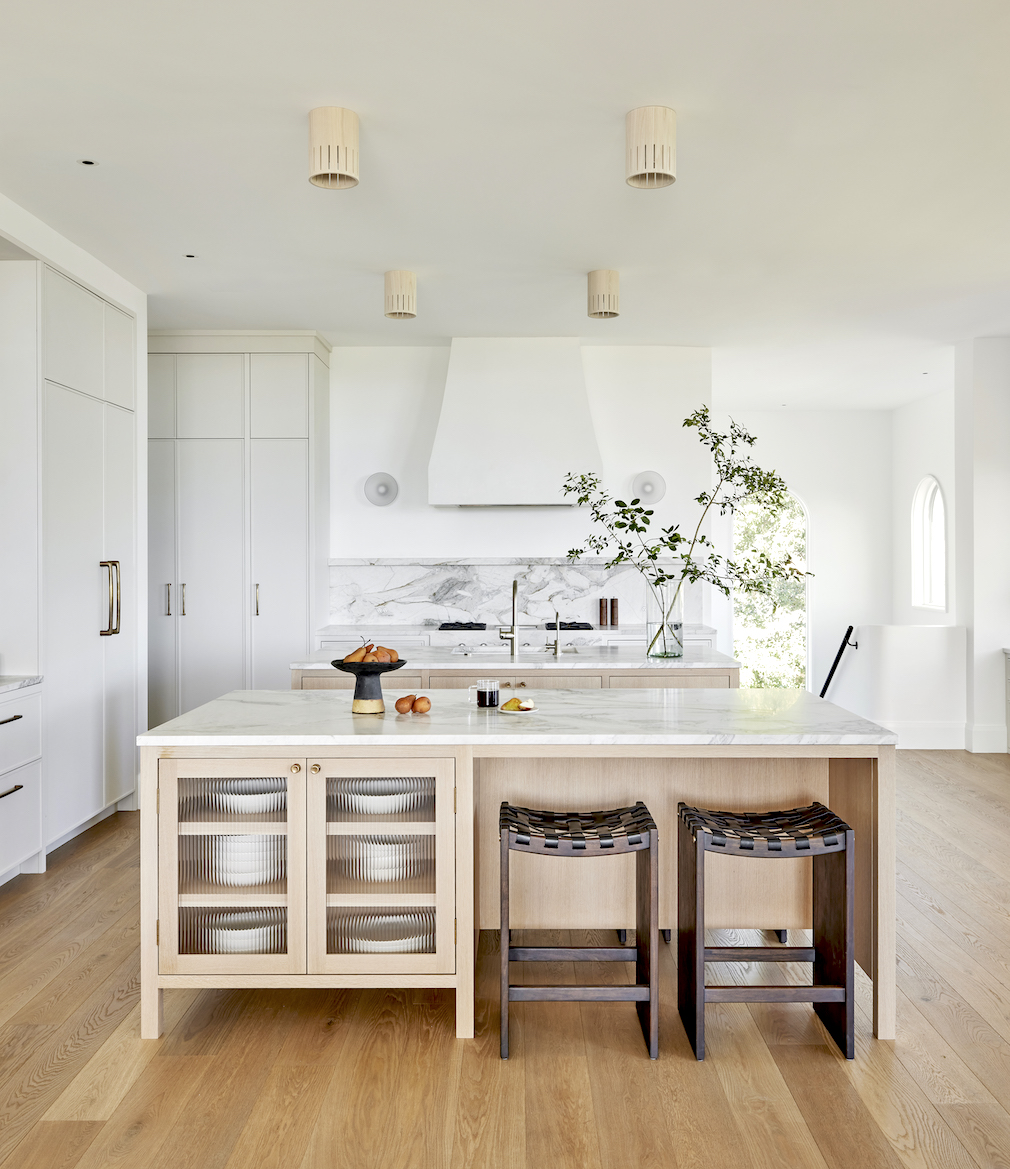
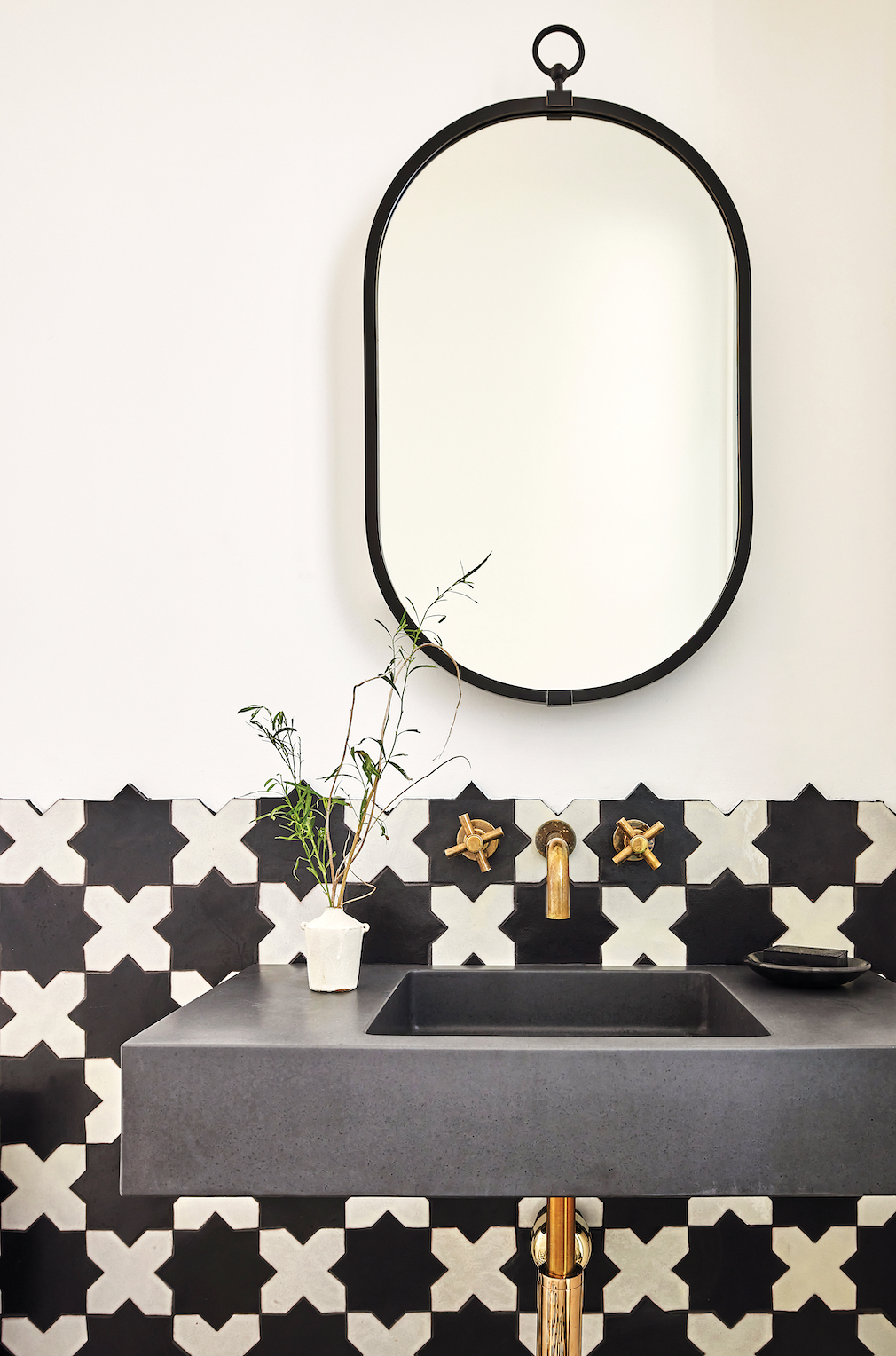
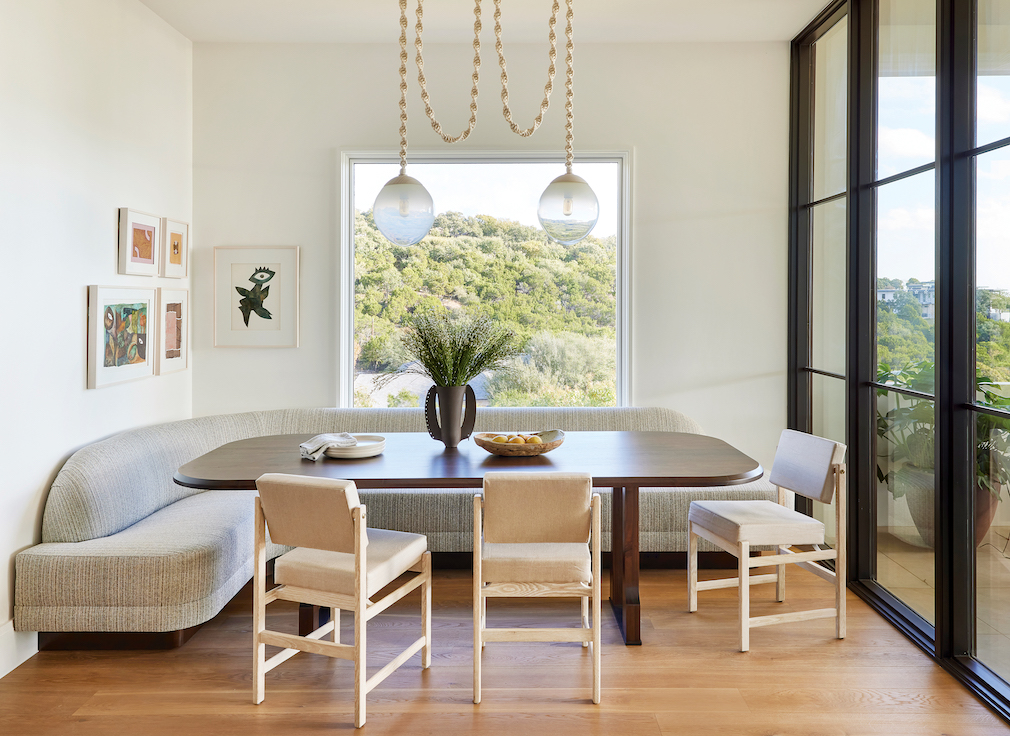
The homeowners wanted a house that would read as “impressive but comfortably casual,” an effect Ekeland achieved through the judicious orchestration of color and material and the relationships she established between each space. “Linen, mohair, wool and cotton triumphed over synthetic fibers,” notes Ekeland. “Reflecting the brush of the surrounding hillside, green accents were added. A wild veining of sober green Calacatta envelopes the free-standing tub in the primary bathroom. Verdigris brass vanity legs support the powder room sink.” A curved bar just off the entry hall announces a commitment to hospitality and leads one to the great room, where floor-to-ceiling windows frame an expansive terrace and the landscape beyond. Instead of a formal dining room, the kitchen features a large corner banquette; big dinner parties are hosted outside.
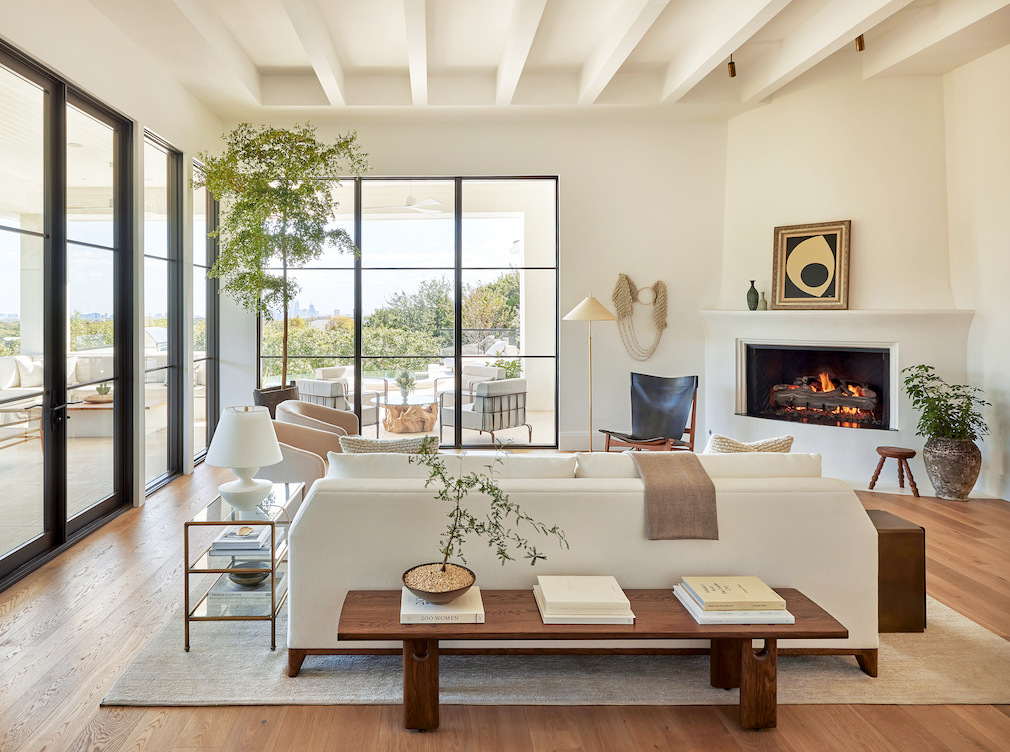
Throughout the house, relatively simple strategies provided big benefits. Rather than remove or reorient the great room’s awkward, diagonally-set fireplace, Ekeland stripped its stone cladding and changed its profile with an application of plaster laid on in a gentle curve. This feature now comes off as a part of the conversation, rather than an introvert wedged weirdly in the corner. And the office/den, the terminus of the primary bedroom corridor, is painted in Dunn-Edwards Black Pool, which generates an almost volumetric contrast to the home’s lightly hued rooms.
The views from this house were always a big part of its appeal. The low green hills in the distance gave it a distinct sense of place. Now, the house itself possesses a sense of place, a sense of home this family can truly call their own.
Photography by Mike Schwartz.
Like what you see? Get it first with a subscription to aspire design and home magazine.