


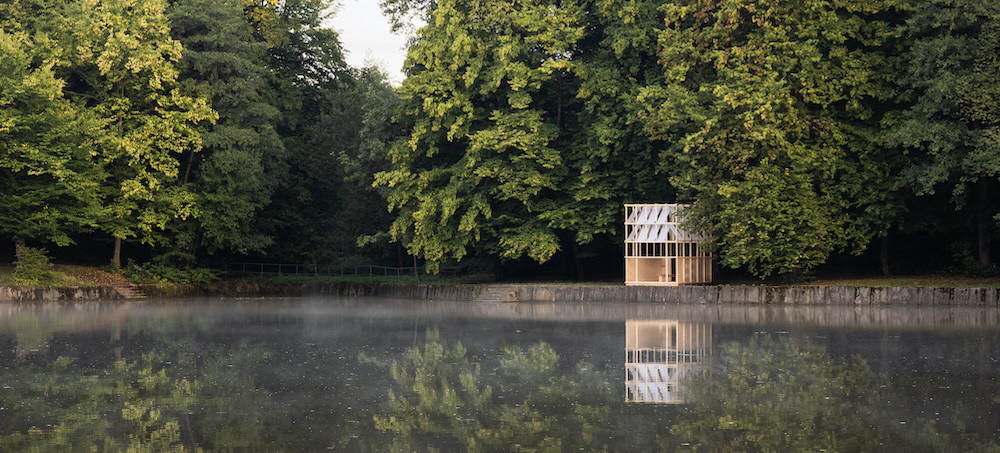


As a part of the 2022 Mood for Wood international design workshop for students and young designers, GRAU architects in collaboration with the workshop participants designed the Tea House Pavilion. Located on the bank of Češký Těšín dam, the design is based on the traditional Japanese architecture of tea houses rendered with contemporary means of expression.
The pavilion invites people to a close experience with nature, focusing visitors’ attention on the water reservoir – views, sounds, movements. It forces a person to stop, and slow down thanks to the endless view into the treetops, the defined view of the boundless calm water surface and the gentle closure from the surrounding bustle of everyday life.
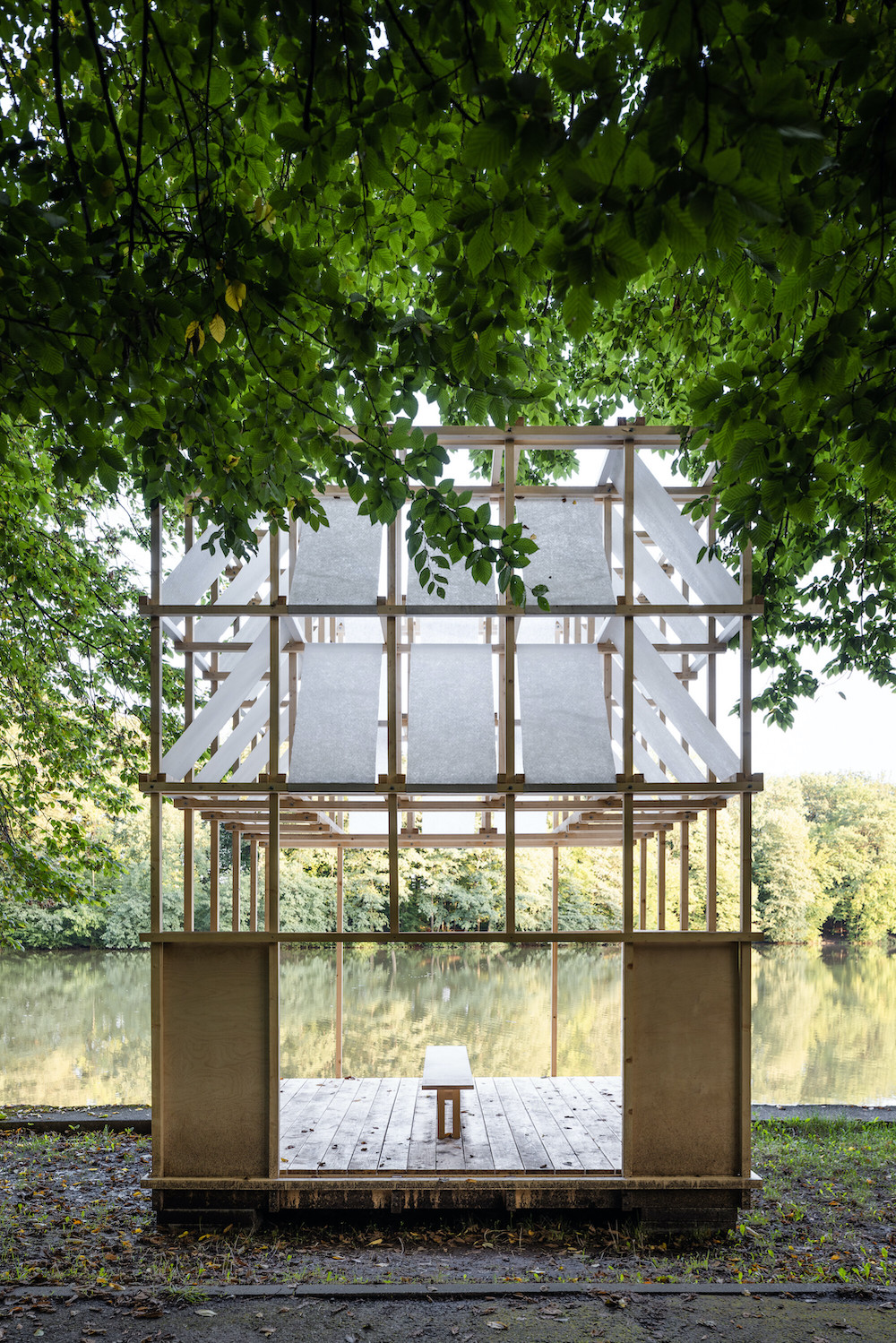
Several rules of the traditional tea ceremony were transferred to the final design. When entering the interior, each visitor must bend down to pass under the lowest horizontal beam of the structure, which refers to the niriji-guchi door, a symbol of the equality of all participants in the ceremony. At the same time, upon entering, a rectifying view opens up attention to the water reservoir. A low table in the middle of the layout invites visitors to sit on their knees as is customary in Japanese culture. Stiffening of the lower part of the structure with plywood boards provides a feeling of privacy and detachment from exterior noises. The open entrance frame allows a view into the interior and passers-by can see the tea ceremony in progress. The height of the table gives it versatility when used both during the tea ceremony or as a bench offering a place for sitting and quiet contemplation, thus following the Japanese ideology focused on simplicity and aesthetic sophistication. The table becomes the only central furniture of the pavilion, its depth allows the participants of the ceremony to sit in close proximity with a feeling of mutuality.
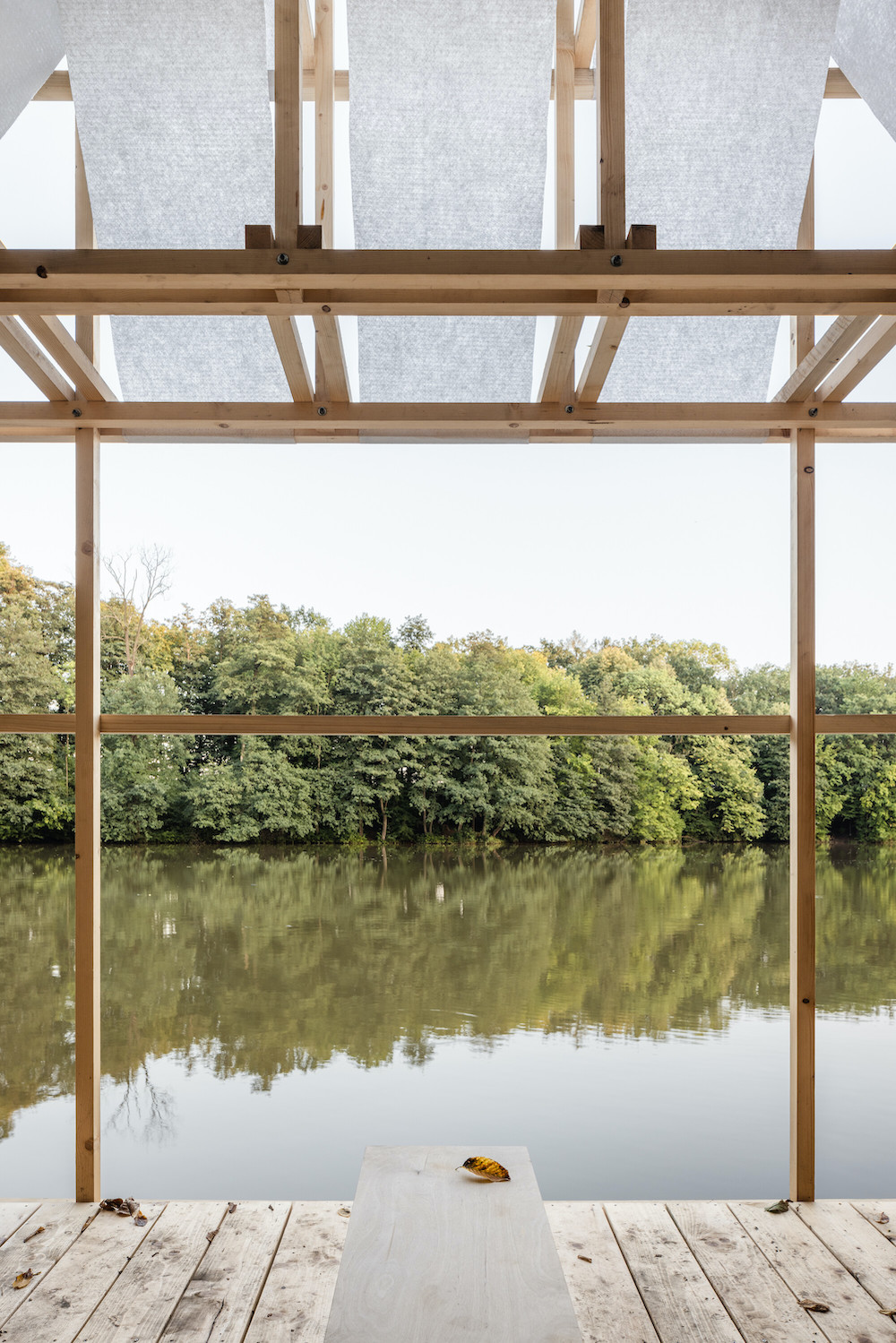
The raw wooden elements are complemented by a soft fabric that brings a feeling of coziness, but keeps the pavilion still minimalist, so that it does not distract from the ceremony itself, from achieving a sense of peace and harmony. Diagonally fixed fabric together with closing two side walls with birch plywood create an impression of privacy and protection against weather conditions such as sun and rain, which the house provides, but at the same time, the frame structure remains airy and open enough to allow a connection with the exterior and the creation of non-traditional views. Textiles in two levels bring a certain play to the pavilion, which is meant to evoke traditional Japanese architecture.
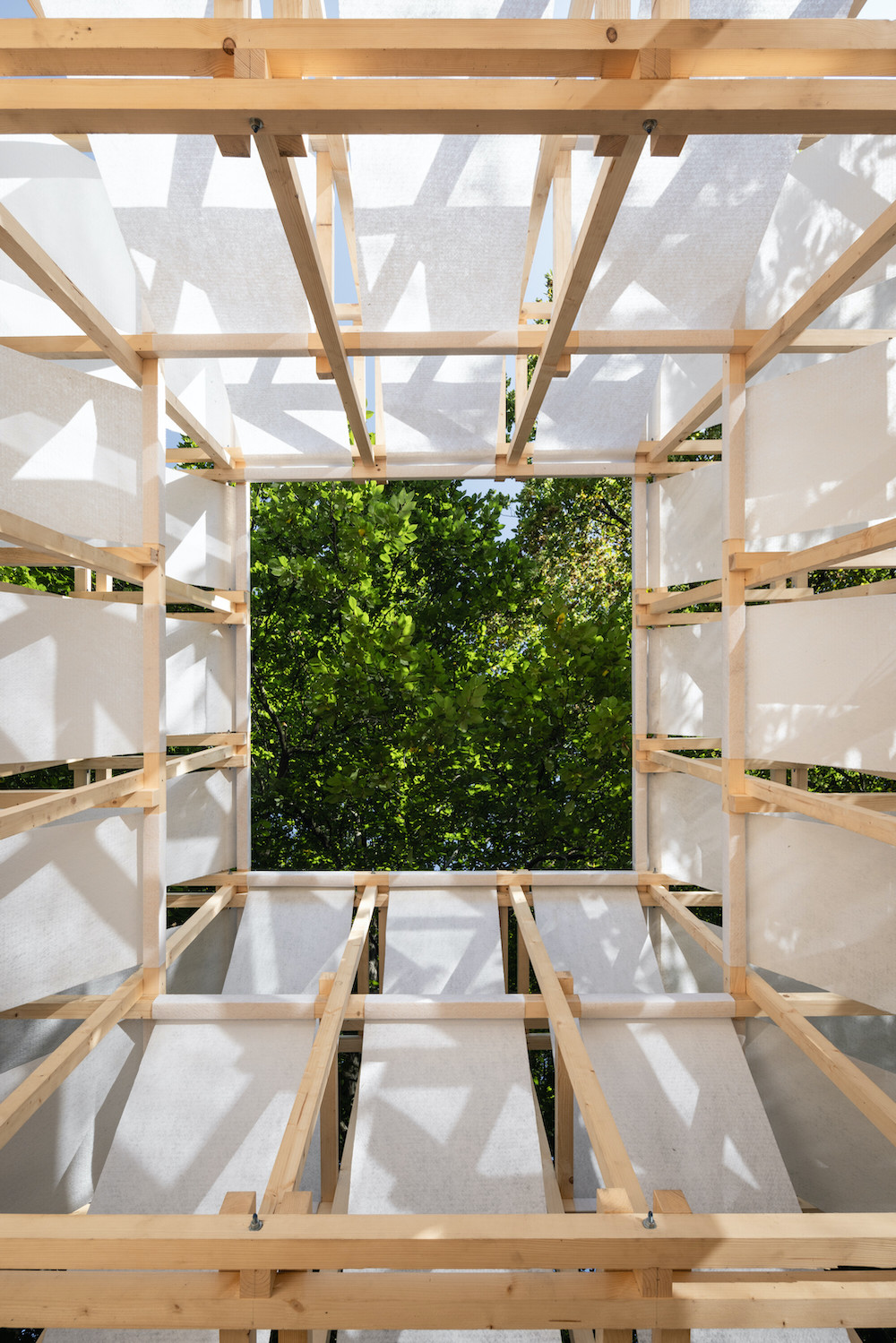
Used as a meditative space for the tea ceremony or as a pleasant summer pavilion, the pavilion invites people to a close experience with nature.
Photography by Matej Hakár.
For more like this be sure to check out the tea house room in this mountainous getaway in Aspen.
Like what you see? Get it first with a subscription to aspire design and home magazine.